
Pastoral Agriculture
At a Glance
Crop Work
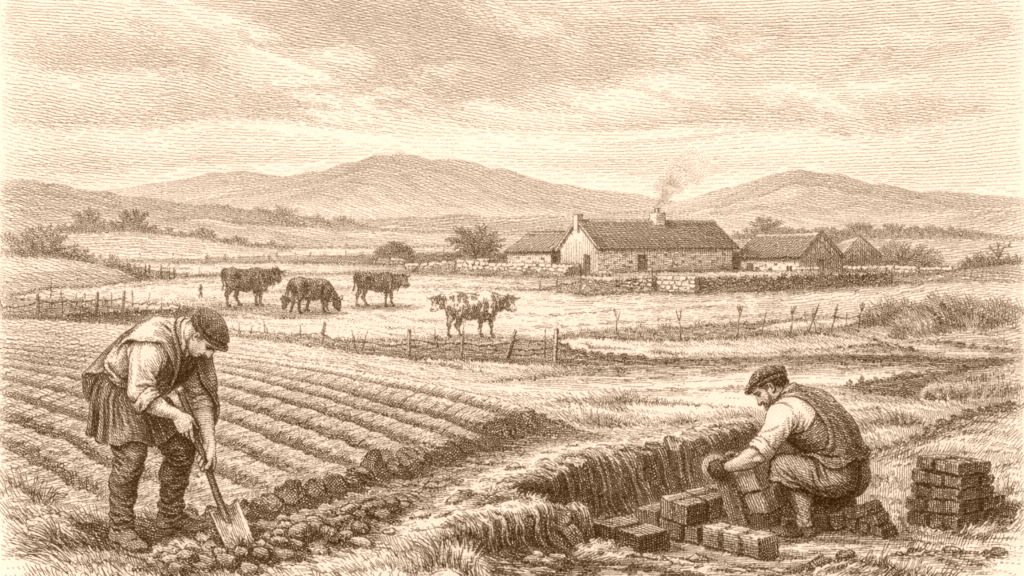
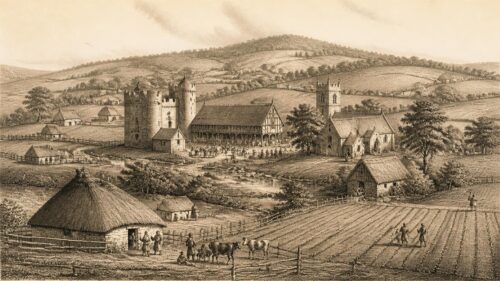
The clearest agricultural contrast in the museum material is between arable farming and pastoral practice. One gallery description states that medieval Ireland included both forms, and the folklife pages expand the arable side with potatoes, cabbage, onions, and carrots. Potatoes were often grown in spade-made ridges, while the farmer used a spade and other hand tools on small holdings. The picture is practical rather than theoretical: cultivation is described through soil preparation, ridge making, and the tools used to do the work. [3] [2] [4]
The same folklife material sets the agricultural year in sequence. In spring, the ground was prepared and ploughed; in mid-spring, crops were planted; in summer, crops were weeded and hay was cut; in August, the cereal harvest began; and by autumn turf was brought home and fruit and berries were gathered. Root crops continued into December. This orderly list does not describe every region, but it does show a repeated cycle of work tied to the seasons and to different crops. [4]
Animal Wealth
The annals repeatedly place animals at the centre of agricultural life. In one entry from the twelfth century, a church visitation in Tir-Eoghain included tribute of cows and horses. Elsewhere, cattle are taken in depredations, and a great murrain of cows is described as leaving only a small remnant of the cattle of Ireland. The wording is sparse, but it clearly shows that cattle were counted, moved, and lost in ways worth recording beside other public events. [1]
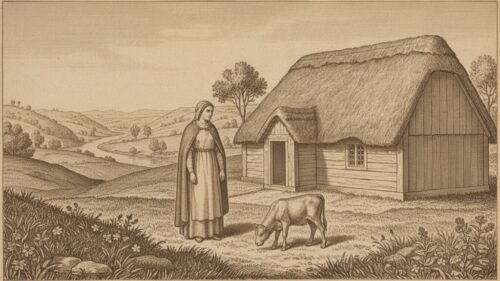
The museum account of farming gives the broader context for these references. It says most Irish farm families owned a few domestic animals, each with a function: cows, pigs, sheep, and fowl provided food; horses and donkeys provided power; sheep supplied wool. Horses were essential for heavy work such as ploughing, while the donkey was especially associated with smaller farms and with the west of Ireland. These are not annalistic details, but they help explain why livestock appears so often in the historical record. [2] [4]
Seasonal Labour
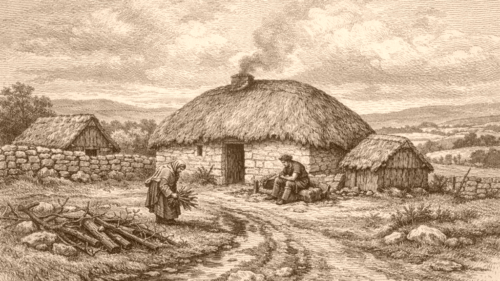
Several of the museum passages emphasise labour done at specific times of year. Turf was cut in May or June, dried, and stacked for later use. Cattle were let out to pasture in the same season, while winter brought repair work, drain clearing, and the housing and feeding of cattle. The result is a rhythm of production and maintenance rather than a single harvest moment. Agriculture here is not only planting and reaping but also storage, transport, and care across the calendar. [2] [4]
The same sequence can be seen in the tools attached to different stages of work. Before sowing, ploughing broke the sod, a harrow broke the clods, and a roller pressed the seed into the earth. For mowing, scythes became common from the early nineteenth century, while sickles and billhooks remained in use earlier and were preferred by some harvesters. These descriptions are later than the medieval annals, but they preserve observable practices that clarify how cereal and grass crops were handled. [2]
Medieval Records
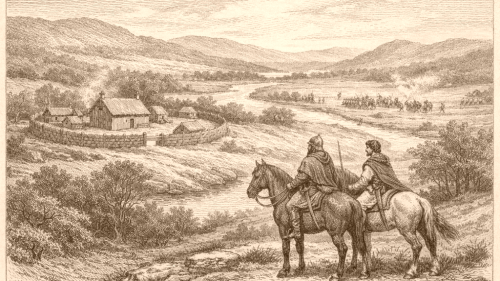
The annals do not present agriculture as a separate subject, yet they repeatedly insert it into narrative of events. The twelfth-century Four Masters entry on the cow mortality is especially striking because it treats cattle loss as a major event. In the same passage, other entries describe plundering of Fine Gall and the east of Leinster, and another notes cattle tribute received during a visitation. Agriculture appears here through animals, tribute, and loss, not through a farm handbook. [1]
Another point of comparison is the way the annals mention destruction of places and livestock in the same year. The bridge of Ath-Luain and its castle were destroyed, while depredations and battles were also recorded. In that setting, the cow mortality stands out because it is not a military action but an agricultural calamity. The text does not explain causes, and it should not be read as a general explanation of farming conditions. It simply preserves the event as significant enough to record. [1]
Tools Traditions
The most common implement named in the museum material is the spade. It is said to have existed on the smallest farm and to have shown great local variety. Two-sided spades spread from the north and east and were mainly produced in spade mills, while one-sided loys were more common in the west and south-west and were mainly produced by blacksmiths. Special slanes were also made for cutting peat. These distinctions are technological and regional, not explanatory, but they show the practical diversity of Irish farm tools. [4] [2]
Other tools and transport help complete the picture. The museum page describes the sleán used for cutting turf, the donkey with panniers, and the slide car and block-wheel cart, all of which survived in particular regions into the twentieth century. The same source also explains flails, winnowing baskets, and threshing machines. These details are later than the medieval annals, but they show how farm work depended on a chain of implements for cutting, moving, and processing crops and fuel. [2]
Historical Scope
Taken together, these passages outline agriculture through recurring actions rather than through a single sustained description. The museum material links medieval Ireland to both pastoral and arable farming, and the folklife pages give examples of planting, harvesting, livestock care, and tool use. The annals add a separate level of evidence by recording cows, horses, cattle tribute, depredations, and a cattle mortality. The overlap is narrow but clear: animals, crops, and labour are visible in both kinds of record. [3] [1] [2] [4]
There are also notable limits. The annals do not explain farm technique, while the museum pages do not narrate specific medieval events. The result is a divided picture: annalistic entries show where agriculture touched public memory, and the museum descriptions show how work was done in practice. That division is useful evidence in itself, because it shows what each source type preserves and what it leaves unstated. Agriculture appears as a lived system of animals, seasons, and tools rather than as an abstract category. [1] [2] [3] [4]
Source References
Hover over a number to see the source. Select it to open the source.

How do the annalistic references and museum descriptions together illuminate agriculture in medieval and traditional Irish rural life?