Turlough Luineach
Turlough Luineach O’Neill was an Irish lord of Tyrone, styled Luineach because he had been fostered by O’Luinigh of Muintir Luinigh in Tyrone. He was the son of Niall Conallach O’Neill, and his mother was Rose, daughter of Manus O’Donnell. The same account places his birth about 1530. The name by which he is known in historical writing reflects fosterage as well as birth. He was a grandson of Art Og O’Neill, and the source places him as a younger brother of Con mor O’Neill, who was the father of Con, first earl of Tyrone.
Dateline
Turlough Luineach O’Neill was an Irish lord of Tyrone, styled Luineach because he had been fostered by O’Luinigh of Muintir Luinigh in Tyrone. He was the son of Niall Conallach O’Neill, and his mother was Rose, daughter of Manus O’Donnell. The same account places his birth about 1530.
Family Origins
The name by which he is known in historical writing reflects fosterage as well as birth. He was a grandson of Art Og O’Neill, and the source places him as a younger brother of Con mor O’Neill, who was the father of Con, first earl of Tyrone. The extract does not give a fuller narrative of his youth, but it does establish the kinship setting from which his later position emerged.
Clan Conflict
He became tanist when his cousin Shane was elected O’Neill. In 1562, while Shane was detained in England, Turlough tried to supplant him as chief of the clan. The account links this attempt with the killing of the young baron of Dungannon on 12 April, between Newry and Carlingford. The source states that he waylaid and murdered the young baron, Brian, the son of Mathew or Ferdorach, and the brother of Hugh, who later became second earl of Tyrone. The attempt to take the chieftainship was checked by the loyalty of Shane’s fosterers, the O’Donnellys, and by Shane’s return. The result was a cooling between the two kinsmen.
Royal Relations
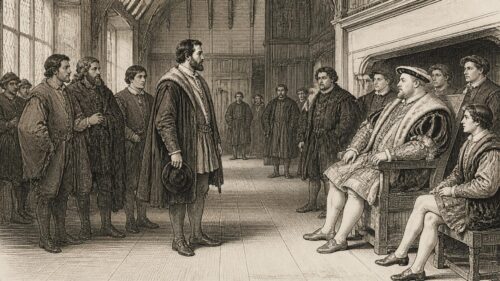
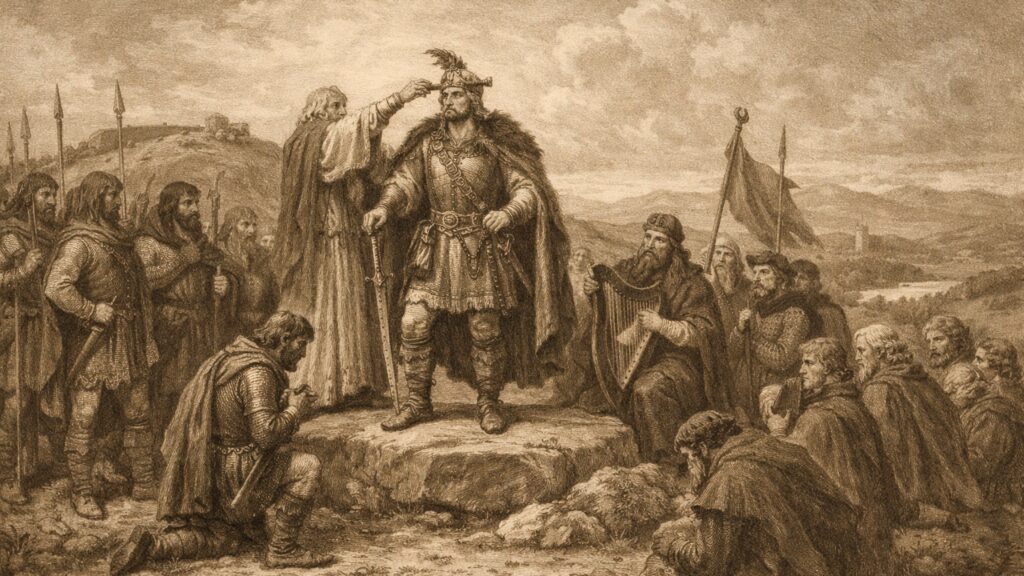
Sir Thomas Radcliffe, earl of Sussex, used the division between the cousins to draw Turlough into a combination against Shane. After a short experience, Turlough found that the alliance with the government did not promise much advantage, and he came to terms with Shane. After Shane’s death in June 1567, Turlough was inaugurated O’Neill with the customary ceremonies at Tullaghoge. Fearing the vengeance of the government, he apologised for his thoughtless behaviour, offered to renounce the title of O’Neill, and promised not to entertain any Scottish mercenaries without licence. The account adds that it was thought best to overlook his misdemeanours, and that he then had time to strengthen his position.
He contracted an alliance with O’Donnell and made overtures towards reconciliation with the MacDonnells, offering to marry either the widow or daughter of James MacDonnell. To ease hostility from the MacQuillins, he gave one of his daughters in marriage to Rory Oge MacQuillin. Notwithstanding his protestations of loyalty, the government continued to regard his conduct with suspicion. In June 1568 Sir William Fitzwilliam formed a plan to seize him, but the plan failed because the lord justice could not provision his army. Later in the year Turlough met Sir Henry Sidney at the Bann and created a favourable impression. Rumours then circulated of an understanding between him and James Fitzmaurice Fitzgerald, but the source does not present that rumour as established fact.
War Peace
In the summer of 1569 he married Agnes Campbell, widow of James MacDonnell. The marriage brought him considerable accession of strength from a military point of view, though the account says it was otherwise of doubtful advantage. The same source reports that he was thought to have “eaten himself up” by supporting his new allies, and that he would gladly have been rid of them and his wife at any price. Another report said that he had been accidentally shot by his jester while sitting at supper with his wife, though Sir Nicholas Malby preferred the view that he was merely winning time and would never be content with less than complete control of his urraghs, or feudatory chiefs.
Government efforts to reach a settlement continued. On 20 January 1571 he agreed to a temporary peace, said in the account to have been made by the advice of his wife, though more probably through the intervention of Sir Edward Moore. He promised to dismiss his Scottish mercenaries, but declined to be drawn into a combination against them. The unsettled situation lasted until the rumour of Sir Thomas Smith’s intended colonisation of Antrim in spring 1572 drove him into open opposition. He acted to frustrate Smith’s undertaking, and later refused to be deceived by Walter Devereux, earl of Essex, when Essex claimed that his expedition was aimed at the Scots and not at loyal Irishmen. In February 1574 Essex prepared to waste him with fire and sword, but lacked the means to carry out the threat. In March Turlough consented to a truce and promised to transmit his petition to the queen. When Elizabeth ordered her deputy to support Essex, the latter invaded Tyrone in September, and Turlough suffered severely. Even so, the expedition brought Essex little advantage, and Turlough tried to improve his position by sending what the source calls a politic letter to the deputy.
On 27 June 1575 articles of peace were signed between Turlough and the government. By those articles he promised to surrender his urraghs and to receive a grant of lands from Lough Foyle to the Blackwater and from the Bann to Lough Erne.
Source References
Hover over a number to see the source. Select it to open the source.