Thomas MacDonagh
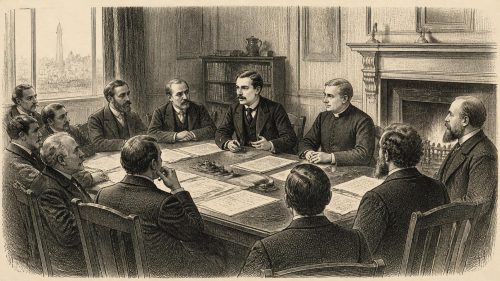
Thomas MacDonagh was born in Cloughjordan, County Tipperary, the son of Joseph MacDonagh and Mary Parker, both teachers. He spent seven years at Rockwell College near Cashel, where he trained for the priesthood before moving into teaching and literary work. MacDonagh taught at St Kieran’s College, Kilkenny, from 1901 to 1903, and at St Colman’s College, Fermoy, from 1903 to 1908. During this period he joined the Gaelic League. He later studied at University College, Dublin, graduating BA in 1910 and gaining an MA in 1911 for a thesis on Thomas Campion and the Art of Poetry.
Dateline
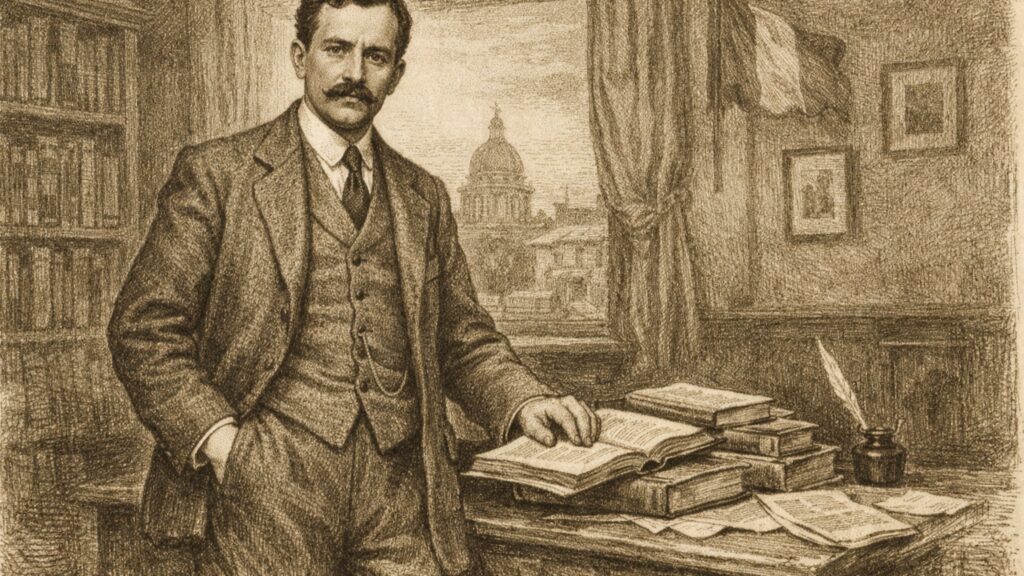
Thomas MacDonagh was born in Cloughjordan, County Tipperary, the son of Joseph MacDonagh and Mary Parker, both teachers. He spent seven years at Rockwell College near Cashel, where he trained for the priesthood before moving into teaching and literary work.
Teaching Career
MacDonagh taught at St Kieran’s College, Kilkenny, from 1901 to 1903, and at St Colman’s College, Fermoy, from 1903 to 1908. During this period he joined the Gaelic League. He later studied at University College, Dublin, graduating BA in 1910 and gaining an MA in 1911 for a thesis on Thomas Campion and the Art of Poetry. In 1911 he was appointed lecturer in English at UCD.
Literary Work
His first book of poems appeared in 1902, and his volume Lyrical Poems was published in 1913. He also wrote three plays, including When The Dawn is Come, which had an Irish insurrection as its theme. He contributed articles to The Nation and The Leader, and he was a founding member of the Association of Secondary Teachers of Ireland in 1909 and of the literary monthly Irish Review in 1911, which he co-edited for a period.
Political Role
In 1914 MacDonagh, Joseph Plunkett and Edward Martyn established the Irish Theatre in Hardwicke Street. He joined the Irish Volunteers on their formation in November 1913, became a member of the provisional committee, and took part in the Howth gun-running. In March 1915 he became commandant of the 2nd Battalion of the Dublin Brigade. He became a member of the Irish Republican Brotherhood in April 1915 and was not co-opted to the Military Council until early April 1916.
Easter Rising
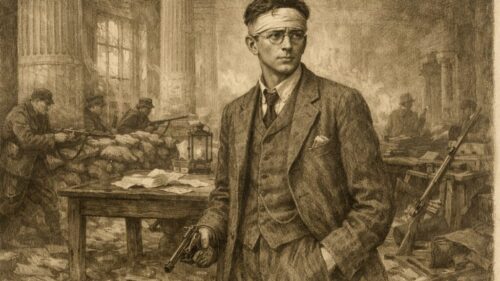
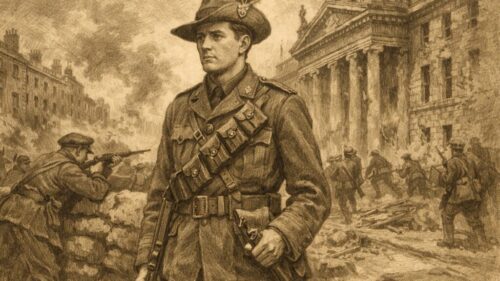
During the Easter Rising he was in charge at Jacob’s biscuit factory in Bishop Street. When Pearse’s surrender order reached the garrison on Sunday, MacDonagh and his men were initially reluctant to comply. He was tried by court-martial and executed by firing squad in Kilmainham Jail on 3 May. He was survived by his wife Muriel Gifford and their children Donagh and Barbara.
Source References
Hover over a number to see the source. Select it to open the source.