Constance Markievicz
Early Life Constance Gore-Booth studied art in London and Paris. In 1900 she married Count Dunin-Markievicz, a Polish aristocrat and artist. The couple came to live in Dublin in 1903, and there Constance developed a keen interest in nationalist politics. She became a member of Inghinidhe na hÉireann and Sinn Féin, and she worked closely with James Connolly. Political Work During the 1913 lock-out in Dublin, she helped feed the workers. She subsequently joined the Irish Citizen Army and took part in the Easter Rising in 1916. She was sentenced to death for her part in the rebellion, but this was commuted on account of her sex.
Dateline
Early Life
Constance Gore-Booth studied art in London and Paris. In 1900 she married Count Dunin-Markievicz, a Polish aristocrat and artist. The couple came to live in Dublin in 1903, and there Constance developed a keen interest in nationalist politics. She became a member of Inghinidhe na hÉireann and Sinn Féin, and she worked closely with James Connolly.
Political Work
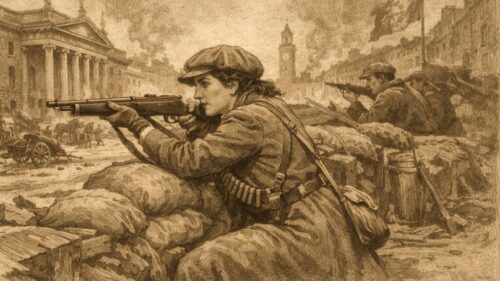
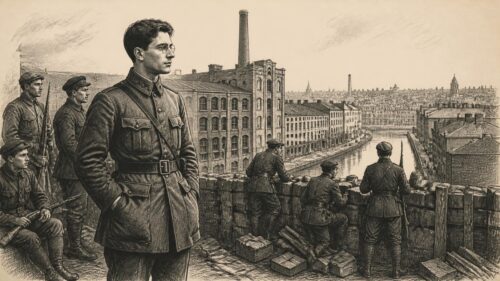
During the 1913 lock-out in Dublin, she helped feed the workers. She subsequently joined the Irish Citizen Army and took part in the Easter Rising in 1916. She was sentenced to death for her part in the rebellion, but this was commuted on account of her sex. In 1918 she became the first woman to be elected to the British parliament, winning a seat for Sinn Féin in Dublin. She was a member of the First Dáil formed in 1919.
Public Image
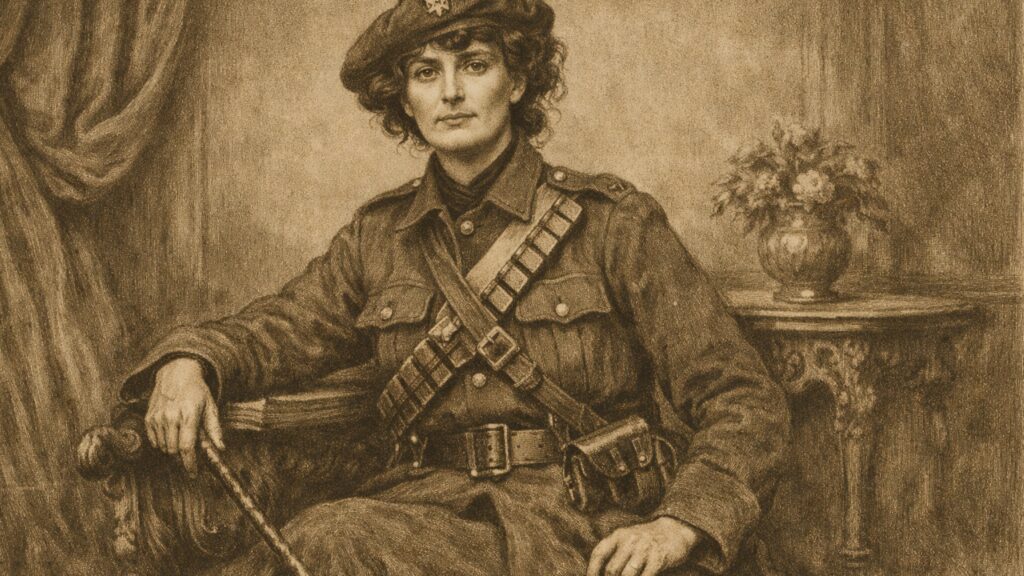
A trained artist, Markievicz recognised the potential of portraiture for political expression and propaganda. She used portrait photography to shape her public identity, and she was the subject of numerous portraits throughout her life. Some relate to the privileged lifestyle she enjoyed as a member of the aristocracy, while later portrayals presented her as a feminist republican. Dressed in the uniform of the Irish Citizen Army, she used a militarised image in support of her politics.
Later Years
She opposed the Anglo-Irish Treaty of 1921 and was a founder member of Fianna Fáil in 1926. She also helped establish Na Fianna Éireann in Dublin in 1909 with Bulmer Hobson, and the youth group was described as an Irish nationalist antidote to British uniformed youth groups operating in Ireland. The National Gallery of Ireland has described her as a leading figure of the Irish revolutionary period, with a prominent role in the struggle for women’s suffrage and the fight for Irish independence.
Source References
Hover over a number to see the source. Select it to open the source.
- [1] Markievicz: Portraits and Propaganda | National Gallery of Ireland
- [2] The Artist's Wife, Constance, Comtesse de Markievicz (1868-1927), Irish Painter and Revolutionary | National Gallery of Ireland
- [3] Constance Markievicz, Women, Ideals and the Nation | Cambridge Core
- [4] The countess and the Quaker | Cambridge Core
Primary Sources
- Markievicz: Portraits and Propaganda | National Gallery of Ireland
- The Artist's Wife, Constance, Comtesse de Markievicz (1868-1927), Irish Painter and Revolutionary | National Gallery of Ireland
- Constance Markievicz, Women, Ideals and the Nation | Cambridge Core
- The countess and the Quaker | Cambridge Core