Irish Iron Age291 CE
The museum material presents the Irish Iron Age as a long development with ironworking traceable back to the 8th century BCE and a clearly identifiable Iron Age society appearing around the 3rd century BCE, continuing into the first centuries CE in its decorative traditions. It emphasizes La Tène ornament with curvilinear forms, spirals, and animal or vegetal motifs, and describes deposited objects found in bogs, lakes, rivers, and coasts as including personal ornaments, weapons, tools, horse gear, feasting equipment, and organic remains such as butter, leather, and cloth.
Dateline
Chronology Context
The museum material presents the Irish Iron Age as a long development rather than a sudden break. It says that ironworking in Ireland can be traced by radiocarbon-dated evidence back to the 8th century BCE, and that a clearly identifiable Iron Age society appears around the 3rd century BCE. It also describes the period as extending into the first centuries CE in its decorative traditions. [1] [2]
Decorative Style
A defining feature in the descriptions is the use of ornament, especially the La Tène style. The museum notes curvilinear forms, spirals, and animal or vegetal motifs, and links these traits to objects such as imported gold torcs and decorated bronze pieces. This material is presented as characteristic of Irish Iron Age art rather than as a record of a single event. [1] [2]
Deposited Objects
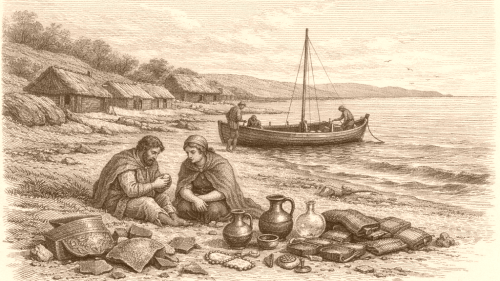
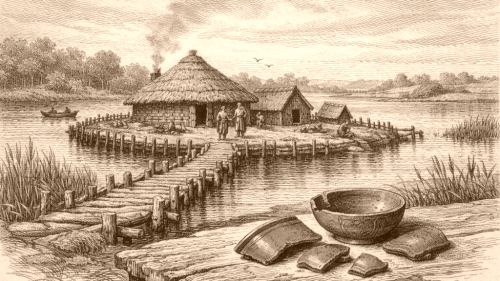
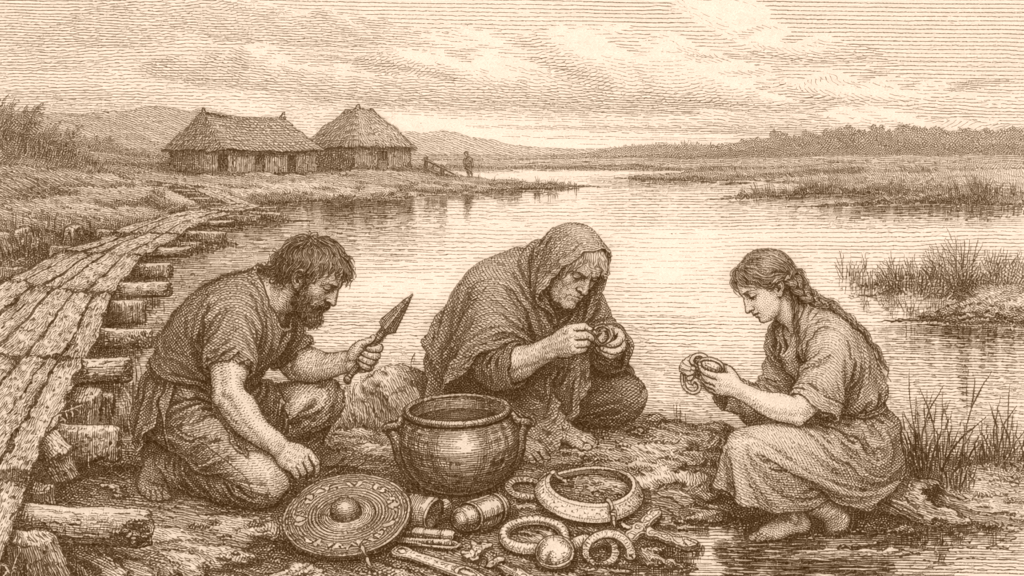
The same descriptions emphasize objects found in wet places and as hoards. They mention bogs, lakes, rivers, and coasts as places where deposited material is found, and note that such objects are usually not discovered in settlement or burial contexts. The material listed includes personal ornaments, weapons, tools, horse gear, feasting equipment, and organic remains such as butter, leather, and cloth. [1] [3]
Source References
Hover over a number to see the source. Select it to open the source.