Creamery Rivalry
Limerick Archives — Monday, 1 January 1900
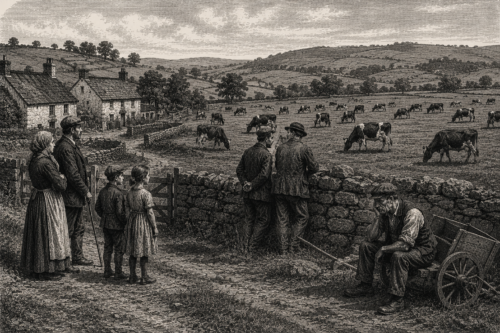
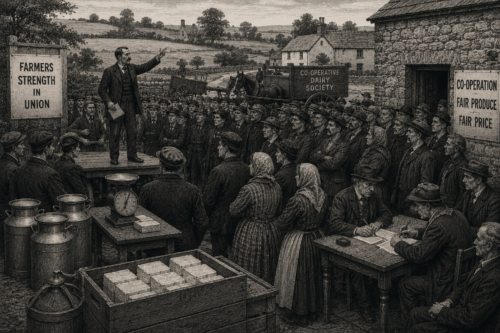
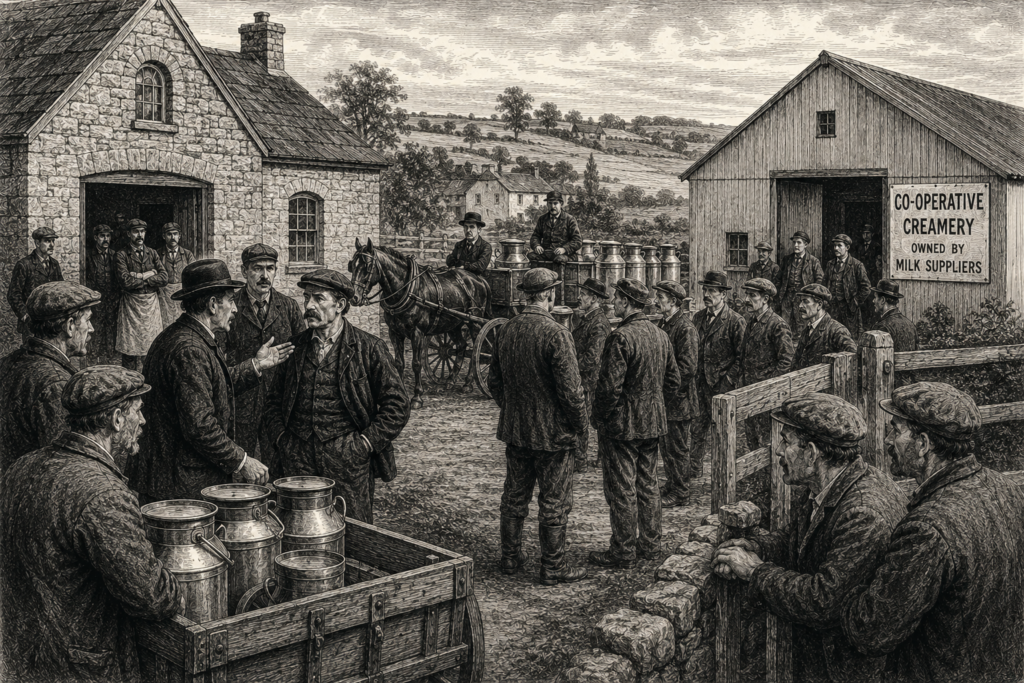
LIMERICK, Monday — Local disputes are arising between co-operative creameries owned by milk suppliers and privately operated concerns seeking to retain control of established dairying districts. The rivalry is especially significant in County Limerick, where cattle, milk and butter provide income for farmers, labourers, carriers and merchants. Co-operative organisers argue that producers should collectively own the machinery through which their milk is processed and marketed. Private proprietors answer that independently managed businesses can offer efficient service without requiring farmers to invest capital, accept committee authority or assume responsibility for commercial losses.
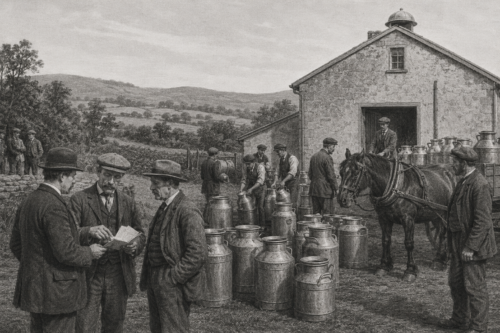
Competition centres upon the daily supply of milk. No creamery can operate successfully without obtaining sufficient quantities from neighbouring farms, and rival establishments may offer different prices, collection arrangements or credit terms to attract suppliers. A private proprietor may raise payments when a co-operative society opens nearby, while co-operators warn that such inducements may disappear once their organisation has been weakened. Farmers must decide whether immediate returns outweigh the longer-term advantages claimed for collective ownership. Their decisions can divide families and neighbours whose milk travels along the same roads but reaches competing churns.
The Irish Agricultural Organisation Society assists communities wishing to establish farmer-owned creameries, providing advice on rules, shareholding, accounts and management. Its supporters regard each new society as an attempt to return commercial power to those producing the milk. Private firms and established butter interests may regard that intervention as an organised attack upon legitimate enterprise. County Limerick has already played an important part in the development of co-operative dairying, although individual establishments have not always remained under co-operative ownership. The movement’s progress has therefore involved reversals, conversions and continued competition rather than an uninterrupted advance.
Disputes may extend beyond prices into access to machinery, transport routes, skilled managers and markets for finished butter. A creamery losing suppliers can quickly become uneconomic, while farmers who have purchased shares may fear that desertion by neighbours will leave them responsible for debt. Private businesses also possess capital and trading connections that newly formed societies may lack. Co-operative committees must demonstrate that democratic control can coexist with discipline, technical competence and prompt payment. Poor accounts or inferior butter can damage the movement as seriously as external opposition, giving private competitors evidence that collective ownership is impractical.
For rural Limerick, these struggles concern more than rivalry between neighbouring buildings. They determine who controls the value created from milk, who bears commercial risk and how much authority farmers exercise over the sale of their produce. A successful co-operative may retain profits locally and teach members to manage shared business affairs. A successful private concern may offer dependable employment and purchasing without requiring collective investment. The continuing disputes reveal a countryside testing two competing forms of enterprise, with milk suppliers deciding whether their future lies principally with proprietor-led commerce or with organisations owned and governed by farmers themselves.
- Irish Agricultural Organisation Society, Annual Report for 1900, Dublin: Irish Agricultural Organisation Society. Consult the creamery statistics, affiliated-society lists and organisers’ reports. Exact page and table should be confirmed before formal citation.
- Irish Homestead, 1900, contemporary reports and editorial commentary concerning co-operative creameries, private competition, milk supplies and butter marketing. Exact issue, page and column should be confirmed before formal citation.
- Horace Plunkett, Ireland in the New Century, London: John Murray, 1904. Consult the chapters concerning agricultural co-operation, creamery organisation and resistance from established commercial interests.
- Department of Agriculture and Technical Instruction for Ireland, Agricultural Statistics of Ireland with Detailed Report for the Year 1900, Dublin: His Majesty’s Stationery Office, 1901. Exact livestock, dairying and butter-production tables should be confirmed before formal citation.
- Limerick Chronicle, 1900, reports concerning creamery ownership, milk prices, butter markets and agricultural organisation in County Limerick. Exact issue, page and column should be confirmed before formal citation.