
Creamery Contest(c.1890s)
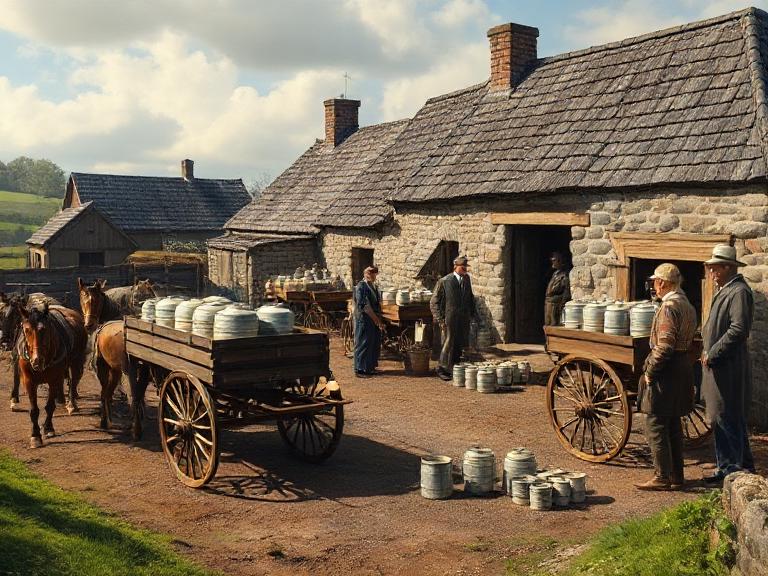
Agricultural co-operation is challenging the private commercial control long exercised over Irish butter production and marketing. Farmer-owned creameries allow milk suppliers to combine their resources, process milk by machinery and sell butter through organisations answerable to their members. The movement carries particular importance in County Limerick, where dairying supports farmers, labourers, carriers, merchants and rural households. Supporters argue that producers should receive a greater share of the value created from their milk instead of remaining dependent upon private creamery proprietors, butter buyers and commercial intermediaries whose interests may not coincide with those of farming communities.
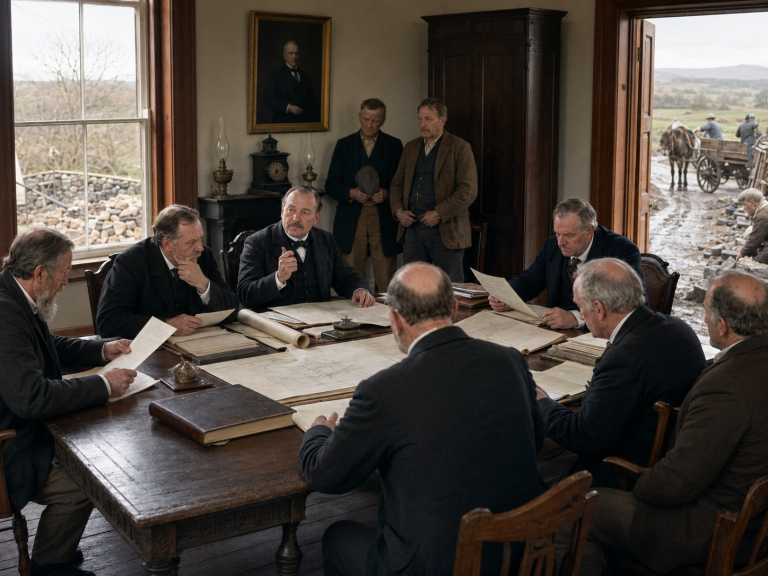
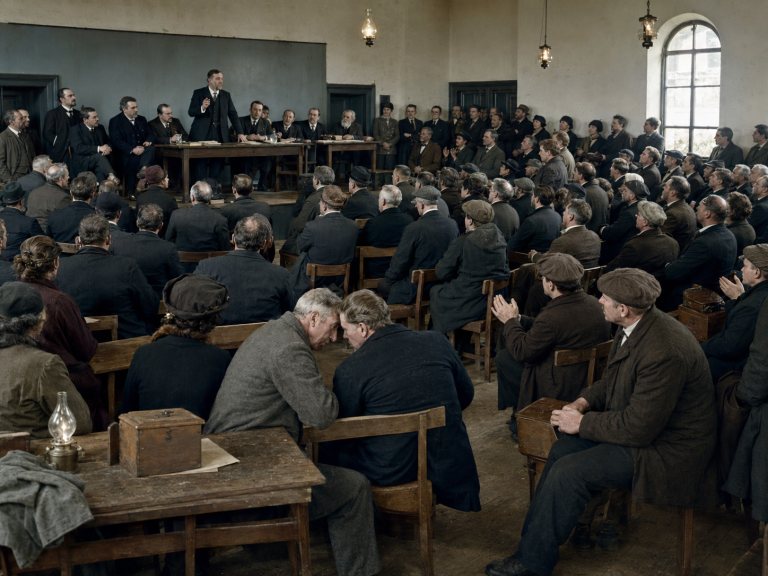
Under the co-operative system, local farmers purchase shares, elect a committee and undertake to supply milk to a central creamery. Mechanical separation and organised churning can produce butter of more consistent quality than scattered household production, while collective marketing may strengthen the farmers’ position when negotiating prices. Surpluses remain within the society rather than passing entirely to an outside owner. Success nevertheless demands competent management, accurate accounts and loyalty from suppliers. A society can be weakened when members divide their milk between competing establishments or accept temporary inducements offered by private firms seeking to preserve control of a district.
The Irish Agricultural Organisation Society, founded in 1894, has encouraged the formation of creameries and other farmer-owned enterprises under the influence of Horace Plunkett and his fellow organisers. Travelling representatives convene meetings, explain the principles of shared ownership and assist communities in drawing up rules. Limerick has become closely connected with this work through early societies formed in its dairying districts. Co-operation is presented not merely as a new method of manufacturing butter but as a means by which farmers may learn collective business management, scrutinise expenditure and exercise greater authority over the route their produce takes to market.
Private proprietors and established butter interests have not surrendered their position without resistance. Rival creameries may compete aggressively for milk, raise payments in districts where a co-operative society appears and reduce them when that threat has passed. Merchants accustomed to controlling purchase and resale may regard farmer-owned marketing as an intrusion into legitimate commerce. Co-operators answer that individual suppliers possess little bargaining power when dealing separately with larger concerns. The dispute therefore concerns not only machinery or butter quality but the ownership of rural enterprise, the distribution of profits and the authority to determine how agricultural produce is sold.
For County Limerick, the outcome may shape the economic life of entire communities. A successful co-operative creamery can create employment, encourage improved cattle breeding, support transport services and provide a regular gathering place for farmers. It can also retain locally a portion of the income formerly absorbed by private intermediaries. Failure, however, may leave members burdened by debt and restore control to commercial competitors. Agricultural co-operation has consequently become both a practical business experiment and a challenge to inherited trading relationships, asking whether those who supply the milk can also own the machinery, supervise production and share the proceeds of the butter market.
Primary Sources
- Irish Agricultural Organisation Society, Annual Report for 1900, Dublin: Irish Agricultural Organisation Society. Consult the creamery statistics, affiliated-society lists and reports of organising activity. Exact page and table should be confirmed before formal citation.
- Irish Homestead, 1900, contemporary reports and editorial commentary concerning co-operative creameries, private competition, butter production and agricultural organisation. Exact issue, page and column should be confirmed before formal citation.
- Horace Plunkett, Ireland in the New Century, London: John Murray, 1904. Consult the chapters describing the origins, commercial purpose and difficulties of agricultural co-operation.
- Department of Agriculture and Technical Instruction for Ireland, Agricultural Statistics of Ireland with Detailed Report for the Year 1900, Dublin: His Majesty’s Stationery Office, 1901. Exact dairy, livestock and butter-production tables should be confirmed before formal citation.
- Limerick Chronicle, 1900, reports concerning creameries, butter markets, milk prices and agricultural organisation in County Limerick. Exact issue, page and column should be confirmed before formal citation.