Now Sharing: Articles: 212 Images: 667 Total Items Archived: 879

Article Archives

Article Archives

212 articles found

Rural Unrest

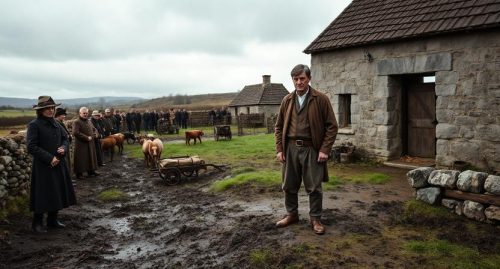
Agrarian agitation has become especially influential across Connacht and parts of Munster, where tenant farmers, smallholders and agricultural labourers continue to demand a fairer distribution of Irish land. County Limerick has not escaped the dispute. Rural families living on cramped or uneconomic holdings have watched substantial grazing farms occupy fertile ground while labourers struggle to secure cottages, gardens and dependable employment. Meetings connected with the United Irish League have provided an organised outlet for grievances concerning rents, evicted tenants, disputed farms and the slow progress of land purchase under legislation already introduced by Westminster.
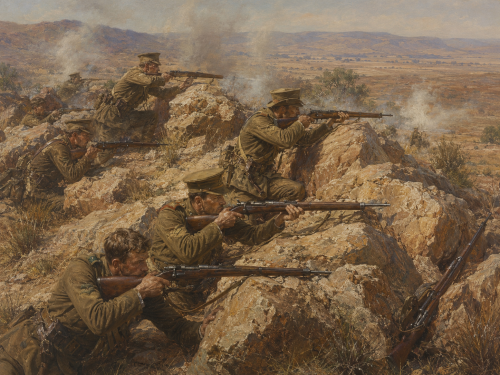

Boers Defended

Nationalists throughout Limerick are following a forceful parliamentary protest against Britain’s continuing war in South Africa, where Irish representatives have declared their sympathy for the Boer republics. John Redmond told the House of Commons today that Ireland opposed the conflict and regarded the Transvaal and Orange Free State as small nations defending their independence against imperial power. The declaration carries particular weight in Limerick, where nationalist feeling exists beside the reality that local men serve in British uniform. Families may therefore condemn the Government’s policy while remaining deeply concerned for Irish soldiers facing death and injury overseas.

Painter Born

Maurice Joseph MacGonigal was born in Ranelagh, Dublin, on 22 January 1900, the only son and third child of Francis MacGonigal and Caroline Lane. His father was a painter and decorator from County Sligo, while his mother belonged to a family already connected with Irish craftsmanship and art. Growing up within that environment exposed him to colour, design and skilled manual work long before he entered formal training. The child born in suburban Dublin would eventually become an influential painter, teacher and administrator whose landscapes, portraits and scenes of Irish life secured him a prominent place in twentieth-century Irish art.

Legal Resistance

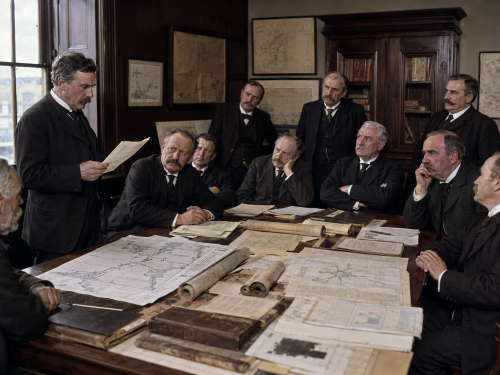
Limerick Harbour Commissioners instructed the Dublin solicitor George Fottrell to organise formal opposition to renewed proposals for railway amalgamation. The decision, reported on 2 January 1900, also authorised him to retain an experienced King’s Counsel to represent the harbour authority during the expected parliamentary struggle. Commissioners had resisted a similar scheme during the previous year and regarded its revival as a direct threat to the commercial independence of Limerick. By securing legal expertise at an early stage, they ensured that the port’s objections would be supported by evidence, parliamentary procedure and professional advocacy rather than confined to local resolutions.

Clontarf Bill

On 9 February 1900, legislation promoted by the Clontarf Urban District Council was formally considered in Parliament. The Clontarf Urban District Council Bill sought to empower the council to improve local infrastructure and public health measures in the rapidly growing suburb north of Dublin. Provisions included the authority to upgrade water supply, extend drainage and sewerage systems, improve roadways, and regulate new building developments.

Museum Art

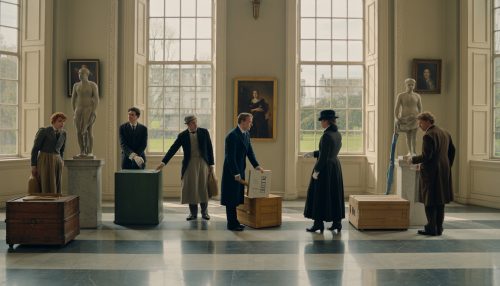
On 5 February 1900, the removal of works of art from the Dublin Museum became the subject of pointed questioning in the British Parliament, a matter that stirred debate among Ireland’s cultural and academic communities. News of the controversy was widely reported in Dublin and beyond, including in Limerick, where interest in the preservation of the nation’s heritage was strong among local antiquarians, educators, and civic leaders.

Disease Emergency

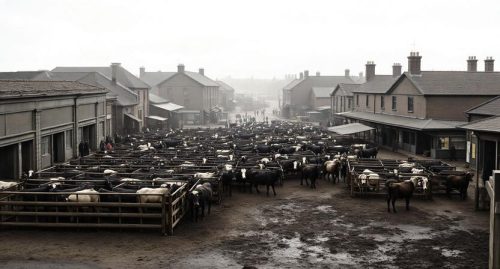
On 6 February 1900, restrictions on importing cattle into Ireland due to the foot-and-mouth disease emergency became a pressing topic in Parliament, with particular resonance in Limerick—a city deeply linked to Ireland’s agricultural trade. Limerick’s livestock markets and meat-processing industries depended heavily on the steady movement of cattle, and any limitations threatened both local economies and the livelihoods of farmers throughout the region. The city’s newspapers and agricultural societies keenly tracked government announcements, voicing concern about the impact of prolonged restrictions on trade, prices, and food supply.

Land Grabbers

The hostile term “land grabber” continues to be directed against tenants who enter farms from which earlier occupiers have been evicted or otherwise displaced. Across rural Ireland, such men may possess legal agreements with landlords, yet neighbours frequently regard their occupation as a betrayal of the former tenant and the wider land campaign. The description carries consequences extending beyond political criticism. Those branded with it may face public condemnation, social isolation and organised pressure intended to make the disputed holding difficult to retain. In County Limerick, the label remains inseparable from memories of eviction, rent conflict and agrarian resistance.

Fisheries Alarm

The Limerick Fishery Conservators intensified their opposition to the Shannon Water and Electric Power Bill when the Board of Public Works failed to provide the clear assurance they sought. At the board’s monthly meeting, Secretary Mr Hosford read a reply stating that the Commissioners would take whatever steps were necessary to protect their responsibilities for Shannon navigation, drainage, revenue and property. Members considered the answer carefully worded but inadequate. It did not state whether the Board would oppose the proposed lowering of Lough Derg or whether the fisheries would receive protection independent of the navigation interests under its direct control.

Harvest Journeys

Seasonal migration remains essential to many small farming and labouring households across western Ireland and the poorer districts of Munster. Each year, men and women leave holdings incapable of supporting a family and travel towards districts offering temporary employment during sowing, haymaking or harvest. Others cross the Irish Sea to work on farms in Britain before returning home with wages needed to pay rent, settle shop debts, purchase seed and maintain relatives through the winter. What appears to be an individual search for work has become an established part of rural survival.