Now Sharing: Articles: 212 Images: 667 Total Items Archived: 879

Article Archives

Article Archives

212 articles found

Estates United

The landed inheritance that later sustained the Pery family’s influence in Limerick was assembled through a succession of marriages connecting the Sexten, Pery, Stacpole, Twigg and Wray families. Susannah Sexten, who died in 1671, was the only daughter of Edmond Sexten and eventually inherited the property of his grandson, another Edmond. Her marriage to Edmond Pery of Croom brought the Sexten estates into the Pery family. Those lands included former religious property in and around Limerick, giving their descendants wealth, rents and a territorial position that would profoundly influence the city’s later development.
Boer Rallies

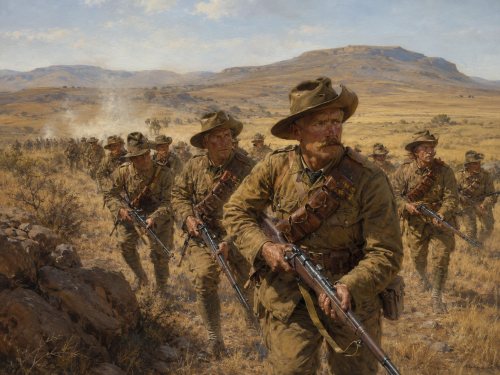
Public support for the Boer republics has taken a prominent civic form in Limerick as the Corporation moves to confer the freedom of the city upon Paul Kruger, former president of the South African Republic. The decision reflects a wider succession of meetings, resolutions and demonstrations held in Irish towns against Britain’s war in South Africa. Nationalist audiences have repeatedly identified the Boers as a small people defending their independence against imperial conquest. In Limerick, the argument carries particular force, although many local families remain deeply concerned for Irish soldiers serving with British regiments overseas.

Grazing Challenged

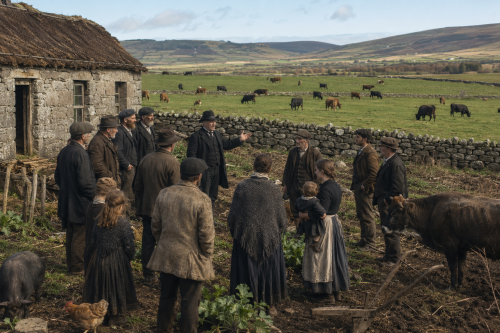
The United Irish League is expanding its campaign against large grazing farms and the concentration of extensive tracts of land in comparatively few hands. Founded by William O’Brien in County Mayo, the League argues that great stretches of grassland should not remain devoted principally to cattle while small farmers struggle upon holdings too limited to support their families. Its programme seeks the division of untenanted land among smallholders, landless families and tenants requiring larger farms. In County Limerick, where agricultural security continues to shape employment, inheritance and emigration, the campaign is likely to command close attention.

Kincora Committees

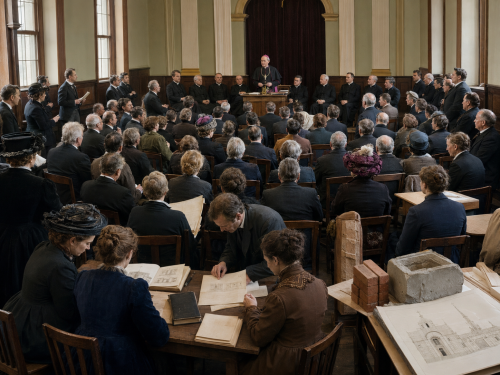
A large public meeting assembled in the Lecture Hall of Limerick’s Catholic Institute to organise a fête and fancy fair for the new church of St Joseph then rising within St Michael’s Parish. The gathering, reported on 4 January 1900, was promoted by the parish clergy and presided over by Bishop Edward Thomas O’Dwyer. Clergy, women and men attended in considerable numbers, demonstrating broad interest in completing the additional parochial church. The meeting agreed that the fundraising celebration would take place in June and established committees to undertake the detailed work required before the event could open.

Party Reunited

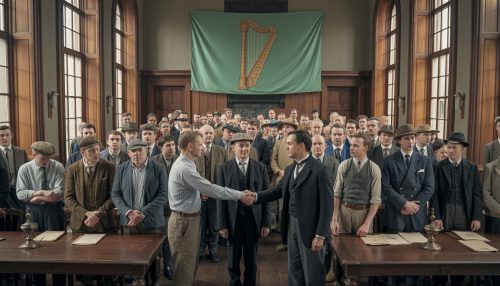
News of the reunion of the Irish Parliamentary Party has been received with keen interest throughout the city and county, where nationalist divisions have long influenced public meetings, elections and local loyalties. Parnellites and anti-Parnellites have now agreed to end nearly ten years of hostility and restore a single parliamentary organisation. Supporters of Home Rule in Limerick believe the settlement may strengthen Ireland’s voice at Westminster and reduce the bitterness that has weakened nationalist politics since Charles Stewart Parnell’s fall. Local organisers are already discussing what the reunion may mean for future contests, land reform and national representation.

Peace Preservation Act Questioned

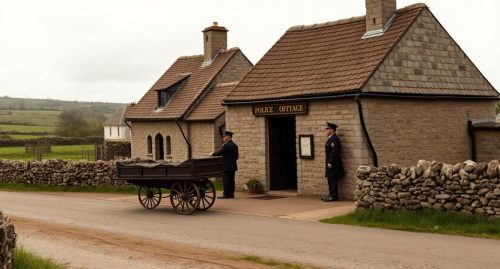
On 12 February 1900, the application of the Peace Preservation Act in County Monaghan was rigorously questioned in Parliament, drawing attention to the ongoing use of emergency powers in rural Ireland. Irish MPs challenged the necessity and fairness of the Act, which allowed authorities to impose restrictions, conduct searches, and increase police presence in areas deemed “disturbed.” They argued that such measures undermined civil liberties, stoked resentment, and failed to address the underlying causes of unrest.

Excursion Riot

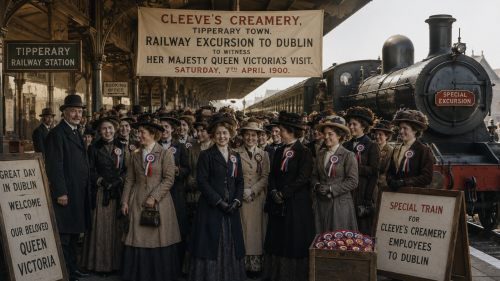
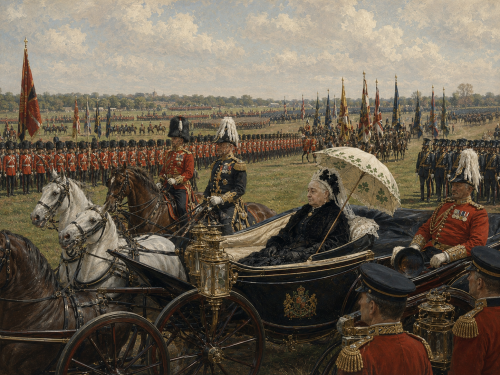
A railway excursion organised by Cleeve’s Creamery in Tipperary town drew the Limerick-based company into public controversy on Saturday, 7 April 1900. The creamery, then the town’s largest employer, arranged a special train to Dublin for its mainly female workforce during Queen Victoria’s final visit to Ireland. Each employee received a rosette in red, white and blue, and the journey was intended as a visible demonstration of loyalty as the royal procession passed through the capital. Because Cleeve’s had its headquarters and industrial identity in Limerick, the episode immediately touched the reputation of one of the city’s most prominent commercial enterprises.

Shannon Retreat

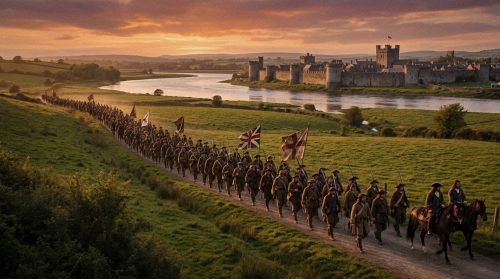
Limerick became one of the principal centres of Jacobite resistance after William III’s victory at the Boyne on 1 July 1690 forced the Irish army to abandon the eastern approaches to Dublin. James II departed for France, but most of his surviving soldiers remained under arms and withdrew westwards towards the River Shannon. Some gathered around Athlone, which guarded an important crossing into Connacht, while the larger concentration developed around Limerick. The city’s walls, river position and access to the western counties offered the Jacobites a defensible base from which the war might continue despite the loss of Dublin.

Shannon Defence

On 2 January 1900, the Limerick Fishery Conservators unanimously opposed the scheme promoted by the Shannon Water and Electric Power Company. Meeting under Lord Massy’s chairmanship, the members viewed the proposed parliamentary bill as a direct threat to interests dependent upon the river. Their objections extended beyond salmon fishing to navigation, milling and the public water supply of Limerick. The Conservators feared that private promoters seeking to harness the Shannon for electricity might secure broad powers before the consequences for existing river users had been fully investigated or adequately protected.

Nationalist Resistance

Nationalist-controlled authorities and public representatives in several districts have resisted demands that they participate fully in the loyal ceremonies surrounding Queen Victoria’s visit to Ireland. Motions, public meetings and newspaper statements have challenged the claim that municipal addresses and official receptions represent the settled opinion of the Irish people. Some nationalist councillors refused to associate themselves with declarations of allegiance, while others attended civic proceedings only after arguing that formal courtesy towards the monarch did not amount to approval of British government. The disputes have reached Limerick, where public bodies must balance local political convictions against established ceremonial expectations.