Now Sharing: Articles: 212 Images: 666 Total Items Archived: 878

Article Archives

Article Archives

212 articles found

Wyndham Appointed

George Wyndham has been appointed Chief Secretary for Ireland in succession to Gerald Balfour, placing a younger Conservative minister in charge of Irish administration at a moment of renewed nationalist organisation and growing agitation over the land. His appointment will be watched closely throughout Limerick city and county, where tenant ownership, congested holdings, rural poverty and the position of evicted families remain pressing political concerns. Wyndham enters office after the reunited Irish Parliamentary Party secured seventy-seven seats at the general election, although Lord Salisbury’s government remains firmly opposed to Home Rule and possesses a substantial Westminster majority.
Branches Demand

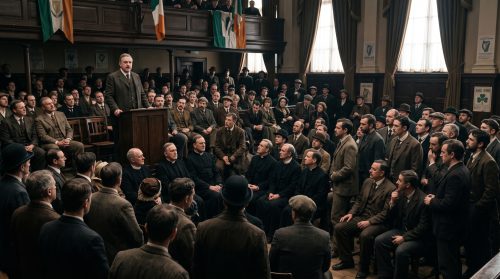
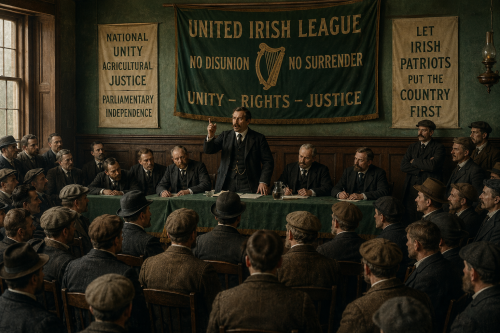
United Irish League branches pressed nationalist MPs to place national unity above personal disagreement as the organisation expanded during 1899. Founded at Westport in January 1898, the League combined agrarian agitation with a campaign to reconstruct the divided parliamentary movement. Local meetings and resolutions allowed tenant farmers, organisers and constituency workers to express impatience with leaders whose rivalries had weakened Irish representation since the fall of Charles Stewart Parnell. Branches possessed no constitutional power to command MPs, but their subscriptions, electoral labour and influence over candidate selection gave their appeals a force that Westminster politicians could not safely dismiss.

Poor Expenditure

On 8 February 1900, the rising cost of maintaining Ireland’s Poor Law system was formally examined in Parliament, a subject that resonated deeply in Limerick, where the workhouse and outdoor relief funds were constant topics of local concern. Limerick’s ratepayers, guardians, and charitable groups had long struggled with the demands of supporting the city’s vulnerable population, and the prospect of further increases in Poor Law expenditure prompted widespread debate.

Student Honoured

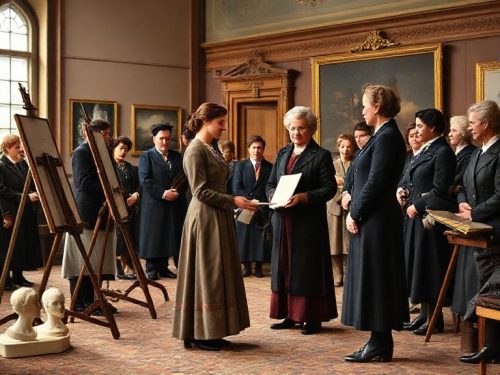
Dublin art student Eileen Elizabeth Janet Barnes received a prize on 10 January, presented by Countess Beatrix Cadogan, wife of the lord lieutenant of Ireland. The award recognised Barnes’s developing artistic ability during her studies at the Dublin Metropolitan School of Art, one of the country’s principal centres for formal instruction in drawing, painting, design and applied art. Such ceremonies linked student achievement with the highest levels of the administration at Dublin Castle, while providing young artists with public recognition. For Barnes, the presentation marked an early distinction in a career later devoted to exceptionally detailed scientific and botanical illustration.

Unity Fractures

The completion of the general election has shown that the reunion of Irish parliamentary nationalism remains incomplete. Although John Redmond’s Irish Parliamentary Party has secured the overwhelming majority of nationalist seats, six supporters of Timothy Michael Healy have been returned outside the disciplined party organisation. The result will attract close attention among nationalists in Limerick city and county, where unity has been presented as essential to advancing Home Rule and land reform. Healy’s surviving parliamentary following demonstrates that the personal, clerical and local rivalries created during the bitter divisions of the 1890s have not been entirely overcome.

Postal Deficiencies

On 6 February 1900, concerns about deficiencies in the postal service operating in Galway resonated strongly in Limerick, where efficient communication with the west was vital for business, family connections, and civic affairs. Limerick merchants, professionals, and residents often relied on timely postal links to Galway for correspondence, trade, and news, so reports of delays and service lapses quickly became a matter of local interest and frustration.

Government Amendment

On 2 February 1900, the introduction of a bill to amend the Local Government (Ireland) Act 1898 was formally announced in the British Parliament, an event that sparked immediate interest among Limerick’s councillors, administrators, and politically engaged citizens. The original Act had brought sweeping changes to local governance, replacing grand juries with elected county and district councils, and its provisions continued to shape civic life across Limerick city and county. News of the amendment bill was reported in local newspapers and discussed at council meetings, as officials anticipated further adjustments to the structure and operation of Irish local government.

Fatal Confusion

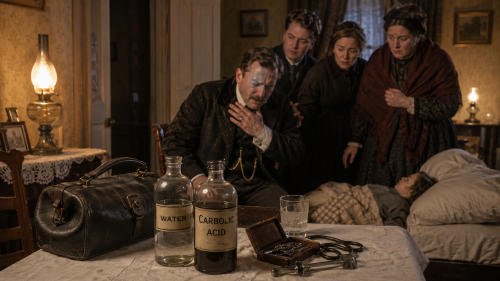
Cappamore and the surrounding district lost a medical practitioner in early February 1900 when Dr Charles Philip Tennant died after accidentally swallowing carbolic acid during an evening visit to a family at Rath. Tennant served patients across the Cappamore and Murroe area, where a country doctor might travel considerable distances to reach sick people in their homes. The surviving reports describe no deliberate act and no dispute over the cause. An ordinary medical call ended in tragedy because two liquids carried to the house were confused, turning a customary gesture of hospitality into a fatal emergency.

Nationalist Defiance

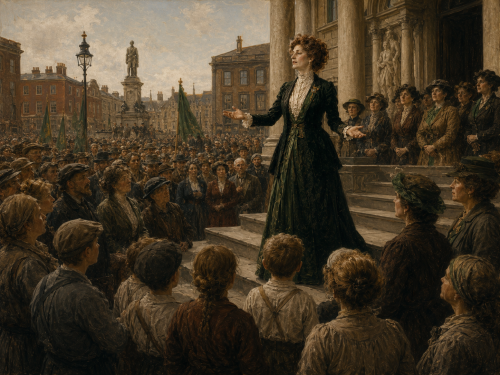
Maud Gonne and other advanced nationalists have organised determined opposition to Queen Victoria’s visit, rejecting official claims that the royal ceremonies represent the will of the Irish people. Gonne’s article “The Famine Queen,” published immediately before the monarch’s arrival, condemns the visit as an imperial and military demonstration conducted during the South African War. Her supporters have challenged loyal addresses, public decorations and attempts to present cheering crowds as evidence of national contentment. In Limerick, where nationalist opinion is strong, the campaign will attract attention among readers who regard Home Rule as insufficient and seek complete Irish independence.

Terminus Tragedy

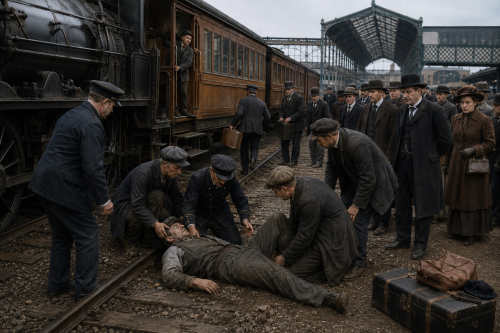
A serious accident at Limerick railway terminus left labourer James Davoren requiring the amputation of his right leg. The Irish Times reported on 2 January 1900 that Davoren had gone to the station to see his brother, described as a solicitor, depart by train for Fermoy. During the farewell, he fell from the platform onto the permanent way and was caught beneath the passing train. Railway staff and bystanders found him lying on the rails after the carriages had cleared. He was removed without delay to Barrington’s Hospital, where surgeons determined that the injured limb could not be saved.