
Castlepook Reindeer Cut Mark
About 31,984 BCE, Ireland lay within the Late Pleistocene, as cold, open steppe-tundra environments developed before the Last Glacial Maximum. Ice expansion was uneven, and access from Britain or Europe remains uncertain despite lower sea levels. Castlepook Cave, County Cork, preserves a diverse Marine Isotope Stage 3 fauna, including reindeer, mammoth, giant deer, hyena and Arctic species. A reindeer femur, dated roughly 33,000 years ago, bears a possible stone-tool butchery mark and may represent Ireland’s earliest human trace. However, its disturbed cave context, lacking tools or camps, cannot prove settlement. Advancing ice erased evidence, leaving only a tentative Palaeolithic visitation.
View Record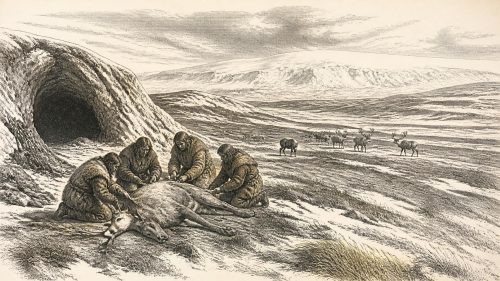
Butchery Marks at Castlepook
Around 31,985 BCE, Ireland lay within the unstable, cold conditions of Marine Isotope Stage 3, with changing ice, sea levels and possible routes from Britain. Glaciation and later inundation destroyed much evidence. Castlepook Cave, County Cork, yielded a reindeer femur reportedly marked by stone-tool butchery, perhaps dating to about 33,000 years ago. If human-made, it indicates a brief Upper Palaeolithic visit, not permanent settlement. Cave fauna, including reindeer, mammoth and predators, reflects cold open habitats but spans different periods. No associated tools, dwellings, art or burials are securely known. Later ice erased traces; human evidence appears near the Pleistocene’s end.
View Record
Castlepook’s Mammoth Fauna
Circa 31,986 BCE, Ireland was undergoing environmental transition during Marine Isotope Stage 3, before the Last Glacial Maximum. Evidence from Fermanagh sediments and Kerry speleothems indicates that some regions remained ice-free, though climate, coastlines and access routes changed rapidly. Castlepook Cave in County Cork preserves a diverse cold-stage fauna, including mammoth, reindeer, giant deer, carnivores and Arctic mammals, but its deposits represent long-term ecological change rather than a single date. No secure evidence demonstrates permanent human settlement or polity at this time. Expanding British-Irish ice reshaped landscapes, deposits and habitats, determining conditions faced by later post-glacial colonists in subsequent millennia.
View Record
Castlepook’s Cut-Marked Femur
Around 31,987 BCE, Ireland lay in the later Marine Isotope Stage 3, before the Last Glacial Maximum, amid cold, dry and unstable conditions. Open vegetation, periglacial terrain and expanding ice shaped habitats and preservation. Castlepook Cave, County Cork, preserves Pleistocene fauna, including mammoth, reindeer, giant deer, predators and cold-adapted animals, though deposits may mix different periods. Human occupation remains unproven: a reportedly cut-marked reindeer femur, dated about 33,000 years ago, may indicate brief butchery, not settlement. Later glaciation destroyed or buried evidence. Ireland’s deep history is therefore reconstructed cautiously through caves, bones, dating and glacial geology, without communities or events.
View Record
Castlepook Reindeer Evidence
Around 34,000 years before 1950, conventionally rendered as 31,988 BCE, Ireland occupied a cold, open and environmentally variable Ice Age setting before the Last Glacial Maximum. Ice extent, vegetation, coastlines and routes from Britain remain uncertain. Castlepook Cave in County Cork preserves important, though poorly excavated and potentially disturbed, faunal remains, including reindeer, mammoth, giant deer, bear, wolves, hyaenas and lemmings. A dated reindeer femur bears a possible stone-tool butchery mark, suggesting early human visitation. However, no associated tools, hearths or settlements confirm occupation. Later glaciation and rising seas obscured evidence; Ireland's Palaeolithic human record remains unresolved and highly tentative.
View Record
Derryvree’s Tundra Archive
About 31,989 BCE, Ireland lay within Marine Isotope Stage 3, a cold Late Pleistocene interval preceding the last ice sheet’s greatest expansion. Evidence from Fermanagh, notably Derryvree freshwater sediments, indicates locally ice-free, open, treeless tundra or wet muskeg, with sedges, grasses, mosses and pools. Glacial landforms and offshore records show an ice mass developing unevenly, not uniform island-wide cover. Fossils suggest intermittent presence of large mammals, including mammoth and reindeer, but cannot establish contemporaneous communities. Lower sea levels altered coasts and access. No credible evidence demonstrates human occupation. Environmental phase helped create landscapes and conditions encountered by Ireland’s Mesolithic settlers.
View Record
Castlepook’s Pleistocene Fauna
31,990 BCE is an imprecise modern label for Ireland during Marine Isotope Stage 3, as no annual chronology or written evidence exists. Approaching the Last Glacial Maximum, Ireland experienced worsening, variable cold conditions, altered coastlines and uncertain land connections. Castlepook Cave in County Cork preserves Ireland’s richest pre-glacial vertebrate assemblage, including mammoth, giant deer, reindeer, bear and hyaena, accumulated across millennia. A possibly butchered reindeer bone may indicate a human visit around 33,000 years ago, but remains unconfirmed. No secure settlement or occupation is known. Glaciation and sea-level change destroyed evidence; firm colonisation occurred much later, during the Mesolithic period.
View Record
Atlantic Ice Sheet Growth
At about 31,991 BCE, Ireland lay within the climatically unstable later Marine Isotope Stage 3, before the Last Glacial Maximum. Growing ice, lower sea levels and changing coastlines transformed habitats and possible access routes, though any land connection with Britain remains uncertain. Castlepook Cave in County Cork preserves key evidence: reindeer, mammoth, giant deer, lemmings, predators and other fauna indicate varied cold open environments. A cut-marked reindeer bone suggests possible Upper Palaeolithic human activity, but cannot prove settlement or continuous occupation. Later glaciation destroyed evidence. Consequently, this period is understood through imprecise dating, cave deposits and reconstruction, not year-specific history.
View Record
Castlepook Reindeer Butchery
About 31,992 BCE, Ireland was entering a severe glacial phase during the later Upper Palaeolithic, although ice extent varied regionally and chronology remains uncertain. Castlepook Cave in north County Cork provides a possible early human trace: a reindeer femur, dated to roughly 33,000 years ago, bears probable stone-tool butchery marks. If confirmed, it indicates brief human presence, not permanent settlement or continuous occupation. Animal remains suggest a cold, open, changing landscape supporting reindeer and other Pleistocene fauna, but deposits span long periods. Later ice, erosion, submerged coastlines and antiquarian excavation have left an exceptionally sparse record, requiring cautious interpretation overall.
View Record
Ireland Before Settlement
Around 31,993 BCE, Ireland was a cold, unstable landscape during the later Last Glacial Period, not a documented human society. Calendar-year precision is impossible: radiocarbon and geological evidence provide only broad, uncertain ranges. Fermanagh deposits indicate open tundra, severe seasons and sparse vegetation, while changing ice and lower seas altered terrain and coastlines. Castlepook Cave preserves diverse Late Pleistocene fauna, including mammoth, giant deer, reindeer, predators and smaller mammals, demonstrating connections with north-west Europe, though not their presence in one year. No securely dated Irish settlement, tools or burials exist from this period. Later glaciation reshaped landscapes and obscured evidence.
View Record