Archived: 24 September 2026
Abstract
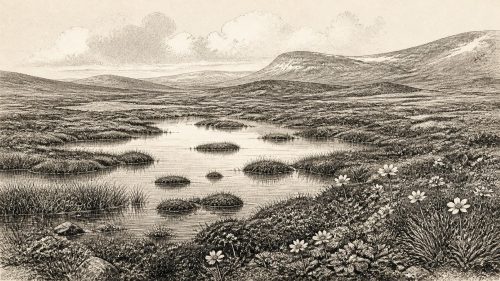
Around 30,758 BCE, Ireland lay within the unstable later Marine Isotope Stage 3, not a precisely datable historical year. At Derryvree in County Fermanagh, freshwater sediments between glacial tills record a temporary ice-free, cold, treeless wetland supporting bogbean, mountain avens, clubmoss and tundra plants. These deposits demonstrate local environmental change, not island-wide conditions. As ice expanded towards its later maximum, habitats repeatedly shifted. Castlepook Cave in Cork preserves cold-stage fauna, including reindeer, mammoth and hyaena, indicating periodically suitable open landscapes. A possibly tool-marked reindeer bone suggests brief Upper Palaeolithic human activity, but proves neither settlement nor society. Evidence remains fragmentary.
Read Article

Archived: 24 September 2026
Abstract
At 30,759 BCE, Ireland cannot be described through precise annual history, but evidence places it within a cold, unstable MIS 3 landscape. Derryvree, County Fermanagh, preserves freshwater sediments between glacial tills, dated broadly to 34,950–29,750 BCE. Its mosses, sedges, bogbean and other fossils indicate treeless, periglacial wetland conditions with seasonal thaw, rather than continuous ice cover. Castlepook Cave, County Cork, preserves remains of cold-adapted animals, including reindeer, mammoth and predators, accumulated across several periods. A marked reindeer femur may indicate human butchery around 33,000 years ago, but cannot demonstrate permanent settlement. Ireland’s history then is ecological, with human presence uncertain.
Read Article

Archived: 24 September 2026
Abstract
Around 30,760 BCE, Ireland lay within the fluctuating cold conditions of Marine Isotope Stage 3, with tundra-like wetlands, open grasslands and changing ice margins. Evidence from Derryvree and Castlepook Cave shows that reindeer, mammoths, giant deer, hyaenas and other cold-adapted animals inhabited parts of the island. Castlepook’s mixed bone deposits reflect animal deaths, scavenging and denning, not a proven settlement. A reindeer femur, possibly cut by a stone tool, suggests brief Upper Palaeolithic human visits or carcass processing near Doneraile. However, no securely associated tools, hearths, dwellings or burials confirm occupation. Subsequent glaciation erased or buried much earlier evidence there.
Read Article

Archived: 24 September 2026
Abstract
Around 30,761 BCE, Ireland cannot be described through annual events, but through Late Pleistocene environmental evidence. At Derryvree, County Fermanagh, organic freshwater sediments between glacial tills indicate a temporary ice-free, periglacial wetland during Marine Isotope Stage 3. Mosses, sedges, bogbean and mountain avens show cold, treeless tundra conditions with shallow water and summer thaw. Castlepook Cave, County Cork, contains remains from different periods, including mammoth, reindeer, giant deer, predators and cold-adapted mammals, demonstrating varied harsh habitats. A possibly cut-marked reindeer bone suggests intermittent human presence, but provides no proof of settlement. Ice-sheet fluctuations shaped survival and preservation of evidence today.
Read Article

Archived: 24 September 2026
Abstract
Nominally dated 30,762 BCE, this period belongs to Ireland’s fluctuating Late Pleistocene MIS 3, not a precisely identifiable year. Ice margins, sea passages and habitats changed regionally, leaving fragmentary evidence. Derryvree, County Fermanagh, preserves freshwater sediments, bogbean and mountain avens, indicating a local cold, tundra-like wetland during an ice-free or ice-marginal interval. Castlepook Cave, County Cork, contains Late Pleistocene remains including mammoth, reindeer, giant deer, predators and smaller cold-adapted animals, accumulated across several episodes. Human presence remains unproven: a possibly cut-marked reindeer bone suggests investigation-worthy visitation, not settlement. Ireland’s history here is palaeoecological, shaped by environmental instability and uncertain preservation.
Read Article

Archived: 24 September 2026
Abstract
Around 30,763 BCE, Ireland lay within the climatically unstable Late Pleistocene MIS 3, rather than a precisely recoverable historical year. Derryvree, County Fermanagh, preserves freshwater sediments between tills, showing that local ice-free wetlands supported tundra plants, including water-milfoil, bogbean, sedges and dwarf willow. Elsewhere, ice conditions varied considerably. Castlepook Cave in County Cork records a broad MIS 3 fauna of mammoth, reindeer, giant deer, predators and smaller cold-adapted animals, although individual remains differ in age. No secure contemporary settlement exists. A possibly stone-cut reindeer bone suggests tentative human visitation, but cannot establish permanent occupation, identity or society there with certainty.
Read Article
Archived: 24 September 2026
Abstract
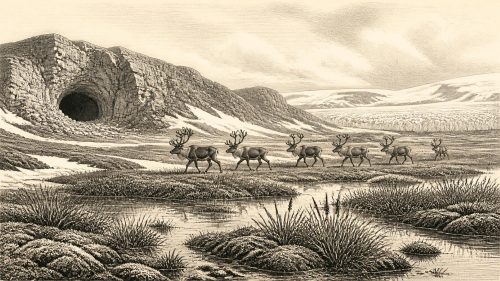
Ireland around 30,764 BCE belongs to unstable late Marine Isotope Stage 3, not a recoverable historical year. Derryvree, County Fermanagh, preserves freshwater organic silts between glacial tills, indicating an ice-free tundra wetland during an earlier interval, though its radiocarbon date has wide calibrated uncertainty. Castlepook Cave, County Cork, contains a long, disturbed record of Ice Age fauna, including mammoth, reindeer, giant deer, bear and hyaena, demonstrating intermittent biological richness. A marked reindeer femur may indicate human butchery about 33,000 years ago, but remains disputed. No secure evidence establishes settlement, society, farming, politics or culture; environmental change dominates the record overall.
Read Article
Archived: 24 September 2026
Abstract
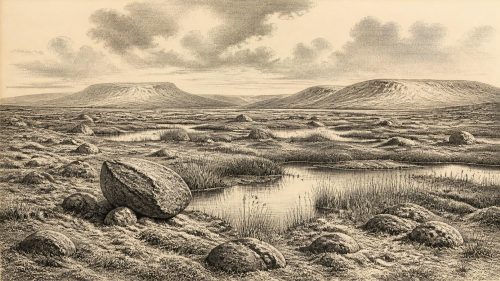
30,765 BCE is a modern label within a Late Pleistocene range, not a recoverable Irish year. At Derryvree near Maguiresbridge, Fermanagh, freshwater silts and organic deposits between two glacier-laid tills record an ice-free interval, broadly dated to 36,900–31,700 cal BP. Mosses, sedges, grasses, wetland plants and northern insects indicate a treeless, periglacial tundra with shallow water and seasonal frost. Castlepook Cave, Cork, preserves evidence of MIS 3 fauna, but disturbed deposits prevent a single contemporary reconstruction. No secure human occupation is known; a possibly modified reindeer bone suggests only tentative, intermittent hunter-gatherer visits. Ireland remained a dynamic, intermittently habitable environment.
Read Article
Archived: 24 September 2026
Abstract
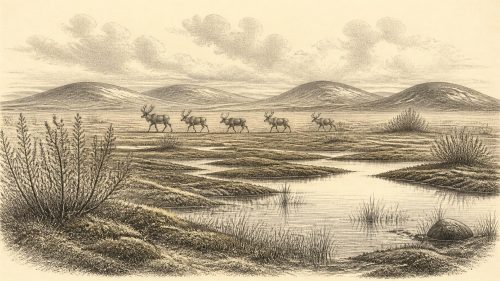
Around 30,766 BCE, Ireland lay within the unstable Late Pleistocene MIS 3 interval, not a precisely datable historical year. Derryvree, County Fermanagh, preserves freshwater sediments between glacial tills, indicating an ice-free episode with cold, treeless wetlands, plants and insects. Castlepook Cave, County Cork, yielded remains of mammoth, reindeer, hyaena and other cold-stage fauna, demonstrating open habitats and ecological links with north-west Europe. A possibly cut-marked reindeer bone may suggest very early human activity, but cannot prove settlement. Glacial advances, changing sea levels and uncertain travel routes shaped the island. Evidence supports environmental reconstruction, not accounts of societies, politics or events.
Read Article

Archived: 24 September 2026
Abstract
Around 30,767 BCE, Ireland was a climatically unstable Late Pleistocene frontier, not a place with recoverable yearly history or proven human settlement. Castlepook Cave near Doneraile, County Cork, preserves Ireland’s richest pre-Last Glacial Maximum animal archive, including spotted hyaena, mammoth, reindeer, giant deer, bears, wolves and smaller mammals. Its deposits accumulated over long periods and cannot date a single ecosystem or year. Revised radiocarbon evidence places much fauna within MIS 3. Derryvree sediments show cold-climate freshwater habitats elsewhere. A possibly cut-marked reindeer bone suggests human visits, but cannot demonstrate enduring occupation. Environmental change, rather than social history, defines this period.
Read Article

