
Archived: 20 September 2026
Abstract
31,049 BCE cannot be treated as a precisely dated Irish event, but falls within late Marine Isotope Stage 3, before maximum glaciation. At Derryvree, Fermanagh, freshwater deposits between tills reveal a cold, treeless wetland of sedges, mosses, dwarf willow, insects and shallow pools, demonstrating regional environmental variation. Castlepook Cave, Cork, preserves reindeer, mammoth, hyaena and other fauna, though disturbed deposits represent different periods rather than one community. Lower sea levels permitted intermittent animal crossings, while expanding ice increasingly restricted habitats and access. A possibly cut reindeer bone suggests early human visits, but no secure settlement, artefacts or social history exists.
Read Article

Archived: 20 September 2026
Abstract
At roughly 31,050 BCE, Ireland lay within the unstable cold conditions of Marine Isotope Stage 3. Freshwater silts at Derryvree, County Fermanagh, preserved between glacial tills, record a temporary ice-free landscape of tundra wetlands, mosses, sedges, grasses and sparse dwarf shrubs. The deposits demonstrate habitable freshwater environments, not a mild interglacial climate. Cave faunas from southern Ireland show that reindeer, mammoths, giant deer and predators intermittently reached the island as sea levels changed. A marked reindeer bone may indicate human butchery, but remains unconfirmed. No settlements or sustained occupation are known. Advancing ice later reshaped and buried these landscapes again.
Read Article

Archived: 20 September 2026
Abstract
31,051 BCE is a retrospective date, not an identifiable Irish event. Derryvree, County Fermanagh, preserves freshwater organic deposits between glacial tills, dated within Marine Isotope Stage 3. Its mosses, sedges, aquatic plants, bogbean and cold-adapted insects indicate an open, treeless tundra wetland shaped by frost, short growing seasons and ice margins. Castlepook Cave, County Cork, contains Pleistocene fauna including reindeer, mammoth, giant deer, predators and animals, though deposits span uncertain periods. A cut-marked reindeer bone may indicate human butchery about 33,000 years ago, but cannot prove settlement or continuity. Evidence reveals shifting ecological opportunities, not island-wide conditions, polities or trade.
Read Article
Archived: 20 September 2026
Abstract
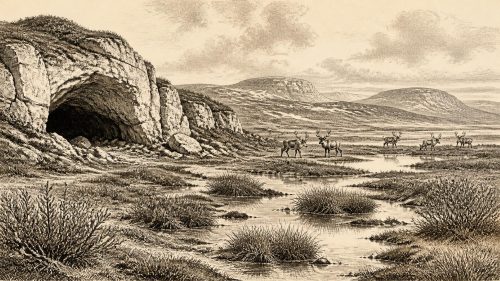
Around 31,052 BCE, a modern label rather than a precisely datable Irish year, Ireland lay in Marine Isotope Stage 3 before the Last Glacial Maximum. Evidence from Castlepook Cave in north Cork records cold-climate fauna, including reindeer, mammoth, giant deer and hyena, accumulated over long periods. A possibly stone-cut reindeer femur suggests human activity, but cannot prove settlement. At Derryvree, Fermanagh, interglacial sediments indicate treeless, wet tundra with sedges, herbs, mosses and cold-adapted species. Falling temperatures and advancing ice increasingly threatened these habitats. No evidence supports contemporary societies, institutions or permanent communities; environmental change and mobile fauna define prehistoric Ireland.
Read Article
Archived: 20 September 2026
Abstract
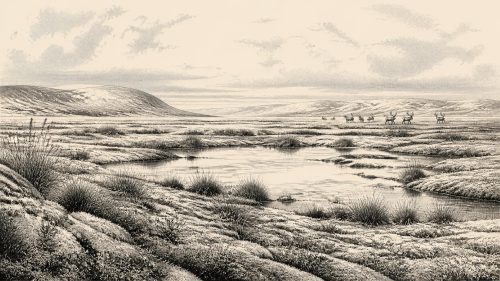
31,053 BCE is a modern chronological point within Marine Isotope Stage 3, not a datable Irish historical year. Evidence from Derryvree, County Fermanagh, records a cold, treeless freshwater wetland between glacial advances, with mosses, sedges and northern insects. Castlepook Cave, County Cork, preserves a long-accumulated fauna including mammoth, reindeer, giant deer, predators and lemmings, demonstrating changing habitats supporting cold-adapted life. A marked reindeer femur may indicate early human butchery, but remains unconfirmed because cave deposits and bone histories are complex. No settlements, tools or institutions establish human occupation. Ireland was an ecological frontier of shifting ice, exposed land and uncertainty.
Read Article

Archived: 20 September 2026
Abstract
At the modern equivalent of 31,054 BCE, Ireland lay in the Late Pleistocene and cannot be described with annual precision. Derryvree, County Fermanagh, preserves wetland sediments between glacial tills, showing an ice-free interval with treeless tundra vegetation, shallow pools and cold-adapted insects. Castlepook Cave, County Cork, yielded mammoth, reindeer, giant deer, predators and other fauna, demonstrating intermittent ecological connections beyond Ireland. A marked reindeer bone may indicate human handling, but provides no proof of permanent settlement. There is no evidence for societies, polities or institutions. The evidence instead depicts a climatically deteriorating, locally varied landscape before the Last Glacial Maximum.
Read Article

Archived: 20 September 2026
Abstract
31,055 BCE is a modern label rather than a recoverable Irish year. Derryvree, County Fermanagh, preserves freshwater sediments between glacial tills, dated broadly to 36,900–31,700 cal BP, showing a cold, wet, locally ice-free tundra landscape with plants and small animals. Ireland was entering greater glaciation, which later reworked or buried evidence. Castlepook Cave, County Cork, contains diverse cold-stage fauna, including reindeer, mammoth and hyaena. A marked reindeer femur may indicate Upper Palaeolithic butchery about 33,000 years ago, but lacks associated tools or occupation evidence. Thus Ireland supported animals and perhaps brief human visits, not securely demonstrable settlement, societies or ritual.
Read Article
Archived: 20 September 2026
Abstract
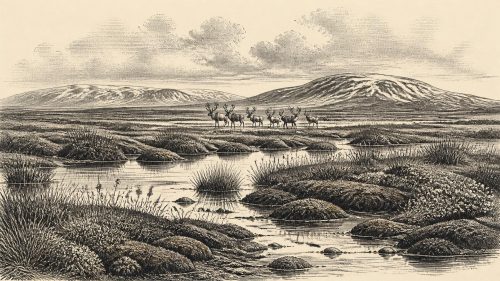
Around 31,056 BCE, Ireland was a cold, changing Late Pleistocene landscape rather than a historically dated society. Derryvree deposits in Fermanagh preserve tundra vegetation between glacial advances, although their radiocarbon chronology is broad and uncertain. Castlepook Cave, County Cork, contains diverse Marine Isotope Stage 3 fauna, including reindeer, mammoth and hyaena, accumulated through varied natural processes. A reindeer femur bearing a possible stone-tool cut mark may indicate human carcass processing, but lacks secure archaeological context. No camp, tools, hearths or human remains confirm settlement. Later ice expansion disrupted habitats and erased evidence, leaving only cautious evidence of possible brief visits.
Read Article

Archived: 20 September 2026
Abstract
31,057 BCE is not a precisely recoverable Irish year but falls within the unstable Late Pleistocene MIS 3. Derryvree, County Fermanagh, preserves freshwater sediments between glacial tills, indicating locally ice-free, treeless tundra wetlands during a broad period encompassing this date. Castlepook Cave, County Cork, contains a disturbed but significant pre-Last Glacial Maximum fauna, including mammoth, reindeer, giant deer and spotted hyaena. A cut-marked reindeer femur may indicate brief human butchery around 31,000 BCE, yet no settlement is proven. Evidence supports a cold, changing landscape intermittently used by mammals and perhaps people, not political, social or chronological narratives at this scale.
Read Article

Archived: 20 September 2026
Abstract
Around 31,058 BCE, Ireland was experiencing a cold, unstable Late Pleistocene climate, not a uniformly ice-covered landscape. At Derryvree, County Fermanagh, freshwater silts preserved between glacial tills record a locally ice-free interval before later ice advance. Radiocarbon calibration places these deposits within a broad range encompassing the notional date, rather than a precise year. Fossils indicate wet tundra of sedges, mosses, grasses, shallow pools and cold-adapted invertebrates. Cave fauna demonstrate intermittent connections with wider Europe but cannot establish contemporaneous species lists. No securely dated human occupation exists. Evidence supports environmental change, not institutions, settlement, economy or named events in Ireland.
Read Article

