Archived: 20 September 2026
Abstract
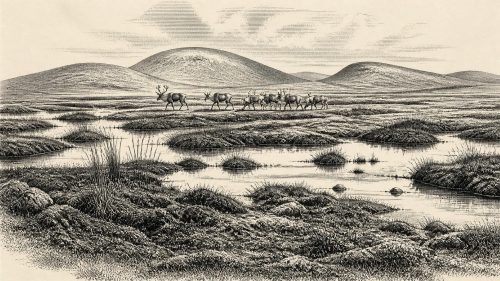
Although 31,074 BCE is a modern notional date, evidence from Derryvree near Maguiresbridge illuminates a Late Pleistocene interval when Fermanagh was temporarily ice-free. Freshwater sediments between tills, dated broadly to 36,900–31,700 calibrated years ago, record treeless, cold wetlands supporting local vegetation and insects. Lower sea levels linked Ireland to Britain and continental Europe, enabling animal movement across an unstable tundra-steppe landscape. Cave remains show reindeer, mammoths, giant deer and predators, though their coexistence is uncertain. A cut-marked reindeer bone from Castlepook may indicate human butchery, but cannot prove settlement. Later glaciation reshaped Ireland and erased much evidence of this period.
Read Article

Archived: 20 September 2026
Abstract
31,075 BCE is a modern label within a broad Late Pleistocene range, not a recoverable Irish year. Derryvree, County Fermanagh, preserves freshwater silts and organic remains between glacial tills, showing that locally ice-free, treeless wetland existed during part of MIS 3 before renewed glaciation. Fossils of sedges, mosses, bogbean and aquatic plants indicate cold, open, fluctuating conditions. Castlepook Cave, County Cork, records diverse cold-climate mammals, though its accumulated bones cannot establish simultaneous fauna or annual events. A possibly cut-marked reindeer bone suggests human carcass handling, but no secure settlement exists. The evidence reveals habitats, not communities, politics, culture or economies.
Read Article
Archived: 20 September 2026
Abstract
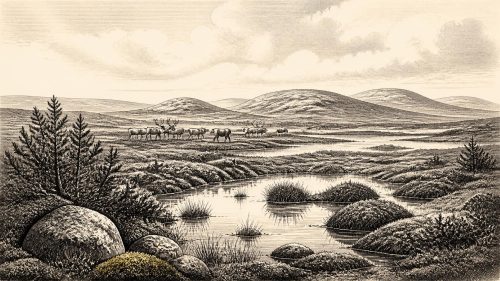
Labelled 31,076 BCE, this period cannot be tied to a specific Irish event, as dating relies on broad calibrated ranges. During Marine Isotope Stage 3, Ireland experienced changing ice margins, sea levels and intermittent ice-free terrain. Derryvree, County Fermanagh, preserves freshwater sediments between tills, indicating cold tundra wetlands during a non-glacial interval. Crag Cave records episodic wetter phases linked to climatic fluctuations. Castlepook Cave yielded diverse cold-adapted fauna and a reindeer femur possibly cut with a stone tool, suggesting brief human presence. However, no secure settlement evidence exists. These fragmentary archives reveal dynamic environments, not a dated historical narrative alone.
Read Article
Archived: 20 September 2026
Abstract
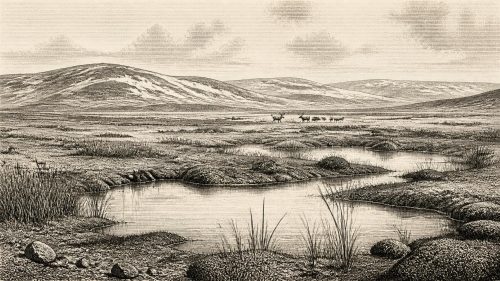
Labelled 31,077 BCE, this notional date cannot yield a conventional Irish history, because evidence consists of stratified deposits, fossils and calibrated ranges rather than records. At Derryvree, County Fermanagh, BIRM-166 dates organic freshwater sediments from an ice-free interval between tills, indicating cold, treeless wetland with mosses, sedges and northern insects. Castlepook Cave, County Cork, preserves MIS 3 fauna including reindeer, mammoth and predators, though mixed cave contexts prevent a single-date reconstruction. A marked reindeer femur may indicate human butchery, but proves neither settlement nor population. Environmental change dominated, as later ice-sheet expansion transformed Ireland's physical landscapes, habitats and drainage systems.
Read Article
Archived: 20 September 2026
Abstract
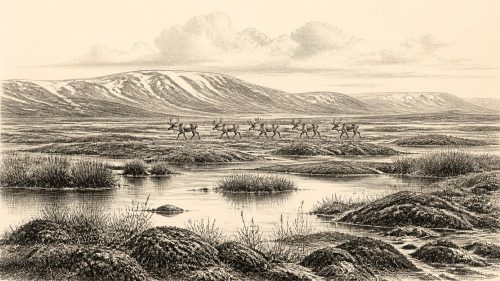
Around 31,078 BCE, Ireland lay within the volatile Midlandian cold stage, before the Last Glacial Maximum, rather than a datable historical year. Changing ice, sea levels and land connections created an environmentally varied, intermittently accessible landscape. Derryvree sediments in Fermanagh preserve evidence of treeless tundra wetland, including mosses, sedges and cold-adapted insects, during an ice-free interval. Castlepook Cave in Cork contains mammoth, reindeer, giant deer, predators and smaller mammals, documenting a diverse cold-stage fauna. A possibly cut-marked reindeer bone suggests fleeting Upper Palaeolithic human activity, but lacks secure context. No evidence supports permanent settlement, institutions or society; uncertainty remains essential.
Read Article

Archived: 20 September 2026
Abstract
Around 31,079 BCE, Ireland cannot be reconstructed as a year-specific historical setting. Derryvree, County Fermanagh, preserves freshwater sediments between glacial tills, indicating a locally ice-free, cold wetland landscape during late MIS 3, although its broad dates cannot define island-wide conditions. Vegetation suggests open tundra-like terrain with pools, sedges and hardy plants. Castlepook Cave, County Cork, contains a long, mixed faunal record including mammoth, reindeer, predators and lemmings. A possibly stone-cut reindeer femur raises, but cannot confirm, brief Upper Palaeolithic human presence. Later glacial expansion repeatedly buried or destroyed evidence across the island, requiring cautious interpretation of Ireland’s shifting ecological frontier.
Read Article
Archived: 20 September 2026
Abstract
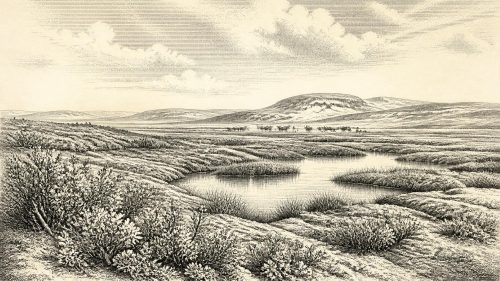
Labelled 31,080 BCE only retrospectively, this period in Ireland is reconstructed from uncertain environmental evidence rather than dated events. At Derryvree, County Fermanagh, organic deposits between glacial tills indicate an ice-free freshwater wetland during part of Marine Isotope Stage 3, supporting treeless tundra vegetation in severe conditions. Castlepook Cave, County Cork, contains Late Pleistocene fauna including reindeer, mammoth and predators, accumulated across long intervals. A cut-like mark on a reindeer femur may indicate human butchery, but cannot establish settlement, culture or continuity. As ice expanded towards the Last Glacial Maximum, shifting landscapes and uncertain routes constrained animal and human movement.
Read Article

Archived: 20 September 2026
Abstract
Modern dating places the Derryvree evidence within Marine Isotope Stage 3, not at a precisely knowable annual moment. Organic silts between glacial tills at County Fermanagh record a locally ice-free, periglacial freshwater tundra, with sedges, mosses, herbs, insects and shallow pools, before renewed glaciation. Ireland’s conditions varied regionally as ice expanded towards the Last Glacial Maximum. Castlepook Cave, County Cork, preserves remains of reindeer, mammoth, giant deer and predators, demonstrating wider faunal connectivity, though not a single contemporaneous community. A possibly tool-marked reindeer bone suggests, but cannot confirm, early human activity. No evidence supports settlement, society, economy or political history.
Read Article

Archived: 20 September 2026
Abstract
Labelled 31,082 BCE, this period cannot be treated as a precisely recorded Irish year, but belongs broadly to climatically unstable Marine Isotope Stage 3. Freshwater deposits at Derryvree, Hollymount and Greenagho show intermittent cold, open wetland environments between glacial advances, while Crag Cave calcite indicates milder episodes with flowing water. Castlepook Cave preserves fauna, including mammoth, reindeer, giant deer, hyaena, wolves and Arctic foxes, accumulated over complex deposits rather than one moment. An incised reindeer femur may indicate human butchery, but proves neither settlement nor continuous occupation. Evidence instead depicts fragmentary Ice Age environments, shifting ice and possible human presence.
Read Article
Archived: 20 September 2026
Abstract
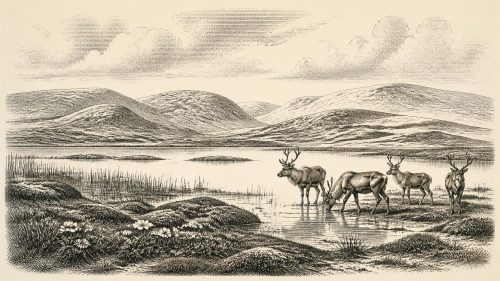
The modern label 31,083 BCE denotes a broad Late Pleistocene interval, not a recoverable year. Ireland experienced unstable cold conditions, with changing ice, low sea levels and largely treeless grassland, wetland and tundra mosaics. Derryvree, County Fermanagh, preserves freshwater sediments dated broadly to the mid-to-late 30,000s calibrated years before present, containing cold-adapted plants and insects that disprove permanent island-wide ice cover. Castlepook Cave, County Cork, records diverse cold-stage fauna, although mixed deposits prevent a single contemporaneous reconstruction. A possibly tool-marked reindeer femur suggests, but cannot prove, brief human carcass processing. No settlements, institutions or sustained population are securely documented locally.
Read Article

