
Archived: 19 September 2026
Abstract
About 31,187 BCE, Ireland lay within the climatically unstable Late Pleistocene, not a recoverable historical year. Radiocarbon calibration permits only broad chronological ranges. At Derryvree, County Fermanagh, freshwater sediments between glacial tills record a locally ice-free, cold, treeless tundra interval, although not an ice-free island. Castlepook Cave, County Cork, contains diverse fauna, including a reindeer femur possibly cut with a stone tool. If confirmed, this may indicate early human activity, but proves neither settlement nor continuity. No institutions, culture or migration route can be identified. Environmental shifts, advancing ice, coastlines and sparse evidence define threshold period in Irish deep history.
Read Article

Archived: 19 September 2026
Abstract
Around 31,188 BCE, Ireland lay in a climatically unstable Late Pleistocene phase before maximum glaciation, although evidence cannot date conditions precisely to that year. Derryvree deposits in Fermanagh indicate local treeless tundra wetlands, while Castlepook Cave in Cork preserves remains of mammoth, giant deer, reindeer, bear, wolf, Arctic fox, lemmings and hyaena, accumulated over long periods. A marked reindeer femur, dated broadly near this horizon, may indicate human butchery, but lacks secure archaeological context. No settlement, tools, hearths, trade or political structures are known. Ireland was a changing cold landscape, intermittently habitable, with possible brief human visits during this period.
Read Article
Archived: 19 September 2026
Abstract
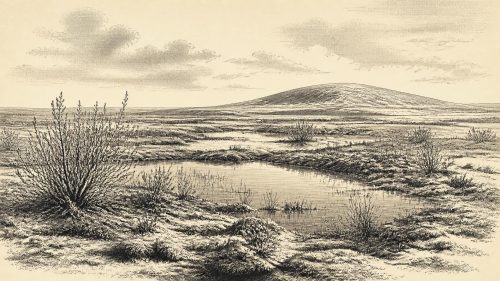
Around 31,189 BCE, Ireland’s history is reconstructed from environmental evidence rather than events or people. At Derryvree near Maguiresbridge, Fermanagh, freshwater silts beneath glacial till reveal a cold, treeless wetland of mosses, sedges, dwarf shrubs and insects during Marine Isotope Stage 3, before renewed ice advance. The deposit demonstrates locally ice-free conditions, not nationwide deglaciation. Castlepook Cave, Cork, preserves Late Pleistocene fauna, showing intermittent ecological connections with Europe, though its remains are not contemporaneous. A marked reindeer bone may indicate early human activity, but cannot prove settlement. Climatic instability, low sea levels and shifting ice margins defined this periglacial landscape.
Read Article
Archived: 19 September 2026
Abstract
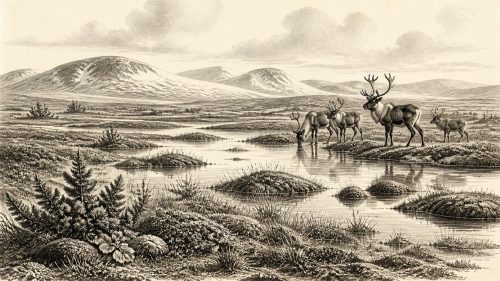
31,190 BCE is a modern label within a broad Late Pleistocene range, not a recoverable Irish year. At Derryvree, County Fermanagh, organic freshwater sediments between two tills demonstrate a local ice-free interval, supporting a treeless, periglacial wetland of sedges, grasses, mosses, herbs, juniper and insects. Castlepook Cave, County Cork, preserves mixed remains of cold-stage mammals, including mammoth, reindeer and hyaena, but cannot reconstruct a contemporary fauna. A potentially cut-marked reindeer bone suggests, without proving, brief human presence. No settlements, polities or trade are evidenced. Advancing ice later reshaped Ireland and erased much evidence from this remote period across the island.
Read Article

Archived: 19 September 2026
Abstract
31,191 BCE is a modern chronological label, not a date for a Irish event. During Marine Isotope Stage 3, Ireland experienced variable glacial conditions rather than uniform ice cover. Freshwater sediments sealed between tills at Derryvree, County Fermanagh, preserve evidence of an ice-free interval, treeless wetlands and tundra-like vegetation, although their radiocarbon range cannot pinpoint this year. Castlepook Cave, County Cork, contains cold-stage fauna, including reindeer, mammoth and hyaena, but disturbed deposits prevent reconstruction of one community. A cut-marked reindeer bone suggests brief human presence, not settlement. No evidence supports society or culture; traces reveal a shifting, climatically constrained landscape.
Read Article
Archived: 19 September 2026
Abstract
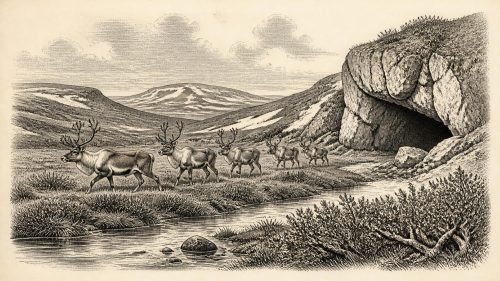
Around 31,192 BCE, Ireland lay within the unstable, cold conditions of Marine Isotope Stage 3, before the Last Glacial Maximum. Evidence derives from broadly dated bones, sediments, plants and insects rather than year-specific events. Castlepook Cave in County Cork preserves fauna including reindeer, mammoth, giant deer, predators and cold-adapted smaller animals. A marked reindeer femur may indicate human butchery, yet cannot prove settlement or even a dated hunting episode. Derryvree, County Fermanagh, records an ice-free wetland interval between glacial advances. Together, these traces depict open tundra-grassland habitats and possible transient human visits, while confirming profound uncertainty about Ireland’s earliest inhabitants.
Read Article

Archived: 19 September 2026
Abstract
31,193 BCE denotes a modern chronological point within Marine Isotope Stage 3, not a documented Irish year. Before the Last Glacial Maximum, Ireland experienced variable ice cover and cold, open tundra-like wetlands, evidenced at Derryvree, Greenagho and Aghnadarragh. Castlepook Cave in County Cork preserves a rich, intermittently accumulated fauna including mammoth, reindeer, giant deer, bear, wolf, Arctic fox, lemmings and hyaena, demonstrating ecological links with Britain and Europe. A cut-marked reindeer femur may indicate brief human carcass processing, but cannot prove settlement or occupation. Evidence remains fragmentary, dating broad, and interpretations may change through improved excavation, analysis and ancient-DNA research.
Read Article

Archived: 19 September 2026
Abstract
About 31,194 BCE is a modern chronological label, not a recorded Irish year. Ireland then lay in the Middle Midlandian cold stage, before maximum glaciation, with variable tundra-steppe, wetlands and sparse vegetation. Derryvree deposits in Fermanagh provide environmental evidence for this harsh, ice-free or ice-marginal landscape. Castlepook Cave near Doneraile contains remains of mammoth, reindeer, giant deer and other cold-climate animals, accumulated across long periods. A marked reindeer femur, possibly cut by a stone tool, suggests a brief Upper Palaeolithic human visit, but cannot prove settlement. Glaciation, erosion and rising seas have left Ireland's human record fragmentary, provisional and unresolved.
Read Article
Archived: 19 September 2026
Abstract
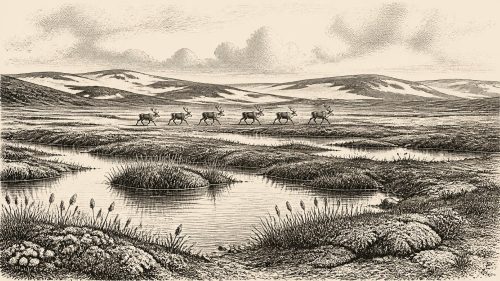
Around 31,195 BCE, Ireland was a cold, changing north-western margin of Europe, with uneven ice cover, lowered seas and tundra-like habitats rather than familiar coastlines. Derryvree, County Fermanagh, preserves freshwater sediments dated broadly to this period, indicating treeless, periglacial wetlands supporting plants, pools and seasonal productivity. Castlepook Cave, County Cork, yielded MIS 3 fauna including reindeer, mammoth, giant deer, predators and scavengers, although its deposits span long periods and have disturbed contexts. An incised reindeer femur may record stone-tool butchery, suggesting episodic human visits. However, no secure settlement, tools, structures or continuous population is known; the evidence remains provisional overall.
Read Article
Archived: 19 September 2026
Abstract
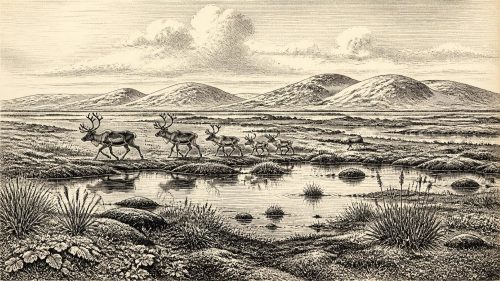
31,196 BCE is not recoverable as a discrete Irish year, but falls within a Late Pleistocene interval of climatic instability. Derryvree, County Fermanagh, preserves an ice-free phase between glaciations, with freshwater sediments recording open, treeless tundra wetland. Flowstone at Crag Cave indicates groundwater and locally non-glacial conditions in south-west Ireland during wider transition towards renewed ice-sheet expansion. Castlepook Cave documents diverse cold-adapted fauna, although its deposits combine episodes and processes. A marked reindeer femur may indicate Upper Palaeolithic butchery, yet cannot demonstrate settlement. Evidence supports changing habitats, animal movements and possible brief human presence, rather than events or known societies.
Read Article
