
Archived: 26 September 2026
Abstract
In 1193, Ireland’s competing Gaelic and Anglo-Norman lordships were reshaped by conflict, patronage and local alliances. Annals record killings among northern, Munster and Leinster rulers, violence by John de Courcy’s followers, and uncertain reports of a castle at Brí Uis authorised against Domhnall Mac Carthaigh. Affrica, wife of de Courcy, founded the Cistercian Grey Abbey on Strangford Lough, linking Ulster to Cumbria and the Irish Sea world. Prince John endowed Crumlin church for St Patrick’s, while Derbfhorgaill died at Mellifont. Inchcleraun was plundered, though sources disagree over the raiders, illustrating fragmented authority and contested evidence across the island's varied regions.
Read Article

Archived: 26 September 2026
Abstract
In 1186, Ireland remained politically fragmented despite expanding Anglo-Norman settlement. Hugh de Lacy, lord of Meath, was killed while inspecting castle works at Durrow, an act Irish annals portrayed as vengeance for violation of Columcille’s sanctuary. His death weakened colonial authority while Crown withheld Meath from heir. In Connacht, Conchobar Máenmaige displaced his father, Ruaidrí Ua Conchobair, amid dynastic warfare. Northern factions deposed Domnall Mac Lochlainn, causing violence. Churches, pilgrimage, hagiography, trade and castle-building shaped life. Gaelic and settler economies interacted, but warfare disrupted communities. The year demonstrated that competing Gaelic, royal, ecclesiastical and Anglo-Norman lordships prevented any unified conquest.
Read Article

Archived: 26 September 2026
Abstract
In 1175 Ireland remained divided between Gaelic kings, Anglo-Norman lords and Henry II’s overlordship. Ruaidrí Ua Conchobair, Strongbow and rulers pursued alliances amid warfare, notably the Anglo-Norman capture of Limerick, which weakened Domnall Mór Ua Briain temporarily. The Treaty of Windsor recognised Ruaidrí as Henry’s liegeman, permitting reduced authority beyond territories reserved for the crown and settlers, in return for tribute, hostages and obedience. Yet violence in Meath and dynastic conflicts elsewhere exposed its weakness. Churchmen brokered diplomacy and appointments, while monasteries retained influence. Warfare disrupted life, livestock and towns. Windsor’s constitutional compromise accompanied conquest, leaving sovereignty and peace unresolved.
Read Article
Archived: 26 September 2026
Abstract
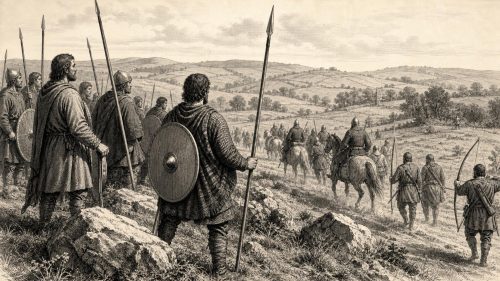
In 1174, Strongbow’s Anglo-Norman army suffered a decisive defeat near Thurles when Domnall Mór Ua Briain and Conchobar Máenmaige led Munster and Connacht forces against an expedition ravaging Munster. The reverse exposed the fragility of Henry II’s new lordship, already weakened by overseas commitments and uneven control beyond coastal towns. Heavy losses forced Strongbow to Waterford, where Hiberno-Norse inhabitants killed garrison members before Raymond le Gros brought reinforcements from Wales. Alliances remained temporary, while dynastic violence continued elsewhere. Church life endured: Gelasius, archbishop of Armagh, died, was succeeded by Cornelius, and a synod met at Birr. Warfare burdened rural communities
Read Article

Archived: 26 September 2026
Abstract
In 1170 Diarmait Mac Murchada’s restoration in Leinster escalated through Anglo-Norman intervention. Raymond le Gros secured Baginbun, then Richard Strongbow captured Waterford, married Diarmait’s daughter Aífe, and seized Dublin, ending its independent Hiberno-Norse rule. The ports supplied strategic links to Britain, trade and military resources. Allied forces campaigned across Leinster and Mide, devastating ecclesiastical centres, while Ruaidrí Ua Conchobair retaliated by killing Leinster hostages, including Diarmait’s son. Wider conflicts persisted in Munster and the north. Rural communities, towns and religious houses suffered warfare, although commerce and reform continued. By year’s end, eastern conquests transformed power without establishing durable settled lordship.
Read Article

Archived: 26 September 2026
Abstract
In 1169 Diarmait Mac Murchada, seeking to recover Leinster, recruited Cambro-Norman mercenaries from Wales. Robert FitzStephen’s force landed at Bannow, joined Irish allies, captured Wexford and received land, creating a fortified coastal foothold. Diarmait’s subsequent campaign devastated Osraige and secured renewed submission, but prompted High King Ruaidrí Ua Conchobair to negotiate hostages and require dismissal of the foreigners. Ireland remained politically sophisticated, with competing kingdoms, active ports, rural economies and reforming Church institutions. The newcomers initially served an Irish king, not Henry II. Yet grants of territory and Diarmait’s continuing ambitions established a durable bridgehead, enabling larger interventions after 1169.
Read Article

Archived: 26 September 2026
Abstract
In 1167 Ruaidrí Ua Conchobair consolidated a precarious high-kingship through military campaigning, hostage-taking, assemblies and church patronage. Leading a broad coalition into Tír Eoghain, he secured submissions, divided authority among northern rivals and demonstrated coordination by land and sea. At Athboy and Tailtiu, he projected island-wide rule, promoted peace, protected churches and regulated political obligations. Ireland’s pastoral economy, port towns and ecclesiastical centres underpinned these networks. Diarmait Mac Murchada returned to Leinster with a small overseas force, regained territory, then submitted to Ruaidrí while retaining future foreign support. Deaths, violence and church building revealed continuing instability beneath Ruaidrí’s temporary ascendancy.
Read Article

Archived: 26 September 2026
Abstract
In 1152, Ireland saw ecclesiastical reform and fierce political conflict. The Synod of Kells–Mellifont, led by Cardinal John Paparo, confirmed four metropolitan provinces at Armagh, Cashel, Dublin and Tuam, strengthening papal authority, diocesan organisation and Armagh’s primacy. Tairdelbach Ua Conchobair and Muirchertach Mac Lochlainn allied under sacred relics, divided Mide, and weakened Tigernán Ua Ruairc of Bréifne. During this campaign, Diarmait Mac Murchada seized Ua Ruairc’s wife, Derbfhorgaill, provoking renewed regional warfare. Tairdelbach’s partition of Munster likewise failed, bringing raids, destruction, displacement and famine. The year exposed an interconnected society where church institutions, royal power, warfare and rural life intersected.
Read Article

Archived: 26 September 2026
Abstract
Ireland in 1137 remained politically fragmented, as Tairdelbach Ua Conchobair of Connacht asserted contested overlordship through warfare and naval power on the Shannon. Rivalries involved Bréifne, Mide, Leinster, Munster and Hiberno-Norse towns. An allied fleet from Leinster, Dál Cais, Dublin and Wexford besieged Waterford, gaining hostages but not conclusively conquering it. Dynastic killing and raids destabilised Mide and Connacht. In the church, Malachy yielded Armagh to reformer Gilla meic Liac. A severe storm and widespread fires damaged communities. Despite violence, trade, maritime capacity, scholarship, artistic patronage and ecclesiastical reform demonstrated a dynamic, connected society within a rapidly changing medieval world.
Read Article




