
Archived: 7 October 2026
Abstract
Around 30,134 BCE, Ireland was approaching the Last Glacial Maximum, although ice expansion varied regionally and no precise annual reconstruction is possible. Cave deposits, notably Castlepook near Doneraile, preserve a disturbed, long accumulated record of MIS 3 fauna, including mammoth, giant deer, reindeer, bears, wolves, foxes, hyaenas and lemmings. These remains indicate intermittent open, treeless cold habitats and connections with north-west Europe, not a uniform national fauna. Human occupation remains unproven: a possibly butchered reindeer bone suggests brief presence but lacks secure context. Growing ice fragmented habitats and obscured evidence, leaving ecological change rather than social or political history here.
Read Article

Archived: 7 October 2026
Abstract
About 30,141 BCE, Ireland’s record permits environmental reconstruction rather than annual history. At Derryvree, County Fermanagh, freshwater organic sediments between glacial tills, broadly dated to 36,900–31,700 calibrated years BP, show an ice-free interval before later ice returned. Plant, insect and aquatic remains reveal treeless tundra-like wetlands, with sedges, mosses, bogbean and shallow pools. Ireland’s ice cover and coastal geography varied greatly during this unstable period. Castlepook Cave preserves wider Pleistocene fauna, including mammoth, reindeer, giant deer and predators, but not a single contemporary community. A cut-marked reindeer bone suggests an early human visit, although permanent settlement there remains unproven archaeologically.
Read Article
Archived: 6 October 2026
Abstract
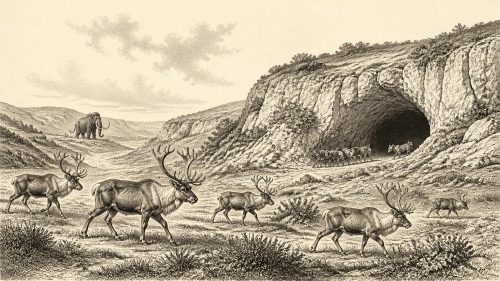
Around 30,175 BCE, Ireland lay within the unstable later Pleistocene, before maximum expansion of the last British–Irish Ice Sheet. Precise dating is impossible, and evidence survives chiefly in disturbed cave deposits. Castlepook Cave, County Cork, preserves remains of mammoth, reindeer, giant deer, hyaena, bear and other cold-adapted animals, accumulated across millennia rather than in one episode. Open tundra-like habitats and lower sea levels shaped a landscape. A marked reindeer femur may indicate Upper Palaeolithic butchery, but lacks secure context and cannot prove settlement. No wider reconstruction is justified. Castlepook instead records intermittent animal life and a possible fleeting human encounter.
Read Article
Archived: 4 October 2026
Abstract
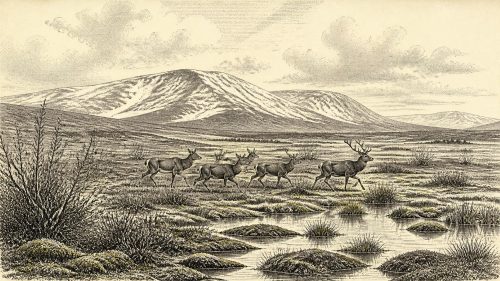
Around 30,304 BCE, Ireland was in the unstable Late Pleistocene build-up to the last major glaciation, rather than a documented historical era. Radiocarbon-dated red deer bones from Waterford caves show that suitable habitats existed around 32,000 years ago, although they prove neither permanent herds nor human hunting. Fermanagh sediments indicate patchy, treeless tundra wetlands supporting diverse vegetation. Cork cave faunas reveal reindeer, mammoth, predators and other animals across the wider period. Ice growth, fluctuating coastlines and later erosion obscure evidence. A possibly cut-marked reindeer bone suggests brief human activity, but no secure settlement, tools, institutions or culture can be established.
Read Article
Archived: 26 September 2026
Abstract
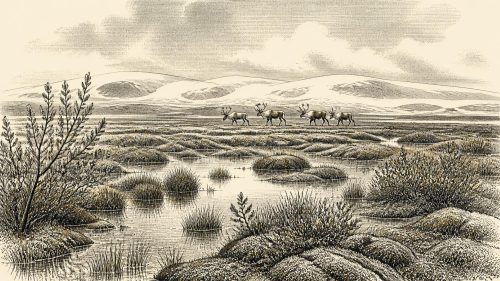
About 30,652 BCE cannot be treated as a precisely dated Irish year, but falls within a Late Pleistocene interval represented by Derryvree, County Fermanagh. Organic silts between glacial tills indicate an ice-free phase, broadly 31,700–36,900 calibrated years before present, when cold, treeless wetlands supported mosses, sedges, dwarf willow, aquatic plants and freshwater life. Cave remains demonstrate that cold-adapted fauna, including reindeer, mammoth and predators, reached Ireland, although assemblages are not local censuses. A cut-marked Castlepook reindeer bone may indicate human butchery, yet remains disputed. Evidence supports intermittently habitable, climatically volatile landscapes, not continuous occupation, settlements, states, trade or annual history.
Read Article
Archived: 19 September 2026
Abstract
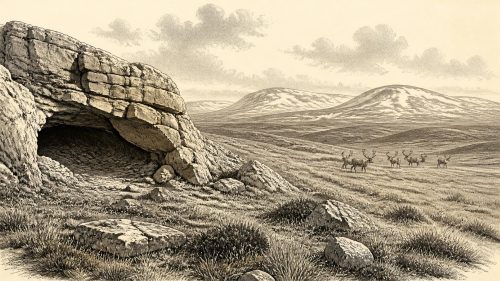
At 31,170 BCE, Ireland lay in the climatically unstable later Marine Isotope Stage 3, approaching expansion of the British–Irish Ice Sheet. Precise local conditions cannot be reconstructed: radiocarbon dating provides calibrated ranges, while glaciation erased much earlier evidence. Models suggest regional ice development, becoming extensive later. Southern caves, especially Castlepook, preserve remains of fauna including reindeer, mammoth and hyaena, but mixed deposits and revised dates prevent their attribution to one year. Possible tool damage on a reindeer bone is inconclusive evidence of early people. Secure human evidence is far later, leaving environmental change and uncertainty as this period’s principal record.
Read Article

Archived: 17 September 2026
Abstract
Around 31,424 BCE, Ireland lay within the unstable cold conditions of Marine Isotope Stage 3, before the Last Glacial Maximum. Lower sea levels and fluctuating ice created changing connections with Britain and continental Europe. Castlepook Cave, County Cork, preserves a complex, re-dated assemblage including mammoth, giant deer, reindeer, hyena, wolves and lemmings, demonstrating a rich, intermittent cold-stage fauna. Improved radiocarbon methods placed some remains far earlier than formerly believed, though dates remain ranges, not precise anniversaries. A cut-marked reindeer femur may indicate Upper Palaeolithic butchery, yet cannot prove settlement. Evidence depicts shifting Ice Age ecosystem; future research may clarify presence.
Read Article
Archived: 17 September 2026
Abstract
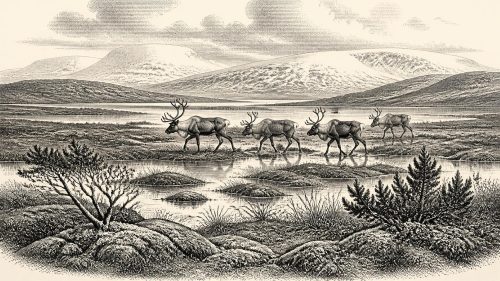
31,514 BCE is a modern label within Ireland’s unstable MIS 3 Late Pleistocene, not a recoverable historical year. Derryvree, County Fermanagh, preserves freshwater sediments dated broadly to this period, showing cold, open, locally ice-free wetlands with tundra vegetation. The major British–Irish Ice Sheet expansion followed later, subsequently erasing much evidence. Castlepook Cave, County Cork, contains time-mixed remains of mammoth, reindeer, giant deer, hyaena and other cold-stage fauna, demonstrating ecological connections. A marked reindeer femur may indicate Upper Palaeolithic butchery, but cannot establish settlement. Ireland was a changing glacial-edge environment; early human presence remains possible yet unproven at the notional date.
Read Article

Archived: 14 September 2026
Abstract
Approximately 31,733 BCE, Ireland lay within the unstable Late Pleistocene climate of Marine Isotope Stage 3, not a precisely datable historical year. Derryvree, County Fermanagh, preserves freshwater sediments between tills, indicating a cold tundra wetland interval before renewed glaciation. Mosses and sedges suggest open, treeless terrain, while Crag Cave records milder episodes permitting water flow. Castlepook Cave’s mixed fauna, including mammoth, reindeer and hyaena, demonstrates diverse Ice Age habitats but not contemporaneous populations. A cut-marked reindeer femur may indicate brief human activity, although evidence remains insecure. Overall, geological archives reveal changing ice margins, habitats and uncertainty rather than conventional history.
Read Article

Archived: 8 September 2026
Abstract
Around 33,900 years ago, Ireland lay within a cold, unstable Late Pleistocene landscape, with regionally variable ice cover preceding the Last Glacial Maximum. Lower sea levels altered coastlines and potential animal routes. Open tundra-steppe habitats supported mammoth, giant deer, reindeer, bears and predators, evidenced especially at Castlepook Cave, County Cork. A cut-marked reindeer femur there provides limited evidence that Upper Palaeolithic hunters may briefly have visited or crossed Ireland. It does not demonstrate settlement, population continuity, polities or cultural practices. Subsequent ice expansion destroyed or obscured much evidence, leaving caves as selective archives. Post-glacial Mesolithic settlement occurred many millennia later.
Read Article

Archived: 8 September 2026
Abstract
About 31,983 BCE, Ireland lay in the later Marine Isotope Stage 3, a cold, variable period before the Last Glacial Maximum, rather than beneath uniform ice. Castlepook Cave in County Cork preserves mixed, imperfectly excavated animal remains including reindeer, mammoth, giant deer, predators and Arctic species, demonstrating an Ice-Age fauna. Revised dating places some bones in this era. Cut marks on a reindeer femur may indicate stone-tool butchery and intermittent human presence around 33,000 years ago, but prove neither settlement nor society. Subsequent glaciation and rising seas obscured evidence; sustained settlement is documented only much later, at Mesolithic Mount Sandel.
Read Article

Archived: 8 September 2026
Abstract
Around 31,997 BCE, Ireland’s history cannot be reconstructed as a dated event, because no written or securely associated archaeological evidence survives. The period, roughly 34,000 years ago, preceded the Last Glacial Maximum and featured changing, regionally variable environments. Castlepook Cave in County Cork preserves remains of reindeer, mammoth, giant deer, bears, wolves and hyenas, indicating productive open habitats. A reported cut mark on a reindeer femur may represent Upper Palaeolithic butchery, but cannot demonstrate permanent settlement or continuous occupation. No tools, hearths, human remains, political structures or cultural traditions are securely known. Ireland’s possible human presence remains tentative and episodic.
Read Article




