Archived: 24 October 2026
Abstract
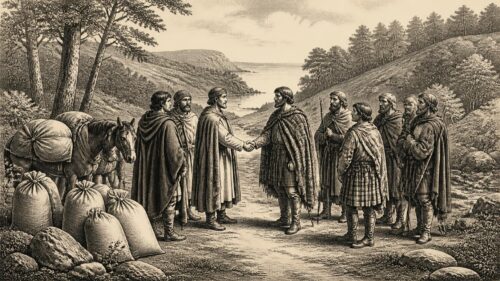
In 1327, Ireland experienced overlapping political, military and social crises amid the accession of Edward III. Thomas FitzGerald, earl of Kildare, became justiciar, but magnates contested royal authority while trade and administration continued. At Glendun, Robert Bruce secured a year’s truce with Ulster, paid for by promised wheat and barley. Domhnall Mac Murchadha was proclaimed king in Leinster before capture by royal officers. Rival Anglo-Irish lords devastated lands during private war, while O’Rourkes and O’Reillys fought over Lough Oughter. A widespread speckled sickness, probably smallpox but diagnostically uncertain, killed people across social ranks alike, disrupting labour, food supplies and lordship.
Read Article
Archived: 24 October 2026
Abstract
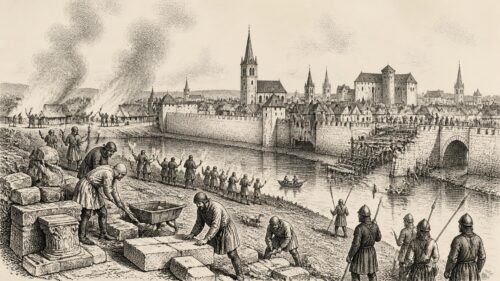
In 1317, at the height of the Bruce invasion, Robert Bruce joined his brother Edward in Ireland and marched through Meath towards Dublin. Fearing siege, Dublin’s citizens burnt western suburbs, demolished the Liffey bridge and religious buildings for defensive stone, and detained the earl of Ulster. The Bruces bypassed the fortified city, campaigned unsuccessfully in Munster, and retreated north; Robert departed in May. Famine, worsened by military requisitioning, afflicted Ireland amid warfare, dynastic struggles and castle destruction. Connacht changed kings, while learned legal culture suffered a loss. Irish leaders’ Remonstrance to Pope John XXII sought support, but Edward’s kingship endured.
Read Article
Archived: 24 October 2026
Abstract
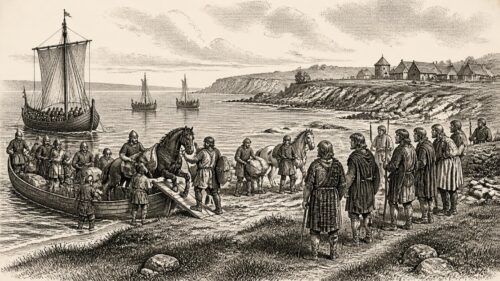
In May 1315 Edward Bruce, brother of Robert Bruce, landed near Larne with a Scottish army, exploiting divisions among Irish rulers, Anglo-Irish magnates and officials. Supported by some Ulster Gaelic lords, he claimed Irish kingship, captured Carrickfergus town and besieged its castle. His forces devastated settlements and supplies, defeated Richard de Burgh at Connor, and advanced into Meath, where opposition faltered amid local rivalries. The invasion also intensified Connacht dynastic conflict. Neither Ireland nor Ulster was unified behind Bruce: Dublin, Trim and Carrickfergus castle remained hostile. Warfare, crop destruction, requisitioning and weather worsened the Great Famine, causing hardship and disorder.
Read Article




