-
Land Dominates
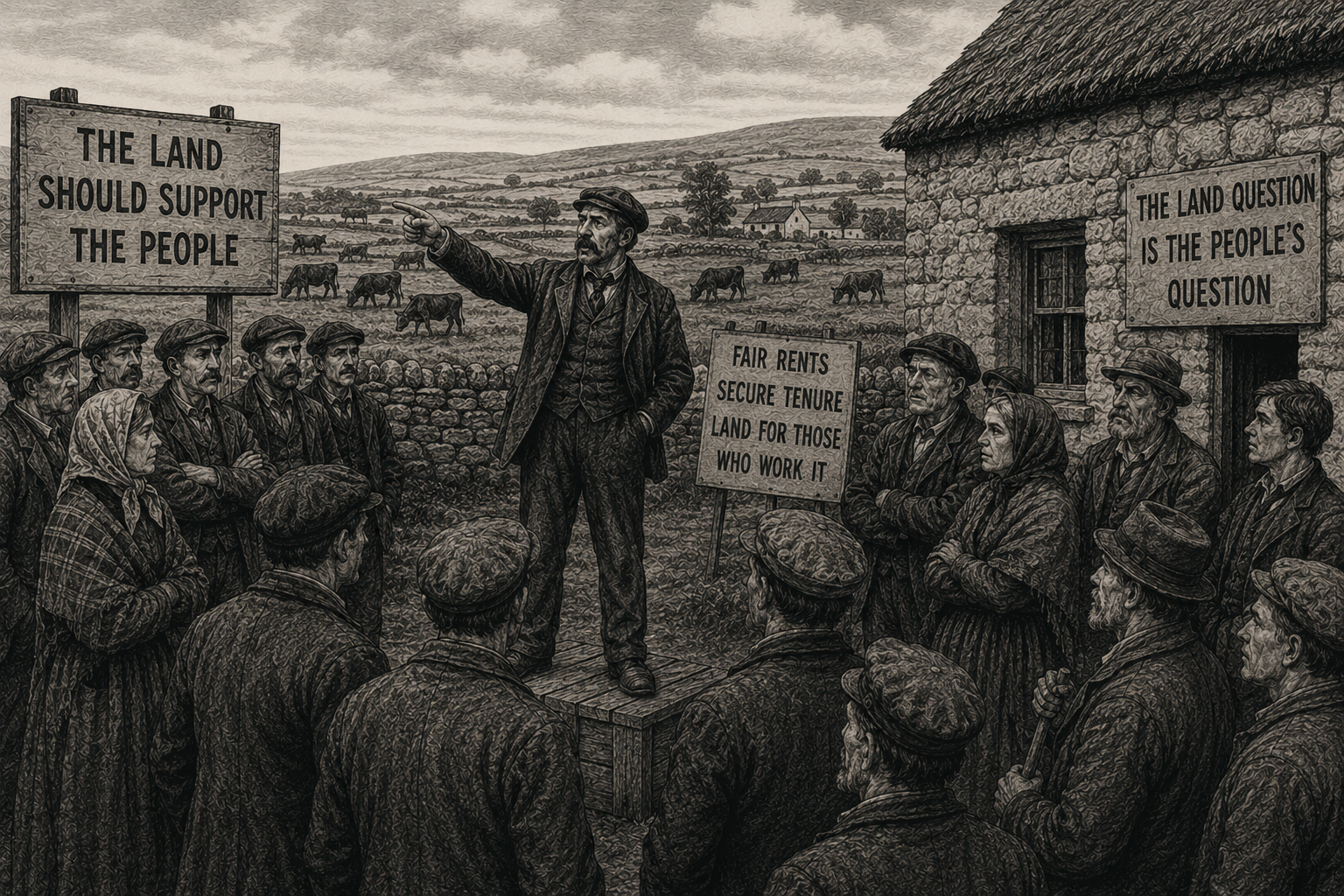
Read Article: Land DominatesThe land question remains the dominant economic and social issue across rural Ireland, shaping political organisation, family security and relations between landlords and tenant farmers. In County Limerick, holdings vary greatly in quality and size, while rents, arrears, grazing land and the prospect of tenant purchase remain constant subjects of discussion. Earlier Land Acts granted greater protection and introduced limited purchase schemes, but they did not complete the transfer of ownership sought by many farmers. Rural households continue to measure political promises against the practical questions of who owns the soil, who works it and who benefits from its produce.
Tenant farmers have gained important legal protections since the agitation of the Land War, including fair-rent procedures, greater security of tenure and recognition of the tenant’s interest in a holding. Yet many still occupy land owned by estates whose authority reaches into rents, improvements, inheritance and the sale of farms. Purchase legislation has allowed some tenants to become owners through state-supported advances, but progress remains uneven and often slow. In County Limerick, the possibility of ownership carries significance beyond financial calculation. A purchased farm promises independence from rent demands and greater security for children expected to inherit the holding.
The United Irish League has connected the land campaign with the wider demand for national self-government. Organisers argue that political unity must serve tenants, evicted families, labourers and communities weakened by emigration. William O’Brien and other leaders have used the League to rebuild nationalist organisation from the countryside upwards, making local branches important centres of pressure. Meetings concerning grazing farms, reinstatement and purchase frequently become tests of political loyalty. The land question therefore reaches beyond individual contracts between landlords and tenants. It influences parliamentary representation, local elections, public meetings and the authority claimed by nationalist leaders throughout rural Ireland.
Agricultural labourers occupy a more uncertain position within the struggle. Tenant purchase may improve the security of farmers without guaranteeing cottages, steady employment or adequate wages for those who own no land. Labourers depend upon seasonal hiring, local demand and access to small plots, while their families often inhabit cottages vulnerable to damp, overcrowding and poor sanitation. In Limerick, debates over ownership must therefore be considered alongside demands for better labourers’ housing and living conditions. A settlement benefiting substantial tenants alone would leave many rural households outside the promised transformation and could preserve inequality beneath a new pattern of ownership.
The continuing prominence of the land question reflects its place at the centre of rural life. Rent determines household expenditure, ownership shapes social standing, and access to land influences marriage, inheritance, employment and emigration. Government schemes have altered the legal position of tenants, but the broader settlement remains incomplete in 1900. Limerick farmers, labourers, shopkeepers and political organisers will continue judging national leadership by its ability to produce practical change. Until ownership, grazing, housing and rural poverty are addressed together, the land question will remain not merely an agricultural dispute but the principal measure of economic justice across the countryside.
- Irish Land Commission, Annual Report for 1900, recording fair-rent decisions, purchase advances and the administration of Irish land legislation. Exact parliamentary-paper number and page should be confirmed before formal citation.
- Census of Ireland, 1901, County of Limerick tables concerning agricultural occupations, housing, population and rural households. Exact table and page should be confirmed before formal citation.
- Limerick Chronicle, 1900, reports concerning tenant meetings, land purchase, grazing disputes, evicted tenants and rural political organisation. Exact issue, page and column should be confirmed before formal citation.
- United Irish League records and contemporary reports concerning County Limerick branches, tenant agitation and land reform during 1900. Exact collection, file and folio should be confirmed before formal citation.
- Parliamentary Debates, House of Commons, Irish land legislation and tenant purchase debates, 1900–1901. Exact debate date, volume, column and speaker should be confirmed before formal citation.
-
Networks Endure
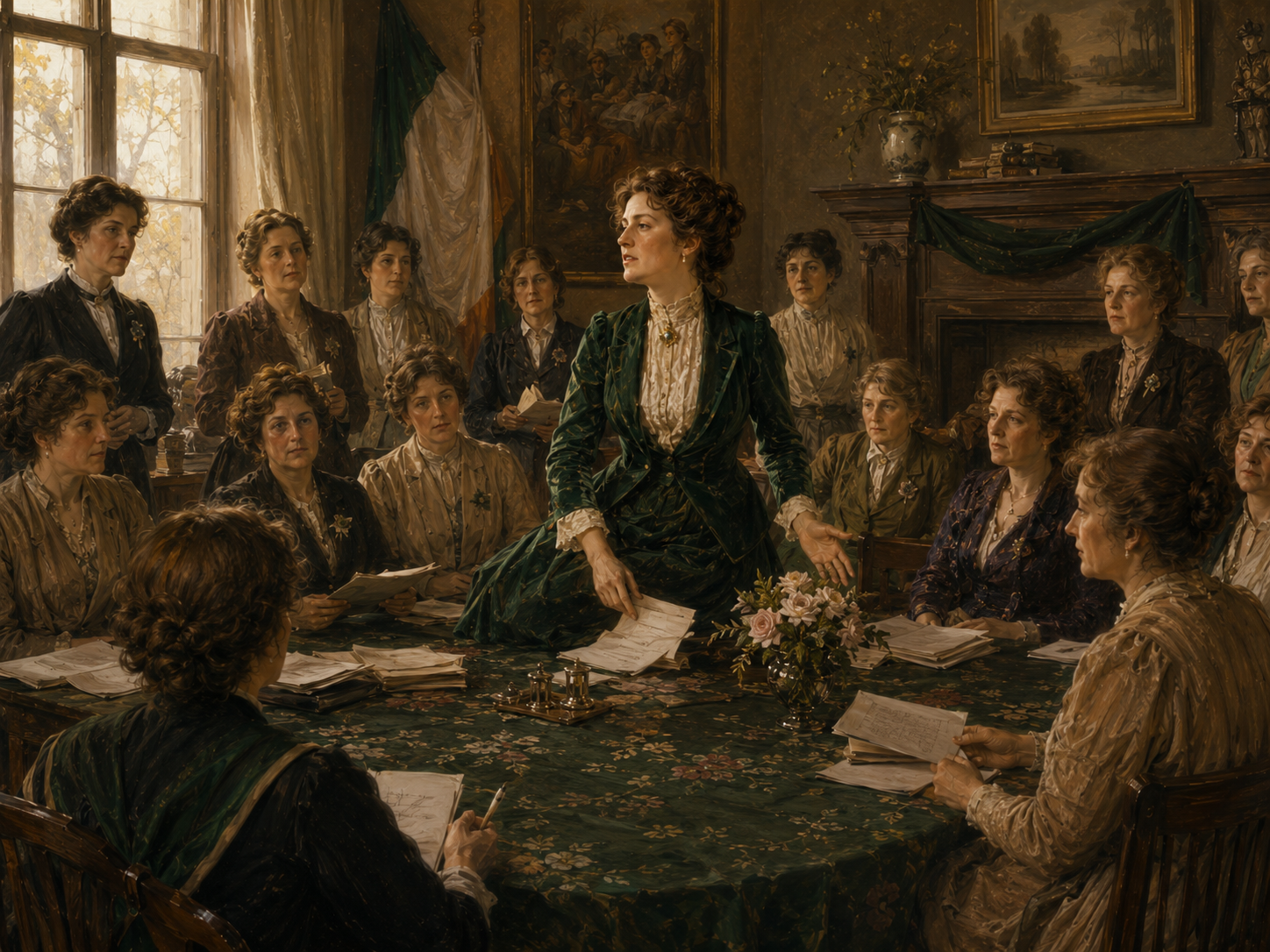
Read Article: Networks EndureThe establishment of Cumann na mBan has revealed how strongly the women’s nationalist networks created during Queen Victoria’s visit in 1900 have endured. Fourteen years ago, Maud Gonne and her associates organised resistance to the royal ceremonies, arranged an alternative patriotic celebration for children and founded Inghinidhe na hÉireann. Those efforts brought women together as fundraisers, teachers, speakers and political organisers. Many of the relationships, practical skills and separatist convictions formed during that campaign have now entered a broader organisation intended to support the Irish Volunteers and advance the cause of national independence.
Inghinidhe na hÉireann provided women with sustained experience in committee work, public meetings, cultural education, publishing, social relief and political mobilisation. Members organised Irish-language classes, theatrical performances, commemorations, children’s activities and campaigns supporting Irish manufacture. Such work required premises, subscriptions, correspondence, trusted messengers and dependable local contacts. The organisation created opportunities for women who were excluded from parliamentary politics to develop authority within advanced nationalism. Cumann na mBan can now draw upon women already accustomed to working collectively, raising resources and defending separatist principles before audiences that often expected female political labour to remain subordinate and largely invisible.
Personal continuity is equally important. Women associated with the Daughters of Ireland entered later organisations carrying friendships and loyalties formed through years of shared activity. Elizabeth O’Farrell and Julia Grenan joined Inghinidhe na hÉireann before becoming members of its branch within Cumann na mBan. Helena Molony, Constance Markievicz, Jennie Wyse Power and other activists moved through overlapping circles of cultural nationalism, labour organisation, women’s politics and revolutionary agitation. These connections allowed information, practical knowledge and confidence to travel between organisations. The nationalist women assembling in 1914 are therefore not beginning without preparation, even though the new military circumstances demand a different structure and purpose.
The formation of Cumann na mBan follows the creation of the Irish Volunteers in November 1913 amid growing uncertainty over Home Rule and armed unionist resistance. Its branches intend to raise funds, learn first aid, support Volunteer companies and assist the wider national movement. Some male leaders may regard the organisation chiefly as an auxiliary, but experienced women bring ambitions extending beyond supportive duties. Inghinidhe na hÉireann had already asserted that women could determine policy and work for complete independence in their own right. The transfer of members into Cumann na mBan ensures that this autonomous tradition will remain present within the developing revolutionary movement.
Limerick women participating in nationalist, cultural, charitable and labour organisations may find similar opportunities within the new association. The networks begun during opposition to the royal visit show how an apparently temporary campaign can produce lasting political consequences. Meetings arranged for one demonstration created friendships; collections organised for children taught financial administration; cultural classes trained speakers and teachers; public resistance strengthened confidence. Cumann na mBan inherits more than individual members from the organisations preceding it. It receives a body of women already practised in disciplined political work and prepared to carry national organisation from public agitation towards the uncertain demands of revolutionary struggle.
- Maud Gonne MacBride, writings on the history, activities and aims of Inghinidhe na hÉireann, Maud Gonne MacBride Papers, National Library of Ireland, MS 49,531/19.
- Inghinidhe na hÉireann, official reports, membership records, accounts and organisational papers, Maud Gonne MacBride Papers, National Library of Ireland. Exact manuscript numbers and folios should be confirmed before formal citation.
- Helena Molony, Bureau of Military History witness statement concerning Inghinidhe na hÉireann, Cumann na mBan and women’s revolutionary activity. Exact witness-statement number and page should be confirmed before formal citation.
- Elizabeth O’Farrell, Bureau of Military History witness material and contemporary biographical records concerning her membership of Inghinidhe na hÉireann and its Cumann na mBan branch. Exact document and page should be confirmed before formal citation.
- Cumann na mBan, early constitution, manifesto, branch records and organisational papers, April 1914, National Library of Ireland and Military Archives. Exact collection, file and folio should be confirmed before formal citation.
-
Women Protest
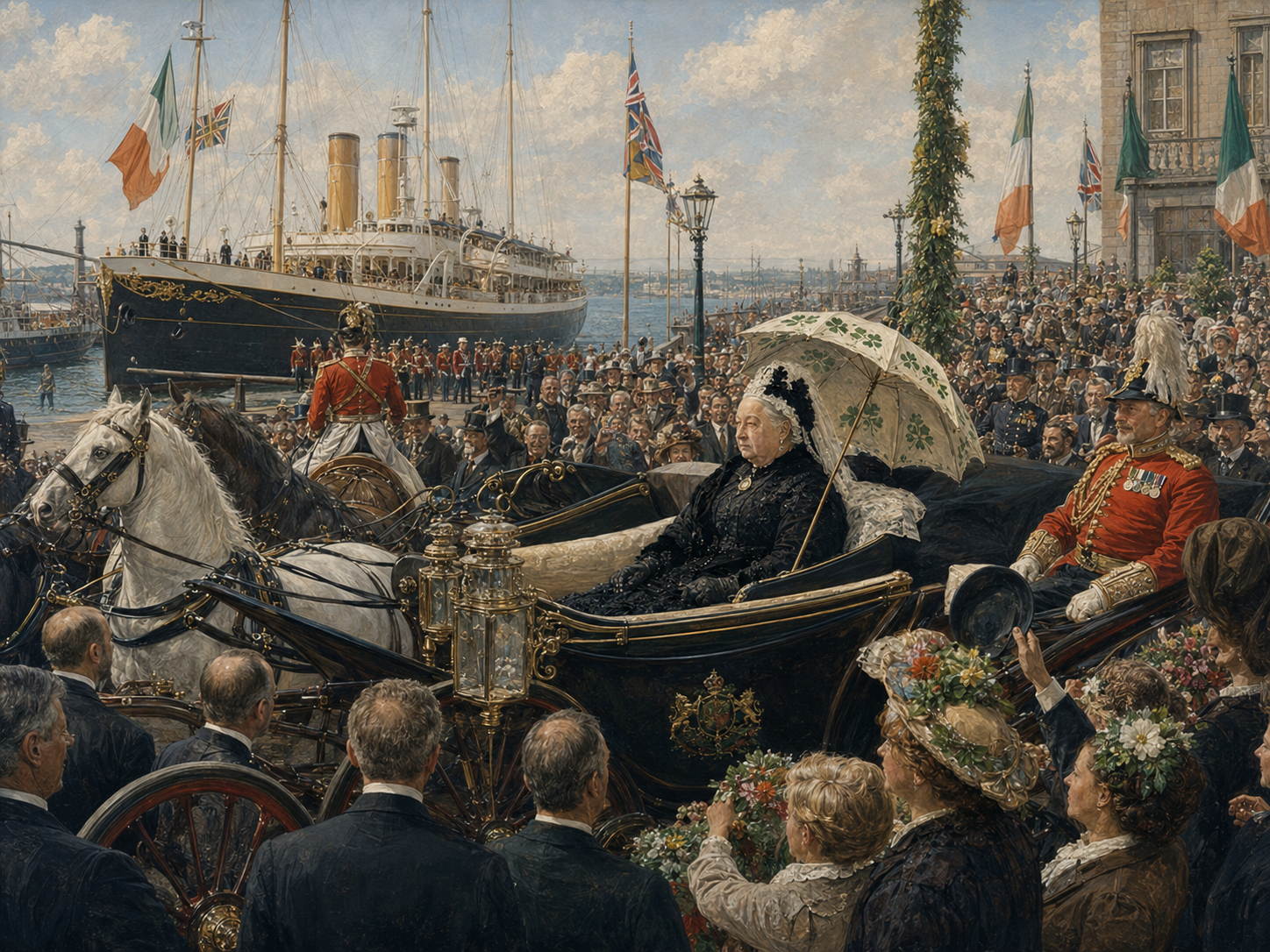
Read Article: Women ProtestWomen have assumed visible roles in the nationalist opposition surrounding Queen Victoria’s arrival in Dublin, moving beyond the customary tasks of collecting money or assisting male political organisers. Maud Gonne and other advanced nationalists have used meetings, public agitation and organised community work to challenge the royal ceremonies and the claim that they represent a united and loyal Ireland. Their involvement will be noted in Limerick, where women already sustain charitable societies, cultural associations, schools and nationalist activity but rarely receive formal recognition as political participants.
The demonstrations arise from opposition to the extensive decorations, loyal addresses, military displays and children’s celebrations arranged during the royal visit. Nationalist women argue that such pageantry conceals poverty, emigration and widespread dissatisfaction with government from Westminster. Gonne’s fierce attack upon the monarch, published as “The Famine Queen,” connects the splendour of the visit with memories of famine, eviction and population loss. Women involved in the campaign have helped circulate nationalist arguments, organise resistance and encourage families to withhold their children from ceremonies intended to associate education and public generosity with loyalty to the Crown.
Their activism extends beyond direct protest. A group of women meeting in the rooms of the Celtic Literary Society has begun organising a Patriotic Children’s Treat as an alternative to the official Phoenix Park celebration. The proposed event will require subscriptions, donated provisions, volunteer stewards and extensive practical organisation. By undertaking this work independently, the women demonstrate that nationalist opposition can provide food, recreation and education rather than merely condemn royal ceremony. The campaign gives women public responsibilities as fundraisers, speakers, organisers and political educators while making childhood itself part of the struggle over national identity.
Women’s participation also exposes limitations within the nationalist movement. They cannot vote in Westminster elections, sit in Parliament or exercise equal authority within most political organisations. Their labour is welcomed, but strategic decisions generally remain in male hands. Gonne and her colleagues are challenging that arrangement by acting publicly and organising in their own name. The activity surrounding the Queen’s visit is helping create the conditions for Inghinidhe na hÉireann, the Daughters of Ireland, an exclusively female organisation committed to complete independence, Irish culture, social reform and a larger civic role for women.
The significance for Limerick extends beyond the immediate royal visit. Local women working in homes, schools, shops, factories, religious societies and charities already possess the skills required for political organisation, though public authority seldom acknowledges them. The Dublin demonstrations suggest that women may bring those abilities directly into national debate and organised protest. Constitutional nationalists may consider the campaign too severe, while unionists will reject its hostility to the Crown. Nevertheless, women have become visible political actors rather than silent symbols, asserting their right to influence how Ireland defines loyalty, citizenship and national freedom.
- Maud Gonne, “The Famine Queen,” United Irishman, 3 April 1900, opposing Queen Victoria’s visit and linking royal ceremony with famine memory and British rule. Exact page and column should be confirmed before formal citation.
- United Irishman, Dublin, March–April 1900, reports and editorials concerning nationalist opposition, public demonstrations and the royal visit. Exact issue, page and column should be confirmed before formal citation.
- Dublin Castle and Dublin Metropolitan Police records concerning the policing of Queen Victoria’s visit and nationalist opposition, April 1900. Exact collection, file and folio should be confirmed before formal citation.
- Maud Gonne MacBride Papers, National Library of Ireland, records concerning opposition to the royal visit and the organisation of the Patriotic Children’s Treat. Exact manuscript number and folio should be confirmed before formal citation.
- Margaret Ward, Irish Nationalist Women, 1900–1918, Manchester: Manchester University Press, 1983; consult the discussion of women’s participation in demonstrations against Queen Victoria’s 1900 visit.
-
Cold Continuation
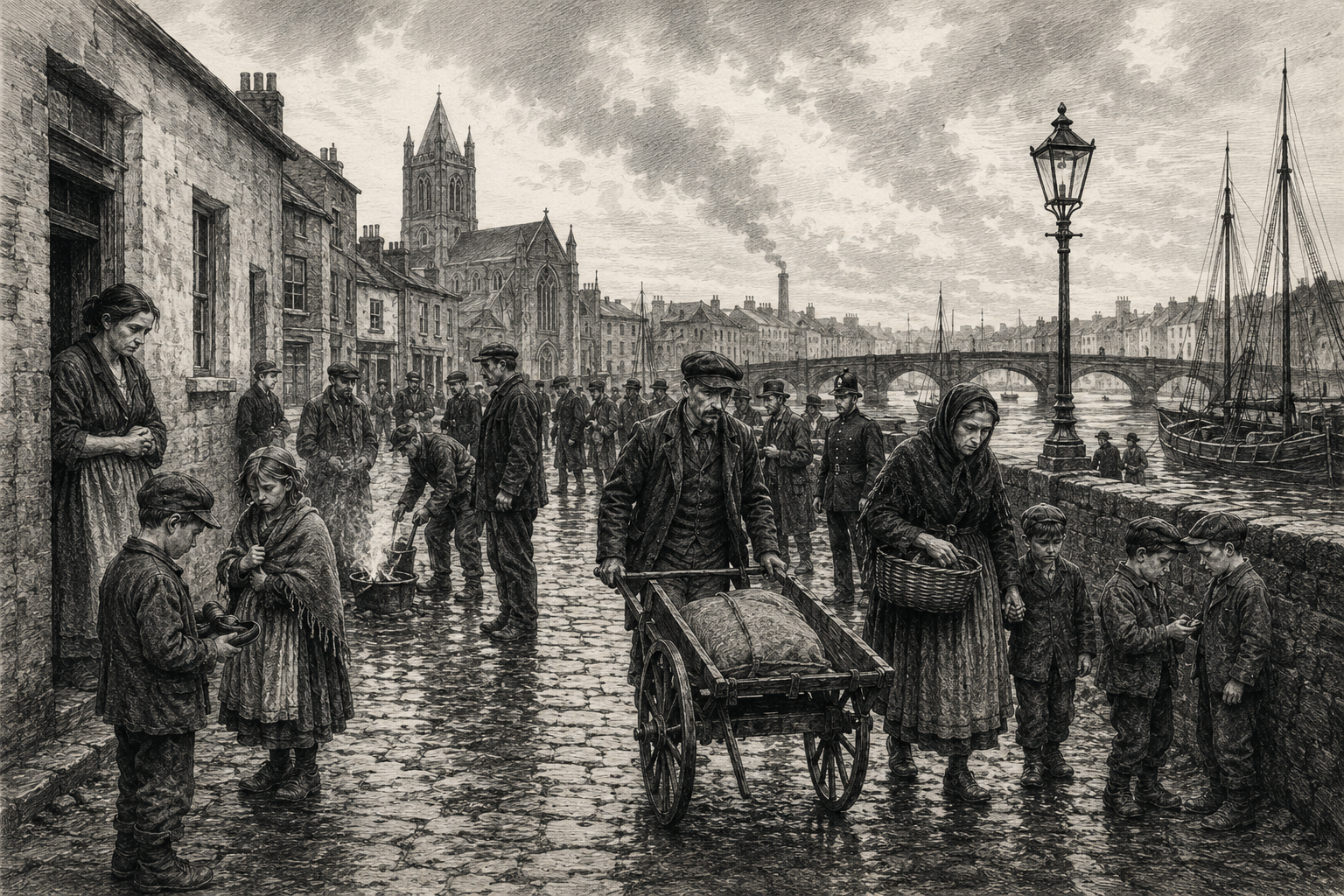
Read Article: Cold ContinuationJanuary came into Limerick without ceremony for most of the people who had to live through it. The arrival of a new century did not lift rent from a labourer’s door, provide sound boots for a schoolchild, warm a damp room, settle a shop debt, clear a fevered lane or make an uncertain wage secure. Across the city and county, families entered the year carrying the same burdens that had shaped the closing decades of the nineteenth century. Public celebration meant little where survival continued to depend upon bread, coal, credit, employment and the health of children.
The city awoke around its quays, bridges, churches, markets, barracks, schools, convents, courts, public houses and municipal offices. Traders opened their shutters, labourers searched for work, dockers watched the river and small shopkeepers calculated what could be sold before another bill became due. In poorer districts, overcrowded houses and damp rooms offered little protection against winter illness. Newspapers carried reports of political affairs and events overseas, but domestic attention remained fixed upon rent, food prices and the possibility that sickness or unemployment might unsettle an already fragile household.
Beyond the city, County Limerick entered January through roads, townlands, farms, market towns and scattered cottages shaped by land, weather and agricultural prices. Tenant farmers considered rents, livestock and the condition of winter fields, while labourers depended upon irregular employment and the willingness of local farmers to hire. Parish schools, police barracks, fairs and chapels connected rural communities, but distance and poor roads could leave families isolated during severe weather. The new century reached such households not as a dramatic beginning, but as another season requiring careful management of food, fuel, animals and money.
Public institutions continued their ordinary work. Limerick Corporation dealt with streets, sanitation, markets and local administration, while Poor Law guardians confronted sickness, poverty and dependence within the workhouse system. Schools received children whose ability to learn could be weakened by hunger, cold or inadequate clothing. Barracks and police stations reflected the continuing presence of British authority, while churches and charitable bodies attempted to relieve hardship that public provision often failed to address. Each institution recorded the city through minutes, notices and statistics, yet the full weight of poverty remained most visible inside homes.
For many people, January offered no sense of a clean historical beginning. The year’s first notices, accounts and newspaper editions appeared beside the same private arithmetic of survival that had governed December: how much coal remained, whether credit would be extended, whether work could be found and whether illness might be avoided. Limerick entered the twentieth century through continuity rather than transformation. Its people carried inherited pressures into the new year, measuring time not by ceremony but by wages, rent, bread, weather and the daily effort to preserve dignity.
- Census of Ireland, 1901, General Report and County and City Tables for Limerick, recording population, housing, occupations and household conditions. Exact table and page should be confirmed before formal citation.
- Thom’s Official Directory of the United Kingdom of Great Britain and Ireland, 1900 edition, entries for Limerick institutions, streets, public offices, businesses and civic administration. Exact pages should be confirmed before formal citation.
- Limerick Chronicle, January 1900, local reporting on municipal affairs, markets, weather, employment, public health and daily life. Exact issue, page and column should be confirmed before formal citation.
- Limerick Board of Guardians minutes and Poor Law records, January 1900, concerning poverty, workhouse administration, illness and relief. Exact volume, meeting date and archival reference should be confirmed before formal citation.
- Limerick Corporation minutes, January 1900, concerning streets, sanitation, markets, public health and municipal administration. Exact volume, meeting date and archival reference should be confirmed before formal citation.
-
Women Participate
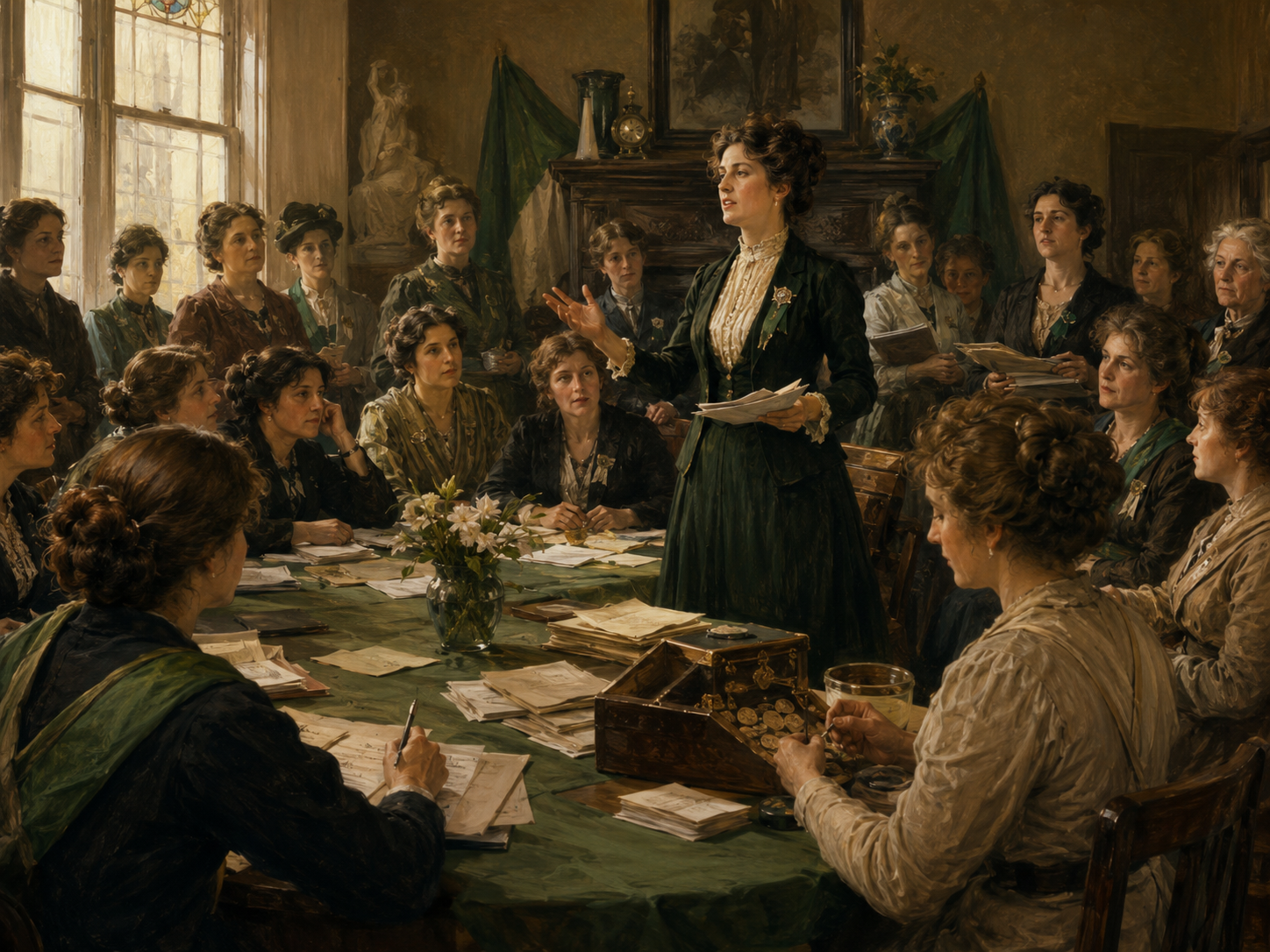
Read Article: Women ParticipateInghinidhe na hÉireann has declared that women must take an active part in Ireland’s political and civic life rather than remain auxiliaries to movements led entirely by men. Established under Maud Gonne’s leadership, the organisation gives women responsibility for deciding policy, addressing meetings, raising funds and arranging public campaigns. Its exclusively female membership provides a political space in which women may develop confidence and organisational experience despite their exclusion from parliamentary elections. The Daughters of Ireland therefore challenges British rule while also questioning conventions that restrict women’s influence within nationalism, local affairs and public debate.
Members intend to participate through education, cultural activity, social relief and political mobilisation. They will organise lectures, language classes, dramatic performances, commemorations and children’s events while encouraging Irish manufacture and complete national independence. Such work places women before audiences as teachers, organisers and speakers rather than as decorative symbols of the nation. The National Library of Ireland describes the organisation’s programme as political, social and feminist, noting its support for women’s suffrage alongside independence and school meals. Its activities helped transform private labour and community service into recognised forms of public action.
Women remain unable to vote in Westminster elections or sit in Parliament, while many nationalist associations offer them only subordinate duties. Inghinidhe na hÉireann rejects those limitations by creating offices, committees and campaigns controlled by women themselves. Its members may determine priorities, publish political arguments and train younger activists without awaiting permission from male parliamentary leaders. Historian Margaret Ward identifies the organisation as the only explicitly nationalist and feminist body in early twentieth-century Ireland. Its emergence marks a significant advance from women being represented symbolically as Ireland towards women acting as practical participants in the struggle over Ireland’s future.
The organisation’s civic work extends beyond speeches and constitutional demands. Its members plan charitable, educational and cultural undertakings that bring them into direct contact with poor families, schoolchildren, workers and local communities. Organising meals, classes and public gatherings requires negotiation, bookkeeping, fundraising and the management of volunteers. These responsibilities provide political training while demonstrating that citizenship includes practical service. The women are not waiting for formal voting rights before contributing to public life. Instead, they are building experience through activities that expose social need, encourage collective action and make female leadership visible within communities usually governed by male officials.
For women in Limerick, the development offers a model of participation suited to existing local experience. Women already manage households, teach children, operate businesses, labour in factories, support charities and sustain religious and cultural associations, yet their authority seldom receives political recognition. The Daughters of Ireland suggests that these skills may be brought directly into national organisation and civic debate. Not every woman will share its separatist programme, but its example challenges the belief that public affairs properly belong to men. By organising independently, its members claim a voice in defining Ireland and in deciding how political freedom should affect the lives of its people.
- Maud Gonne MacBride, writings on the history, activities and aims of Inghinidhe na hÉireann, Maud Gonne MacBride Papers, National Library of Ireland, MS 49,531/19.
- Inghinidhe na hÉireann, early rules, objectives, membership records and annual reports, Maud Gonne MacBride Papers, National Library of Ireland. Exact manuscript numbers and folios should be confirmed before formal citation.
- Helena Molony, Bureau of Military History Witness Statement No. 391, recollections concerning women’s organisation and political activity within Inghinidhe na hÉireann. Exact page should be confirmed before formal citation.
- Bean na hÉireann, Dublin, 1908–1911, articles concerning women’s suffrage, nationalist politics, social reform and female civic participation. Exact issue, page and column should be confirmed before formal citation.
- Margaret Ward, Irish Nationalist Women, 1900–1918, Manchester: Manchester University Press, 1983; consult the chapter “Daughters of Ireland”.
-
Children Fed
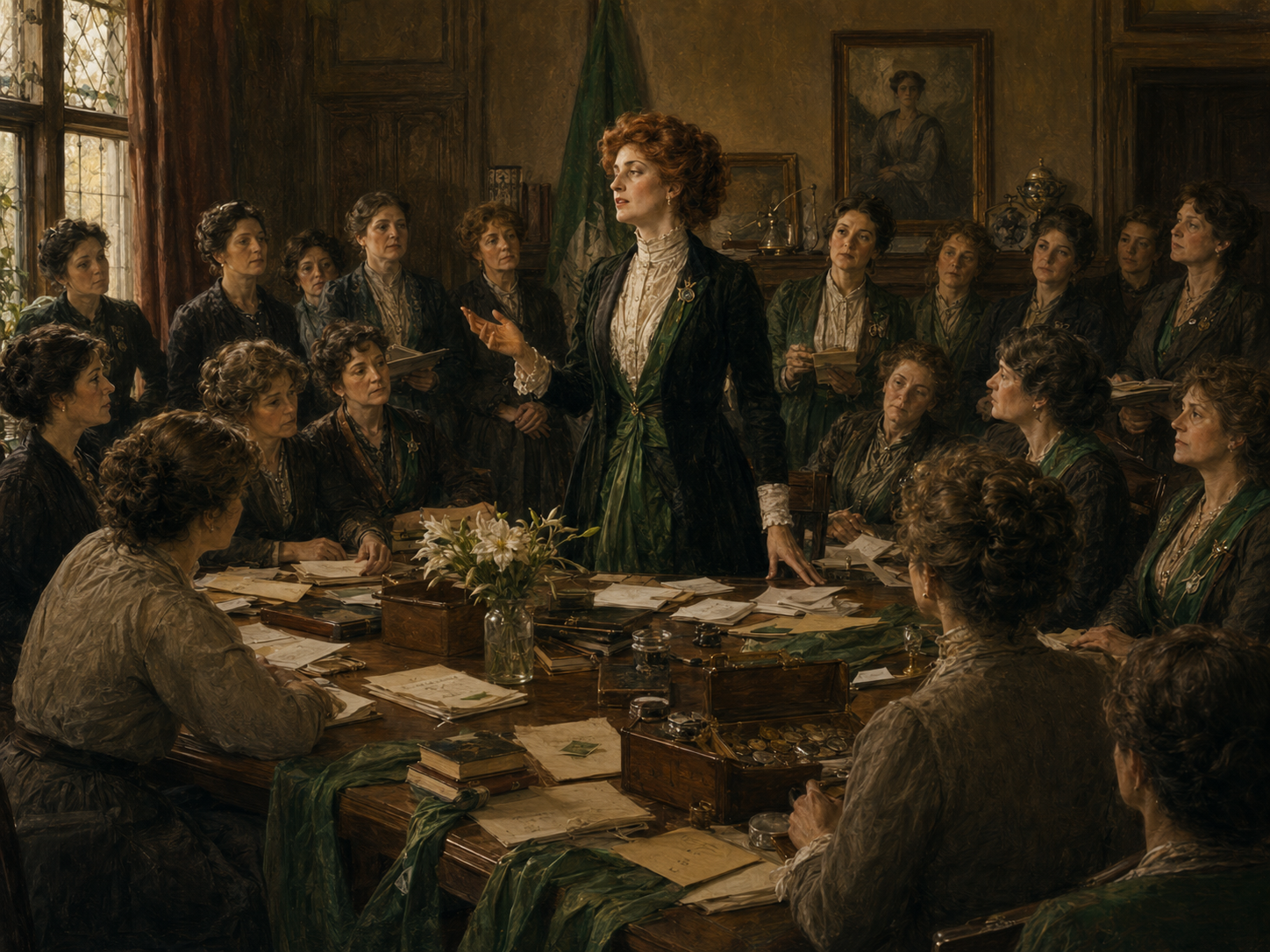
Read Article: Children FedInghinidhe na hÉireann has linked its demand for national independence with practical concern for poor children, arguing that political freedom must include protection from hunger, neglect and unequal education. Members of the women’s organisation have drawn attention to children arriving at school without adequate food and have pressed for organised meals in the poorest districts of Dublin. Their campaign places social welfare beside language, culture and sovereignty. For the Daughters of Ireland, a nation claiming the right to govern itself must also demonstrate that it can care for children whose health and education are damaged by poverty.
Maud Gonne’s interest in school meals developed from direct encounters with hungry children in Dublin. Inghinidhe na hÉireann established a school dinner committee and helped provide nourishing meals in impoverished districts, while also pressing Dublin Corporation and other authorities to accept greater responsibility. Hot stew, vegetables, milk and other simple food could determine whether a child remained attentive in class or struggled through the day weakened by hunger. The women treated malnutrition not as an individual moral failing but as a public problem requiring organisation, funding and political pressure from those willing to confront the conditions of urban poverty.
The campaign broadened the meaning of nationalist work. Irish independence was not presented solely as the transfer of authority from Westminster to an Irish government, but as a means of improving ordinary life. Children living in overcrowded rooms, attending school hungry or leaving education early could not be expected to benefit from cultural revival alone. The organisation therefore combined Irish-language classes, patriotic education and social assistance. Its members believed that national dignity required practical service, particularly where official institutions had failed. Feeding children became both humanitarian relief and a declaration that the Irish nation should assume responsibility for its most vulnerable members.
Women carried much of the daily labour behind the scheme. They raised subscriptions, purchased provisions, arranged cooking, distributed meals and collected evidence of need. This work gave female nationalists experience in administration and public campaigning while challenging the belief that politics belonged only to parliamentarians and councillors. Helena Molony and other members later became closely associated with the school meals campaign, pressing for meals of genuine nutritional value rather than token charity. Their activism connected women’s political organisation with labour conditions, housing, childhood health and educational opportunity, helping to make social reform part of advanced-nationalist discussion.
The campaign will be understood in Limerick, where poor families also face irregular wages, overcrowding and the difficulty of sending children to school properly fed. Teachers, charitable workers and parents know that hunger enters the classroom before lessons begin. Inghinidhe na hÉireann’s work suggests that national independence must be measured not only by flags, speeches or constitutional change, but by whether children are healthier, better educated and treated with dignity. Its members have placed a demanding principle before the nationalist movement: a free Ireland must be capable of feeding its children as well as celebrating its history.
- Helena Molony, Bureau of Military History Witness Statement No. 391, recollections concerning Inghinidhe na hÉireann, poor children and the school meals campaign.
- Bean na hÉireann, October 1910, articles concerning hungry schoolchildren, school dinners and the responsibility of public authorities. Exact page and column should be confirmed before formal citation.
- Maud Gonne MacBride Papers, National Library of Ireland, records concerning Inghinidhe na hÉireann’s social, educational and children’s activities. Exact manuscript number and folio should be confirmed before formal citation.
- Dublin Corporation records concerning school meals, poor children and municipal responsibility during the early twentieth century, Dublin City Archives. Exact volume, committee and meeting entry should be confirmed before formal citation.
- Margaret Ward, Irish Nationalist Women, 1900–1918, Manchester: Manchester University Press, 1983; consult the discussion of Inghinidhe na hÉireann, social welfare and school meals.
-
Culture Revived
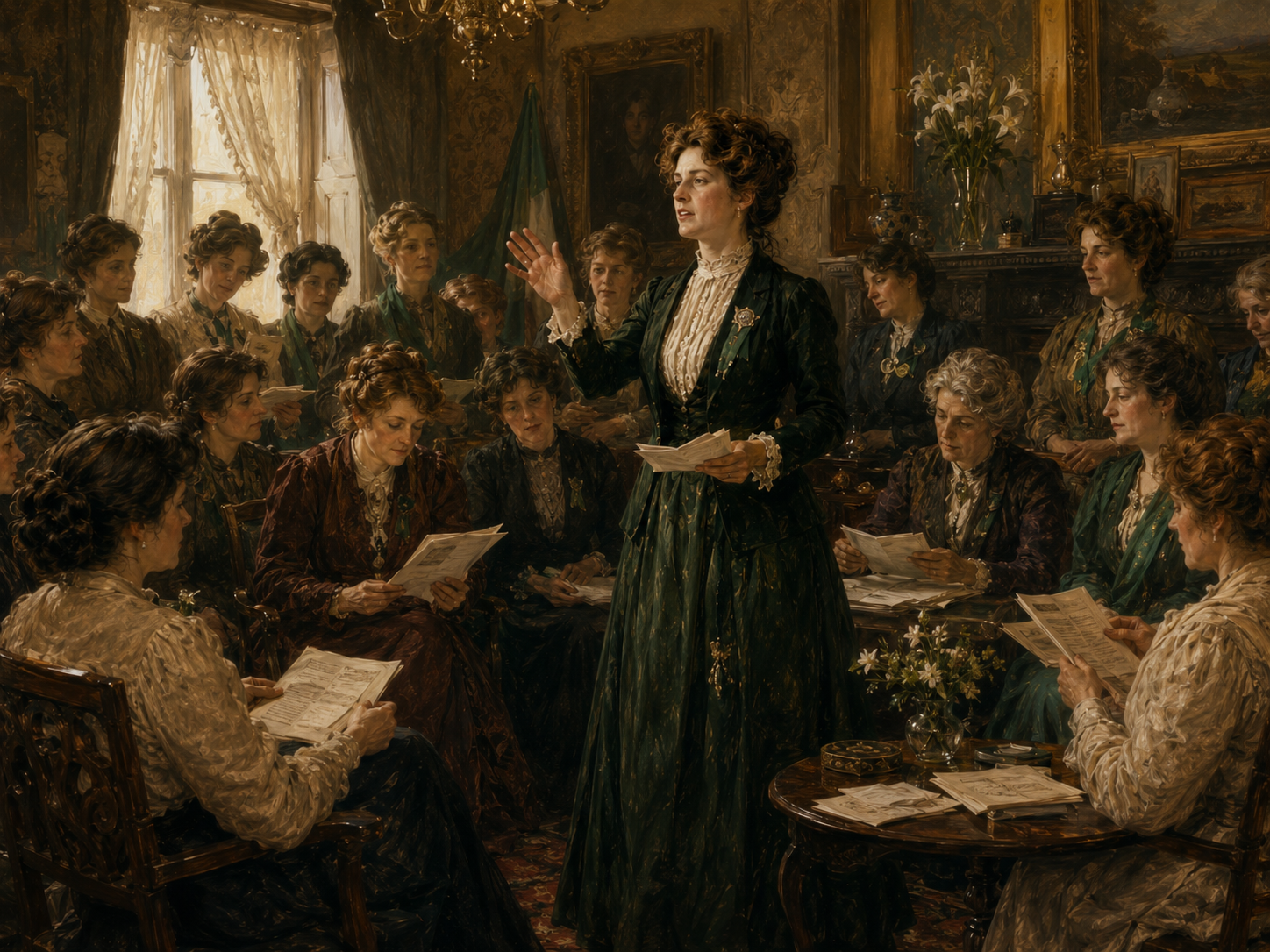
Read Article: Culture RevivedInghinidhe na hÉireann has placed the Irish language, national culture and economic self-reliance at the centre of its programme for complete independence. Established under Maud Gonne’s leadership, the women’s organisation argues that political freedom cannot be secured by parliamentary action alone while Irish people continue to neglect their own language, history, literature and industries. Members intend to cultivate national confidence through education and practical organisation, especially among children. Their approach joins separatist politics with everyday choices concerning speech, reading, entertainment and household spending, giving women a direct role in shaping the cultural foundations upon which an independent Ireland might eventually stand.
The organisation proposes classes in Irish language, history, literature, music and art, with particular attention given to younger people. Members believe generations educated principally through English institutions have been separated from important parts of Ireland’s inherited culture. Public lectures, dramatic performances, historical commemorations and children’s gatherings will therefore be used to make national learning accessible beyond formal schools. These activities resemble aspects of the Gaelic revival but carry a more openly political purpose. For the Daughters of Ireland, recovering the language and cultural memory is not antiquarian work. It is a means of weakening dependence upon Britain and strengthening belief in Ireland’s capacity to govern itself.
Irish theatre, music and storytelling will also form part of the movement’s cultural campaign. Members plan to encourage plays based upon Irish history and legend, promote Irish songs and challenge entertainments they consider degrading or excessively imitative of English popular culture. Their performances will allow women to write, act, organise and speak before audiences at a time when most formal political platforms remain controlled by men. The organisation’s cultural work may appear less confrontational than street protest, yet its leaders regard it as equally important. A population familiar with Irish achievement, they argue, will be less likely to accept political inferiority or dismiss independence as impractical.
Economic self-reliance provides another important element of the programme. Inghinidhe na hÉireann intends to support and popularise Irish manufactures, encouraging households to purchase goods produced by Irish workers whenever possible. This policy connects national independence with employment, trade and consumer choice. Money spent upon imported products is viewed as strengthening outside industries while Irish craftspeople, dressmakers and manufacturers struggle for markets. Women exercise considerable influence over household purchases, clothing and provisions, giving them practical power within such a campaign. Supporting Irish goods therefore becomes both an economic measure and a daily expression of national commitment rather than a principle confined to public speeches.
The programme may carry particular relevance in Limerick, where language revival, local manufacture, employment and cultural identity touch city and county life directly. Teachers, shopkeepers, craftspeople, musicians, writers and mothers could all participate without waiting for parliamentary permission or membership in male political organisations. Constitutional nationalists may question the separatist purpose behind these activities, while unionists will reject attempts to portray British cultural influence as harmful. Nevertheless, the Daughters of Ireland has defined national freedom broadly. Independence, in its view, requires political authority, cultural confidence and the practical habit of supporting Irish work, Irish learning and Irish creativity within ordinary life.
- Inghinidhe na hÉireann, early rules, stated objectives, membership records and annual reports, Maud Gonne MacBride Papers, National Library of Ireland, including MS 49,531/33. Exact folios should be confirmed before formal citation.
- Máire Ní Chinnéide O’Brolcháin, Bureau of Military History Witness Statement No. 321, describing the foundation and early work of Inghinidhe na hÉireann.
- Maud Gonne MacBride, Bureau of Military History Witness Statement No. 317, recollections concerning the organisation, its members and nationalist activities.
- Bean na hÉireann, Dublin, 1908–1911, articles promoting Irish language, culture, children’s education and Irish manufacture. Exact issue, page and column should be confirmed before formal citation.
- Margaret Ward, Irish Nationalist Women, 1900–1918, Manchester: Manchester University Press, 1983; consult the chapter concerning the cultural, educational and economic programme of the Daughters of Ireland.
-
Independence Demanded
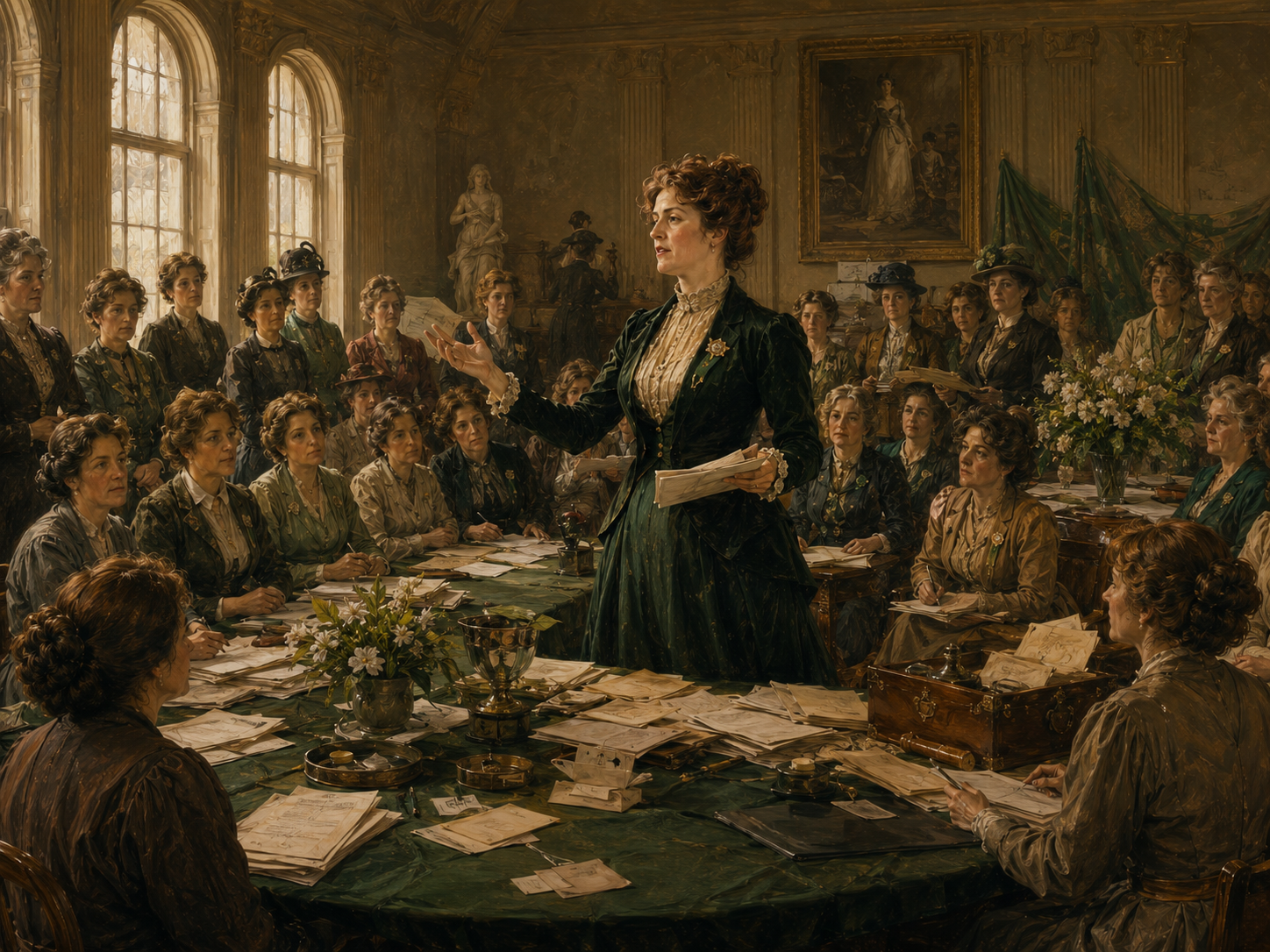
Read Article: Independence DemandedInghinidhe na hÉireann has declared that the restoration of an Irish legislature under Home Rule would not satisfy its political programme. The women’s organisation established under Maud Gonne’s leadership seeks the complete independence of Ireland rather than limited self-government within the United Kingdom. Its members argue that an Irish parliament remaining subject to Westminster and the Crown would leave the central question of national sovereignty unresolved. The declaration places the Daughters of Ireland firmly within advanced nationalism and separates the new movement from the constitutional programme pursued by John Redmond and the reunited Irish Parliamentary Party.
Home Rule supporters believe an Irish legislature could manage domestic affairs while preserving the connection with Britain. They hope disciplined parliamentary action at Westminster will eventually secure that settlement. Inghinidhe na hÉireann rejects the assumption that British institutions should determine the limits of Irish freedom. Its founding objectives place the re-establishment of complete independence before all other aims. The organisation regards Ireland as a nation entitled to govern itself, control its resources and shape its cultural life without external authority. This uncompromising position will attract separatists while alarming constitutional nationalists who fear that more radical demands may divide the movement.
The Daughters of Ireland connects political independence with cultural and economic self-reliance. Members intend to promote the Irish language, literature, history, music and art, especially among children and young people. They also support Irish manufacture and oppose cultural influences they believe encourage dependence upon Britain. These activities are not treated as decorative additions to political campaigning. The organisation considers national education, cultural confidence and domestic industry essential foundations of freedom. Ireland could not become independent merely through a constitutional document, its members argue, unless Irish people first developed the knowledge, organisation and confidence required to sustain national government.
The organisation’s programme also gives women an autonomous role within separatist politics. Women cannot vote in parliamentary elections and remain excluded from most positions of formal political authority. Inghinidhe na hÉireann nevertheless allows its members to determine policy, arrange public activities, publish arguments, raise funds and educate younger nationalists. The movement therefore challenges the political settlement between Britain and Ireland while also challenging assumptions within nationalism about women’s proper place. Its members do not intend merely to assist male leaders seeking independence. They claim the right to define the nation’s objectives and participate directly in the work required to achieve them.
In Limerick, the distinction between Home Rule and independence will become increasingly important as nationalist organisations compete for public support. Many voters remain loyal to constitutional methods and regard an Irish parliament as an attainable first step. Advanced nationalists answer that partial concessions may weaken the demand for sovereignty and reconcile Ireland permanently to British rule. The Daughters of Ireland has entered that dispute with unusual clarity. Its programme does not seek administrative reform, improved representation or a subordinate legislature. It demands an Ireland exercising complete national authority, and it places organised women among those responsible for bringing that objective into public life.
- Inghinidhe na hÉireann, early rules, objectives, membership records and annual reports, Maud Gonne MacBride Papers, National Library of Ireland, including MS 49,531/33. Exact folios should be confirmed before formal citation.
- Maud Gonne MacBride, writings concerning the aims and activities of Inghinidhe na hÉireann, Maud Gonne MacBride Papers, National Library of Ireland. Exact manuscript number and folio should be confirmed before formal citation.
- Helena Molony, Bureau of Military History Witness Statement No. 391, recollections concerning Inghinidhe na hÉireann and advanced-nationalist women’s organisation. Exact page should be confirmed before formal citation.
- United Irishman, Dublin, 1900–1901, reports and commentary concerning Inghinidhe na hÉireann, Home Rule and complete Irish independence. Exact issue, page and column should be confirmed before formal citation.
- Margaret Ward, Irish Nationalist Women, 1900–1918, Manchester: Manchester University Press, 1983; consult the chapter concerning the Daughters of Ireland and its separatist programme.
-
Women Organise
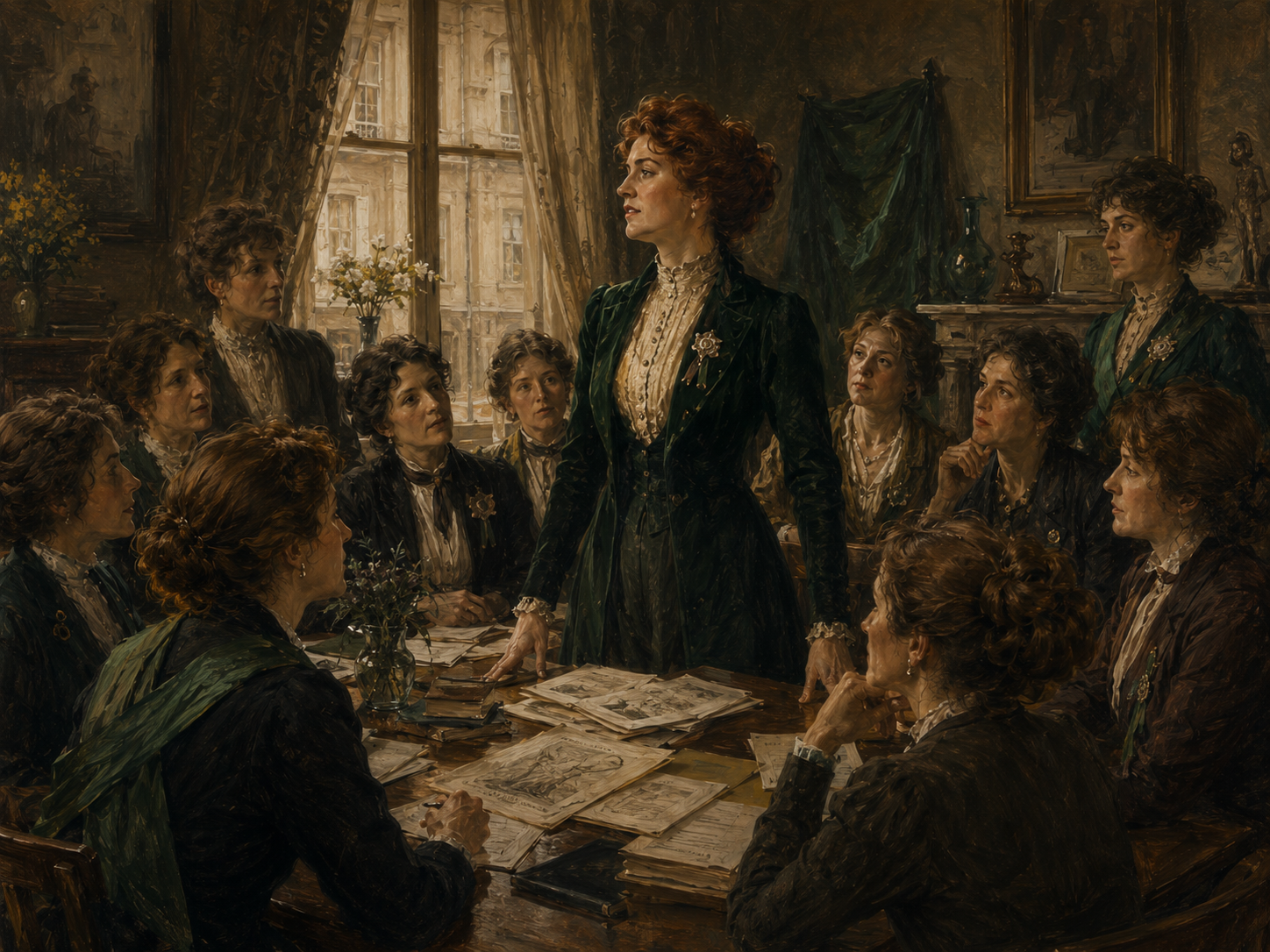
Read Article: Women OrganiseThe establishment of Inghinidhe na hÉireann has provided women with a distinct and independent place in advanced-nationalist politics. Founded under the leadership of Maud Gonne, the Daughters of Ireland differs from political organisations in which women are permitted only to collect subscriptions, prepare refreshments or assist male speakers. Its members intend to organise, educate and campaign in their own name. The organisation’s appearance during opposition to Queen Victoria’s visit demonstrates that women are no longer willing to remain silent observers of Ireland’s constitutional struggle. Nationalist women in Limerick will watch closely as this new political association develops.
Membership is reserved exclusively for women, allowing its officers and committees to determine their own programme without direction from parliamentary leaders. The organisation supports complete Irish independence rather than the limited restoration of an Irish legislature under Home Rule. It also intends to promote national self-reliance, women’s suffrage, Irish manufacture and relief for impoverished children. These objectives unite political separatism with social reform and cultural revival. By adopting Saint Brigid as its patron, the organisation connects contemporary female activism with an Irish historical tradition while asserting that women possess responsibilities to the nation extending beyond domestic and charitable work.
The Daughters of Ireland will use education and public culture as political instruments. Members plan to arrange Irish-language classes, lectures, dramatic performances, historical commemorations and activities for children intended to strengthen national awareness. Their organisation grew directly from preparations for a Patriotic Children’s Treat challenging the royal celebration held in Phoenix Park. That undertaking required women to raise money, secure provisions, coordinate volunteers and address large public gatherings. Such work demonstrated administrative ability normally denied recognition within political life. It also offered working and middle-class women opportunities to cooperate across social divisions through a shared commitment to Irish independence.
The new organisation challenges the structure of nationalism as well as British authority. Parliamentary politics remains overwhelmingly controlled by men, while women cannot vote in Westminster elections or stand as parliamentary candidates. Even nationalist movements often describe women as symbols of Ireland rather than political actors capable of shaping strategy. Inghinidhe na hÉireann rejects that passive role. Its members may speak publicly, publish political arguments, organise demonstrations and train younger women in nationalist activity. Their independence may create disagreement with male leaders who welcome women’s labour but remain reluctant to share authority, particularly when female activists advance more radical political and social demands.
For Limerick women, the development carries significance beyond Dublin. Women already sustain households, schools, shops, factories, religious societies, charitable organisations and cultural associations throughout the city and county. The Daughters of Ireland offers a model through which such experience can be directed towards political organisation. Its separatist programme will not attract every nationalist woman, and constitutional supporters may consider its methods too uncompromising. Nevertheless, the organisation has created a recognised female space within advanced nationalism. Women who were previously expected to assist from the margins may now determine policy, organise campaigns and speak publicly as political representatives of their own national convictions.
- Maud Gonne MacBride, writings on the history, activities and aims of Inghinidhe na hÉireann, Maud Gonne MacBride Papers, National Library of Ireland, MS 49,531/19.
- Helena Molony, Bureau of Military History Witness Statement No. 391, recollections of her involvement with Inghinidhe na hÉireann and advanced-nationalist women’s organisation.
- Inghinidhe na hÉireann, early rules, objectives, membership records and annual reports, Maud Gonne MacBride Papers, National Library of Ireland. Exact manuscript numbers and folios should be confirmed before formal citation.
- United Irishman, Dublin, April–July 1900, reports concerning the Patriotic Children’s Treat, Maud Gonne and the organisation of nationalist women. Exact issue, page and column should be confirmed before formal citation.
- Margaret Ward, Irish Nationalist Women, 1900–1918, Manchester: Manchester University Press, 1983; consult the chapter concerning the Daughters of Ireland and women’s autonomous nationalist organisation.
-
Daughters Founded
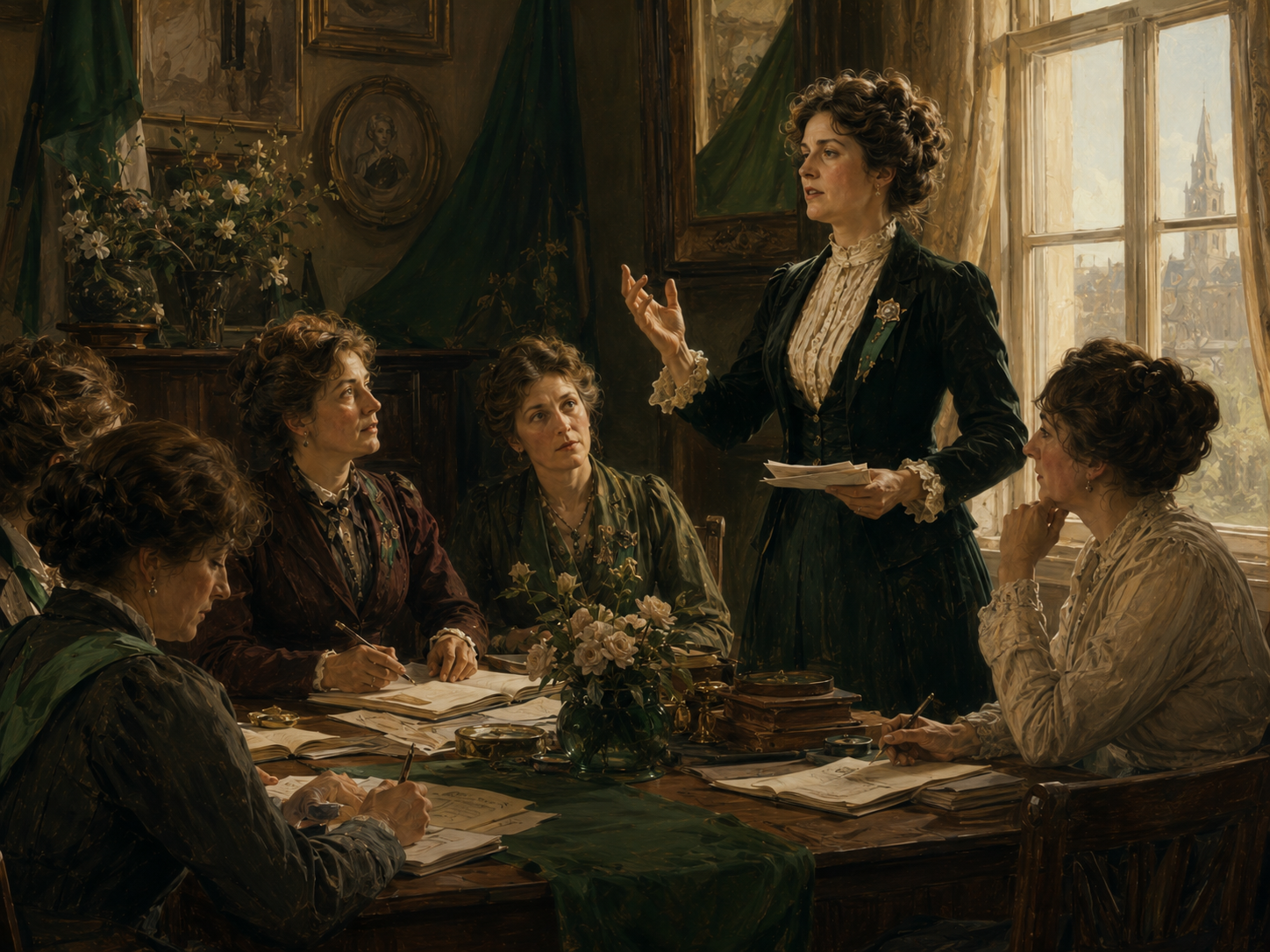
Read Article: Daughters FoundedInghinidhe na hÉireann, translated as the Daughters of Ireland, has been established in Dublin under the leadership of Maud Gonne. The women’s nationalist organisation emerged from a meeting held in the rooms of the Celtic Literary Society on Easter Sunday, where participants discussed practical opposition to Queen Victoria’s visit and its accompanying children’s celebrations. The founders intend to give women an independent place within advanced nationalism rather than restricting them to supporting roles in organisations directed by men. News of the initiative will attract attention in Limerick among women already active in cultural, charitable and political life.
The immediate concern of the meeting was the organisation of a Patriotic Children’s Treat as an alternative to the official gathering held for schoolchildren in Phoenix Park. Gonne and her colleagues objected to the association of childhood, education and public generosity with loyalty to the British Crown. They proposed instead to provide children with food, recreation, music and instruction centred upon Irish history and national identity. The project required fundraising, donated provisions and extensive voluntary labour. Its planning demonstrated that nationalist women could organise a large public undertaking independently and turn opposition to royal ceremony into practical community activity.
Inghinidhe na hÉireann adopted Saint Brigid as its patron and committed itself to the complete independence of Ireland. Its programme encouraged the study of the Irish language, literature, history, music and art, particularly among younger people. Members also intended to support Irish manufacture and resist cultural influences they believed weakened national self-respect. These aims placed political separatism beside education, economic self-reliance and cultural revival. The organisation rejected the limited objective of Home Rule and sought a sovereign Irish nation. Its work would therefore challenge both British administration and the more cautious constitutional methods pursued by the reunited Irish Parliamentary Party.
The new organisation also marks an important development in women’s public participation. Women remain excluded from parliamentary voting and from many political bodies, despite their extensive work in education, charity, labour organisation and nationalist campaigning. Gonne’s leadership offers women an organisation through which they can speak, raise funds, teach, publish and arrange demonstrations in their own name. Jennie Wyse Power, Anna Johnston, Annie Egan, Alice Furlong and other activists helped shape its early direction. Their involvement shows that nationalist politics is no longer confined to male parliamentarians, councillors and public speakers, but is extending into autonomous female organisation.
Limerick women have long sustained families, schools, religious societies, shops, workshops and charitable work, yet their political influence is rarely acknowledged formally. The creation of the Daughters of Ireland may encourage local women to connect national independence with education, culture, employment and the welfare of children. Critics will regard the organisation as excessively separatist, while constitutional nationalists may fear that it will deepen divisions within the movement. Nevertheless, its formation gives advanced nationalism a disciplined women’s voice. The opposition to one royal visit has produced an organisation whose ambitions extend far beyond the ceremonies of April 1900.
- Helena Molony, Bureau of Military History Witness Statement No. 321, stating that Inghinidhe na hÉireann was founded on Easter Sunday 1900 in the rooms of the Celtic Literary Society. Exact page should be confirmed before formal citation.
- Maud Gonne MacBride Papers, National Library of Ireland, MS 49,531/33, containing early membership lists, rules, objectives and documents concerning Inghinidhe na hÉireann.
- Maud Gonne MacBride, manuscript and typescript writings on the history, activities and aims of Inghinidhe na hÉireann, National Library of Ireland, Maud Gonne MacBride Papers. Exact manuscript and folio should be confirmed before formal citation.
- United Irishman, Dublin, April–May 1900, reports concerning Maud Gonne, the formation of the women’s organisation and preparations for the Patriotic Children’s Treat. Exact issue, page and column should be confirmed before formal citation.
- Inghinidhe na hÉireann, second annual report and early membership documents, circa 1900–1902, National Library of Ireland, MS 49,531/33.