Inside Gurranmore Police Cabin

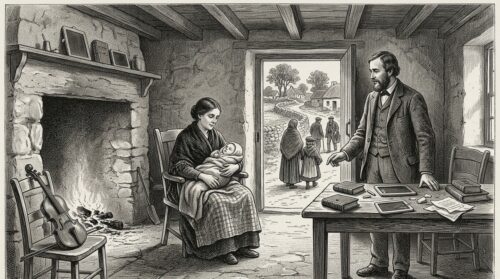
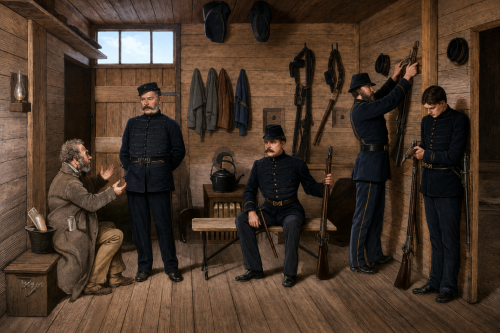
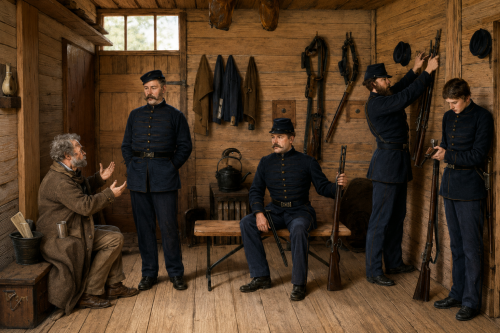
Around 1880, the interior of a police cabin at Gurranmore, near Pallas in County Limerick, reveals the modest conditions in which rural constables lived and worked. The small room is sparsely furnished, with simple wooden fittings, basic household utensils and few comforts. Uniformed officers occupy the cramped space, suggesting that the cabin served as both workplace and living quarters. Published in The Graphic in 1880, the image offers a rare glimpse of everyday policing in nineteenth-century Ireland. It preserves not only the appearance of the station, but also the disciplined, isolated life experienced by men posted in rural communities nearby.
Labourers Organise

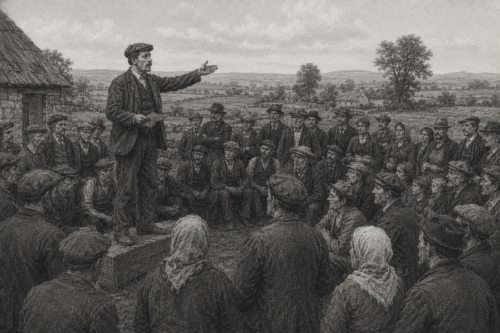
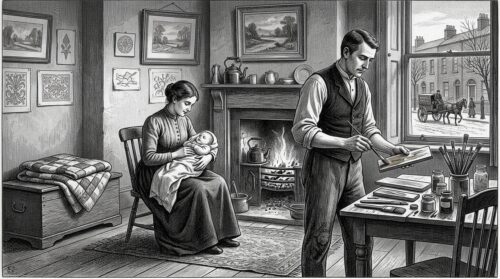
Agricultural labourers throughout County Limerick and the wider Munster countryside continue to campaign for better cottages, fairer wages and access to small plots of land. Their position remains distinct from that of tenant farmers seeking ownership of the farms they occupy. Labourers frequently possess neither secure employment nor property, depending instead upon seasonal hiring, daily wages and accommodation controlled by farmers or landlords. Public meetings increasingly insist that any settlement of the Irish land question must include the men and women whose labour sustains agriculture but who remain among the countryside’s poorest inhabitants.

Painter Born

Maurice Joseph MacGonigal was born in Ranelagh, Dublin, on 22 January 1900, the only son and third child of Francis MacGonigal and Caroline Lane. His father was a painter and decorator from County Sligo, while his mother belonged to a family already connected with Irish craftsmanship and art. Growing up within that environment exposed him to colour, design and skilled manual work long before he entered formal training. The child born in suburban Dublin would eventually become an influential painter, teacher and administrator whose landscapes, portraits and scenes of Irish life secured him a prominent place in twentieth-century Irish art.

Treaty Stone

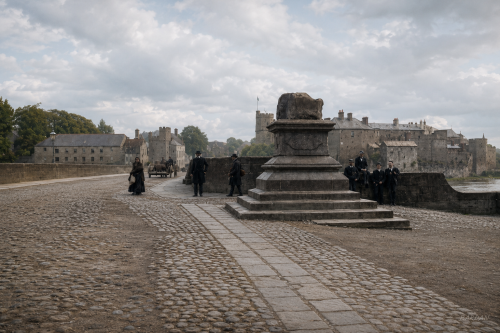
AI-assisted archival reconstruction showing the Treaty Stone on Thomond Bridge, Limerick, with the riverside castle buildings and historic bridge approach in the background. The scene presents the monument, cobbled roadway, bridge parapet, pedestrians, and horse-drawn traffic in a restored early twentieth-century setting, preserving the atmosphere of the original historical source image.

Broadcast Pioneer

Séamus “Clan” Clandillon was born near Gort, County Galway, on 6 June 1878 into a household closely connected with education. His father, William A. Clandillon, was a national school teacher, while his mother, Joanna Little, also came from a family shaped by work, migration and service. The countryside surrounding Gort preserved a strong inheritance of Irish-language speech, traditional singing and local storytelling. These influences entered Clandillon’s life early and later guided his work as a teacher, musician, civil servant and broadcaster. The child born in rural Galway would eventually help determine how the newly independent state presented Irish culture through radio.

A Busy Day On George Street

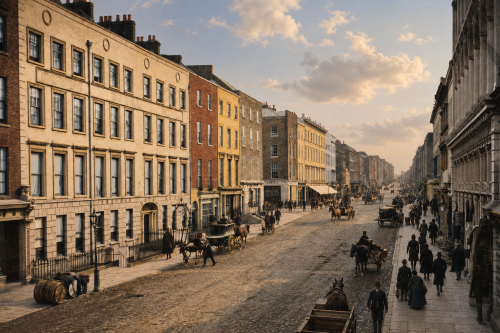
George Street, now O’Connell Street, formed the bustling commercial and social heart of Limerick around 1900. Elegant Georgian and Victorian façades lined the thoroughfare, their ornate shopfronts illuminated by gaslight and filled with goods for local shoppers. Horse-drawn carriages, jaunting cars and merchant carts crowded the roadway, while pedestrians in heavy coats and hats moved between businesses and hotels. The grand Cruises Royal Hotel stood among the street’s most prominent landmarks, welcoming merchants, travellers and visitors. This scene reflects the energy of late-Victorian Limerick before motor traffic transformed the city’s principal shopping street and historic urban centre during a changing era.

Land Grabbers

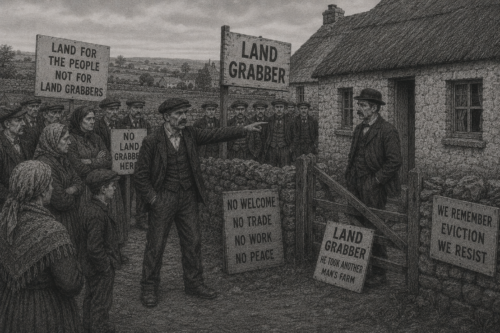
The hostile term “land grabber” continues to be directed against tenants who enter farms from which earlier occupiers have been evicted or otherwise displaced. Across rural Ireland, such men may possess legal agreements with landlords, yet neighbours frequently regard their occupation as a betrayal of the former tenant and the wider land campaign. The description carries consequences extending beyond political criticism. Those branded with it may face public condemnation, social isolation and organised pressure intended to make the disputed holding difficult to retain. In County Limerick, the label remains inseparable from memories of eviction, rent conflict and agrarian resistance.

Wellesly Bridge, Limerick (c.1840s)

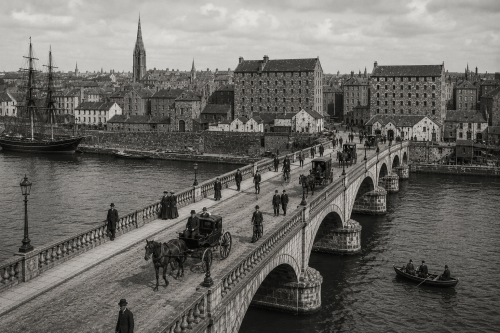
A sweeping view of Wellesley Bridge, now Sarsfield Bridge, crossing the River Shannon in Limerick City. The elegant 1835 structure rises with restrained neoclassical grace, its stone arches carrying traffic between the historic city centre and Thomondgate on the northern shore. Calm river water reflects the bridge’s pale masonry, while quays, rooftops, and distant activity suggest a city expanding beyond its old boundaries. Maritime details, mooring points, and riverside movement evoke Limerick’s trading past. The scene should feel dignified, atmospheric, and historically grounded, presenting the bridge as both active crossing and enduring architectural landmark.

Inside Gurranmore Police Cabin

Around 1880, the interior of a police cabin at Gurranmore, near Pallas in County Limerick, reveals the modest conditions in which rural constables lived and worked. The small room is sparsely furnished, with simple wooden fittings, basic household utensils and few comforts. Uniformed officers occupy the cramped space, suggesting that the cabin served as both workplace and living quarters. Published in The Graphic in 1880, the image offers a rare glimpse of everyday policing in nineteenth-century Ireland. It preserves not only the appearance of the station, but also the disciplined, isolated life experienced by men posted in rural communities nearby.
Contracts Shortened

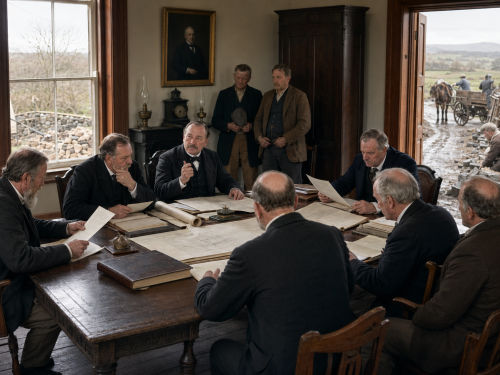
Limerick No. 1 District Council altered the system governing maintenance and repair contracts for public roads when members decided that future agreements would run for twelve months rather than the four-and-a-half-year term previously used. The decision followed an adjourned quarterly meeting held under the chairmanship of William Noonan and reported on 18 January 1900. Road tenders rejected at an earlier sitting had been referred to Limerick County Council, which declined to consider them and returned the entire question to the District Council. Members were therefore required to reconsider both the tenders and the basis upon which future road work would be awarded.

Now Sharing: Articles (154) | Images (196) | Total Items Archived (350)
Our Mission: 100,000 Items | Total Percentage Achieved (0.35%)