Mathew Bridge, Limerick

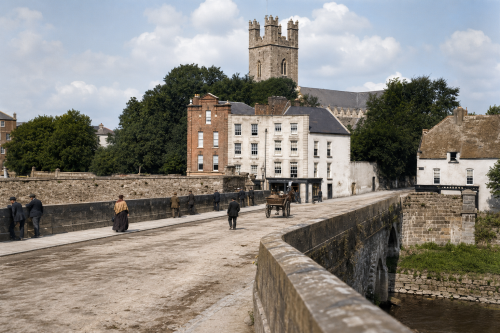
Mathew Bridge, completed between 1844 and 1846, forms an important crossing over the Abbey River in Limerick City. Designed by William Henshaw Owen, the triple-span ashlar limestone structure features segmental arches, rounded breakwaters and a broad flat roadway. It linked Rutland Street and Bank Place with Bridge Street and Merchant’s Quay, connecting the Georgian commercial quarter of Newtown Pery with medieval Englishtown. The bridge replaced the inadequate New Bridge of 1762 and accommodated the city’s growing Victorian traffic. Named for Father Theobald Mathew, the celebrated temperance reformer, it remains a notable example of nineteenth-century Irish civic engineering and urban development.

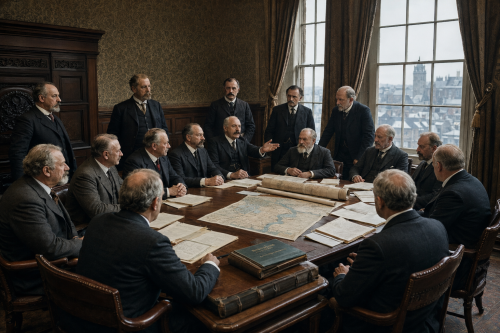
Commons Uproar

The House of Commons descended into uproar on 2 February 1900 after Colonel Edward Saunderson invoked remarks attributed to John Daly, the Mayor of Limerick, during a fierce attack upon Irish Nationalists. Speaking in a debate on the Government’s conduct of the South African War, the North Armagh Unionist argued that a ministry dependent upon Nationalist votes could not be trusted to prosecute the conflict. Limerick’s political voice therefore entered Westminster at a moment of imperial crisis, exposing the gulf between Irish opposition to the war and Unionist demands for victory and loyalty to the Crown.

Georgian Vision

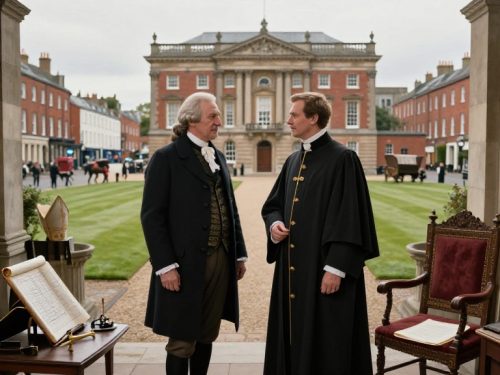
Edmond Sexten Pery emerged as one of the most accomplished Irish parliamentarians and urban improvers of the eighteenth century. Representing Limerick City in parliament, he combined political skill with a practical interest in construction, land development and civic expansion. His election as Speaker of the Irish House of Commons in 1771 placed him in an office of considerable authority during a period when parliamentary procedure, patronage and government policy were closely connected. Returned to the chair three times, Pery remained Speaker until 1785 and used his standing in Dublin to advance measures and obtain public funding that benefited Limerick.

Editorial Pressure

Nationalist newspapers increasingly presented reunion as a political necessity if Ireland was to recover influence at Westminster. Nearly ten years of division had left the parliamentary movement broken into Parnellite, Dillonite and Healyite groupings, each claiming to represent the national cause while weakening the collective strength of Irish MPs. Editorial argument did not always conceal sympathy for particular leaders, but a common warning became difficult to ignore: a divided party could neither discipline its members nor exploit opportunities created by close divisions in the House of Commons. Unity was therefore described less as reconciliation between personalities than as an instrument of national effectiveness.

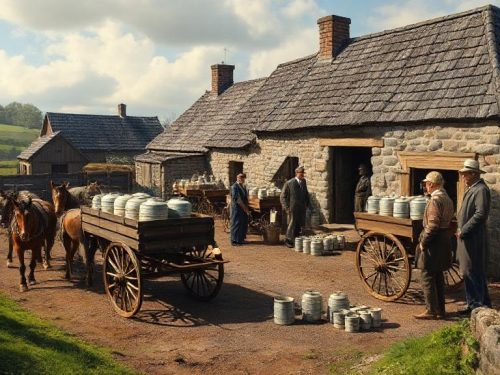
Creamery Contest

Agricultural co-operation is challenging the private commercial control long exercised over Irish butter production and marketing. Farmer-owned creameries allow milk suppliers to combine their resources, process milk by machinery and sell butter through organisations answerable to their members. The movement carries particular importance in County Limerick, where dairying supports farmers, labourers, carriers, merchants and rural households. Supporters argue that producers should receive a greater share of the value created from their milk instead of remaining dependent upon private creamery proprietors, butter buyers and commercial intermediaries whose interests may not coincide with those of farming communities.

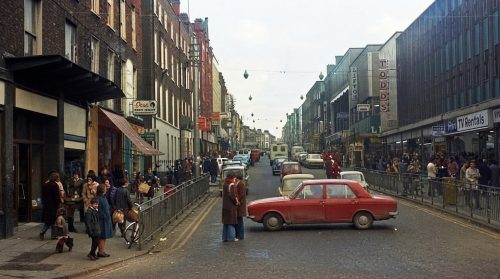
Shoppers On William Street

William Street, Limerick, appears busy and energetic in this view from 1975. Shoppers crowd the pavements beneath traditional shopfronts, while cyclists, buses and family cars compete for space along the roadway. Georgian buildings on the left stand opposite the modern commercial blocks of the period, including the prominent Lifts sign. Overhead street lighting and central pedestrian railings reflect changing approaches to traffic management in the city centre. The scene captures a transitional moment when long-established local businesses, older architecture and everyday street life existed beside post-war redevelopment, growing car ownership and a more modern retail environment within central Limerick itself.

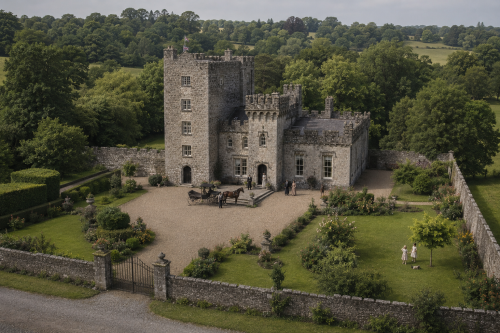
Castlegarde Castle Through Time

Castlegarde Castle, near Cappamore in County Limerick, is regarded as Ireland’s oldest continuously inhabited castle. Established by the O’Brien family around 1190, its five-storey medieval tower rises from a limestone outcrop, strengthening its defensive position. Original features include an internal well and a murder hole above the entrance passage. In 1820, Waller O’Grady commissioned architects James and George Pain to add a castellated Gothic extension, harmonised with the ancient keep. A carved head of Brian Boru overlooks the entrance, while three unusual stone figures representing Bacchus, Pallas Athene and Aphrodite survive within the gatehouse. Today, it remains a private residence.

Shannon Defence

On 2 January 1900, the Limerick Fishery Conservators unanimously opposed the scheme promoted by the Shannon Water and Electric Power Company. Meeting under Lord Massy’s chairmanship, the members viewed the proposed parliamentary bill as a direct threat to interests dependent upon the river. Their objections extended beyond salmon fishing to navigation, milling and the public water supply of Limerick. The Conservators feared that private promoters seeking to harness the Shannon for electricity might secure broad powers before the consequences for existing river users had been fully investigated or adequately protected.

Shanagolden Through the Ages

Shanagolden, whose Irish name Seanghualainn means “old shoulder,” possesses a history stretching from early medieval warfare to plantation settlement and modern political struggle. Nearby lands witnessed Mahon’s victory over Norse forces in 968, while Shanid Castle later became a major FitzGerald stronghold. St Katherine’s Abbey reflects the district’s medieval religious heritage. Following the Desmond conflicts, the village was reshaped as an Elizabethan plantation settlement, leaving its broad street, square and central green. During the nineteenth century, policing, trade, farming and creamery production shaped local life. Shanagolden also played a remembered role during Ireland’s War of Independence in the twentieth century.

Barricades In Limerick

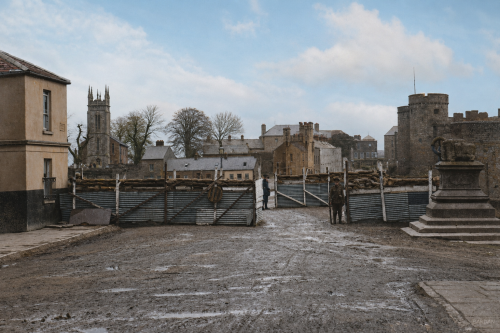
At Thomond Bridge in Limerick in 1923, a soldier stands guard beside a rough barricade near the Treaty Stone, a symbolic landmark now overshadowed by civil conflict. The scene evokes the tense aftermath of the Treaty split, when Anti-Treaty IRA forces and pro-Treaty National Army troops fought for control of the city. Sandbags, timber, stone, and street debris suggest hurried urban fortification, while the soldier’s watchful posture conveys danger and uncertainty. The bridge becomes both military checkpoint and historic threshold, linking Limerick’s medieval memory with the bitter street warfare that marked the Irish Civil War in the city that summer.

Now Sharing: Articles (154) Images (568) Total Items Archived (722)
Our Mission: 100,000 Items Total Percentage Achieved (0.72%)