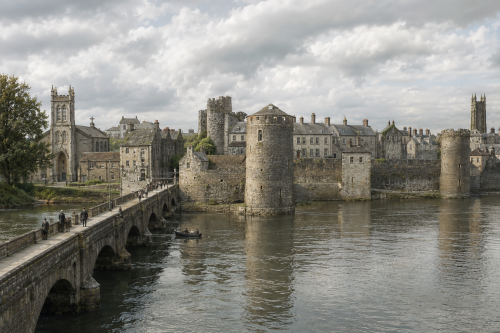
Limerick from the Shannon, c. 1850s

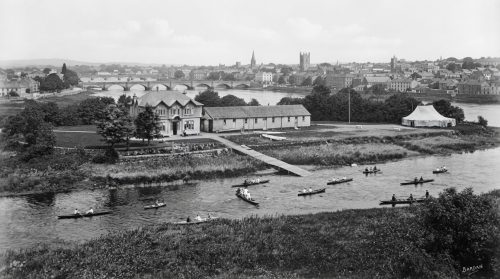
By the mid-nineteenth century, Limerick remained one of Ireland's most strategically significant river cities, its fortunes long tied to the Shannon as a route for trade, defence, and settlement. The medieval walls and towers still visible in this period recalled centuries of contested history, from Norman fortification to the sieges of the seventeenth century that shaped the city's identity. Alphonse Dousseau's romanticised depiction reflects a wider mid-Victorian fascination among European artists with Ireland's older townscapes, capturing Limerick at a moment when its historic core coexisted with the pressures of modernisation, emigration, and post-Famine recovery reshaping much of the country during this era.
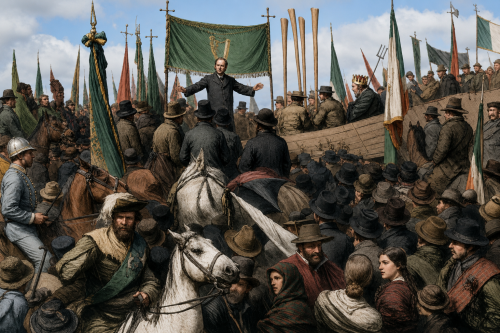
Limerick Land League Demonstration

This 1880 illustration depicts a Land League demonstration in Limerick, organised to advance the rights and welfare of Irish tenant farmers. Large crowds gathered to protest against insecure tenancies, excessive rents and the threat of eviction under the landlord system. Speakers and organisers promoted sweeping land reform, including tenant protection and the transfer of land ownership from landlords to those who worked it. Such demonstrations formed part of the wider Irish Land War, combining public meetings, political pressure and organised resistance. The scene reflects the growing strength of rural agitation and nationalist politics in late nineteenth-century Limerick and Ireland nationally.

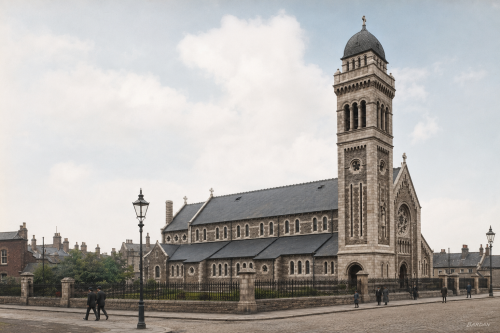
St Mary’s Church

St Mary’s Church stands on Athlunkard Street in Limerick, occupying a site associated with Catholic worship since the eighteenth century. The present church opened in 1932, replacing an earlier chapel where Mass was first celebrated on December 10, 1749. Designed by Ashlin and Coleman of Dublin, the building reflects the scale and ambition of parish church architecture in early twentieth-century Limerick. Its tower, façade, railings and street setting mark an important local landmark, while the surviving holy water font from the former chapel links the modern church with the long religious history of St Mary’s parish community today.

Athlunkard Boat Club

Athlunkard Boat Club was founded in 1898, taking its name from its home beside O’Dwyer Bridge at the end of Athlunkard Street. By the 1930s, the club was already firmly woven into Limerick’s rowing tradition, with a proud record on the water. Its greatest distinction came through the Senior Eight Championship, which Athlunkard won twice, in 1913 and 1923. That achievement made it the only Limerick club to secure the title on two occasions. Its riverside presence and competitive success gave Athlunkard Boat Club a lasting place in the sporting history of the city and the wider Shannon rowing community.

Busy Day On O’Connell Street

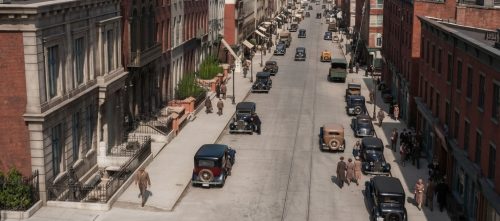
O'Connell Street is Limerick's main thoroughfare, stretching one mile from Arthur's Quay to The Crescent. Originally called George's Street, it was built in the late 1700s as the backbone of the Georgian "Newtown Pery" expansion. The street features elegant red-brick townhouses, many built around the year 1867.The city renamed the street in the 1920s to honor Daniel O'Connell, an Irish leader who fought for Catholic rights. The Crescent at the south end of the street features a famous monument dedicated to him. Throughout its history, the street has served as the city's primary center for shopping and commerce. This image 1940.

Shannon Resistance

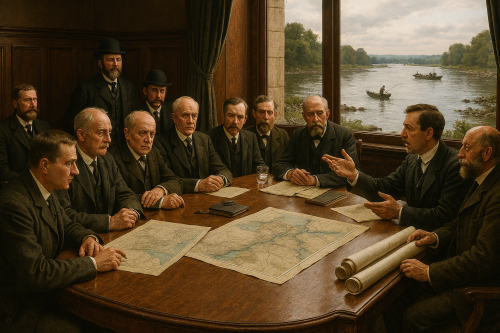
At the opening of the twentieth century, Limerick’s fishery interests faced a proposal they believed could transform the River Shannon at enormous local cost. The Limerick Fishery Conservators, presided over by Lord Massy, met to consider the Shannon Water and Electric Power Company’s plan to secure parliamentary authority for works near Lough Derg and Clonlara. The promoters argued that Shannon water could be diverted through engineered channels to generate electricity for Limerick and surrounding districts. The Conservators unanimously resolved to oppose the measure, regarding it as a direct threat to the river upon which fisheries, navigation and established livelihoods depended.

Creamery Contest

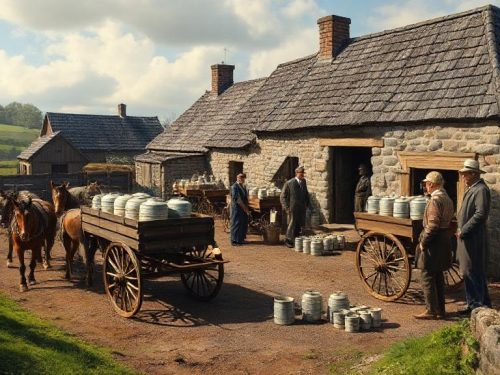
Agricultural co-operation is challenging the private commercial control long exercised over Irish butter production and marketing. Farmer-owned creameries allow milk suppliers to combine their resources, process milk by machinery and sell butter through organisations answerable to their members. The movement carries particular importance in County Limerick, where dairying supports farmers, labourers, carriers, merchants and rural households. Supporters argue that producers should receive a greater share of the value created from their milk instead of remaining dependent upon private creamery proprietors, butter buyers and commercial intermediaries whose interests may not coincide with those of farming communities.

Shannon Bridge Under Construction (1987)

Shannon Bridge, opened on 30 May 1988, remains widely known in Limerick as the “New Bridge”, despite now being several decades old. This four-lane concrete girder crossing connects the Dock Road and Mallow Street area with the North Circular Road and Clancy Strand, providing an important inner-city relief route across the River Shannon. Soon after opening, it acquired another memorable nickname, the “Whistling Bridge”. Strong winds travelling up the Shannon Estuary passed through gaps in the original railings, producing a loud, eerie shrill sound. The problem was later reduced by fitting mesh grilles over the railings along the exposed crossing.

Kincora Preparations

A large public meeting reported on 4 January 1900 gathered in the Lecture Hall of Limerick’s Catholic Institute to organise a fête and fancy fair in aid of the new St Joseph’s Church then under construction in St Michael’s Parish. Bishop Edward Thomas O’Dwyer presided over an attendance of clergy, women, merchants and other prominent citizens. The gathering agreed that the event should take place during June and established committees to undertake the considerable work involved. Their responsibilities included subscriptions, entertainments, stalls, decorations, publicity and the practical management of what organisers intended to become a major civic fundraising occasion.

Chalice Replica

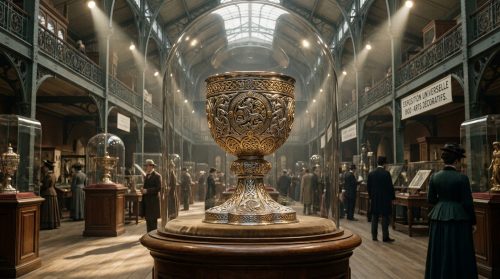
An elaborate reproduction of the Ardagh Chalice, rather than the original early medieval vessel, brought County Limerick’s artistic inheritance before the public in April 1900. The copy formed part of a collection assembled by the Goldsmiths’ and Silversmiths’ Company for the Exposition Universelle in Paris and was shown at the firm’s London premises before travelling to France. Contemporary coverage therefore does not support the claim that the object received a preliminary display in Limerick. Its relevance to the county remained unmistakable, however, because the celebrated original had been discovered at Reerasta, near Ardagh, in 1868.

Now Sharing: Articles (154) Images (578) Total Items Archived (732)
Our Mission: 100,000 Items Total Percentage Achieved (0.73%)