
Kincora Preparations(c.1900s)
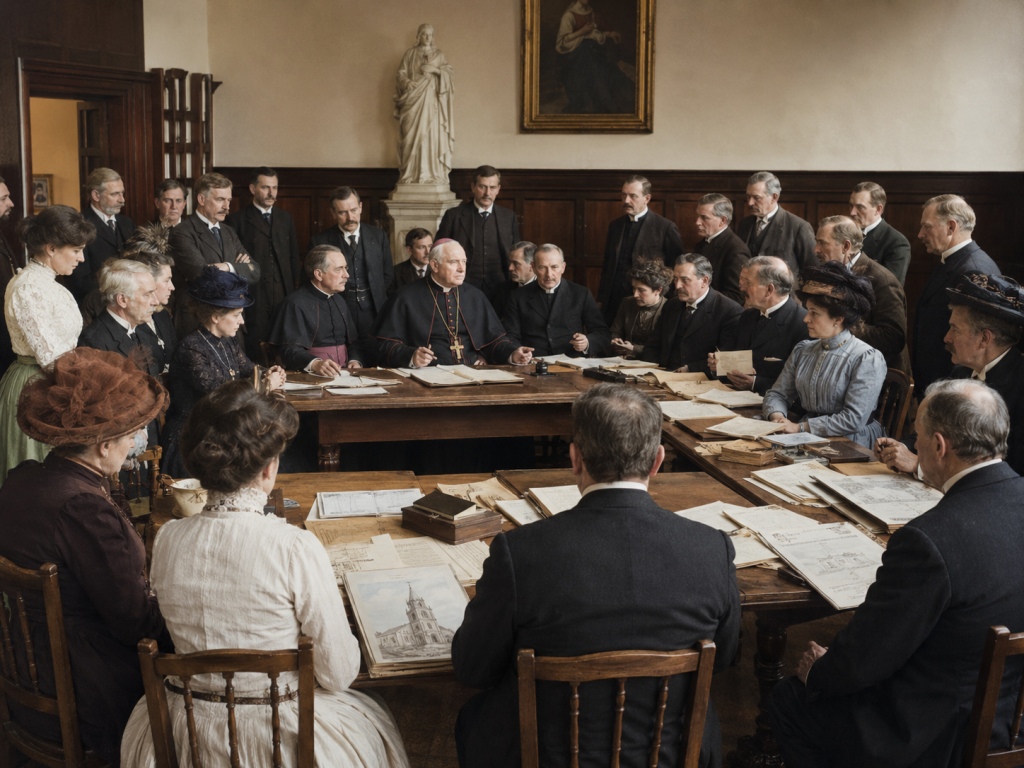
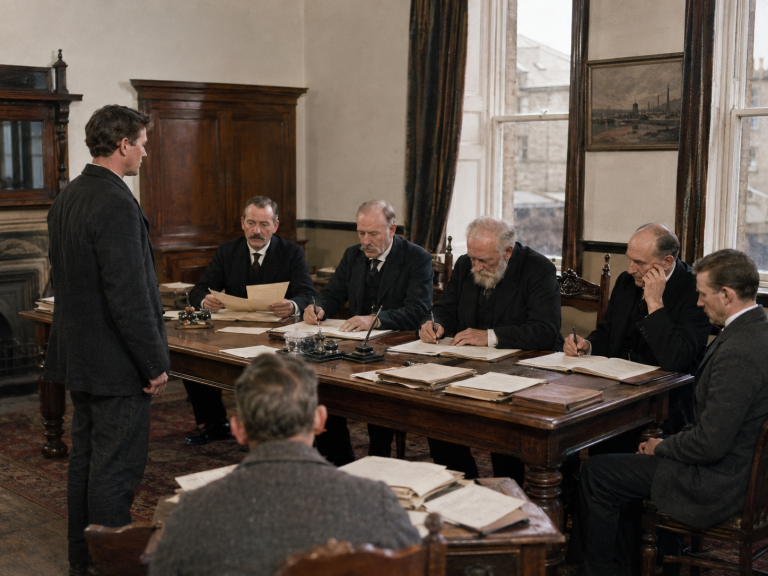
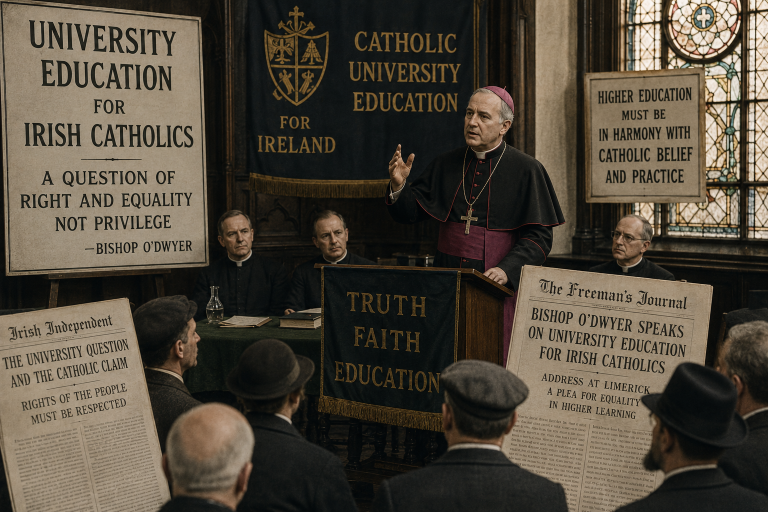
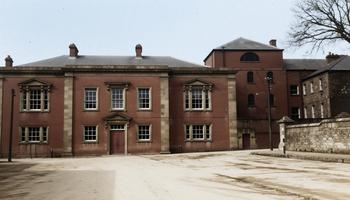
A large public meeting reported on 4 January 1900 gathered in the Lecture Hall of Limerick’s Catholic Institute to organise a fête and fancy fair in aid of the new St Joseph’s Church then under construction in St Michael’s Parish. Bishop Edward Thomas O’Dwyer presided over an attendance of clergy, women, merchants and other prominent citizens. The gathering agreed that the event should take place during June and established committees to undertake the considerable work involved. Their responsibilities included subscriptions, entertainments, stalls, decorations, publicity and the practical management of what organisers intended to become a major civic fundraising occasion.
Father O’Donnell, administrator of St Michael’s Parish, explained that the organisers had delayed making arrangements until they established whether Limerick’s hospitals intended to hold a fête during the same year. Once the hospital committees confirmed that no competing event was planned, the church committee selected June. The timing also allowed the celebrated Limerick tenor Joseph O’Mara to assist with the programme. The undertaking was named the Kincora Fête, invoking the royal residence traditionally associated with Brian Boru and giving the planned celebration a distinctively Irish historical character without limiting its appeal to one narrow religious or social constituency.
The most significant feature of the meeting was the reported promise of assistance from Protestant residents as well as Catholic supporters. Father O’Donnell welcomed these offers publicly and stated that the organisers would gladly accept them. This cooperation did not remove Limerick’s religious divisions, nor should it be interpreted as evidence that sectarian differences had disappeared. It nevertheless showed that charitable and civic occasions could create practical alliances across denominational boundaries. Merchants, professionals, performers and householders could contribute money, prizes, labour or influence to a project formally associated with Catholic parish life but presented as an important addition to the wider city.
Construction of St Joseph’s had begun because the existing church arrangements in the extensive St Michael’s Parish no longer adequately served its growing population. The new building on Military Road was designed by William Edward Corbett, with John Ryan and Sons engaged as builders. Raising the necessary funds required more than ordinary weekly collections. Large fêtes transformed charitable giving into public entertainment, drawing visitors through music, performance, novelty attractions, competitions and decorated stalls. They also generated temporary work for tradespeople, printers, caterers and performers while allowing social organisations and prominent families to demonstrate support for a visible civic undertaking.
The committees established at the Catholic Institute carried their preparations through to the Kincora Fête held at the Markets Field in June 1900. Cardinal Michael Logue opened the celebration, while a large choir and numerous attractions helped draw public attendance. Among the advertised novelties was the cinematograph, still unfamiliar to many Irish audiences. The fête produced valuable income for the church building fund, although St Joseph’s required further work before opening in 1904. The January meeting therefore marked the point at which a parish construction project became a citywide campaign involving religious leadership, commercial organisation, popular entertainment and limited but meaningful cross-community cooperation.
Primary Sources
- Freeman’s Journal, “Proposed Fete in June,” 4 January 1900, p. 6.
- St Joseph’s Parish, St Joseph’s Parish: A History, Limerick, pp. 13–14, account of the church-building project and the Kincora Fête of June 1900.
- Denis Condon, Early Irish Cinema, 1895–1921, Dublin: Irish Academic Press, 2008, pp. 22–23, identifying the cinematograph among the attractions advertised for the Limerick Kincora Fête.
- St Joseph’s Parish, “Parish History,” account of the church’s construction, architect William Edward Corbett and builders John Ryan and Sons.
- Gerard Hannan, “Limerick — January 1900,” Irish Media Man, 28 February 2013, transcription of the contemporary Freeman’s Journal report.