Archived: 20 October 2026
Abstract
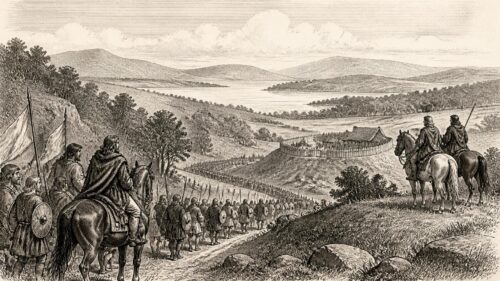
In 1456 Enrí Ó Néill consolidated power in northern Ireland after the death of his father, Eóghan, whom he had displaced as ruler of Tír Eóghain in 1455. Allied with Tomás Óg Mag Uidhir, he invaded Inis Eógain, where Domhnall Ó Domhnaill of Tír Conaill was killed on 28 May and opponents captured. Ó Néill installed Toirdelbach Cairbreach Ó Domhnaill, securing acknowledged superiority rather than annexation. Obituaries from Connacht recorded the deaths of Moylurg’s tanist Fergal Mac Diarmata, his daughter Lasarfina, and John Burke. At Lisgabhail, deaths among teachers and fosterage networks reveal ecclesiastical communities, learning, kinship and women’s roles.
Read Article
Archived: 20 October 2026
Abstract
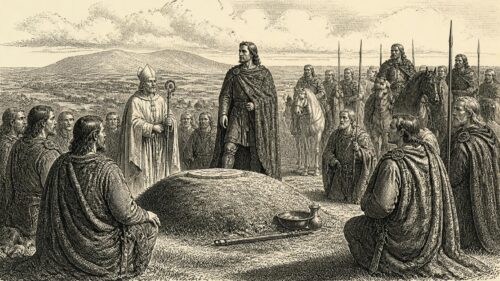
In 1455 Henry O’Neill was inaugurated at Tullyhogue as king over Ulster, backed by allied lords and Armagh’s ecclesiastical leader, although his father remained alive and dynastic conflict persisted. Elsewhere, Philip Maguire’s forces raided east Breifne, burning settlements, killing rivals and capturing a crannog, demonstrating mobile lordly warfare. Annals also recorded deaths among ruling, clerical and learned families, revealing networks of status, hospitality and service. At Navan, Abbot John Bole granted a Pentecost indulgence supporting religious observance and monastic repair. In Connacht, a lord was killed by his own men. These events illustrate Ireland’s multiple, localised and precarious political worlds.
Read Article
Archived: 20 October 2026
Abstract
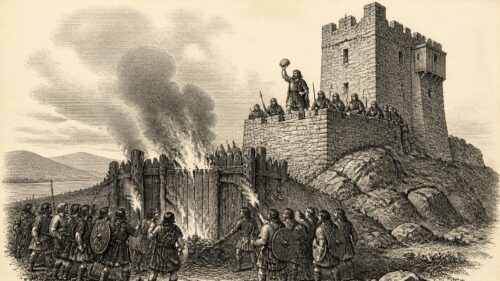
In 1454, Ireland’s fragmented political order was illustrated by conflict, succession and cultural exchange. At Inis Castle in Tír Chonaill, Domhnall O’Donnell killed rival Ruaidhrí O’Donnell with a stone during a siege, securing the lordship temporarily. Annals also record deaths and kin violence among the O’Reillys, Maguires and O’Molloys, alongside contested local successions and cattle raids. Sir Edward FitzEustace’s death led to Thomas fitz Maurice FitzGerald’s election as justiciar in Dublin. Notices commemorate elite women and a notable Fermanagh sermon. Meanwhile, Edmund MacRichard Butler’s manuscript, copied by Gaelic scribes during campaigning, vividly demonstrates interconnected Anglo-Irish patronage, learning, warfare and mobility.
Read Article

Archived: 20 October 2026
Abstract
In 1453, Irish annals record regional struggles rather than a national crisis. At Ardglass, a Dublin fleet pursuing Welsh raiders who had seized the archbishop defeated Henry Mac Néill Buidhe’s Clandeboye force, aided by the Savages; leading Ulster men died and Henry was captured. In Oriel, Hugh Roe MacMahon died and was succeeded by Felim MacMahon, while Donnchadh MacCarthy Reagh’s death brought Diarmaid an Dúna to power in Carbery. Killings, deaths and disputed lordships in Connacht, Bréifne and Tirerrill revealed political dependence on kin, followers, castles and church patronage. The record depicts maritime, localised and interconnected late-medieval society in Ireland.
Read Article
Archived: 20 October 2026
Abstract
In 1452, Ireland was governed through competing lordships, kinship, warfare and negotiation. Neachtan Ó Domhnaill’s assassination by nephews destabilised Tír Chonaill, enabling Énrí Ó Néill to broker a settlement while gaining territory and tribute. Marriage alliances drew James Butler, fourth earl of Ormond, north to compel Énrí’s reconciliation with his first wife. Fighting in the Fews ended with compensation and peace. Ormond’s rapid circuit across the midlands and north-east secured submissions, payments and prisoners, but he died at Ardee in August. His death weakened settlements. Annals also noted the Liffey’s recession, raids on Teagh-Munna, plague, and deaths among learned families.
Read Article
Archived: 20 October 2026
Abstract
For Ireland, 1451 is not a year dominated by one island-wide campaign or governmental act. Its surviving record is instead a set of sharply local episodes: the death of a renowned midland patron, a fire in a Franciscan friary at Cavan, a return from Rome, murders and hostage agreements, and the building of a castle in Connacht. Read together, they show an Ireland of overlapping lordships rather than a single political community: Gaelic rulers, Anglo-Irish families, religious houses and learned networks all exercised authority in particular places.The evidence has limits. The principal narratives were written or compiled in monastic and
Read Article

Archived: 20 October 2026
Abstract
In 1450 Thomas Óg Mág Uidhir, lord of Fermanagh, departed for Rome’s jubilee, demonstrating Gaelic lordship’s international religious connections and dependence on learned patronage. During his absence, Donnchadh Dunchadhach Maguire murdered Cathal Maguire, seized his wealth, and sought wider power; after negotiation, Edmond Maguire captured and mutilated him. Annals also record deaths of Clogher’s Maguire bishop, pilgrims and physician Tadhg Ó Cáiside, illustrating ecclesiastical and hereditary service networks. Elsewhere, Ó Néill raids, alliances and killings, and an Ó Raghallaigh settlement reshaped northern politics. Richard, duke of York, left Ireland in September, appointing Ormond deputy, thereby highlighting Ireland’s multiple political centres.
Read Article

