
Archived: 15 September 2026
Abstract
About 31,641 BCE, Ireland lay within the climatically unstable later Marine Isotope Stage 3. Organic sediments at Derryvree, County Fermanagh, record an ice-free freshwater basin amid open, cold tundra vegetation, including Arctic-alpine fringed sandwort. Southern caves, Castlepook and Shandon, preserve remains of mammoth, giant deer, reindeer and predators, though their dates and deposition require caution. These environments preceded wider glaciation during the Last Glacial Maximum, which erased or buried evidence. No secure evidence confirms human occupation at this date; the earliest indication of human presence is later, around 12,810–12,590 years ago. Ireland’s record therefore documents changing ecosystems, not human communities.
Read Article

Archived: 15 September 2026
Abstract
Around 31,703 BCE, Ireland lay within the climatically unstable Late Pleistocene, as ice expanded before its later maximum. Later glaciation destroyed much evidence, but northern buried sediments preserve pollen, plants and beetles indicating treeless, cold grass-sedge tundra, wet hollows and Arctic-like conditions. Southern caves contain reindeer, giant deer, mammoth, bears, wolves and hyaenas, demonstrating changing habitats and animal movement. A cut-marked Castlepook reindeer bone may suggest transient human activity, but cannot prove settlement or occupation. Shifting seas and ice complicated access to Ireland. No evidence supports societies, trade or institutions. This period is understood through fragmentary deposits and radiocarbon ranges.
Read Article
Archived: 15 September 2026
Abstract
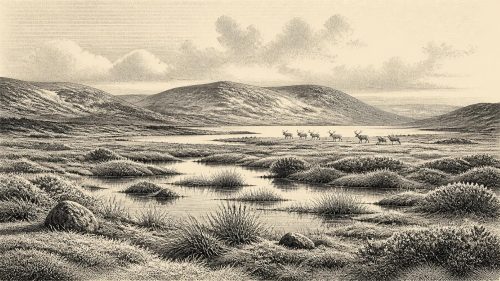
Around 31,708 BCE, Ireland was part of a climatically unstable Late Pleistocene landscape, not a place with a recoverable annual history. Derryvree sediments in Fermanagh indicate cold, open, waterlogged tundra-like habitats with mosses, sedges and northern insects during a broad period encompassing this date. Ice margins, sea levels and vegetation shifted repeatedly before the Last Glacial Maximum. Crag Cave stalagmites record intermittent milder phases, while southern caves preserve varied cold-stage mammals. Castlepook’s marked reindeer bone may indicate human processing, but lacks secure archaeological context. Evidence supports transient animal habitats and possible brief human visits, not settlement, society or political events.
Read Article

Archived: 14 September 2026
Abstract
31,758 BCE is a modern chronological label within climatically unstable Marine Isotope Stage 3, not a precisely datable Irish event. Low sea levels and shifting ice shaped a changing north-west European landscape, while routes into Ireland remain uncertain. Shandon Cave fauna, including reindeer, mammoth, horse, bears and wolves, indicates cold, open habitats and diverse food webs, though cave deposits are not ecological censuses. Castlepook’s marked reindeer bone may evidence human butchery around 33,000 years ago, but cannot prove settlement. Derryvree sediments document treeless freshwater wetlands between glaciations. Later ice transformed or destroyed landscapes, leaving evidence of connections and human presence.
Read Article
Archived: 14 September 2026
Abstract
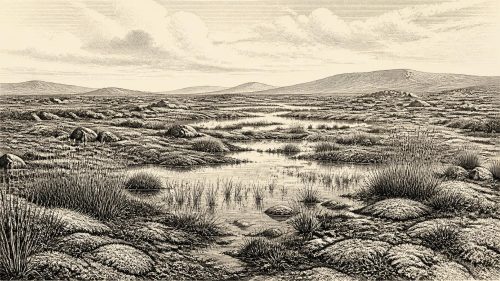
The nominal date 31,782 BCE is a modern calibration within a broad Late Pleistocene range, not a recorded Irish event. At Derryvree, County Fermanagh, organic freshwater silts between glacial tills document an ice-free interval during Marine Isotope Stage 3. They preserve evidence of tundra, wetland habitats before renewed glaciation sealed them. Comparable northern deposits demonstrate unstable ice margins. Southern caves yield cold-stage fauna, including mammoth, reindeer, giant deer, horse and predators, but mixed assemblages limit precision. No securely dated human settlement exists; a possible modified bone remains inconclusive. Ireland therefore had a changing, active landscape, while human visits remain unproven.
Read Article
Archived: 14 September 2026
Abstract
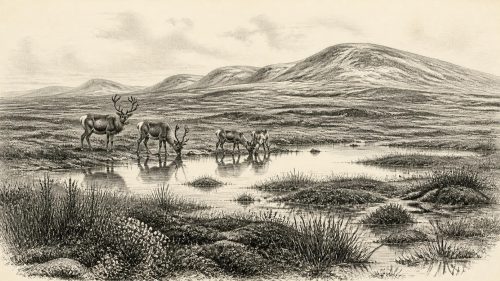
About 31,783 BCE, Ireland lay within the unstable Late Pleistocene MIS 3, not a recoverable historical year. Derryvree, County Fermanagh, preserves silts between glacial tills, dated broadly to 36,900–31,700 calendar years BP. Its bogbean, mosses, sedges, pollen and insects indicate treeless, periglacial wetlands with pools. Parts of north-central Ireland remained ice-free before British–Irish Ice Sheet expansion. Southern caves document open-country fauna, including reindeer, mammoth, horse, deer, bears, wolves and hyaenas, though not necessarily contemporaneously. A cut-marked Castlepook reindeer bone tentatively suggests human carcass processing, but no occupation exists. Later glaciation erased much evidence, leaving environmental archives and faint human traces.
Read Article

Archived: 14 September 2026
Abstract
Although 31,799 BCE is an artificial precise label, it denotes later Marine Isotope Stage 3, when parts of Ireland were ice-free before the Last Glacial Maximum. At Derryvree near Maguiresbridge, freshwater silts sealed between glacial tills, radiocarbon dated broadly to 36,900–31,700 calibrated years BP, reveal cold open tundra, wetlands and periglacial conditions. Southern caves preserve remains of mammoth, reindeer, giant deer and predators, though mixed deposits cannot provide a single-time census. A possibly tool-marked Castlepook reindeer bone suggests an early human visit, not settlement. Subsequent British–Irish Ice Sheet expansion transformed and obscured these fragile prehistoric landscapes over the following millennia.
Read Article

Archived: 9 September 2026
Abstract
Around 31,882 BCE, Ireland was a climatically unstable Late Pleistocene landscape, not a settled or historically documented society. Calibrated radiocarbon evidence from Shandon Cave, County Waterford, indicates red deer were present during a broad period overlapping this date. Derryvree sediments in Fermanagh suggest cold, open, seasonally wet tundra habitats, while cave assemblages reveal changing communities of large herbivores, predators and small mammals. Later glaciation destroyed much evidence. Claims for early human visits, including a possibly cut-marked Castlepook bone, remain unproven. No secure Palaeolithic dwellings, tools or burials exist. Ireland’s record instead documents intermittent Ice Age ecological opportunity and fragmented survival.
Read Article

Archived: 8 September 2026
Abstract
Around 33,900 cal BP, rather than a precisely knowable year, Ireland experienced the cold, unstable later Marine Isotope Stage 3, before the Last Glacial Maximum. Ice and changing climates shaped landscapes, while later glaciation destroyed much evidence of earlier life. Cave finds record reindeer, hares, lemmings, Arctic foxes and larger mammals; dated red deer confirm habitable areas. Castlepook Cave yielded a reindeer femur, about 33,000 years old, with possible stone-tool cut marks, suggesting human carcass processing. However, no securely dated settlement, artefacts, skeletons or cultural affiliation exists. Any visitors were mobile foragers, but beliefs, society, routes and permanence remain unknown.
Read Article
Archived: 8 September 2026
Abstract
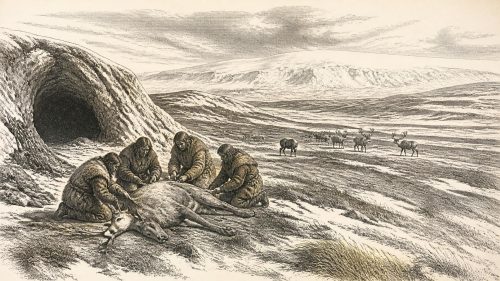
Around 31,985 BCE, Ireland lay within the unstable, cold conditions of Marine Isotope Stage 3, with changing ice, sea levels and possible routes from Britain. Glaciation and later inundation destroyed much evidence. Castlepook Cave, County Cork, yielded a reindeer femur reportedly marked by stone-tool butchery, perhaps dating to about 33,000 years ago. If human-made, it indicates a brief Upper Palaeolithic visit, not permanent settlement. Cave fauna, including reindeer, mammoth and predators, reflects cold open habitats but spans different periods. No associated tools, dwellings, art or burials are securely known. Later ice erased traces; human evidence appears near the Pleistocene’s end.
Read Article

