Explore every Emerald Archives article connected with
Enda Kenny.
2010–2019 CE
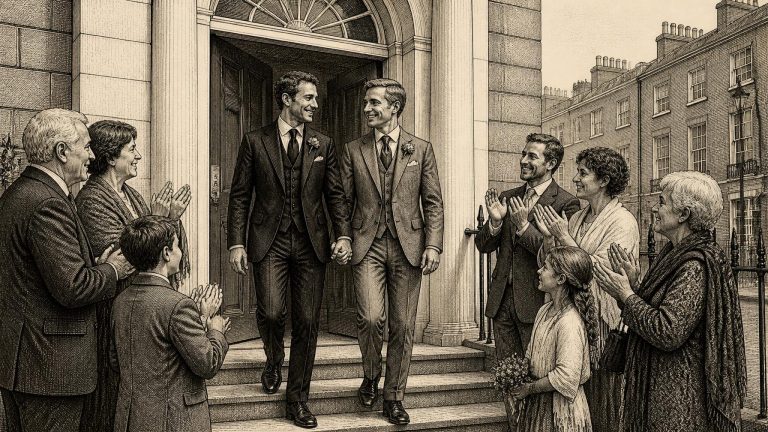
Ireland in 2015 was a country emerging unevenly from the financial crash while approaching a general election expected in the following year. Enda Kenny’s Fine Gael–Labour coalition could point to renewed employment, improving tax receipts and an end to the formal EU-IMF bailout programme achieved in late 2013. Yet the political atmosphere was not one of uncomplicated recovery. Years of spending restraint, changes to public services and continued emigration had left a deep mark. The introduction of domestic water charges on 1 January became an especially potent symbol of grievance. Demonstrations continued through the year, including a major Dublin march in April, while local campaigns against meters, bills and Irish Water brought national policy into estates and town streets.

The opening weeks of 2014 were shaped by the exceptional storm sequence of the winter of 2013–14. Successive Atlantic depressions brought strong winds, prolonged rainfall, high tides and damaging seas. Met Éireann recorded storm-force winds on several days between January and February; the combination of saturated ground, storm surges and unusually large waves caused persistent flooding and serious coastal damage, particularly along the southern, western and north-western seaboards. Businesses, homes, roads and harbours all felt the effects. The weather was not merely a dramatic backdrop. It reinforced long-running concerns about coastal protection, drainage, insurance and the capacity of local services to respond to severe events.

Ireland held the rotating Presidency of the Council of the European Union from January to June. It was the State’s seventh presidency and coincided with the fortieth anniversary of Irish entry into the European Communities. The role gave Dublin a conspicuous platform at a moment when Ireland was still closely identified abroad with the euro-zone crisis. Irish ministers chaired negotiations rather than directing Europe alone, but the presidency helped broker agreement on the EU’s 2014–20 Multiannual Financial Framework, advanced reform of the Common Agricultural Policy, supported the Youth Guarantee, and reached a provisional deal with the European Parliament on the Single Supervisory Mechanism for banks. The latter was a central component of the proposed banking union, intended to weaken the dangerous connection between fragile banks and indebted states.

The central political event in the Republic was the referendum of 31 May on the European Fiscal Compact, formally the Treaty on Stability, Coordination and Governance in the Economic and Monetary Union. Ireland was the only state to put this particular treaty to a popular vote. Its opponents argued that it would entrench austerity and place further limits on democratic economic choice; its supporters maintained that ratification was necessary to demonstrate financial reliability and preserve access to future euro-area assistance. The campaign made the external constraints on Irish policymaking unusually visible. The State’s fiscal decisions were being judged not merely in Leinster House but by European institutions, the International Monetary Fund and lenders in international markets.
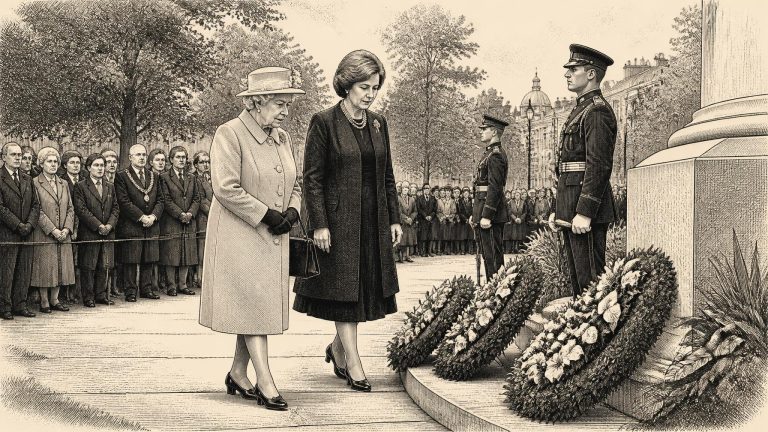
The general election of 25 February delivered a decisive rejection of Fianna Fáil, which had governed through the property boom, banking collapse and the State’s entry into the EU–IMF assistance programme late in 2010. Fine Gael emerged as the largest party with 76 seats in the 166-seat Dáil; Labour won 37, while Fianna Fáil fell to 20. The result remade the party balance of the State, although no party commanded a majority alone.
