
Archived: 21 October 2026
Abstract
In 1398, the political settlement imposed after Richard II’s first Irish expedition was visibly coming apart. The year’s most consequential firmly dated event was the death on 20 July of Roger Mortimer, earl of March and Ulster, the king’s lieutenant in Ireland. Mortimer was a major lord in his own right, an heir presumptive to the childless Richard II, and the Crown’s foremost military representative in Ireland. His death in a Leinster campaign exposed how limited English authority remained beyond the better-defended lordship towns and lordly estates. That did not make 1398 a simple national contest between ‘English’ and ‘Irish’.
Read Article
Archived: 21 October 2026
Abstract
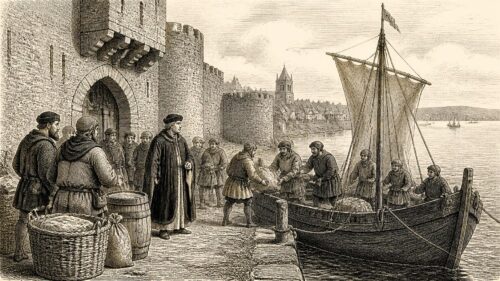
In 1396, Richard II’s charter granted Galway’s provost and burgesses annual election of a sovereign, restricted retail trade to resident burgesses, and extended Drogheda’s liberties, for £6 13s 4d. Building on 1395 murage, it strengthened defence, commerce and civic government, while preserving Roger Mortimer’s seigneurial rights. The charter reflected insecurity in Connacht, where rival dynasties raided, fought and burned Sligo, while O’Tooles defeated English forces in Leinster. Off Aran, Ó Máille raiders drowned when their plunder-laden ship sank. Church life saw Thomas Sparkford appointed to Waterford and Lismore, and scholar-herenagh Matthew Ó Luinín’s death, illustrating enduring ecclesiastical and learned traditions.
Read Article

