St Patrick’s Studium1320 CE
In 1320, Ireland showed contrasting efforts at order and continuing conflict after the Bruce invasion. Archbishop Alexander de Bicknor established statutes for a studium generale at St Patrick’s Cathedral, appointing teachers and a chancellor to promote theology and canon law, while strengthening ecclesiastical discipline through synodal measures. Roger Mortimer’s Dublin parliament reaffirmed English statutes, regulated administration and market measures, and named the earl of Kildare deputy justiciar. Elsewhere, authority remained contested: Cathal Ó Conchobair broke peace with Maelruanaid Mac Diarmata, seizing captives and ravaging Connacht; a Connacht claimant was killed; and Munster’s Ó Briain tanist Mathgamain died violently, unsettling succession.

Dateline
The year 1320 is unusually revealing because its surviving evidence records both an ambitious institutional project in Dublin and hard, local struggles for power in Gaelic Ireland. Neither story should be mistaken for the whole island. The English crown’s Lordship of Ireland remained strongest in and around the towns, lordships and shires of the east and south-east; elsewhere, Gaelic dynasties, Anglo-Irish magnates and ecclesiastical landholders exercised authority through overlapping claims, alliances and force. The damage inflicted by the Bruce invasion of 1315–18 and the preceding years of scarcity still lay close behind. In 1320, efforts to restore order therefore took place alongside fresh seizures, killings and ravaging in Connacht and Munster.
A Studium at St Patrick’s
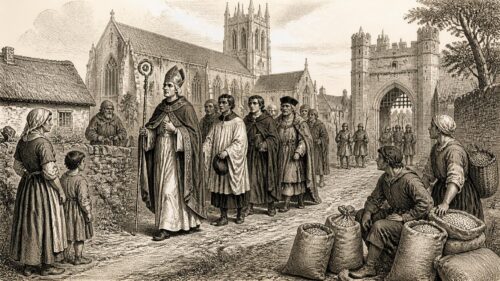
The best-known Dublin development of the year was the revival of plans for a university. On 10 February 1320, Archbishop Alexander de Bicknor issued statutes for masters and scholars of a university associated with St Patrick’s Cathedral, acting with the consent of the chapters of St Patrick’s and Holy Trinity, or Christ Church. The project built on an earlier, unrealised plan promoted by Archbishop John Lech. It was a studium generale: a corporate body of teachers and scholars, rather than a purpose-built campus in the modern sense.
The surviving accounts associate the foundation with papal privilege under John XXII and describe a course of teaching in theology and canon law. William de Rodyard, dean of St Patrick’s, became its chancellor. Three men were made doctors of divinity: William de Hardite, a Dominican; Henry Cogry, a Franciscan; and Edmund de Karmardin, another Dominican. Rodyard was made doctor of canon law. These appointments gave the undertaking an outwardly impressive beginning, joining cathedral clergy and mendicant friars in a scholarly community shaped by the models of Oxford and other Latin-European universities.
Its importance in 1320 lies less in claims of a fully developed university than in what the initiative attempted. Dublin’s clergy sought to make advanced learning, theological instruction and legal expertise more securely available in Ireland. Cathedral churches were already places of worship, administration, record-keeping and education. A university could draw on those resources, but it also required regular income, students able to travel and reside safely, and sustained institutional support. Later evidence shows that the enterprise continued intermittently but never flourished as a richly endowed university. That later outcome should not diminish the seriousness of the 1320 initiative: its statutes, named teachers and chancellor show a real attempt to create a durable learned institution.
Bicknor’s wider activity that year places the studium within a programme of ecclesiastical government. He convened a provincial synod which issued twenty-three statutes, including a measure concerning payment of tithes. He defended the lands and revenues of his see, and contemporary administrative concerns also extended to vagrancy and begging in Dublin. Such measures show the church acting not only in sacramental matters but in urban order, finance and the discipline of clergy and laity. The cathedral-centred university was therefore part of a larger assertion of archiepiscopal authority.
Mortimer’s Parliament and Departure
Government in the Lordship was also active. Roger Mortimer, lord of Wigmore and Trim and justiciar of Ireland, held a parliament at Dublin around Easter 1320. It confirmed the observance in Ireland of major English statutes, while preserving the “good customs and usages of the land”. This formula mattered. It asserted the authority of royal law but acknowledged that government operated amid established local practices and jurisdictions.
The legislation associated with the session ranged widely. It protected the liberties and franchises of the church; addressed waste, royal protections and procedures in the exchequer; required justices with knights to hold assizes and gaol deliveries in counties; and directed seneschals of neighbouring liberties to help one another pursue felons. An ordinance for one measure and one weight throughout Ireland was particularly relevant to market exchange, stipulating standard measures for grain. It was an administrative aspiration as much as a description of everyday practice: customs and local measures did not vanish merely because parliament legislated against variation.
On 23 April Mortimer nominated Thomas fitz John FitzGerald, second earl of Kildare, as deputy justiciar before returning to England later in the year. The appointment placed a major Irish-based magnate at the centre of government. Kildare’s inheritance, marriage into the de Burgh family, military experience during the Bruce wars and close association with Mortimer made him a plausible choice. Yet the handover also exposed a structural limitation. Royal administration depended heavily on the cooperation of great lords whose private affinities, inheritances and regional interests could not simply be directed from Dublin or Westminster.
Peace Broken in Connacht
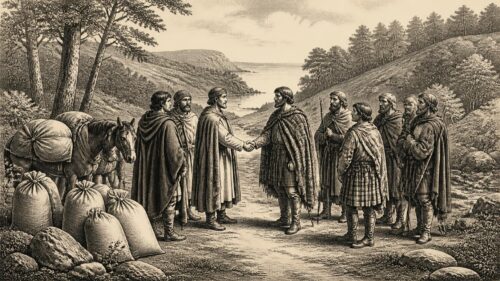
Far from Dublin, Annála Connacht records a sharp reversal in the politics of central Connacht. Cathal Ó Conchobair and Maelruanaid Mac Diarmata held what the annalist calls an important meeting and made a “wise and friendly peace”. Such language signals the value placed on negotiated settlement between powerful kindreds. Connacht had long been contested among branches of the Ó Conchobair dynasty and their leading neighbours, while the effects of war, intervention and changing alliances had made authority precarious.
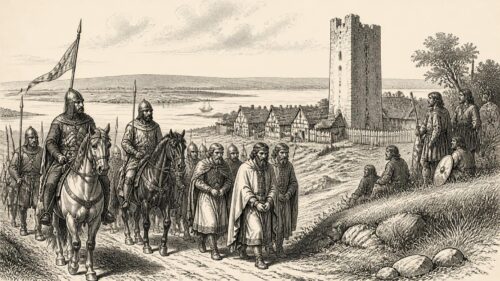
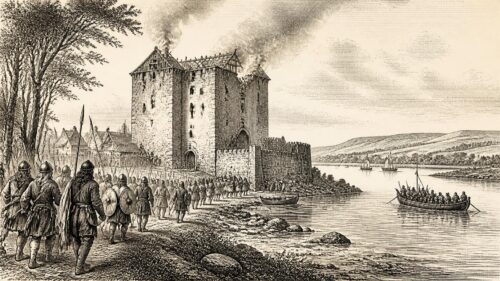
The settlement did not endure. After Mac Diarmata returned to his country, Cathal treacherously seized him at Mullach Doramnach. Mac Diarmata’s wife, Gráinne, daughter of Mac Maghnusa, was captured at the same time at Caladh na Carraige. The annal adds that the countryside was ravaged and names further captives: Mael Ísa Donn Mac Aedacáin and his son, and Tomaltach Mac Donnchada, lord of Tírerrill. These details show that political coercion reached beyond the two principals. The taking of a wife and subordinate lords was a means of controlling alliances, extracting terms and weakening rival networks; the ravaging of a district made ordinary cultivators and stock-keepers bear the immediate cost of elite conflict.
The year also brought a killing within the wider Ó Conchobair world. Áed, son of Tadc Ó Conchobair, was killed by Mac Martin; Mac Martin was then killed in vengeance. The annalist praises Áed’s appearance, nobility and generosity and says that he was well suited to be king of Connacht. This is not neutral language. Annalists often preserved aristocratic ideals as well as facts, and the description tells readers what qualities were expected of a claimant: lineage, liberality, physical presence and fitness to lead. His death narrowed the already unstable field of potential rulers.
A Munster Succession Setback
In Munster, Mathgamain, son of Domnall Connachtach Ó Briain and tanist of Munster, was killed by Clann Cuilein. The annal gives no secure day, place or detailed cause, so none should be invented. It does, however, firmly identify the political significance of the death. A tanist was an acknowledged heir or successor within a ruling dynasty, not merely a royal kinsman. Mathgamain’s killing therefore disturbed the expected line of succession among the Ó Briains of Thomond at a time when lordship in the region was shaped by rivalry between dynastic branches and pressure from neighbouring powers.
One further notice is more personal but no less characteristic of annalistic society: Mór, daughter of Ó Baigill and wife of Ó Fergail, died in 1320. Her commemoration under both natal and marital connections reflects the importance of marriage in linking ruling families across territories. Women of such rank could be central to alliance-making, inheritance and hostage politics, even where the terse annals preserve only a death notice.
Recovery Without Security
For most inhabitants, 1320 was not experienced through parliament or university statutes alone. It was lived through rents and tithes, seasonal labour, cattle and grain, market measures, obligations to local lords, and the risks created by armed retinues moving through a district. The language of ravaging in Connacht should be taken seriously, but cautiously: the annal does not itemise crops burned, animals taken or people displaced. It nonetheless confirms that political struggle could damage the productive countryside on which every lord, church and town depended.
The year’s evidence consequently resists a simple story of recovery after invasion. Dublin saw determined attempts to regularise law, improve ecclesiastical discipline and foster higher learning. Connacht saw peace negotiated and then betrayed, prisoners seized and a promising claimant killed. Munster lost a designated successor. In 1320, Ireland’s institutions could be ambitious and its political culture sophisticated, but neither statute nor scholarship removed the insecurity created by competing lordships. St Patrick’s new studium and the broken Connacht peace stand together as fitting symbols of a country seeking order while repeatedly pulled back into conflict.
Primary Sources
- Annála Connacht: Annal 1320
- Annals of Ulster: Years U1315–U1317
- Annales Breves Hiberniae
- Annales Hiberniae
- Pre-Union Irish Statutes Affected: 1320
- Statute Law Revision Act 2015
- Bicknor, Alexander
- Rodyard (Rudyard), William de
- Mortimer, Roger (1287–1330)
- FitzGerald, Thomas fitz John
- FitzGerald, John fitz Thomas
- Butler (le Botiller), Edmund
- Bermingham, John
- Revealing the Corrupt Record in 14th-Century Ireland
- Materials for the History of the Franciscan Province of Ireland, A.D. 1230–1450
- University and Parliament
- Lord Chancellor De Bicknor
- Irish Parliaments in the Reign of Edward II
- The Impact of the Bruce Invasion, 1315–27
- Crises and Opportunities: Irish Royal Towns During the Bruce Invasion
- From Boom to Bust: The Lordship of Ireland and the European ‘Commercial Revolution’
- Remonstrance of the Irish Chiefs to Pope John XXII
- Exploring the Irish Annals
- Research and Archives, Saint Patrick’s Cathedral