
Fuel Blockades — Gathering Storm
At a Glance
Gathering Storm
By 2026 the fuel protests had become a nationwide disruption rather than a single local stoppage. Reporting described meetings in late March, then rapid spread through online forums and WhatsApp groups. One Irish Times account named several public figures associated with the protests and said the momentum had built after fuel prices rose sharply and many participants felt unheard. The report also noted that an online page active since 2021 helped organise support. [4]
The same report says the protests were not confined to one channel of communication. It describes Facebook activity, locally focused WhatsApp groups, and arguments inside those groups over routes and tactics. It also states that some actions were organised on the ground and that the movement spread to big cities, arterial roads, and smaller towns. That evidence shows a protest network capable of coordinating beyond a single depot or county. [4]
Depot Blockades
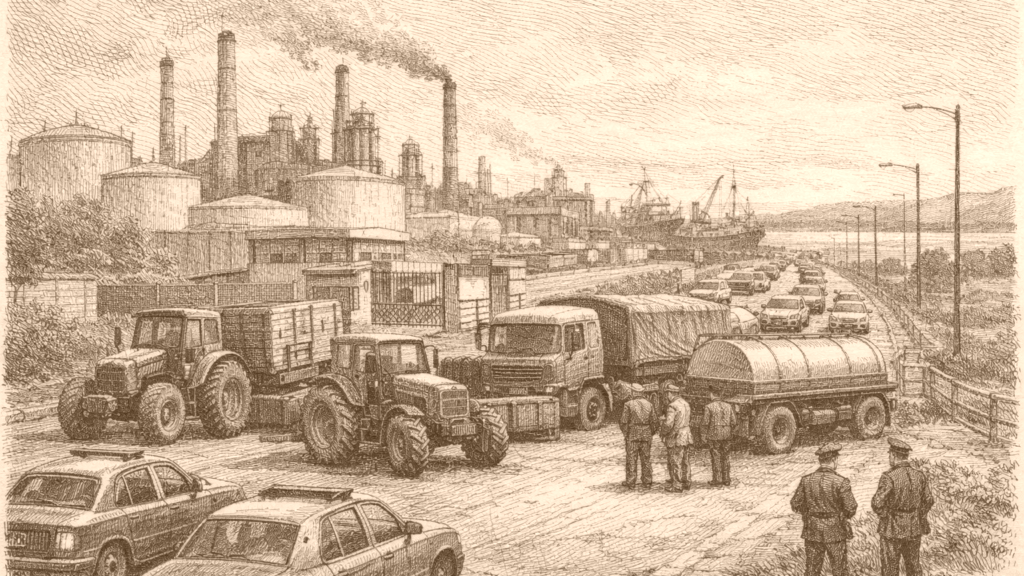
Official reporting from RTÉ said blockades at fuel depots in Limerick and Galway, together with the country’s only refinery in Cork, were causing shortages nationwide. The account identifies the three restricted sites as Whitegate Refinery, Shannon Foynes Port, and the Port of Galway. It also says some service stations, mainly in the south and west, had already run out of diesel and petrol, while fuel remained available but trapped at the terminals. [8]
The same coverage shows the scale of the stoppage at port and refinery level. A tanker carrying six million litres of fuel was stranded in Galway Bay because it could not be unloaded, and the report says movement at the sites remained extremely limited. That is a specific, observable form of disruption: fuel existed, but the infrastructure needed to move it was blocked or slowed. The report does not say how long the blockades would last. [8]
Road Gridlock
Road disruption accompanied the fuel blockades. RTÉ reported lengthy queues on the M1 northbound near Dundalk after protesters closed the motorway, and further blockages on parts of the M50 and the N7 around Dublin. Another report said at least sixty tractors, trucks, and buses remained parked on O’Connell Street, showing how the protest reached the city centre as well as fuel terminals. The result was delay rather than complete paralysis everywhere. [8]
The reports also show uneven consequences across transport services. Dublin Bus was running curtailed services, while delivery firm DPD Ireland temporarily suspended services in the Republic. At the same time, the opening of the north and south quays and the Luas outside O’Connell Street eased movement in central Dublin. These details suggest a disruption that was serious but not total, with some roads and services still functioning while others were blocked or restricted. [8]
Police Standoff
At Whitegate in Cork, protesters were in a standoff with the Garda Public Order Unit while officers tried to escort a tanker into the refinery. That detail matters because it shows the protests were not only about queues and shortages but also about direct confrontation at a key industrial site. The report does not say the tanker got through at that moment, only that the attempt was under way and the blockade remained. [8]
The same coverage notes that some fuel trucks were later allowed to pass from Foynes because the fuel was needed for emergency services. It also says trucks carrying animal feed and water-treatment chemicals were let through. Those exceptions show that the protesters were still controlling access, deciding which loads could move and which would stay put. The report does not explain whether these decisions were coordinated centrally or made locally. [8]
Earlier Echoes
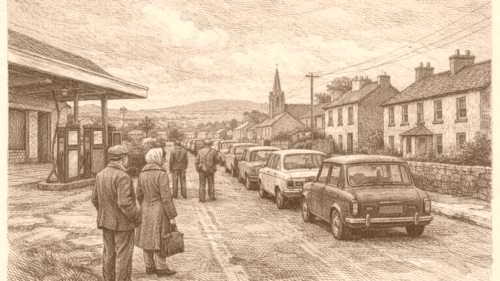
The 2026 events fit into a longer archive of Irish fuel-related disruption. RTÉ’s record of the 1980 petrol shortage describes motorists queueing for hours, empty pumps, garages closing, and delivery drivers on strike over pay and working conditions. Another RTÉ item on the 1973 and 1979 petrol crises gives a background report on earlier queues, showing that fuel scarcity and queueing were already familiar public problems in previous decades. [5] [6] [7]
The archive also places fuel protests beside other forms of mass action, including PAYE marches in 1979 and the turnover tax protest in 1963. Those items are different in subject, but they show similar crowd action in Dublin and repeated use of city streets and government buildings as protest routes. The comparison is limited to what the records show: roads, queues, marches, and pressure on public authorities. [1] [2] [3]
Aftermath Unclear
What the reports establish is disruption, not a final resolution. One Irish Times account says the government was preparing to meet protesters, and RTÉ says normal supply lines could take up to a week to restore even if the blockades ended. That leaves the immediate outcome visible only in part: there were negotiations, but the available reporting does not yet provide a complete settlement or a definite end point. [4] [8]
The strongest direct conclusion from the contemporary record is that the protests linked fuel, transport, and logistics into one crisis. Depots, ports, a refinery, city streets, and motorways all appear in the reporting, along with shortages and controlled exemptions for essential loads. Beyond that, the evidence is cautious: it shows where the blockages were and how they spread, but not every later decision or longer political consequence. [8] [4]
Source References
Hover over a number to see the source. Select it to open the source.

- [1] RTÉ Archives | Society | PAYE Protest
- [2] RTÉ Archives | Society | Turnover Tax Protest March
- [3] RTÉ Archives | Society | Strikes, Pickets and Protests
- [4] ‘You know who’s in control’ - How the fuel protests brought the country to a standstill – The Irish Times
- [5] RTÉ Archives | Environment | Petrol Queues
- [6] RTÉ Archives | Society | Queuing For Petrol
- [7] RTÉ Archives | Collections | 1973 and 1979 Petrol Crises
- [8] Blockades at key fuel facilities, gridlock on the roads
How did the 2026 fuel protests disrupt transport and supply in Ireland, and what do contemporary reports indicate about their development and scale?