
Year by Year
Explore Year by Year articles from the most modern historical year back to the oldest.
3,295 Articles Archived
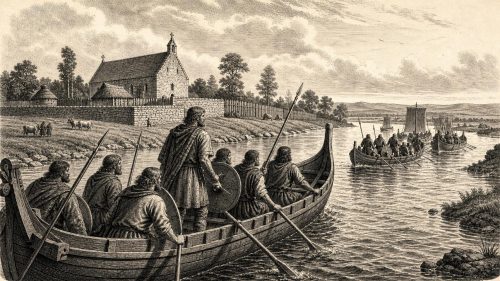
Dublin Raids
Archived: 26 September 2026
In 1035, Ireland comprised competing regional kingdoms, with no universally accepted high king since 1022. Annals record raids, killings and church plundering, though clerical priorities obscure ordinary life. Donnchad mac Briain defeated Bréifne raiders after their attack on Clonfert, demonstrating the Shannon’s military importance. In Dublin, Sitriuc Silkbeard killed Waterford’s Ragnall ua Ímair and raided Ardbraccan; Mide’s Conchobar retaliated against Swords. Other conflicts involved Leinster, Mide and Donegal, often for cattle, captives and prestige. Churches were political and economic targets, while farming, craftsmanship, learning and trade continued. Archaeology reveals interconnected Gaelic and Hiberno-Norse communities, and annalistic dating remains sometimes uncertain.
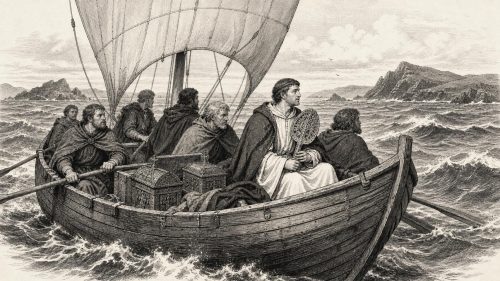
Amlaíb's Pilgrimage
Archived: 26 September 2026
In 1034, Ireland lacked an uncontested high king, as regional dynasties, churches and maritime networks shaped a fragmented political landscape. Donnchad mac Briain of Munster ravaged Osraige, challenging its ruler’s expanding Leinster authority, while Flaithbertach Ua Néill resumed control of Ailech after his son’s death. Killings and treachery destabilised Connacht, Brega, Tethba and neighbouring regions. Ecclesiastical losses included leading figures at Cork, Mungret and Clonmacnoise, and Kells’s lector drowned returning from Scotland with companions and relics. Amlaíb, Dublin’s royal pilgrim, was killed en route to Rome. Annals reveal elite conflict and religious connections, while rural communities bore warfare’s economic burdens.

Carman Fair
Archived: 26 September 2026
Irish annals portray 1033 as a fragmented year of regional rivalry, ecclesiastical authority and economic pressure. Donnchad mac Gilla Pátraic of Osraige asserted Leinster kingship by holding the Fair of Carman, a public demonstration of rule, clerical support, trade and legal order. In Mide, Ua Máel Sechnaill conflicts brought battlefield deaths, plundering and Murchad's assassination. Áed Ua Néill, heir designate to Ireland’s high-kingship, died, while killings destabilised Ciarraige, Éile, Munster and northern territories. Church obituaries and a reported bleeding shrine at Armagh underlined sacred authority. Cattle disease, farming and Hiberno-Norse maritime networks shaped everyday life amid political uncertainty across Ireland.

Boyne Victory
Archived: 26 September 2026
In 1032, annalistic records portray Ireland as a patchwork of competing lordships after the decline of island-wide kingship. Domnall ua Maíl Doraid of Cenél Conaill and Mathgamain Ua Riacáin of Brega were killed, while Mathgamain’s killer was blinded. Sitriuc of Dublin defeated neighbouring groups at the Boyne estuary. In Munster, Donnchad mac Briain married Ragnall’s daughter, reinforcing Norse-Gaelic connections amid regional tensions. Deaths of local rulers, officials and prominent churchmen reveal dispersed authority. The killing of Étrú Ua Conaing after violation of Emly underscored ecclesiastical protection. These fragmentary notices vividly depict warfare, alliance, church power, and political instability throughout Ireland.
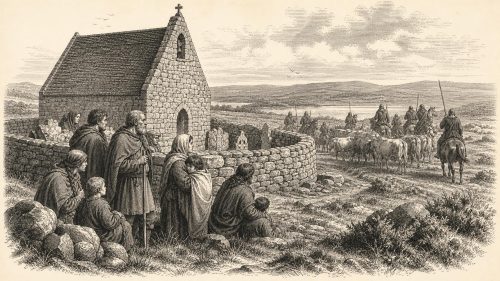
Ardbraccan Plundering
Archived: 26 September 2026
In 1031 Ireland remained politically fragmented after Brian Bóruma, as northern, southern and Hiberno-Norse rulers pursued power through raids, booty and captives. Flaithbertach Ua Néill returned from Rome while Aed Ua Néill campaigned against Cenél Conaill. Dublin’s Sitriuc Silkbeard was linked to Ardbraccan’s devastating plunder, and Waterford’s king was killed in Dublin. Churches at Ardbraccan, Swords, Kildare, Cell Chomair and Clonfert suffered burning, robbery or violence. Donnchad mac Briain raided Osraige but lost men; conflict also afflicted the Déisi. Obituaries emphasised learning, hospitality, piety and ecclesiastical office, revealing society’s religious resilience amid warfare, trade and local rivalry throughout Ireland alike.

Flaithbertach's Pilgrimage
Archived: 26 September 2026
In 1030, Ireland remained divided among competing dynasties after Brian Bórama and Máel Sechnaill’s deaths. Annals record the killing of Tadc Ua Conchobair of Connacht, conflict and devastation in Mide, and northern rivalry culminating in Ruaidrí Ua Canannáin’s death. Flaithbertach Ua Néill travelled to Rome, while Tadc of Uí Cheinnselaig died on pilgrimage at Glendalough. Gormlaith’s death linked Leinster, Dublin and Munster dynasties. Ecclesiastical leaders, including successors of Ciarán, Tigernach and Comgall, died, alongside chief poet Cú Mara. Relic profanation, church attacks, maritime loss and a solar eclipse illustrate religion, learning, violence and observation shaping everyday political life across Ireland.

Amlaíb's Ransom
Archived: 26 September 2026
In 1029, Ireland remained divided among competing Gaelic dynasties, church centres and Hiberno-Norse Dublin. Mathgamain Ua Riagáin of Brega captured Amlaíb, Dublin’s prince, whose release required an exceptional ransom of cattle, horses, silver, gold, hostages and a renowned sword, demonstrating links between rural and maritime economies. Killings of rulers in Uí Fhailgi, Fernmag, Conaille, Connacht and Cenél Conaill exposed persistent succession disputes and regional rivalries. At Inis na Lainne, a fire killed nobles and Drumcliff’s superior. Pilgrimage and church patronage connected elites to wider Christianity, while the death of master craftsman Máel Brigte Ua Brolcháin attests to skilled ecclesiastical culture.

Roman Pilgrimage
Archived: 26 September 2026
In 1028, Ireland remained politically fragmented after Brian Bórama and Máel Sechnaill, with power contested through raids, killings, hostages and cattle wealth. Cenél nEógain plundered Tír Conaill, while the Conaille killed regional rulers. Sitriuc Silkbeard, Hiberno-Norse king of Dublin, and Flannacán of Brega made a prestigious pilgrimage to Rome, signalling wider Christian connections and developments associated with Dublin’s cathedral. Severe Lent snow disrupted people and livestock. Ecclesiastical deaths, Duleek’s plundering, and Slane’s collapsed oratory reveal churches’ institutional importance and vulnerability. Conflicting annals record violent regional succession, especially Connacht’s Brian Ua Conchobair, portraying a literate, agrarian, martial society linked to Europe.
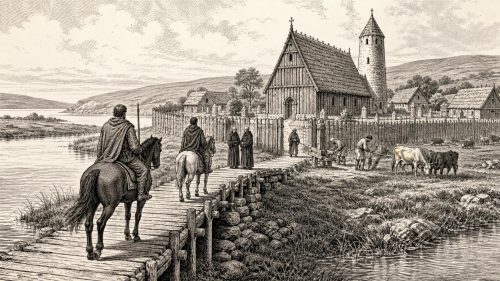
Staff Profanation
Archived: 26 September 2026
In 1027, Irish annals recorded a politically fragmented island where regional rulers, Dublin and monasteries shaped events. Donnchad mac Briain of Munster invaded Osraige, taking booty and captives, but suffered a costly defeat against local resistance. In Mide, forces of Sitriuc Silkbeard’s Dublin and Brega fought Mide, killing both Ráen ua Máel Sechnaill and Donnchad ua Duinn. Northern cattle raids and local conflicts underscored persistent border warfare. Deaths, pilgrimages and ecclesiastical successions linked Ireland to Iona, Rome and Cologne. The reported desecration of the Staff of Jesus demonstrated relics’ public importance. Warfare, trade, lordship and Christian learning were deeply interconnected.

Donnchad's Hostages
Archived: 26 September 2026
In 1026, Ireland’s contested politics reflected the unsettled aftermath of Brian Bóruma and Máel Sechnaill’s deaths. Donnchadh mac Briain asserted Munster’s wider ambitions by taking hostages in Mide, Brega, Dublin, Leinster and Osraige, while hosting Patrick’s successor at Cenn Corad. Northern king Flaithbertach Ua Néill raided Mide, crossing ice to ravage Inis Mochta. Dublin remained a wealthy Hiberno-Norse power, alternately submitting and fighting. Leinster, Osraige and Mide saw killings, raids and shifting local leadership. Church offices, pilgrimages to Irish centres and Rome, and road building at Clonmacnoise demonstrate how religion, infrastructure and lordship sustained fragile regional power overall across Ireland.
Some records do not yet have a verified historical year and are awaiting chronological placement.