Pilgrims and Raids1028 CE
In 1028, Ireland remained politically fragmented after Brian Bórama and Máel Sechnaill, with power contested through raids, killings, hostages and cattle wealth. Cenél nEógain plundered Tír Conaill, while the Conaille killed regional rulers. Sitriuc Silkbeard, Hiberno-Norse king of Dublin, and Flannacán of Brega made a prestigious pilgrimage to Rome, signalling wider Christian connections and developments associated with Dublin’s cathedral. Severe Lent snow disrupted people and livestock. Ecclesiastical deaths, Duleek’s plundering, and Slane’s collapsed oratory reveal churches’ institutional importance and vulnerability. Conflicting annals record violent regional succession, especially Connacht’s Brian Ua Conchobair, portraying a literate, agrarian, martial society linked to Europe.
Dateline
The surviving record for Ireland in 1028 is not the story of a single decisive battle or a single ruler imposing order across the island. It is a year seen through annalistic flashes: a royal pilgrimage to Rome, deaths among bishops and church officers, a severe Lent snowfall, raids in the north and midlands, and violence among regional dynasties. The entries are brief, sometimes inconsistent, and often written from ecclesiastical viewpoints. Read together, however, they show an Ireland still living in the aftermath of Brian Bórama’s age: politically active, regionally fragmented, outward-looking, and deeply shaped by churches, cattle wealth, pilgrimage and local lordship.
A Fragmented Political Landscape
The wider political setting of 1028 was the unstable period after the deaths of Brian Bórama in 1014 and Máel Sechnaill mac Domnaill in 1022. Donnchad mac Briain, Brian’s son and king of Munster, had attempted to extend Dál Cais authority beyond Munster, and in 1026 the annals describe him taking hostages from Mide, Brega, Dublin, Leinster and Osraige. Yet his reverse in Osraige in 1027 showed that this reach was not secure. The year 1028 therefore belongs to a phase in which no claim to island-wide authority can be treated as settled. Power was negotiated through hostages, cattle spoils, strategic marriages, church patronage and opportunistic raids.
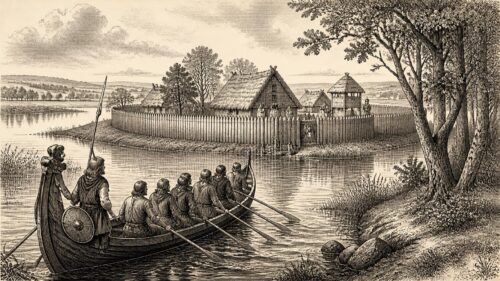
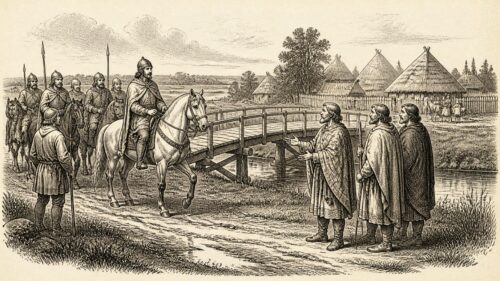
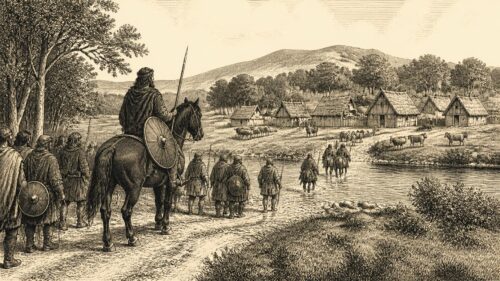
The firmly dated notices for 1028 are mostly regional. In the north, the Cenél Eógain raided Tír Conaill and carried off great spoils. This was not an isolated frontier incident but part of the long rivalry between branches of the northern Uí Néill: Cenél nEógain to the east and Cenél Conaill in Donegal. The annals do not describe the battle line or name the commander, but the reference to substantial plunder indicates a successful strike at wealth, probably cattle and movable goods, rather than a campaign of occupation.
In the east and north-east midlands, the Conaille appear repeatedly. Máel Mochta, king of Fir Rois, was killed by the Conaille, and another entry records Donn Ua Congalaig being killed by them. The Conaille Muirthemne, whose territory lay in the modern Louth region, were positioned between powerful neighbours and could act violently in their own right. These killings remind us that the annals’ great dynastic names were only part of the political map. Lesser kingdoms and kindreds were active military communities, capable of reshaping local leadership through sudden violence.
Dublin, Brega and Rome
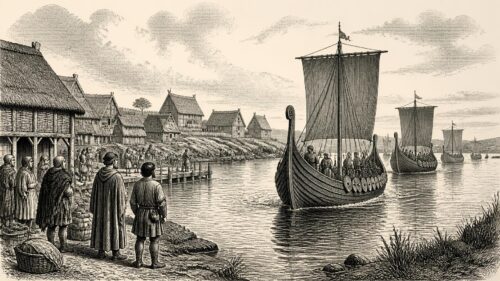
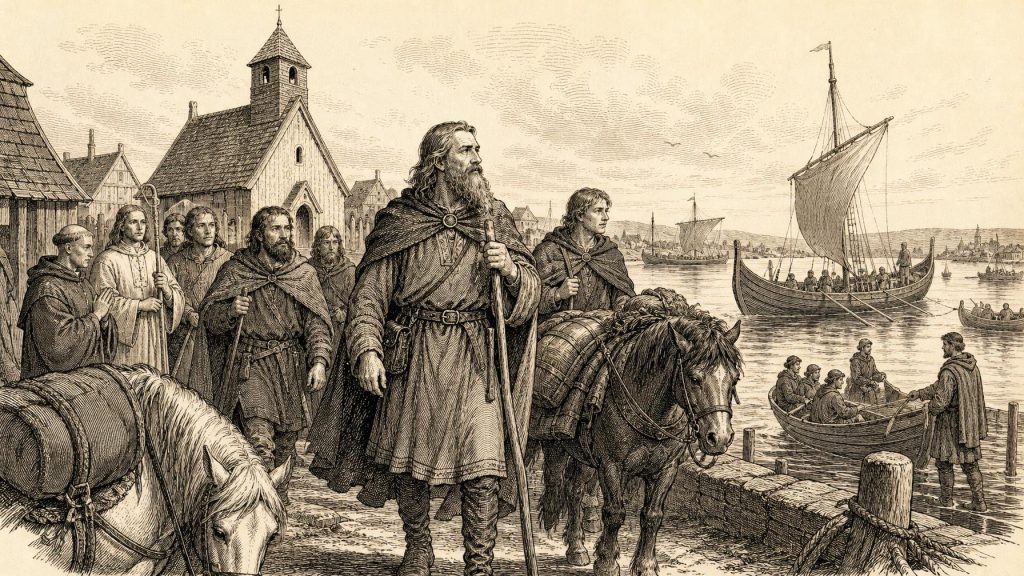
The most striking notice of the year is the pilgrimage of Sitriuc Silkbeard, the Hiberno-Norse king of Dublin, to Rome. The Annals of Ulster record that Sitriuc, described as king of the foreigners, and Flannacán Ua Cellaig, king of Brega, went to Rome; the Annals of Tigernach add that many others accompanied them. Chronicon Scotorum also notes the journey and says that the son of Amlaíb came back from Rome, apparently placing Sitriuc’s return within the same year.
This was a major act of public Christianity by the ruler of Dublin. Sitriuc was no marginal figure. He had survived the crisis of Clontarf, ruled a commercially important Norse-Irish town, minted coins, and maintained ties with Irish dynasties as well as the Scandinavian world. His journey with Flannacán of Brega is especially revealing. Dublin and Brega had fought and allied with one another in the preceding decades; pilgrimage did not erase politics, but it could provide a language of prestige and reconciliation. Travelling to Rome advertised Christian kingship in a form intelligible across Europe.
Later tradition connects Sitriuc’s return with the foundation of Christ Church Cathedral, Dublin, in association with Dúnán, the city’s first bishop. The earliest cathedral foundation is usually placed around 1030 or, more cautiously, after the Roman pilgrimage of 1028. It would be irresponsible to state that the cathedral was definitely founded in the calendar year 1028, but the pilgrimage is clearly part of the same development: Dublin’s ruling elite was presenting itself not merely as a trading and military power, but as a Christian urban kingdom linked to Rome, Canterbury, Cologne and the wider Latin West.
Snow, Cattle and Everyday Strain
The Annals of Inisfallen preserve a vivid environmental note: great snow fell in Lent for three days and three nights, so severe that neither people nor cattle left their houses. This is one of the few entries for 1028 that opens a window onto ordinary life. In a society where cattle were central to wealth, diet, status, tribute and compensation, weather that kept animals under shelter mattered. It threatened fodder supplies, milk production, movement, markets and the ability of households to maintain the herds on which lordship and survival depended.
The annals rarely dwell on peasants, herdsmen, women working farms, craftspeople or slaves, but their lives are implied by the year’s entries. When raiders carried off spoils, they usually targeted cattle and captives. When monasteries were plundered, local tenants, dependants and pilgrims were affected as well as clerics. When a Lent snowstorm pinned animals indoors, the burden fell on households with finite stores of hay, oats and winter food. The year’s political violence and its weather note therefore meet in the same rural economy: control of cattle and people was the practical foundation of power.
Churches Under Pressure
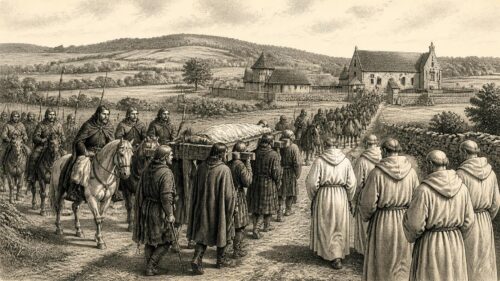
Ecclesiastical entries dominate the record for 1028. Tuathal Ua Dubánaig, bishop of Clonard, died. Clonard was one of the great churches of the midlands, associated with Finnian and with a long tradition of learning and ecclesiastical authority. The death of its bishop was therefore more than a local obituary. It marked a change in leadership at a church whose influence extended into the politics and culture of Mide.
Other church deaths show the density of Ireland’s religious network. The annals record Tadc son of Eochaid, superior or airchinnech of Cell Da Lua, probably Killaloe; Art Ua Dúnchada, superior of Mungairit or Mungret near Limerick; Gilla Críst son of Dub Cuilinn, a noble priest of Armagh who died at Roscommon; and, in the fuller list of the Four Masters, clerics and officers associated with Swords, Kells and Clonmacnoise. These titles matter. An airchinnech was not simply a monk but a head or steward of church lands and rights. A lector was a learned teacher. An ostiarius, or doorkeeper, belonged to the organised life of a major monastery. Their deaths show churches as institutions of property, education, ritual and administration.
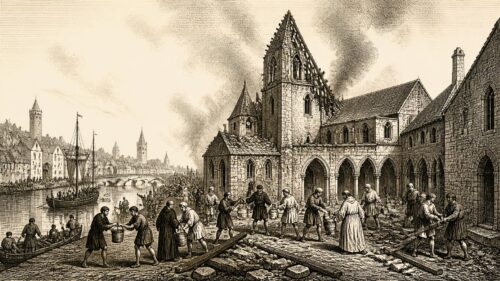
Yet churches were not safe from violence. Dam Liac, identifiable with Duleek in County Meath, was plundered by the Fir Manach. Duleek’s Irish name means a stone church or stone house, and the site had long ecclesiastical associations with Cianán. The annalistic notice is terse, but it confirms that church settlements remained attractive targets. Sacred status could deter attack, but it also marked a place where wealth, livestock, metalwork, books, hostages or food might be found.
Another ecclesiastical notice says that the oratory of Sláine fell down. No battle is attached to the entry. It may record structural failure, age, weather damage or the vulnerability of older church buildings. Slane, like Duleek, stood in the ecclesiastical landscape of Brega and Meath, where churches, royal sites and routeways were closely connected. The collapse of an oratory was worth recording because buildings embodied a community’s sanctity, memory and status.
Connacht, Éile and Disputed Deaths
The death of Brian Ua Conchobair, royal heir of Connacht, is one of the year’s more important political notices, but the sources do not present it uniformly. The Annals of Inisfallen simply say that he died. The Annals of Ulster group him with Scorn Ua Ruairc, Flaithbertach Ua hErudáin and Conchobor son of Eochaid as men who were killed. Chronicon Scotorum specifies that Brian son of Cathal Ua Conchobair was killed by Máel Sechnaill Ua Máel Ruanaid, while the Annals of Tigernach place a similar killing under the preceding annal. The safest conclusion is that Brian’s death belongs securely to this narrow moment around 1028 and was remembered in several traditions as violent, but the precise circumstances cannot be reconstructed with confidence.
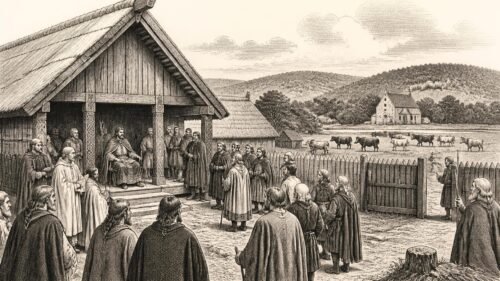
Other deaths add to the impression of regional turnover. The son of Cú Chuailnge, king of Uí Echach, died. The Annals of Inisfallen also record the death of Ua Dubchróin, king of Éile. Such entries can look minor beside the pilgrimage of Sitriuc, but they are important evidence for the political scale of early eleventh-century Ireland. Kingship existed at many levels: provincial overkings, powerful sub-kings, local dynasts, royal heirs and church-linked kindreds all competed for survival. An annalistic death notice may be the only surviving trace of a ruler whose loss mattered intensely to his own people.
Learning and Memory
The year also illustrates how Irish history was being made into writing. The annalists cared about the Kalends of January, lunar reckoning and bissextile years; they cared about bishops, priests, lectors and church officers; they cared about kings, raids, plunder and pilgrimage. Their priorities were not identical with those of a modern historian, but they preserve the framework through which educated church communities understood time.
In 1028, that framework linked local and universal history. A snowfall in Lent, a collapsed oratory in Slane, a raid into Tír Conaill and a death at Clonard could stand in the same record as a royal journey to Rome. Ireland was not isolated. Dublin’s ships and coins connected it to Britain and the wider northern world; Rome drew Irish and Norse-Irish pilgrims; churches such as Armagh, Clonmacnoise, Kells, Mungret and Clonard maintained learned traditions; and local warfare continued to redistribute cattle, captives and authority.
The year’s balance is therefore one of movement and fragility. Sitriuc and Flannacán travelled to the centre of Latin Christendom. Snow halted people and animals at home. Northern warriors carried spoils out of Tír Conaill. Church leaders died, a church was plundered, and an oratory fell. No single event in 1028 transformed Ireland, but the year captures the texture of an early medieval society in motion: Christian, martial, regional, literate, agrarian and increasingly connected to a wider European world.
Primary Sources
- The Annals of Ulster: Year U1028
- Chronicon Scotorum
- Annals of Inisfallen
- The Annals of Tigernach, Part 16
- Annals of Loch Cé, Part 1
- Annals of the Four Masters
- Sitriuc Silkbeard (Sitric, Sigtryggr Ólafsson Silkiskeggi)
- Donnchad
- Life After Brian: The High-Kingship
- Why Sitric Silkenbeard Is the Greatest Dubliner of All Time
- History of Christ Church Cathedral
- Christ Church Cathedral Dublin: Conservation Management Plan
- Viking Collection, National Museum of Ireland
- Dublin City Urban Archaeology Survey
- Agriculture, Settlement and Society in Early Medieval Ireland
- Early Medieval Dwellings and Settlements in Ireland, AD 400–1100
- The Economy of Early Medieval Ireland
- Reassessing the Irish ‘Monastic Town’
- Mungret Churches
- Finnian (Vinnianus, Findbarr)
- Duleek: History and Development
- County Meath Urban Archaeology Survey
- Ua Bráein, Tigernach
- Exploring the Irish Annals