
Year by Year
Explore Year by Year articles from the most modern historical year back to the oldest.
3,295 Articles Archived

Brega Hostages
Archived: 26 September 2026
In 1025, Ireland lacked a universally recognised high king after Máel Sechnaill mac Domnaill’s death, and authority was contested through campaigns, hostages, raids and alliances. Flaithbertach Ua Néill entered Brega and Dublin, securing Irish hostages, before Domnall Got countered and recovered Brega’s hostages. Violence included the killing of Brega’s ruler Gerr Gaela, Connacht heir Niall Ua Conchobair, and a Uí Fiachrach Aidne leader, alongside raids between Fernmag and Fir Manach. Termonfeckin was plundered and burned. Annals also recorded Munster rulers, pilgrims and numerous senior churchmen’s deaths, demonstrating churches’ political, economic and cultural importance amid fragmented regional rivalries throughout the island.

Leinster Upheaval
Archived: 26 September 2026
In 1024, Ireland remained fragmented after Máel Sechnaill’s death, with authority contested among provincial dynasties, Norse-Gaelic towns and church interests. Leinster suffered upheaval when Úgaire, king of Leinster, and Máel Mórda of Uí Cheinnselaig were killed during Donn Sléibe’s seizure and burning of a house; Donn Sléibe was later slain. Fighting marked Corann, Ulster and the midlands, while Irish forces raided Foreigners for hostages and wealth. Ecclesiastical deaths, pilgrimages and attacks on Slane and Kildare demonstrated churches’ scholarly, economic and political importance. Cúán ua Lothcháin, Ireland’s chief poet-historian, was murdered, emphasising the learned class’s prestige amid endemic violence and instability.
Tadc's Killing
Archived: 26 September 2026
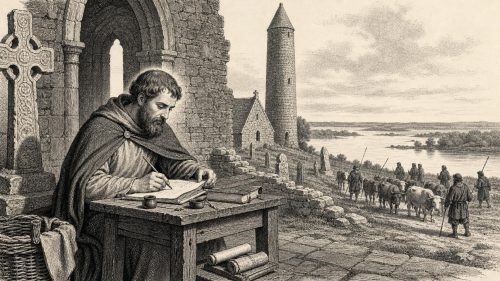
In 1023, Ireland experienced political fragmentation after Máel Sechnaill’s death. Rivalries destabilised Mide, where Domnall Ua Máel Sechnaill was killed, while Dublin’s Hiberno-Scandinavian rulers raided South Brega, killed Ainbíth Ua Cathasaigh, and seized King Donnchad Ua Duinn. Tadc son of Brian Bórama, a Munster dynastic rival, was killed by the Éile, allegedly at his half-brother Donnchad’s instigation. Connacht and northern kings also died in factional conflict. Clonmacnoise’s church lands were plundered of cattle. Annalists recorded January lunar and solar eclipses, spring drought, ecclesiastical deaths, and foreign rulers, revealing monastic learning and Ireland’s links across the Irish Sea and Christian Europe.

Mide Succession
Archived: 26 September 2026
In 1022, the death of Máel Sechnaill mac Domnaill, king of Mide and foremost post-Clontarf claimant to Ireland’s high-kingship, exposed the weakness of island-wide authority. He died at Cró Inis on Lough Ennell, honoured by churches and remembered for royal generosity, though later accounts elaborate his final rites. His loss, following the death of his heir in 1021, intensified succession disputes. Warfare continued: Waterford’s Sitriuc was killed, Ulaid defeated Dublin at sea and attacked Airgialla, while regional rulers and heirs fell. Kildare was plundered, churchmen and poets died, and Irish kingship, trade, maritime power and ecclesiastical wealth remained closely intertwined.

Mide Succession
Archived: 26 September 2026
In 1021 Máel Sechnaill mac Domnaill’s restored overkingship remained active but fragile. He raided Dublin’s foreigners and Cenél nEógain, while Úgaire of Leinster defeated Sitriuc Silkbeard’s Dubliners near Delgany. Northern raids, killings and local conflicts exposed contested lordship around Airgialla. The murder of Áed, Máel Sechnaill’s heir, and other elite deaths weakened succession prospects in Mide. Amalgaid of Armagh made a politically significant visitation to Munster, asserting Patrician authority. Ecclesiastical deaths, Branacán’s drowning in Lough Ennell, and a reported shower of wheat in Osraige coloured annalistic memory. The year foreshadowed intensified struggle following Máel Sechnaill’s death in 1022 for Ireland.

Church Fires
Archived: 26 September 2026
In 1020, Ireland remained politically fragmented after Clontarf. Máel Sechnaill mac Domnaill led a coalition including Uí Néill, Donnchad mac Briain and Art Ua Ruairc to the Shannon, receiving Connacht hostages and asserting overkingship. Northern and eastern lesser kingdoms experienced blinding, killings and rapid succession disputes. Fires devastated Kildare, Glendalough, Clonard, Clonmacnoise, Swords and Armagh, damaging churches, treasures and settlement districts. Armagh’s blaze then preceded Máel Muire’s death and Amalgaid’s installation as Patrick’s successor; Patrick’s shrine and bell were also plundered. Annals additionally commemorate learned clerics, revealing churches as centres of wealth, scholarship, authority and vulnerability amid violent political competition.

Dublin Raiders
Archived: 26 September 2026
In 1019, five years after Clontarf, Ireland remained politically fragmented despite Máel Sechnaill’s high-kingship. Donnchad mac Briain survived a sword attack that severed his right hand, while the death of Munster’s heir Mathgamain weakened Dál Cais networks. Sitriuc Silkbeard’s Dubliners raided Kells, killing inhabitants and carrying off captives and spoils. Lightning burned Kildare, and attackers violated Durrow’s stone church to seize and kill Mael Muad. Dynastic killings affected Ailech, Leinster and smaller kingdoms; northern raids, revenge killings and disease in Ára compounded insecurity. Annals portray churches as wealthy, vulnerable institutions and record interconnected sacred authority, warfare, succession and local life.
Braen's Blinding
Archived: 26 September 2026
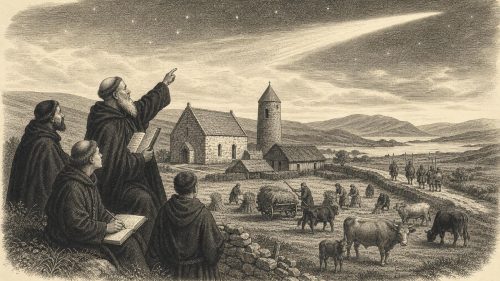
In 1018, four years after Clontarf, Ireland remained fragmented, as rival dynasties, Hiberno-Norse towns and local peoples pursued power through raiding, treachery and alliance. Máel Sechnaill’s authority in Mide was challenged when his steward and an allied king died during conflict in Fir Chell. Sitriuc Silkbeard of Dublin treacherously blinded Braen, son of Leinster’s Máel Mórda, ending his capacity to rule. Northern Uí Néill forces mobilised, while killings and plundering affected Gailenga, Tuatha Luigne and Óentreb. Ecclesiastical deaths reflected churches’ political and cultural importance; Waterford’s Norse king died. Annalists also recorded an autumn comet, revealing learned religious observation amid instability.
Odhba Victory
Archived: 26 September 2026
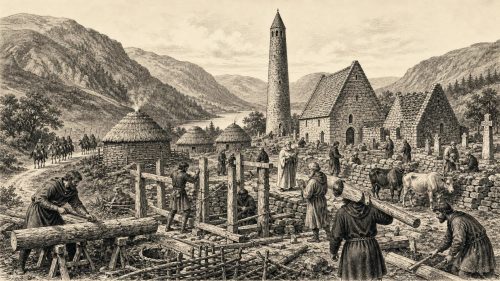
In 1017, three years after Clontarf, Ireland remained politically fragmented rather than settled under Máel Sechnaill mac Domnaill’s renewed overkingship. He defeated Dublin’s Hiberno-Scandinavian forces and Leinster men near Odhba, while dynastic killings eliminated several royal heirs and regional rulers in Ailech, Brega, Uí Méith and elsewhere. These internal conflicts reflected competitive succession among ruling kindreds. Church and learned communities also suffered: much of Glendalough burned, other ecclesiastical leaders died, and Inis Gaill Duib was destroyed as the scholar Anmchad drowned. Annals portray tense rebalancing, linking warfare, local lordship, monasteries, agriculture, and Dublin’s commercial power in post-Clontarf Ireland during 1017.

Ulaid Hostages
Archived: 26 September 2026
In 1016, two years after Clontarf, Máel Sechnaill mac Domnaill reasserted authority by taking Ulaid hostages, while Donnchad mac Briain raided Shannon islands, seized boats and consolidated Munster. Northern conflict between Ulaid and Dál Araide killed several rulers, and Osraige’s king slew Leinster and Uí Drona leaders at Leithglenn. Other regional dynastic deaths revealed fragmented power. Ecclesiastical life remained influential despite fires at Clonmacnoise, Clonfert, Kells and Downpatrick; church officers and the chief poet Mac Liag died. Raiding, hostage-taking and an autumn storm burdened communities. Annalistic peace meant relative stability after Clontarf, not an end to violence or political rivalry.
Some records do not yet have a verified historical year and are awaiting chronological placement.