
Year by Year
Explore Year by Year articles from the most modern historical year back to the oldest.
3,293 Articles Archived
Lusitania Sinking
Archived: 9 October 2026
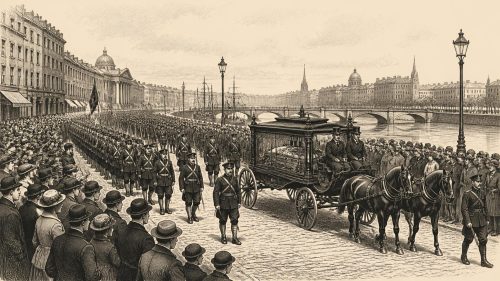
In 1915, the First World War intensified Ireland’s political, social and cultural divisions. The sinking of RMS Lusitania off Kinsale brought global conflict directly to Cork, killing about 1,198 people, including Hugh Lane and Thomas O’Brien Butler. John Redmond’s National Volunteers demonstrated continued constitutional strength, while Irish troops endured heavy losses at Gallipoli and prepared for France. Recruitment increasingly provoked opposition. Meanwhile, IRB-linked Volunteers secretly planned a 1916 rising, seeking German aid, while James Connolly promoted socialist militancy. O’Donovan Rossa’s Dublin funeral became a major republican demonstration. Cultural bodies debated nationalism, and wartime prices and hardship affected communities nationwide unevenly.

Home Rule
Archived: 9 October 2026
In 1914, Ireland experienced social hardship after the Dublin Lockout, escalating conflict over Home Rule, and the growth of armed volunteer movements. The Curragh crisis undermined army neutrality, while Ulster Volunteers imported arms at Larne. Nationalists responded through Cumann na mBan’s formation and the Howth gun-running, followed by fatal shootings at Bachelor’s Walk. Efforts to resolve Ulster’s status at the Buckingham Palace Conference failed. Britain’s entry into the First World War transformed priorities. Although the Third Home Rule Act received Royal Assent in September, it was immediately suspended. Redmond’s call for wartime enlistment divided the Irish Volunteers, deepening political uncertainty.
Dublin Lockout
Archived: 9 October 2026
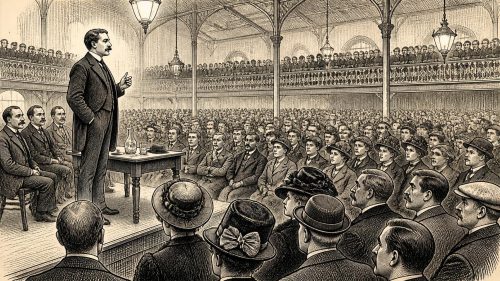
In 1913, the Third Home Rule Bill intensified conflict between constitutional nationalism and Ulster unionism, whose Volunteer Force prepared to resist self-government. Dublin’s Lockout pitted James Larkin’s ITGWU against employers led by William Martin Murphy, bringing exclusion, Bloody Sunday violence, hunger and disputes over relief for children. The collapse of Church Street tenements, killing seven, highlighted urban housing failures. Labour activists formed the Irish Citizen Army, while nationalists founded the Irish Volunteers at the Rotunda in response to unionist militarisation. Cultural debates involving Yeats and the Gaelic League reflected public identities, leaving Ireland divided, mobilised and distrustful of parliamentary solutions.
Ulster Covenant
Archived: 9 October 2026
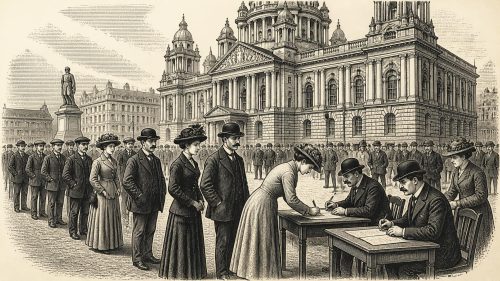
In 1912, the Third Home Rule Bill made limited Irish self-government a realistic prospect, though it remained under parliamentary debate and reserved major powers to Westminster. John Redmond’s Irish Parliamentary Party supported it, while Ulster unionists, led by Edward Carson and backed by British Conservatives, demonstrated mass resistance at Balmoral and signed the Ulster Covenant and women’s Declaration on Ulster Day. Belfast’s industrial strength, sectarian divisions and summer disturbances revealed mounting tension. Suffragists challenged women’s exclusion from reform. Titanic’s Queenstown call highlighted migration and regional connections. Cultural activity continued, but unresolved Home Rule, unionist mobilisation and social divisions foreshadowed crisis.
Unionist Resistance
Archived: 9 October 2026
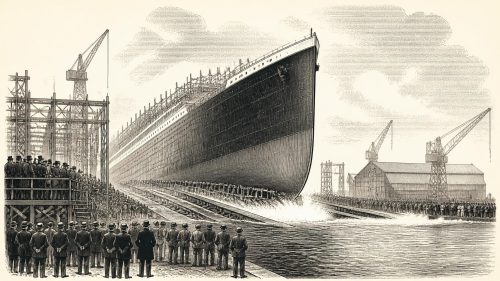
In 1911, Ireland remained under Westminster rule but faced deepening constitutional, social and economic divisions. The census documented continuing population decline through emigration, rural livelihoods, and the mixed fortunes of Irish language revival. The Parliament Act removed the Lords’ absolute veto, making Home Rule more attainable, while Carson’s Craigavon rally demonstrated organised Unionist resistance. Belfast launched Titanic, symbolising industrial strength and Unionist ties to Britain. Labour militancy emerged through Larkin’s Irish Worker and the Wexford lockout. Suffrage organisations expanded women’s public activism. Royal visits and the Parnell monument reflected competing loyalties, as Ireland’s divergent futures became increasingly visible to contemporaries.

Redmond’s Leverage
Archived: 9 October 2026
In 1910, two British general elections made John Redmond’s Irish Parliamentary Party essential to Liberal government, increasing prospects for Home Rule without securing it. The Lords’ veto remained intact, while nationalist and unionist divisions persisted. Land reforms strengthened the Congested Districts Board’s capacity to address western poverty, and old-age pensions exposed disputes over proof of age. James Connolly returned from America, reinforcing developing socialist and trade-union politics. The Abbey Theatre, after Annie Horniman withdrew support, faced financial uncertainty while asserting independence. Meanwhile, Kalem filmed The Lad from Old Ireland, linking rural Ireland, emigration and modern transatlantic visual culture for audiences.

Ferguson Flight
Archived: 9 October 2026
In 1909, Ireland remained within the United Kingdom, yet social, political and cultural change accelerated. Old-age pensions, introduced in January, gave qualifying elderly people a statutory income. The Irish Land Act advanced tenant purchase and addressed western congestion, while the People’s Budget and the United Irish League’s baton convention exposed nationalist divisions, prompting William O’Brien’s All-for-Ireland League. James Larkin’s general union established an Irish labour base. University reform replaced the Royal University with national and Belfast institutions. Synge’s death, Irish-language opera and the Clare Island Survey reflected innovation. On 31 December, Harry Ferguson’s monoplane achieved Ireland’s first self-designed, self-built flight.

Women’s Franchise
Archived: 9 October 2026
In 1908, Ireland remained within the United Kingdom, but institutional developments strengthened its public sphere. The Irish Universities Act created frameworks for the National University of Ireland and Queen’s University Belfast, addressing Catholic educational grievances while preserving regional distinctions. Patrick Pearse’s St Enda’s school promoted culturally nationalist bilingual education. Hanna Sheehy-Skeffington and Margaret Cousins founded the Irish Women’s Franchise League, demanding equal parliamentary voting rights. Hugh Lane’s Municipal Gallery and the Georgian Society advanced civic cultural memory, while Derry’s Guildhall fire exposed urban vulnerability. Tom Clarke’s Dublin return indicated emerging republican organisation, and impending old-age pensions promised limited social support.
Belfast Strike
Archived: 9 October 2026
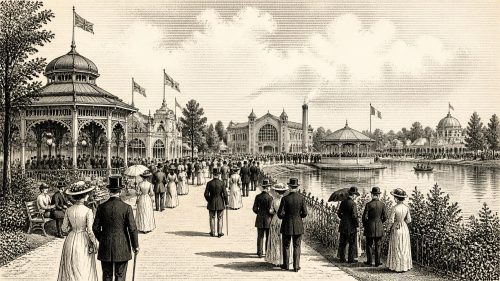
In 1907 Ireland displayed contrasting modernities. Dublin’s Irish International Exhibition at Herbert Park celebrated industry, art and entertainment, while Belfast labour unrest, led by James Larkin, brought transport and docks near paralysis, prompted military intervention and police mutiny. Synge’s Playboy riots exposed disputes over national culture. Birrell’s limited Irish Council Bill collapsed after nationalist rejection, encouraging separatist alternatives. The Evicted Tenants Act and cooperative movement addressed rural hardship, though poverty persisted. Dublin Castle’s Crown Jewels vanished. Marconi’s Clifden station opened wireless links to Canada, illustrating Ireland’s role in technology. Overall, the year revealed stalled constitutional reform, competing visions of progress.
Labourers’ Cottages
Archived: 9 October 2026
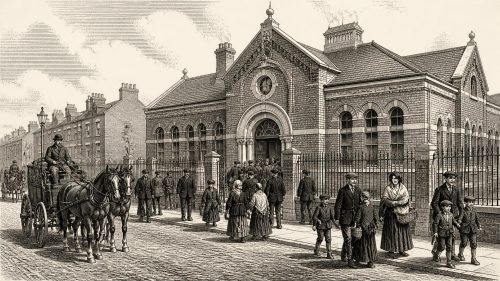
In 1906, Liberal victory left John Redmond’s Irish Parliamentary Party hopeful but unable to secure Home Rule, while James Bryce pursued administrative reform. The Labourers (Ireland) Act empowered local authorities to build cottages and plots, laying foundations for rural security. Dublin’s Iveagh Trust Baths expanded washing and recreation facilities, and licensing legislation restricted drinking hours. University education remained divided after Catholic bishops rejected a mixed Trinity arrangement. Cultural nationalism gained visibility through Douglas Hyde and Peter O’Connor’s Athens protest. Michael Davitt’s death recalled the Land War generation. The year exposed constitutional, social, religious and national tensions while creating welfare institutions.
Some records do not yet have a verified historical year and are awaiting chronological placement.