
Year by Year
Explore Year by Year articles from the most modern historical year back to the oldest.
3,295 Articles Archived
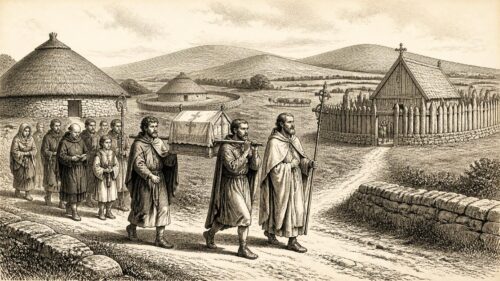
Ultán’s Relics
Archived: 30 October 2026
In 785, annalistic records noted political and ecclesiastical transitions across a divided, predominantly rural Ireland. Ruaidrí mac Fáeláin, Leinster overking, died, creating opportunities later exploited by Donnchad Midi and Bran Ardchenn. Máel Dúin of Loch Gabor and Dúnchad of Uí Maine also died, while Tipraite won an otherwise unexplained battle of the Muad. Relics of Ultán were carried on circuit, demonstrating mobile saintly authority and church patronage. Deaths included abbots, learned clerics, a scribe and Abbess Ellbríg. The notices reveal interconnected royal and religious networks, although they preserve little about ordinary people, chronology, motives, warfare, or material conditions in detail.
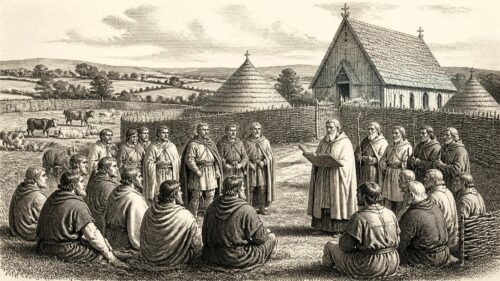
Emly Settlement
Archived: 30 October 2026
In 784, the Annals of Inisfallen record that the Law of Ailbe operated throughout Munster, indicating a provincial ecclesiastical settlement backed by saintly and likely secular authority. No surviving text identifies its rules, sponsors or proclamation, but such cána could protect churches, regulate obligations, secure revenues and reinforce peace. The measure reflected Emly’s importance and Munster’s contested kingship, without proving any specific ruler’s involvement. Notices of abbots’ deaths at Clonmacnoise and Terryglass reveal interconnected religious institutions. On 27 November, Irish-born Virgil of Salzburg died, demonstrating Irish ecclesiastical influence abroad. Together, these events illuminate sacred authority, political negotiation and rural obligations.

Royal Meeting
Archived: 30 October 2026
In 783, Irish annals recorded political rivalry, regional warfare, ecclesiastical change and royal deaths across a connected but divided island. Donnchad, southern Uí Néill ruler, and Fiachna of Ulaid met at Inis na Ríg, yet neither would enter the other’s sphere, exposing limits to high-kingship. Battles occurred among northern Uí Néill groups and at Carn Conaill in Connacht, while Áth Truim was burned. Church leaders died, including Flann of Inis Caín Dega, killed by poison; Dúnchad of Uí Maine adopted religious observance. Relics reached Tailtiu, demonstrating ecclesiastical authority and mobility. The notices reveal shifting local power rather than unified rule.
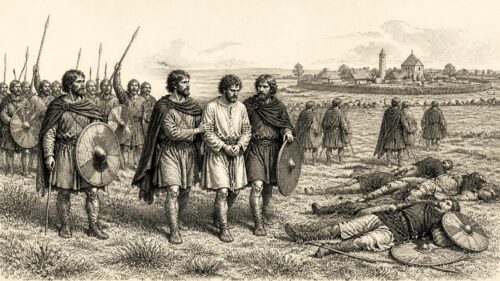
Bran’s Captivity
Archived: 30 October 2026
In 782, Ruaidrí son of Fáelán defeated his cousin Bran son of Muiredach at the Curragh near Kildare, killing allies including Mugrón of Uí Fhailgi and capturing Bran. The Leinster struggle involved rival Uí Dúnlainge branches and allied regional interests, amid wider pressure from Donnchad Midi of Tara, Bran’s father-in-law. In Connacht, King Artgal son of Cathal adopted the pilgrim’s staff, declaring a journey to Iona for the following year. Annals also record numerous ecclesiastical deaths, illustrating monastic administration and influence. Careful chronology is essential, since Four Masters entries are misdated; 782 reveals clearly intertwined dynastic, religious and maritime connections.
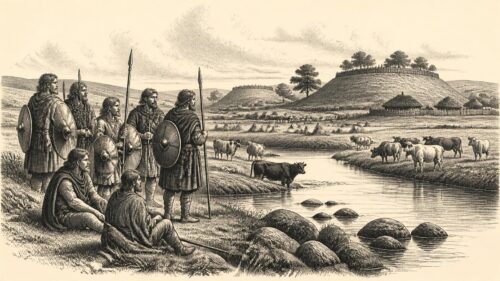
Brega Victory
Archived: 30 October 2026
In 781, men of Brega defeated a Leinster force at the battle of the Ríg during Samhain, killing Cú Chongalt, king of Ráith Inbir. Annals name four Bregan leaders and preserve a verse recalling an unwelcome Leinster visit and encampment beside the river. The conflict reflected contested borderlands, dynastic rivalry and pressure from Tara under Donnchad Midi, without proving his involvement. Autumn warfare affected farming, tribute, livestock and local authority. Society remained rural, bound by clientship and ecclesiastical institutions. The evidence records no Viking activity, permanent conquest, or precise location, illustrating both the political significance and limits of surviving sources.
Tara Synods
Archived: 30 October 2026
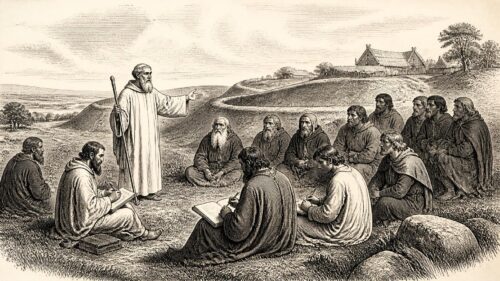
In 780, Donnchad Midi, king of Tara, campaigned against Ruaidrí of Leinster near Óchtar Ocha, driving him away and devastating territory and churches. At Tara, Dublittir, abbot of Finglas and Céli Dé leader, presided over a gathering of Uí Néill and Leinster synods, attended by anchorites and scribes, possibly seeking settlement after conflict. The third enforcement of the law of Comán and Aedán demonstrated church-backed legal authority. Annals also noted April snow, deaths among religious figures, Colgu’s victory over the Airthir, and burnings including Dumbarton Rock. Together, these notices reveal warfare, ecclesiastical mediation, law, learning, weather and Irish Sea connections.

Kildare Fire
Archived: 30 October 2026
In 779, Irish annals record converging environmental, ecclesiastical and political crises. A continuing cattle murrain, human deaths from want, widespread smallpox and an autumn windstorm placed severe pressure on rural communities and their pastoral economy. On 11 June, Kildare burned; fires also damaged Clonmore and Kildalkey, though causes and connections remain unknown. Several prominent clerics died, including Clonard’s bishop and Roscommon’s abbot. Donnchad Midi, king of Tara, secured hostages from northern king Domnall son of Áed Muinderg, demonstrating contested overlordship. In Munster, Breislén of Béirre killed Fergal of Desmumu in internal conflict. Fragmentary sources portray exceptional vulnerability and rivalry alike.

Kildare Fires
Archived: 30 October 2026
In 778, securely dated through the Annals of Ulster, Ireland endured interconnected crises. Kildare burned on 11 June, alongside Cluain Mór Maedóc and Cell Delge, damaging ecclesiastical settlements central to worship, learning and local economies. Continuing cattle disease, deaths from want, an island-wide epidemic termed smallpox, and an autumn storm intensified insecurity. Political conflict persisted: Donnchad of Clann Cholmáin took northern hostages; regional kings died or were killed; and Breislén of Béirre defeated Fergal of Desmumu. Deaths of bishops and abbots, including at Fursa’s French monastery, demonstrate ecclesiastical networks beyond Ireland. The annals reveal intertwined religious, economic and political vulnerability.
Clonmacnoise Burning
Archived: 30 October 2026
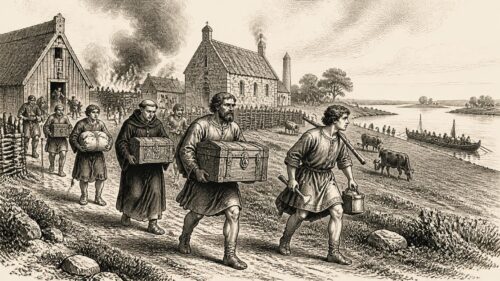
Records for 777 illustrate the difficulties of early Irish chronology. The Annals of Inisfallen report Nia son of Cú Allaid killed at Sliab Mis, the death of Connacht king Flaithrí son of Domnall, and the drowning of more than one hundred Connachta at Tír dá Glas. The Annals of Ulster's associated dossier, conventionally dated 778, describes Donnchad Midi's victory at Forchalad, Clonmacnoise's burning on 10 July, illness and cattle disease, and promulgation of Columba's law. It also notes deaths and conflict. Together the evidence depicts interconnected yet politically fragmented communities vulnerable to warfare, accidents, disease and monastic disaster across Ireland.
Summer Murrain
Archived: 30 October 2026
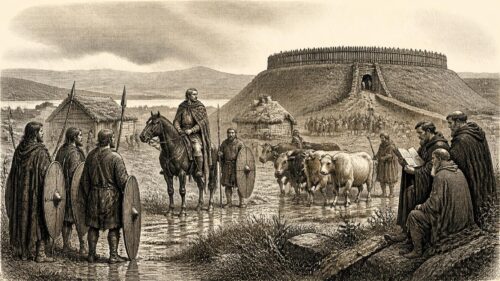
In 776, Irish annals record political conflict alongside severe environmental and health pressures. Donnchad Midi, ruler of Mide, organised a Leinster hosting against Brega, disturbed an assembly involving the Ciannachta, and entered conflict with Congalach, whose later defeat should not be dated to this year. Flaithrí, king of Connacht, died, while skirmishes and killings involved northern and local dynasties. Most strikingly, summer brought heavy rain and wind, described as winterlike, followed by bloody flux, widespread illness and major cattle murrain. These disasters threatened rural livelihoods, tribute and social security. The notices also record death of Bán Boidbgni, a learned man.
Some records do not yet have a verified historical year and are awaiting chronological placement.