
Year by Year
Explore Year by Year articles from the most modern historical year back to the oldest.
3,295 Articles Archived
Donnchad Midi
Archived: 30 October 2026
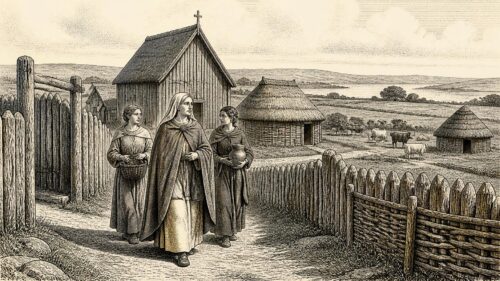
In 775, Irish annalistic evidence records deaths of ecclesiastical and learned figures, including Scannal, Maicníad, Augustin, Adarchu and Forbflaith, abbess of Clonbroney, alongside a battle at Uilleann Guaire that killed Flann son of Cellach and Scannlán son of Fínnechta. Dates and details remain uncertain because medieval annalistic chronologies differ. The year also saw Donnchad Midi, king of Tara, devastate Munster, demonstrating coercive but limited overlordship. These notices reveal interconnected political, religious and intellectual communities, in which churches held economic and social authority, women could lead religious houses, and rural households locally sustained kingdoms and monasteries through labour, rents, and service.
Tailtiu Disturbance
Archived: 30 October 2026
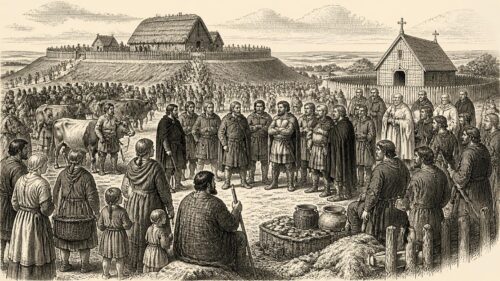
In 774, Irish annals recorded political unrest, elite deaths, ecclesiastical change and lethal illness across a fragmented yet connected island. A disturbance involving Donnchad Midi, probably at Tailtiu’s major assembly, reflected his contested consolidation of Clann Cholmáin power in Mide and among the Uí Néill, though details remain unknown. Kings of Cruachain Ai, Cenél Fiachach, the Cruithni, Uí Fhidgeinte and Corcu Baiscinn died, illustrating regional succession. Obituaries for abbots, a bishop-scribe and an anchorite demonstrate churches’ social and political importance. A bloody flux killed Eógan son of Colmán and many others, exposing wider vulnerability. No Viking raids were recorded there.
Grain Shortage
Archived: 30 October 2026
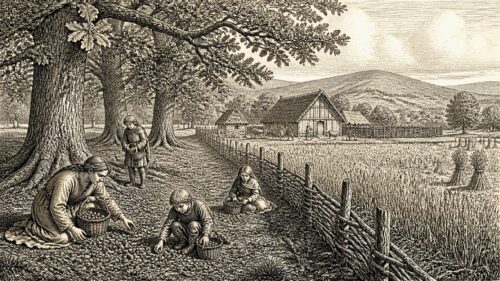
In 773, securely dated by a December lunar eclipse, Ireland experienced exceptional drought and heat, causing widespread failure of staple bread-grain. Abundant oak-mast, or acorns, offered limited relief, particularly through pig fodder, but did not erase subsistence pressures. Donn Cothaid, king of Connacht, died, prompting a dynastic transition later associated with Flaithrí of the Uí Briúin. Annals also recorded deaths of Maenach of Sláine, scribe Dainél of Letuba, several abbots and bishop Aedán, Lerthan, abbess of Kildare, and Áed of Rechru. These notices reveal interconnected environmental, political and ecclesiastical vulnerabilities, while preserving only limited detail about local consequences for communities.
Cnoc Báine
Archived: 30 October 2026
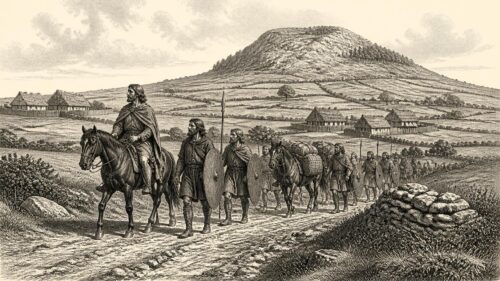
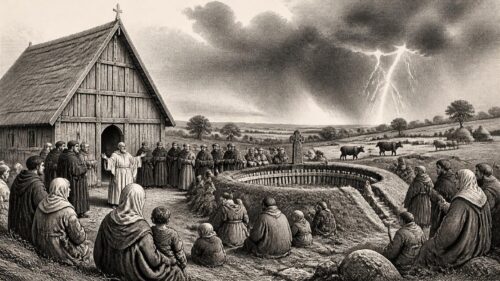
In 772, despite chronological uncertainties in the annals, Donnchad Midi of Clann Cholmáin led a hosting to Cnoc Báine in Airgialla, projecting Midland power northwards amid changing Uí Néill leadership. Connacht lost Áed Aithgén of Uí Maine and Art of Aidne, while the law of saints Comán and Aedán was renewed across its three divisions. On St Michael’s Day, lightning, thunder and heaven-sent fire terrified an assembly, prompting widely observed penitential fasts. Airlid of Clonard, Máel Aichthen of Cluain Eidnig and Suibne of Iona died, illustrating ecclesiastical networks linking Ireland, regional politics and the wider Columban world beyond its shores.
Báine Hosting
Archived: 30 October 2026
In annalistic year 771, Donnchad mac Domnaill, king of Tara, led a hosting to Cnoc Báine, probably in modern County Tyrone, demonstrating authority rather than recording a confirmed victory. The annals also note killings of Conchobor and Connacht rulers Áed Aithgein of Uí Maine and Art of Aidne. The law of saints Comán and Aedán was renewed across the three Connachts, illustrating church and secular collaboration. A severe Michaelmas thunderstorm prompted widespread fasting. Deaths included ecclesiastics from Clonard and Cluain Eidnig, and Suibne, abbot of Iona. Chronological discrepancies among later annals require caution when assigning additional events to this year.
Ráith Ailinne
Archived: 30 October 2026
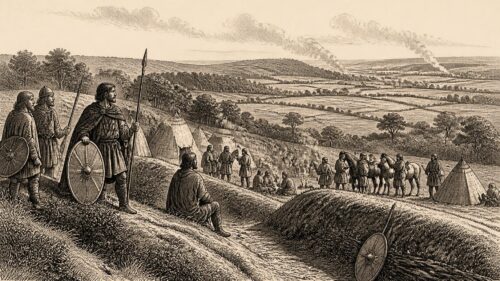
In 770, Donnchad Midi led a Uí Néill army into Leinster, where King Cellach mac Dúnchada avoided a decisive battle. Donnchad occupied Ráith Ailinne for seven days and burned Leinster’s borders, demonstrating coercive power rather than conquering the province. Leinster was already divided: Cellach had defeated rival groups at Áth Orc. Subsequent fighting brought a Leinster victory over southern Brega at Bolg Bóinne, while the Ciannachta defeated Uí Téig at Áth Cliath, with heavy losses and drownings. Annals also record ecclesiastical deaths and Feidlimid of Cashel’s possible birth, illustrating fragmented authority, warfare’s rural disruption, and limited surviving evidence in Ireland.
Tóim Snáma
Archived: 30 October 2026
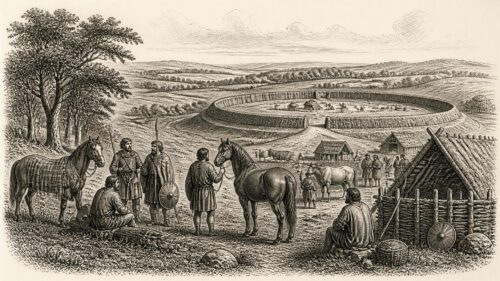
In 769, annalistic dating varied, yet records depict regional conflict. Donnchad Midi’s Uí Néill army camped at Ráith Ailinne for seven days and ravaged Leinster’s borderlands, while Cellach of Leinster later won at Áth Orc amid internal provincial struggles. Battles also affected Brega, Dublin Bay and south Leinster. In Osraige, King Tóim Snáma was killed after recent dynastic fighting. Conchobar of Aidne and Torpaid of Corcu Modruad died, alongside prominent churchmen, including abbots of Clogher and Clonmacnoise. The sources reveal fragmented kingship, military mobility and vulnerable communities. Tallaght’s foundation remains uncertain, and adjacent notices cannot securely be assigned to 769.
Dub Innrecht
Archived: 30 October 2026
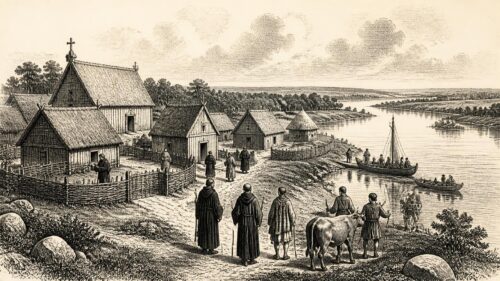
Conventionally dated to 768, the annals record transitions rather than a national crisis in Ireland. Dub Innrecht, Uí Briúin king of Connacht, died from bloody flux, creating an undocumented succession question but not evidence of epidemic or civil war. Ecclesiastical leadership changed with the deaths of Aedán of Lismore, the senior abbot at Clonmacnoise, Fer dá Crích son of Suibne at Armagh, and Coibdenach of Cell Tóma. Eithne of Brega, styled queen of Tara’s kings, was praised for penance. These selective notices illuminate intertwined dynastic, religious and economic authority in a rural, fragmented Ireland connected to Britain through learned networks.
Patrick's Law
Archived: 30 October 2026
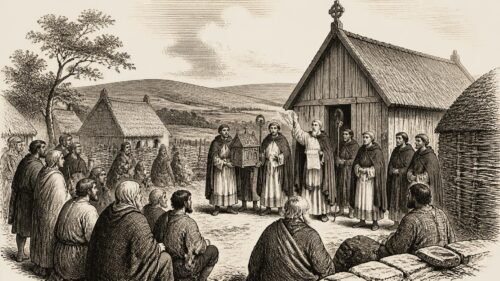
In 767, reconstructed from chronologically problematic annalistic entries, Ireland’s surviving record highlights political violence, ecclesiastical succession and sacred law. Murchad son of Flaithbertach, king of Cenél Conaill, was killed, weakening a northern Uí Néill lineage already eclipsed by Cenél nÉogain under Tara’s king, Niall Frossach. Cellach son of Cairpre died at a robber’s hands, while Flathgus son of Fiachra was treacherously slain. The annals also record abbots’ deaths, demonstrating churches’ religious, economic and political importance. Patrick’s law, probably a proclamation of Cáin Phátraic linked to Armagh and royal authority, asserted a moral order, though its provisions and enforcement remain unknown.
Sruthair Battle
Archived: 30 October 2026
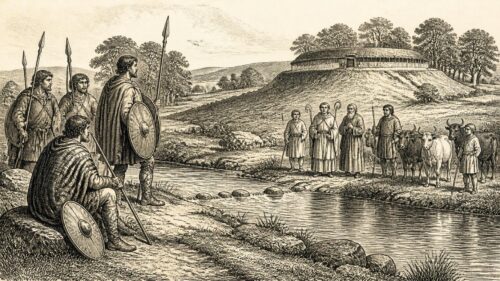
In annalistic year 766, Ireland’s fragmentary records reveal political rivalry and ecclesiastical links. Folloman, king of Mide, was treacherously killed after supporting Donnchad Midi, while fighting between Mide and Brega claimed Máel Uma and Donngal. In Connacht, Dub Innrecht’s Uí Briúin defeated the Conmaicne at Sruthair, killing many, including Áed Dub. In Munster, Uí Fhidgeinte and Araid Cliach defeated Máel Dúin at Énboth Breg. Crimthann, abbot of Clonfert, died, and Suibne, abbot of Iona, visited Ireland. These notices depict competing dynasties, powerful churches, and Irish Sea connections, while leaving ordinary life largely unrecorded and offer no evidence of Viking raids.
Some records do not yet have a verified historical year and are awaiting chronological placement.