
Year by Year
Explore Year by Year articles from the most modern historical year back to the oldest.
3,305 Articles Archived
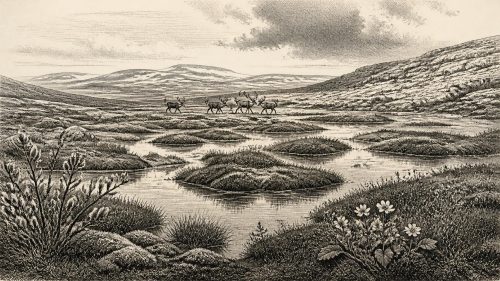
Fermanagh Meltwater
Archived: 6 October 2026
Thirty thousand one hundred and eighty-four BCE is a modern label, not a securely resolvable Irish date. Derryvree, County Fermanagh, preserves a wetland interval between glacial advances, broadly dated to 36,900–31,700 calibrated BP, with cold-water plants, mosses, insects and open tundra vegetation. Castlepook Cave, County Cork, records varied Ice Age fauna, although disturbed deposits prevent simple reconstructions. A possibly cut-marked reindeer bone may suggest an early human visit, but remains unconfirmed. No evidence establishes settlement, society or politics. Ireland formed a shifting periglacial landscape of ice, water, animals and possible transient people, documented only by fragmentary, local and revisable evidence.
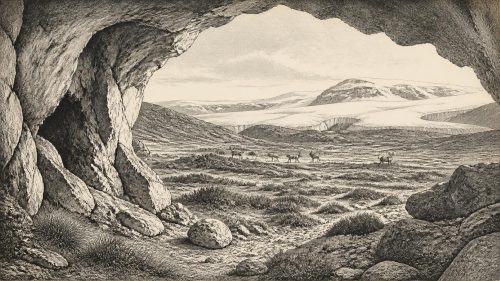
Cave Fossils
Archived: 6 October 2026
Thirty-thousand years BCE is a modern label, not a recoverable Irish historical year; evidence supports only broad Late Glacial reconstructions. Around 32,000 calibrated years BP, Ireland experienced unstable, severe cooling as the British–Irish Ice Sheet expanded, reshaping coasts, drainage and habitats. Ice-free areas, if present, held sparse tundra and steppe-tundra vegetation supporting varied fauna, documented in cave deposits including Castlepook, Cork. These assemblages include reindeer, hyaena and mammoth but may mix different periods. A possibly cut-marked Castlepook reindeer bone suggests unconfirmed early human visitation, not settlement. Secure Irish human evidence is far later. Caves and landforms preserve vital environmental evidence.

Doneraile Animals
Archived: 6 October 2026
Around 30,186 BCE, Ireland experienced unstable Late Pleistocene conditions as ice expanded and sea levels fell. Castlepook Cave near Doneraile, County Cork, preserves major evidence: bones of mammoth, giant deer, reindeer, bear and spotted hyaena, accumulated across many millennia rather than one period. These animals indicate intermittent connections with north-west Europe and cold, open habitats, though not a single reconstructed ecosystem. Hyaena activity explains much bone damage and deposition. A marked reindeer femur may show human butchery, but remains unproven. No secure evidence exists for settlement, tools, houses, burials, farming, trade or political communities. Environmental change dominates this prehistoric horizon.

Treeless Wetland
Archived: 6 October 2026
30,187 BCE is a modern label within climatically unstable Marine Isotope Stage 3, not a recoverable Irish year. Derryvree, County Fermanagh, preserves freshwater silts beneath later glacial till, indicating treeless, cold wetland habitats with hardy plants and local biological productivity between ice advances. Castlepook Cave, County Cork, contains diverse late-Pleistocene fauna, including mammoth, reindeer, giant deer, hyaena and horse, though remains need not be contemporaneous. Ice expansion later erased much evidence. A marked reindeer femur may indicate Upper Palaeolithic butchery, but cannot demonstrate settlement or permanent population. No named communities, political structures, culture, routes or beliefs can be securely reconstructed.
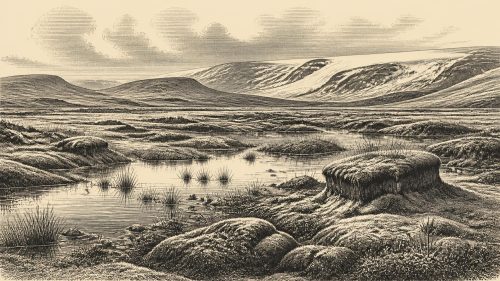
Glacial Sequence
Archived: 6 October 2026
30,188 BCE is a label for a Late Pleistocene horizon, not a recoverable Irish year. Derryvree, County Fermanagh, preserves a sequence of glacial till, freshwater organic sediments and later till, demonstrating an ice-free interval between glacier advances. Radiocarbon dating places it broadly within MIS 3, although calibration prevents annual precision. Mosses, sedges and insects indicate cold, treeless wet tundra. Castlepook Cave records cold-stage fauna, but not a single contemporaneous community. Ireland’s ice sheet was expanding unevenly, while sea crossings remained uncertain. No evidence identifies human occupation, social institutions, farming or technology at date. Derryvree documents environmental change before renewed glaciation.

Fermanagh Reprieve
Archived: 6 October 2026
At the notional date of 30,189 BCE, Ireland’s history can only be reconstructed from uncertain environmental evidence. Derryvree, County Fermanagh, preserves organic freshwater sediments between glacial tills, dated broadly to later Marine Isotope Stage 3, showing a temporary ice-free, tundra-like landscape before renewed glaciation. Castlepook Cave in County Cork contains diverse Late Pleistocene fauna, including reindeer, mammoth and hyaena, although its mixed deposits cannot depict one moment. A possibly tool-marked reindeer bone suggests a brief human visit around 33,000 years ago, but secure evidence of occupation is absent. Ireland remained a harsh ecological frontier, repeatedly altered by ice and sea.

Cork Carnivores
Archived: 6 October 2026
Around 30,190 BCE, Ireland lay in the later Marine Isotope Stage 3, approaching major glaciation but not necessarily uniformly ice-covered. Dating and ice margins remain uncertain. Glacial processes were shaping landforms later visible across Ireland. Castlepook Cave, County Cork, preserves a time-averaged MIS 3 fauna including reindeer, mammoth, giant deer, bears, wolves and spotted hyenas. Revised dates mean these animals cannot securely be placed in this year. Treeless or sparse cold-steppe and tundra supported shifting ecological communities, while changing sea levels and ice affected dispersal. No accepted evidence demonstrates human settlement or activity; Ireland’s earliest confirmed human evidence is later.

Glacial Deposits
Archived: 6 October 2026
Around 30,191 BCE, Ireland was a fluctuating later-Pleistocene landscape, not a historically recoverable year. Organic silts at Derryvree, Fermanagh, dated broadly rather than precisely, indicate an interval of ice-free tundra wetland between glacial advances, supporting sedges, mosses, dwarf shrubs and aquatic plants. Ice margins, sea levels and connections with Britain varied regionally. Castlepook Cave in Cork preserves evidence of diverse cold-adapted fauna, including mammoth, reindeer, giant deer, predators and smaller mammals, though its mixed bones are not contemporaneous. A possibly cut-marked reindeer bone suggests unresolved early human activity, but no secure settlement evidence exists. Subsequent glaciation destroyed or buried evidence.

Castlepook Passage
Archived: 6 October 2026
Around 30,192 BCE, Ireland was a cold, variable Late Pleistocene frontier, not a documented human society. Derryvree sediments in Fermanagh record ice-free freshwater wetlands with sedges, mosses, aquatic plants and dwarf willow before later glaciation. Castlepook Cave in Cork preserved remains of reindeer, giant deer, bear, Arctic fox, lemming and other animals, demonstrating intermittent access from north-west Europe. A possibly cut-marked reindeer bone may indicate brief human activity, but cannot prove settlement or sustained occupation. Lower sea levels may have created movement opportunities, although routes remained uncertain. Later ice buried much evidence, leaving an incomplete environmental archive open to reassessment.

Derryvree Species
Archived: 6 October 2026
At roughly 30,193 BCE, Ireland lay within a climatically unstable Late Pleistocene interval, not a precisely datable historical moment. Derryvree, County Fermanagh, preserves freshwater sediments between glacial tills, indicating a temporary wetland landscape of cold-adapted, largely treeless vegetation, including aquatic plants, mosses, sedges and dwarf shrubs. Radiocarbon evidence places the deposit within a broad range, while later ice sealed it. Ireland experienced changing ice margins, periglacial conditions and shrinking habitats rather than uniform glaciation. Castlepook Cave fauna demonstrate wider cold-stage animal presence, but not coexistence at this date. A modified reindeer bone suggests unconfirmed human activity; no settlement evidence survives.
Some records do not yet have a verified historical year and are awaiting chronological placement.