
Year by Year
Explore Year by Year articles from the most modern historical year back to the oldest.
3,305 Articles Archived
Legacy Radiocarbon
Archived: 30 September 2026
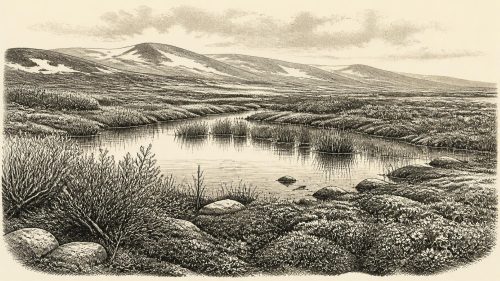
30,464 BCE is a nominal date within a broad Late Pleistocene range, not a recorded Irish year. At Derryvree, County Fermanagh, freshwater silts and organic deposits sealed between glacial tills indicate an ice-free interval before the Last Glacial Maximum. Radiocarbon sample BIRM-166, though imprecise and legacy-dated, broadly encompasses this horizon. Mosses, bogbean, water-milfoil, dwarf willow and other remains reveal cold, wet tundra-like mosaics with pools and sparse vegetation. Cave finds show diverse mammals, but are chronologically and contextually complex. A cut-marked Castlepook reindeer bone suggests a possible human visit, not settlement. No political, social or cultural history can be reconstructed.
Wetland Mosses
Archived: 30 September 2026
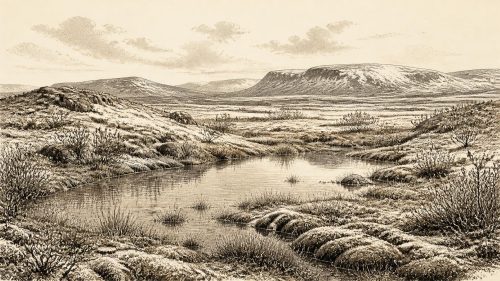
Thirty thousand four hundred and sixty-five BCE is a label rather than a recoverable Irish date. Derryvree, County Fermanagh, preserves moss-rich freshwater sediments between glacial tills, indicating open, cold, wet habitats during unstable Marine Isotope Stage 3. Its BIRM-166 radiocarbon age spans a broad calibrated interval encompassing the date. Castlepook Cave, County Cork, contains time-averaged remains of mammoth, reindeer, giant deer, predators and lemmings, demonstrating links with wider European cold-stage ecosystems. No secure evidence establishes settlement or society. A possibly stone-tool-marked reindeer bone may indicate human activity, but remains provisional. Environmental change, preceding the Last Glacial Maximum, is the conclusion.
Carnivore Landscape
Archived: 30 September 2026
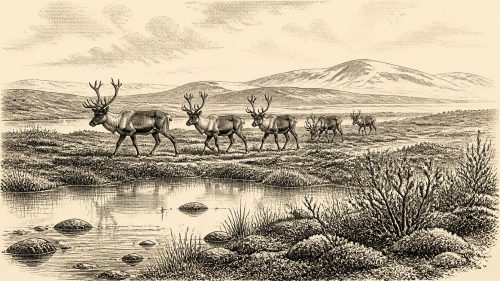
Around 30,466 BCE, Ireland’s evidence records shifting Late Pleistocene environments rather than dated events or societies. Dynamic glaciation created local ice-free intervals, illustrated by Derryvree, County Fermanagh, where freshwater sediments between tills preserve tundra plants, mosses, insects and wetland life. Castlepook Cave, north Cork, accumulated bones over millennia, documenting mammoth, giant deer, reindeer, bear, hyaena and later cold-adapted mammals within a carnivore-rich landscape. A modified reindeer femur may indicate human processing around 33,000 years ago, but lacks secure context or corroborating artefacts. No evidence establishes settlement, farming, institutions, language, conflict or occupation; Ireland was an intermittently habitable Ice Age frontier.
Ice Accumulation
Archived: 30 September 2026
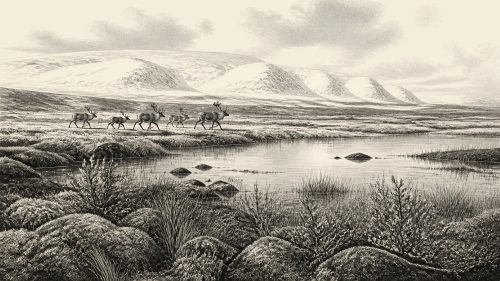
Around 30,467 BCE, a modern label rather than a recoverable date, Ireland was entering expanding British–Irish Ice Sheet conditions during Marine Isotope Stage 3. Ice accumulated across northern and upland regions, while shifting margins left patchy periglacial terrain, altered coastlines and uncertain travel routes. Derryvree deposits in Fermanagh preserve evidence of cold, wet, treeless freshwater habitats with mosses, sedges, dwarf willow and aquatic plants. Castlepook Cave in Cork contains time-mixed remains of mammoth, giant deer, reindeer and predators, indicating intermittent cold-climate fauna. A possibly cut-marked reindeer bone suggests potential human presence, but no securely dated settlement or society survives archaeologically.

Aquatic Bogbean
Archived: 30 September 2026
Around 30,468 BCE, Ireland lay in the climatically unstable later Ice Age, without written history or securely dated settlement. At Derryvree, County Fermanagh, organic freshwater sediments between glacial tills record an ice-free interval, broadly dated to 34,950–29,750 BCE. Bogbean, sedges, mosses, aquatic plants and cold-adapted species indicate open tundra wetland, not woodland. Castlepook Cave, County Cork, preserves remains of reindeer, mammoth, predators and other cold-climate fauna. A cut-marked reindeer bone may indicate Upper Palaeolithic butchery, yet cannot prove settlement. Ice erosion and disturbed deposits limit conclusions: evidence reveals local ecosystems and possible brief human visits, not communities, politics or culture.

Organic Fossils
Archived: 30 September 2026
30,469 BCE is a notional modern date within Marine Isotope Stage 3, not a recoverable Irish historical year. At Derryvree, County Fermanagh, organic freshwater silts between glacial tills, dated by BIRM-166 to about 30,500 radiocarbon years before present, indicate an ice-free or ice-marginal wetland before later glaciation. Plants, mosses and insects reveal tundra, saturated ground and shallow water. Castlepook Cave in County Cork preserves mixed cold-stage fauna, including mammoth and reindeer. A possibly butchered reindeer bone suggests, but cannot prove, early human visitation. No secure evidence establishes settlement, society, trade or politics. Environmental change and ice-sheet expansion dominate this period.
Faunal Linkages
Archived: 30 September 2026
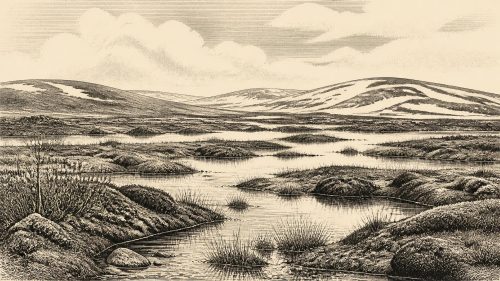
Around 30,470 BCE, Ireland lay within the climatically unstable Late Pleistocene, approaching more extensive glaciation. Derryvree, County Fermanagh, preserves organic freshwater deposits between glacial tills, indicating a locally ice-free wetland landscape around 33,500 calibrated years ago. Fossils show cold, treeless environments with pools, mosses, sedges and hardy vegetation. Castlepook Cave, County Cork, contains diverse Ice Age animal remains, including mammoth, reindeer, giant deer and hyaena, demonstrating wider faunal connections. Possible tool marks on a reindeer bone may indicate an early human visit, but settled occupation remains unproven. Evidence chiefly records changing environments, fauna and glacial erosion, not societies or events.
Freshwater Deposits
Archived: 29 September 2026
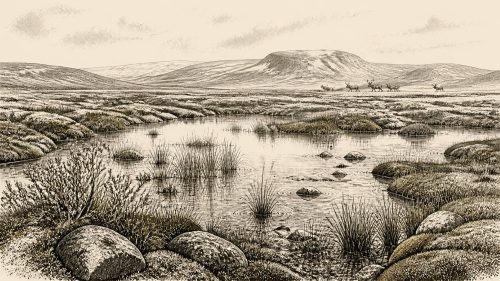
30,471 BCE is a modern label within the broad calibrated range of Derryvree’s freshwater deposit in County Fermanagh, not a recoverable Irish historical year. Roadworks exposed organic silts between two tills, proving a local ice-free interval before glacier return. Pollen, plants, insects and aquatic remains indicate open tundra, wetland and periglacial conditions during Marine Isotope Stage 3, before the Last Glacial Maximum. Cave finds, especially Castlepook’s cold-stage mammals, indicate regional faunal possibilities but cannot identify Fermanagh’s contemporary animals. A possibly butchered reindeer bone suggests human visits, not settlement. Lower seas altered routes, but no Irish land bridge can be assumed.
Episodic Wetlands
Archived: 29 September 2026
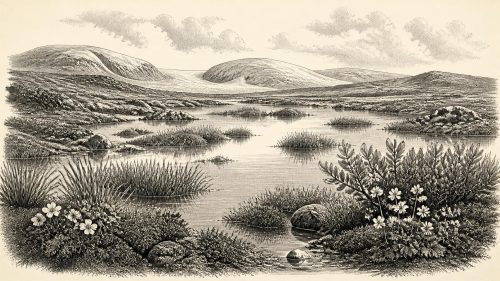
Thirty thousand years BCE is a modern label for a broad Late Pleistocene interval, not a recorded Irish year. At Derryvree, County Fermanagh, freshwater silts containing pollen, plants, mosses and insects lie between glacial tills, demonstrating episodic ice cover and a cold, open wetland mosaic. Radiocarbon dating places this episode broadly between about 34,950 and 29,750 BCE. Castlepook Cave, County Cork, preserves cold-stage animal remains, including reindeer, mammoth and hyaena. A possibly cut-marked reindeer femur suggests fleeting human activity, but requires confirmation. Evidence reveals seasonal, biologically active landscapes, not settled societies, political life or proven continuous land routes to Europe.
Fragmentary Flora
Archived: 29 September 2026
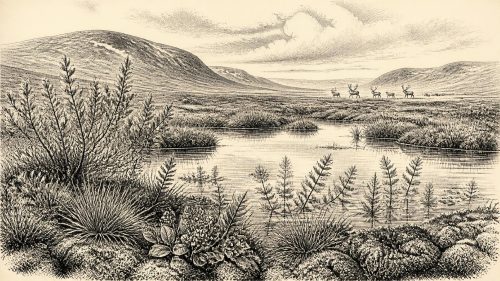
Around 30,473 BCE, Ireland experienced the unstable Late Pleistocene rather than a datable historical year. Derryvree in County Fermanagh preserves freshwater sediments between tills, showing a local ice-free wetland during Marine Isotope Stage 3. Its plants and insects indicate cold, treeless tundra-like conditions, with seasonal pools and vegetation. This evidence cannot establish island-wide conditions or a precise date. Castlepook Cave documents diverse cold-stage fauna, including mammoth, reindeer and hyaena, but its disturbed deposits span long periods. A possibly cut-marked reindeer bone suggests early human presence, yet does not prove settlement. Later ice reshaped landscapes and obscured evidence; uncertainty remains central.
Some records do not yet have a verified historical year and are awaiting chronological placement.