Athlone Bridge Collapse1146 CE
In 1146, Tairdelbach Ua Conchobair’s contested high-kingship faced warfare across Ireland. After raiding Tethba, his returning army suffered losses when Athlone’s wicker bridge collapsed during an attack, though he retained captured cattle. Connacht defeated a coalition, while Tigernán Ua Ruairc burned Ua Conchobair vessels and Ruaidrí Ua Conchobair campaigned actively. In Brega, Dublin leader Ragnall mac Torcaill was killed, followed by the killing of Cellach Ua Cellaig with Dublin support. Rulers also died in Osraige. Churchman Cormac Ua Cathasaig died amid ecclesiastical reform. Raiding, captives and damaged infrastructure exposed rural communities’ insecurity; a reported December storm remains uncertain in sources.
Dateline
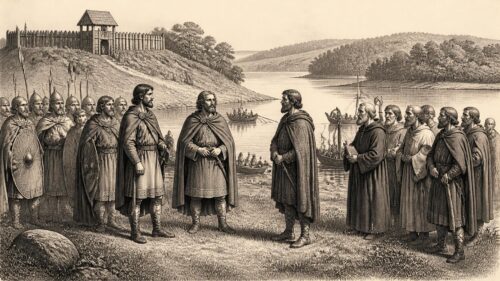
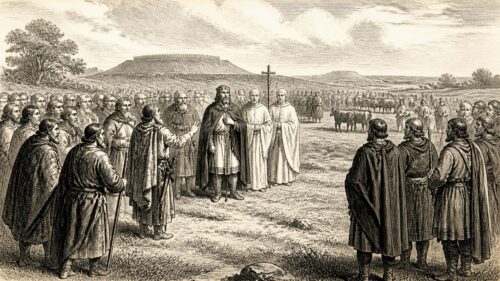
In 1146 Ireland was dominated not by a single settled monarchy but by an overlapping hierarchy of provincial kings, regional rulers and ambitious dynasties. Tairdelbach Ua Conchobair of Connacht remained the leading claimant to the high-kingship, yet his authority depended upon repeated campaigns, hostages, alliances and the loyalty of subordinate rulers. The annals assigned to this year reveal how quickly agreements could fail. Fighting extended from the Shannon crossings and central Connacht to Brega, Dublin, Leinster and Osraige, while deaths among kings and churchmen altered local balances of power.
A High-King’s Difficult Reach
Tairdelbach Ua Conchobair had made Connacht a power of island-wide importance. He maintained fleets, fortified strategic sites and placed members of his family in contested kingdoms. Nevertheless, the title sometimes accorded him by the annalists—king of Ireland—should not be mistaken for undisputed government of the whole island. His was a high-kingship with opposition, exercised through military pressure and personal agreements rather than a permanent central administration.
The political background to 1146 was especially unstable. A widely attended peace had been arranged in 1144 by Tairdelbach Ua Conchobair and his Munster namesake, Tairdelbach Ua Briain, with clerical participation. Warfare resumed almost immediately. By 1145 the annals were describing widespread conflict involving Connacht, Munster, Meath and Bréifne. The campaigns entered under 1146 therefore belonged to a continuing struggle over access to the midlands, the allegiance of lesser kingdoms and control of the routes linking Connacht with Dublin and southern Ireland.
Disaster at Athlone
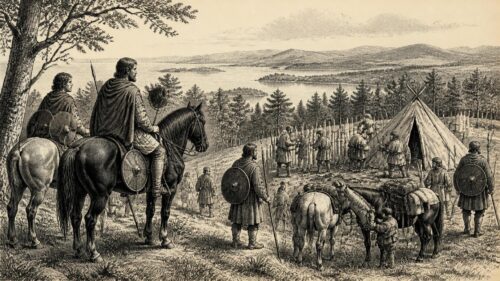
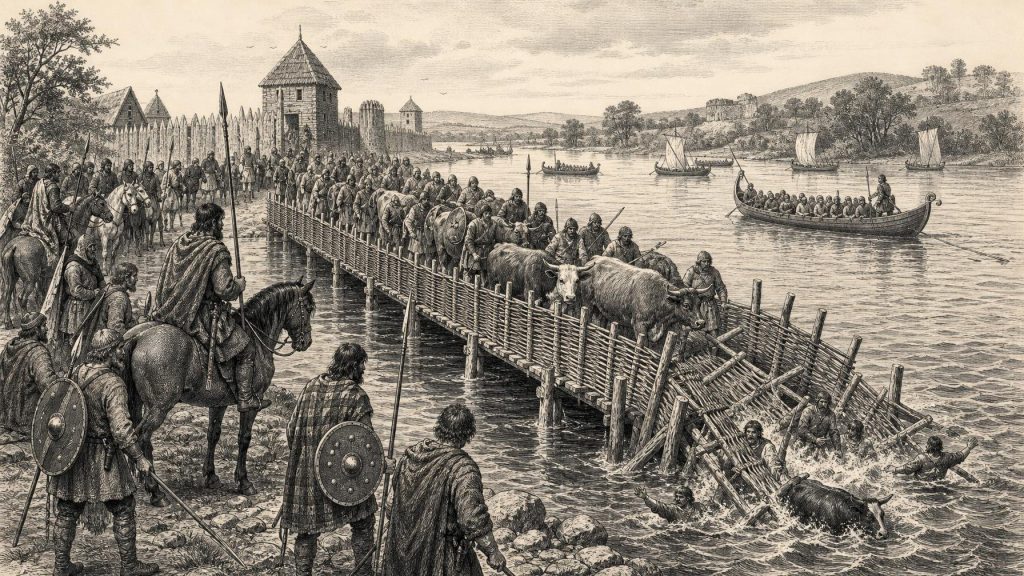
One of the best-attested events of the year was Tairdelbach Ua Conchobair’s raid across the Shannon at Athlone into Tethba, broadly corresponding to parts of the modern midlands west of Meath. His army plundered the people identified as Muinter Maílshinna and collected cattle, the customary movable wealth of a major expedition. On the return journey, however, the men of Tethba attacked the rear of the Connacht host at Athlone.
The Annals of Tigernach add a striking physical detail: the wickerwork of the bridge gave way beneath part of the retreating force. Many lower-ranking men were drowned or killed, although Tairdelbach escaped with the cattle already seized. The episode illustrates both the reach and the limits of royal warfare. A king could penetrate hostile territory and remove its herds, yet his success depended upon vulnerable river crossings and the discipline of a long column burdened with animals. The annalist’s distinction between the king’s retained booty and the deaths of ordinary followers also exposes who often paid the greatest price for such campaigns.
War Within Connacht
Another annalistic entry records a large confrontation between the Connachtmen and a coalition involving Munstermen, Uí Briúin, Conmaicne, the men of Tethba and forces from Meath. The eastern contingents advanced through Connacht while the Munstermen approached from the south. The Connacht host assembled against them and routed the Munster force, killing an unspecified number. The sources provide no battlefield location or exact sequence, so the engagement cannot responsibly be reconstructed in greater detail.
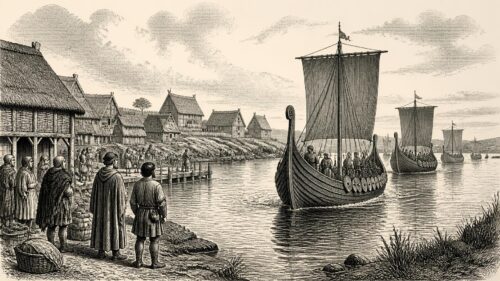
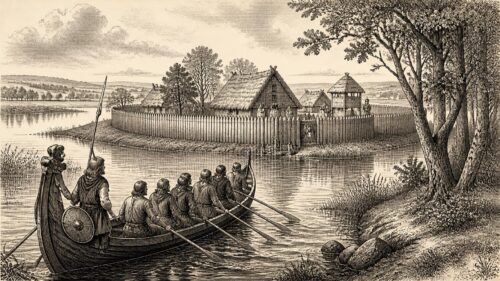
Tigernán Ua Ruairc, the formidable king of Bréifne, also campaigned in the Connacht heartland. He crossed Mag nAí, burned Dún Imdain and reached Loch Long, where his followers destroyed vessels belonging to Ua Conchobair. Women and guards were among those caught at the ships, while Ua Ruairc’s own force also suffered casualties. The burning of boats was strategically significant: Tairdelbach’s use of river and lake fleets had strengthened Connacht’s military system, and destroying vessels attacked both communications and royal prestige.
Ruaidrí Ua Conchobair, Tairdelbach’s son and the future high-king, appears as an active commander. He and the Síl Muiredaig raided Dartraige, apparently devastating the territory extensively. Ruaidrí also ordered Tairdelbach Ua Briain to seize a son of Domnall Ua Conchobair. These notices show him already building an independent political role, although the annals do not explain the immediate cause of the arrest or whether his father authorised it.
Bloodshed Around Dublin
The most important eastern conflict was the defeat of a Dublin force in southern Brega. Ragnall mac Torcaill, a leading member of the Hiberno-Norse Meic Torcaill dynasty, was killed with many followers. Chronicon Scotorum gives a total of 235 dead and says that some Leinstermen fought beside the Dubliners; the Annals of the Four Masters report about 200, while the Annals of Tigernach simply speak of many hundreds. Such figures should be treated as annalistic estimates rather than precise casualty returns.
Ragnall’s rank is likewise presented differently. Some sources call him king of the foreigners of Dublin, whereas the Four Masters describe him as a mórmáer, a great steward or magnate. Óttar mac meic Óttair is also associated with Dublin’s kingship during the 1140s, making it uncertain whether Ragnall ruled independently, displaced Óttar briefly or commanded a powerful faction within the town. What is firm is that his death weakened one of Dublin’s principal dynasties and demonstrated the ability of Brega’s rulers to challenge forces from the city.
Dublin’s warriors were soon involved in retaliation or renewed local conflict. Cellach Ua Cellaig, king of Brega, was killed by Flaithbertach Ua Cathasaig and the foreigners of Dublin. Together, the two entries reveal a frontier where alliances crossed ethnic labels. Dublin’s Hiberno-Norse inhabitants fought beside Leinstermen in one engagement and an Irish dynast in another. The city was Christian, commercially connected and deeply integrated into Irish politics, not an isolated surviving Viking colony.
Deaths in Leinster and Osraige
In Osraige, Gilla Pátraic mac Domnaill Mac Gilla Pátraic was killed by the Uí Bráenáin. Chronicon Scotorum places the killing at Cell Chainnigh, modern Kilkenny, while the Four Masters characterise it as treacherous. His death belonged to a longer pattern of internal competition among the ruling families of Osraige. The kingdom occupied a strategically important zone between Leinster and Munster, but its kings also faced challenges from rival lineages within its own territory.
The Four Masters additionally place a campaign by Tairdelbach Ua Briain in Leinster during 1146. His army plundered Uí Fhailge and carried away numerous captives. As this event is not preserved in every surviving chronicle, its details cannot be expanded, but it accords with Ua Briain efforts to rebuild Munster influence beyond the Shannon. The same compilation records the burning of Fochart Muirthemne in the north-east. Whether the destruction resulted from warfare, accident or another cause is not stated.
A Church in Transition
Cormac Ua Cathasaig, described as chief bishop or archbishop of Leinster and as a successor of Brigid for a period, died in 1146. His titles reflect Kildare’s ancient prestige and the still-fluid organisation of the Irish Church. Episcopal authority, the leadership of major saintly communities and hereditary or dynastic interests could overlap even as reformers promoted clearer territorial dioceses.
The broader religious context must be distinguished from events firmly dated to the year. Ireland was between the Synod of Ráth Breasail of 1111 and the Synod of Kells of 1152, both landmarks in the development of a diocesan hierarchy. Malachy of Armagh was still alive, and Mellifont, founded in 1142, was a young Cistercian community introducing continental forms of monastic organisation. Older centres such as Kildare, Clonmacnoise and Glendalough nevertheless remained places of worship, learning, pilgrimage, hospitality and political influence. No major surviving manuscript can be securely assigned to 1146 itself, but the recording of these events depended upon active clerical communities and trained scribes.
Wealth, Work and Insecurity
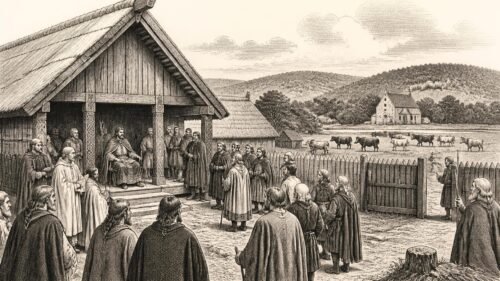
The annals concentrate on rulers because political and ecclesiastical elites commissioned and preserved them. Even so, their language provides glimpses of ordinary life. Cattle were repeatedly seized because herds supplied food, hides, status and transferable wealth. Captives could be taken as labourers, dependants or bargaining assets. Boats carried warriors and goods across lakes and along rivers, while the wicker bridge at Athlone shows how timber, brushwood and woven materials supported essential infrastructure.
Most people lived in a rural economy combining livestock with grain cultivation, gardening, woodland resources and local craft production. Settlement remained dispersed across farmsteads, ringforts, crannógs, lordly sites and ecclesiastical enclosures, although important churches and royal centres encouraged increasing concentration. Dublin differed sharply as a maritime town of merchants and craftspeople. Its inhabitants traded with Britain and continental Europe, imported goods and used coin more readily than communities in much of the countryside, where obligations and exchange were commonly reckoned through livestock, produce and service.
Raiding disrupted every part of this system. The removal of cattle threatened food and social standing; burned buildings and ships demanded scarce timber and labour to replace; and campaigning drew cultivators and dependants away from seasonal work. References to women at Loch Long and to unnamed lower-ranking men lost at Athlone remind us that warfare extended far beyond the celebrated kings whose names dominate the record.
Storm and Memory
The Annals of the Four Masters, a much later compilation drawing upon earlier material, assign an exceptional windstorm to 3 December. It reportedly levelled woods across Ireland, brought down sixty trees at Derry and killed people sheltering in a church there, with further deaths at Cill Sléibhe. Because this precise date and description are not preserved across the principal contemporary annalistic traditions, they should be reported with appropriate caution rather than treated as independently confirmed measurements.
Overall, 1146 was a year of vigorous but insecure kingship. Tairdelbach Ua Conchobair could raid beyond the Shannon and defeat hostile coalitions, yet his men drowned at Athlone and his enemies burned his fleet. Dublin remained wealthy and militarily important but lost Ragnall mac Torcaill in battle. In Osraige and Brega, the deaths of rulers opened new contests. Beneath these political changes lay a society sustained by cattle, crops, boats, craftsmanship, churches and the labour of people whose names rarely reached the written record.
Primary Sources
- The Annals of Tigernach: Annal T1146
- Chronicon Scotorum: Annal CS1146
- Annals of the Four Masters: Annal M1146
- Mac Carthaigh’s Book
- Mac Carthaigh’s Book: Irish-Language Edition
- Irish Script on Screen: NLI MS G 6, Mac Carthaigh’s Book
- The Annals of Ulster
- Annals of Inisfallen
- Ua Conchobair, Tairdelbach (O’Conor, Turlough)
- Ua Conchobair, Ruaidrí
- Ua Ruairc, Tigernán
- Ua Briain, Tairdelbach
- Ua Máelshechlainn, Murchad
- Mac Murchada, Diarmait (MacMurrough, Dermot)
- Ua Conchobair, Conchobar
- The Kingship and Landscape of Tara
- Mellifont Cistercian Abbey
- Old Mellifont Cistercian Abbey Monastic Site
- The Transformation of the Irish Church in the Twelfth Century
- Glendalough
- Viking Collection
- Economy and Authority: A Study of the Coinage of Hiberno-Scandinavian Dublin and Ireland
- The Archaeology of Livestock and Cereal Production in Early Medieval Ireland, AD 400–1100
- The Social and Ideological Role of Crannogs in Early Medieval Ireland
- Early Medieval Ireland: Archaeological Excavations, 1930–2009
- The Annals Attributed to Tigernach