
Archived: 26 September 2026
Abstract
In 2023, Ireland’s population surpassed five million, intensifying pressures on housing, homelessness, public services and migration accommodation. Employment remained strong despite inflation and multinational-led GDP contraction, while housing completions rose without easing rental scarcity. Government introduced domestic-violence leave, revised electoral boundaries and launched an anti-racism plan. Ireland marked the Good Friday Agreement’s twenty-fifth anniversary during continuing political deadlock in Northern Ireland, highlighted by President Biden’s visit. Sporting successes and Sinéad O’Connor’s death shaped public culture, while the RTÉ payments controversy damaged trust. November’s Parnell Square riot exposed misinformation, racism and policing concerns. Record warmth, rainfall and flooding underscored climate vulnerability.
Read Article

Archived: 26 September 2026
Abstract
In 2019, Ireland faced Brexit, social reform and uneven recovery. The Government enacted contingency legislation and pursued arrangements preventing a hard border, while the revised Northern Ireland Protocol replaced the backstop, though Brexit remained unresolved. Lyra McKee’s murder in Creggan exposed continuing dissident violence and Northern Ireland’s institutional vacuum, during which Westminster advanced abortion and marriage equality reforms. Republic voters liberalised divorce rules, and abortion services began. Employment and population grew, but homelessness and housing pressures persisted. Climate emergency measures and the National Broadband Plan signalled policy ambitions. First Dáil centenary commemorations connected democratic origins, revolutionary conflict, and constitutional uncertainty.
Read Article
Archived: 26 September 2026
Abstract
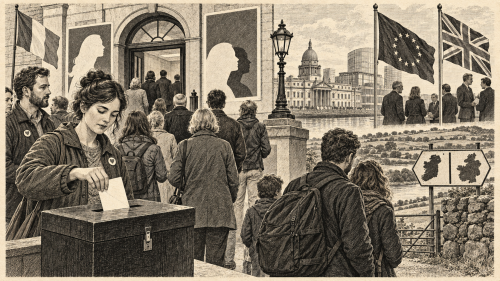
In 2018, Ireland experienced major constitutional, social and political change amid economic growth and persistent inequality. In May, voters repealed the Eighth Amendment by 66.4 per cent, enabling legislation for abortion services from 2019; October also removed blasphemy from the Constitution and returned Michael D. Higgins as President. Brexit negotiations centred on an Irish border backstop, while Northern Ireland remained without devolved government. Housing shortages and homelessness intensified despite Project Ireland 2040 and new development initiatives. Pope Francis’s visit highlighted abuse-related criticism of the Church. Alcohol legislation, broadband planning and severe autumn storms further shaped a consequential, unresolved national year.
Read Article

Archived: 26 September 2026
Abstract
Ireland’s 2016 combined the Easter Rising centenary with political fragmentation and Brexit uncertainty. After an inconclusive election, Enda Kenny led a Fine Gael minority government sustained by Fianna Fáil confidence and supply, amid disputes over water charges, housing and public services. Inclusive commemorations at the GPO, Kilmainham and elsewhere examined 1916’s contested legacy. Britain’s EU withdrawal vote revived concerns about the border, trade, the Common Travel Area and the peace process. Economic recovery, falling unemployment and immigration coincided with homelessness and housing shortages. Ireland challenged the European Commission’s Apple tax ruling, established a Citizens’ Assembly, and joined the Paris Agreement.
Read Article
Archived: 26 September 2026
Abstract
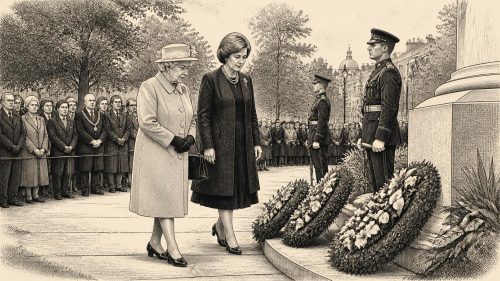
In 2011, Ireland underwent political, economic and social upheaval. Fine Gael and Labour replaced Fianna Fáil after an election dominated by the banking crisis, EU–IMF programme, austerity, unemployment and emigration. Census 2011 recorded a growing, increasingly diverse population. Civil partnership commenced, extending legal recognition to same-sex couples. Queen Elizabeth II’s State visit, including Croke Park, and Barack Obama’s visit to Moneygall symbolised reconciliation and international connection, although dissident violence persisted in Northern Ireland. The Cloyne report exposed grave failures over clerical abuse allegations, damaging institutional trust. Michael D. Higgins became President, promising ethical citizenship and solidarity amid continuing national hardship.
Read Article
Archived: 26 September 2026
Abstract
In 2008 Ireland moved from Celtic Tiger confidence to recession and banking crisis. Bertie Ahern resigned, succeeded by Brian Cowen, while Brian Lenihan became Finance Minister. Voters rejected the Lisbon Treaty, delaying European ratification, yet Dublin successfully concluded the Convention on Cluster Munitions. Northern Ireland's devolved institutions endured Paisley’s replacement by Peter Robinson, though policing and justice remained unresolved. Construction collapse, unemployment and falling revenues exposed economic fragility, prompting an austerity-focused budget. On 29–30 September, government guaranteed liabilities of six Irish banks, tying public finances to their losses. New trafficking, welfare and transport laws nevertheless reflected institutional activity amid uncertainty.
Read Article

Archived: 26 September 2026
Abstract
In 2004, Ireland’s EU Presidency culminated in Phoenix Park’s welcome for ten new member states and agreement on a proposed European constitution. At home, prosperity, migration and infrastructure expansion reshaped society: Dublin’s Luas lines opened, while a workplace smoking ban transformed pubs and other enclosed venues. Voters approved the Twenty-seventh Amendment, ending unconditional birthright citizenship and leading to new nationality legislation. Elections strengthened Fine Gael and gave Sinn Féin its first European seat. Diarmuid Martin became Archbishop of Dublin, and Scouting Ireland formed. Northern Ireland’s institutions remained suspended; failed talks, paramilitary concerns and the Northern Bank robbery further deepened mistrust.
Read Article

Archived: 26 September 2026
Abstract
In 2003, Ireland debated neutrality as United States forces continued using Shannon Airport during the Iraq invasion, prompting protests, parliamentary conflict and an unsuccessful legal challenge. Northern Ireland’s devolved institutions remained suspended despite British-Irish initiatives and IRA decommissioning; November’s election advanced the DUP and Sinn Féin. The Special Olympics World Summer Games, hosted across Ireland, celebrated athletes with intellectual disabilities and volunteering, while Tyrone won an Ulster all-Ireland final. Slowing Celtic Tiger growth nevertheless brought housing construction, immigration and pressure on services. Government plans for smoking restrictions provoked debate, and the Derrybrien peat slide exposed risks associated with wind-energy development.
Read Article
Archived: 26 September 2026
Abstract
In 1996, Ireland combined economic optimism and demographic recovery with political violence, reform and institutional change. The IRA’s Canary Wharf bombing ended its ceasefire, while the killing of Detective Garda Jerry McCabe, the Manchester bomb and Drumcree tensions strained Northern Ireland peace negotiations. Investigative journalist Veronica Guerin’s murder highlighted organised crime, prompting stronger anti-crime measures. Divorce became legally available under the Family Law (Divorce) Act. Growth, employment and EU presidency indicated growing confidence, though unemployment and inequality persisted. Teilifís na Gaeilge launched, strengthening Irish-language broadcasting. The year thus revealed a modernising State still vulnerable to conflict, crime and uneven prosperity.
Read Article
Archived: 26 September 2026
Abstract
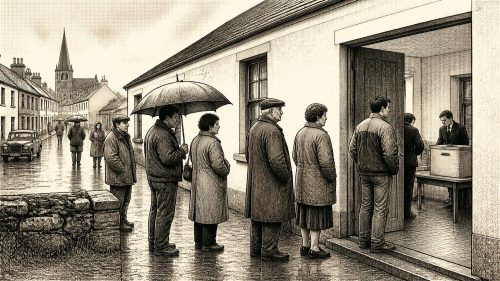
In 1995, Ireland confronted constitutional, social and political change amid economic growth and cultural confidence. The Government and Britain issued Framework Documents for Northern Ireland, while disputes over paramilitary decommissioning delayed talks; the twin-track initiative and President Clinton’s visit sustained peace-process momentum. In November, voters narrowly approved the Fifteenth Amendment, ending the constitutional ban on divorce subject to conditions. The Supreme Court’s McKenna ruling required state neutrality in referendum campaigns. Legislation permitted regulated information on abortion services abroad and established civil legal aid. Rising employment foreshadowed the Celtic Tiger, while Riverdance and plans for Irish-language television symbolised modernising cultural ambition.
Read Article
Archived: 26 September 2026
Abstract
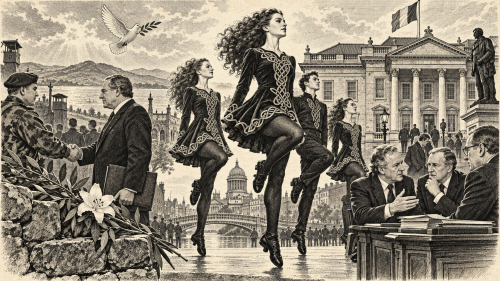
In 1994 Ireland underwent major political, cultural and economic change. Riverdance, premiered during Dublin’s Eurovision interval, transformed Irish dance into a globally successful expression of modern cultural confidence. The IRA’s August cessation of military operations, followed by an October loyalist ceasefire, reduced organised violence and created opportunities for negotiations, though disarmament, constitutional issues and political participation remained unresolved. Taoiseach Albert Reynolds, influential in advancing the peace process, resigned after the Fianna Fáil–Labour coalition collapsed amid controversy over Brendan Smyth and Harry Whelehan. John Bruton then led a Fine Gael–Labour–Democratic Left coalition. Meanwhile, falling unemployment, investment and exports signalled national recovery.
Read Article
Archived: 26 September 2026
Abstract
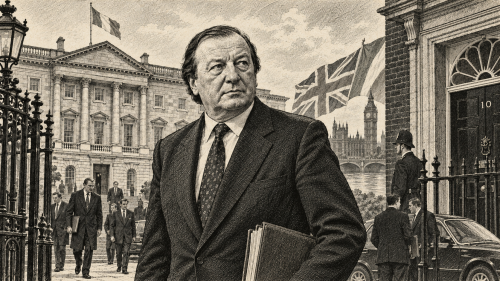
In 1991, Ireland combined tentative recovery with political instability and continuing conflict. Dublin’s European City of Culture programme promoted the capital’s contemporary artistic identity, despite criticism of its visibility and reach, and supported Temple Bar’s emergence as a cultural quarter. The Fianna Fáil–Progressive Democrats coalition was strained as Taoiseach Charles Haughey dismissed finance minister Albert Reynolds, replacing him with Bertie Ahern. Fiscal restraint and social partnership reduced borrowing and inflation, but unemployment reached about 14.7 per cent and insecurity persisted, although emigration eased. The IRA’s Downing Street mortar attack underscored the Troubles’ reach, while negotiations continued without a peace breakthrough.
Read Article

Archived: 26 September 2026
Abstract
In 1990, Ireland combined growing international confidence with economic insecurity and continuing Northern conflict. Dublin’s European Community presidency hosted discussions on German reunification and future union, while Italia ’90 inspired nationwide celebration after Ireland reached the World Cup quarter-finals. Nelson Mandela’s visit highlighted Irish anti-apartheid solidarity, and abolition of the death penalty marked legal reform. Economic recovery remained uneven, with unemployment at 12.9 per cent. Northern Ireland saw violence alongside tentative political developments. Mary Robinson’s presidential victory over Brian Lenihan, following damaging controversy, made her Ireland’s first woman president and challenged established assumptions about political authority, gender and public life.
Read Article

Archived: 26 September 2026
Abstract
In 1988, Ireland combined economic hardship, political change, cultural celebration and continuing conflict. Charles Haughey’s government implemented the first full year of the Programme for National Recovery, using fiscal restraint and social partnership, alongside tax and urban-renewal measures. Northern Ireland endured killings at Gibraltar, Milltown, Andersonstown, Ballygawley and Drumnakilly, while emergency powers persisted and Anglo-Irish relations remained strained. John Hume’s private talks with Gerry Adams opened a tentative nationalist channel. The European Court’s Norris judgment challenged criminalisation of homosexual acts; broadcasting laws reshaped media. Dublin’s millennium, Eurovision and Ireland’s Stuttgart victory provided civic and international optimism amid unresolved constitutional violence.
Read Article
Archived: 26 September 2026
Abstract
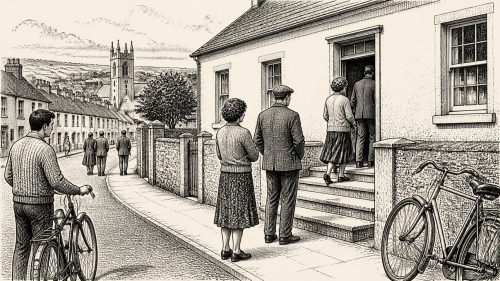
In 1986, Ireland faced economic hardship, social change and intensified Northern conflict. Garret FitzGerald’s coalition confronted debt, unemployment and emigration, while legislation addressed poverty, welfare and public archives. Voters decisively rejected a constitutional amendment permitting limited divorce, though separation and marital breakdown remained prominent realities. The census recorded 3,540,643 people; Self-Aid highlighted mass unemployment, and Knock airport symbolised regional aspiration. Chernobyl contamination fears and the Russborough art theft caused concern. The Anglo-Irish Agreement provoked unionist resistance, culminating in Peter Robinson’s loyalist incursion into Clontibret. Sinn Féin ended Dáil abstention, prompting a republican split, revealing deep enduring strains across Irish society.
Read Article
Archived: 26 September 2026
Abstract
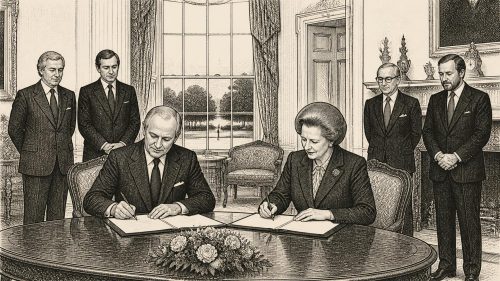
In 1985, the Anglo-Irish Agreement, signed by Garret FitzGerald and Margaret Thatcher at Hillsborough, created a permanent consultative role for Dublin in Northern Ireland affairs while confirming majority consent for constitutional change. It offered constitutional nationalists progress but provoked unionist protest and Fianna Fáil opposition. Violence continued, including major IRA attacks and the killing of a Garda officer. Sinn Féin advanced electorally and revised its Dáil abstention policy. The Republic faced severe unemployment and emigration, alongside the Progressive Democrats’ foundation and liberalised contraception law. Religious controversy, theatre, U2’s Croke Park concert and Cork 800 reflected changing national identities amid hardship.
Read Article
Archived: 26 September 2026
Abstract
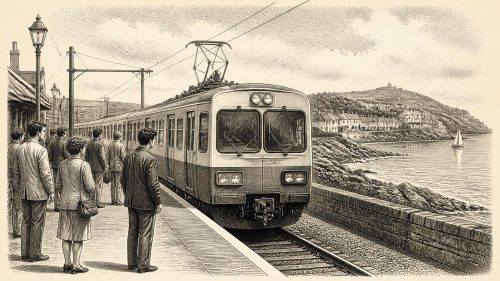
In 1984, recession, unemployment and industrial closures, including Ford Cork and Irish Shipping, shaped Irish life, while DART and the East-Link bridge improved Dublin transport. The New Ireland Forum developed a shared nationalist approach to Northern Ireland, although Thatcher rejected its options and violence continued, notably the Brighton bombing and supergrass case collapses. Reagan’s visit prompted both celebration and protest. Ann Lovett’s death in Granard and the Kerry babies investigation exposed harsh attitudes and institutional failings affecting unmarried pregnant women. Dunnes Stores workers began an anti-apartheid strike, while the GAA centenary provided a significant cultural celebration in Thurles that year.
Read Article

Archived: 8 October 2026
Abstract
In 1981, Ireland faced economic hardship, political change and the Northern conflict. Fianna Fáil lost its Dáil majority in June, enabling Garret FitzGerald’s Fine Gael-Labour minority coalition to replace Charles Haughey. The Maze hunger strike dominated events: Bobby Sands won a Westminster by-election before dying, while ten republican prisoners died; Kieran Doherty and Patrick Agnew were elected to the Dáil. Violence and Dublin protests accompanied the crisis, although Anglo-Irish talks resumed. A census recorded 3,443,405 residents. February’s Stardust fire killed 48 people, devastating north Dublin. Dublin also hosted Eurovision, illustrating an outward-looking cultural life amid grief, insecurity and political division.
Read Article
Archived: 8 October 2026
Abstract
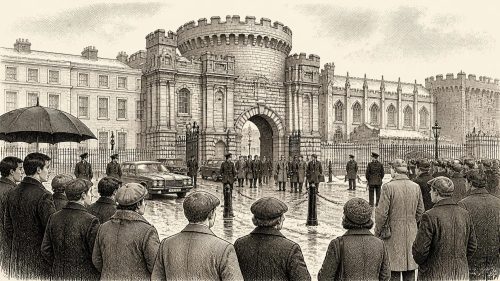
Ireland in 1980 faced inflation, unemployment, heavy borrowing and industrial closures, while Haughey’s government pursued fiscal restraint and national wage agreements. Northern Ireland remained politically deadlocked and violent, as constitutional proposals failed to reconcile unionist and nationalist demands. The central event was the fifty-three-day Maze hunger strike, begun by republican prisoners seeking recognition through five prison demands. It ended without deaths or settlement, leaving conflict unresolved. Dublin and London maintained dialogue through Haughey-Thatcher meetings and the Dublin Castle summit. Restrictive family-planning provisions commenced, and NIHE Dublin opened. Strumpet City, Johnny Logan’s Eurovision victory, and Gaelic games successes provided cultural landmarks.
Read Article
Archived: 8 October 2026
Abstract
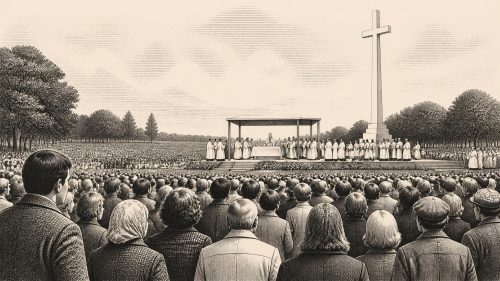
In 1979, Ireland confronted industrial disaster, political change, social reform, European integration and Troubles violence. The Betelgeuse explosion at Whiddy Island killed fifty people, exposing risks associated with oil trade. Ireland joined the European Monetary System, elected its first directly elected MEPs and hosted the European Council. Jack Lynch resigned, succeeded by Charles Haughey, whose cabinet included Máire Geoghegan-Quinn. Legislation established Údarás na Gaeltachta and cautiously legalised family planning. IRA attacks killed Lord Mountbatten and eighteen soldiers at Warrenpoint. Pope John Paul II’s visit, altered by security concerns, included an appeal for peace, encapsulating a modernising, divided and unsettled Ireland.
Read Article
Archived: 8 October 2026
Abstract
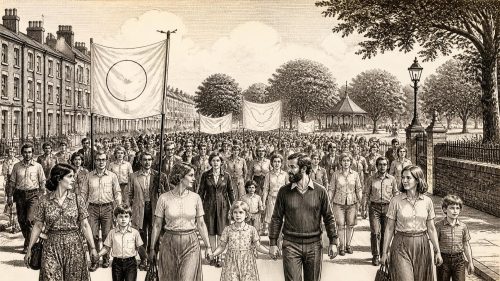
In 1976, Ireland endured intensified Troubles violence, including the Kingsmill massacre, the assassination of British Ambassador Christopher Ewart-Biggs, and continued direct rule in Northern Ireland. The Republic strengthened cross-border criminal co-operation and declared a constitutional emergency, prompting President Cearbhall Ó Dálaigh’s referral of emergency legislation, ministerial insult and resignation; Patrick Hillery succeeded him. Deaths of the Maguire children inspired the Peace People’s mass cross-community marches. Economic recession brought inflation and unemployment, alongside inheritance-tax and family-home reforms. An exceptional drought preceded wildlife legislation. Cultural life included U2’s formation and Maeve Binchy’s play, illustrating resilience amid political, social and environmental nationwide strain.
Read Article

Archived: 8 October 2026
Abstract
In 1975, Ireland hosted the first formal European Council meeting at Dublin Castle during its EEC presidency, signalling an expanded international role. Northern Ireland remained unstable despite IRA ceasefires: the Constitutional Convention favoured majority rule, while violence claimed 260 lives, including three Miami Showband members. Security policy proposed ending special-category prisoner status and building Maze H-Blocks. In the Republic, recession raised insured unemployment to 12 per cent, exposing dependence on British and European markets. Lasting changes included establishment of the Law Reform Commission, commencement of equal-pay legislation, and Oliver Plunkett’s canonisation. The year combined engagement, hardship, reform and national conflict.
Read Article
Archived: 8 October 2026
Abstract
In 1974, Northern Ireland’s Sunningdale power-sharing Executive collapsed after anti-agreement unionist electoral success and the Ulster Workers’ Council strike, restoring direct rule from Westminster. During the strike, loyalist car bombs killed thirty-three people in Dublin and Monaghan, exposing the Republic’s vulnerability; no one was prosecuted. Violence continued across Ireland and Britain, while republicanism fragmented with the formation of the IRSP. Economic disruption, inflation and a lengthy Dublin bus strike burdened daily life. Equal-pay legislation advanced women’s rights, but contraception reform failed. Erskine Childers died, Cearbhall Ó Dálaigh succeeded him, and cultural initiatives persisted amid constitutional crisis and widespread social loss.
Read Article

Archived: 8 October 2026
Abstract
In 1972, violence and constitutional change reshaped Ireland. Bloody Sunday in Derry, when British soldiers killed fourteen civilians, intensified nationalist anger and accelerated Northern Ireland’s political crisis. Westminster suspended Stormont in March, imposing direct rule, while paramilitary violence, Bloody Friday and Operation Motorman deepened insecurity. The Republic strengthened emergency powers after violence spread south, including Dublin bombings. Simultaneously, Jack Lynch’s government pursued European integration. Voters overwhelmingly approved the constitutional amendment enabling EEC accession, due in 1973. December referendums also lowered the voting age to eighteen and removed constitutional recognition of the Catholic Church’s special position, signalling a more pluralist State.
Read Article

Archived: 8 October 2026
Abstract
1970 marked a decisive hardening of the Northern Ireland conflict and its impact on the Republic. Security reforms replaced the B Specials with the Ulster Defence Regiment, while Ian Paisley’s election and the Alliance Party’s foundation reflected polarised and alternative politics. The British Army’s thirty-four-hour Lower Falls curfew, searches, gun battles and civilian deaths alienated Catholic communities. In Dublin, the Arms Crisis split Fianna Fáil after allegations of illegal arms imports, despite subsequent acquittals. A prolonged bank strike and cement dispute disrupted economic life. Ireland also opened European Community negotiations, while Dana’s Eurovision victory provided a notable all-island cultural moment.
Read Article
Archived: 8 October 2026
Abstract
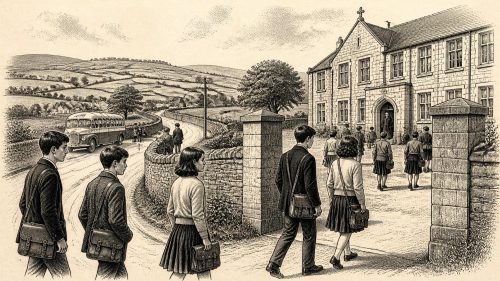
In 1967, Jack Lynch’s government renewed Ireland’s application to join the European Economic Community, regarding integration as economically necessary despite dependence on Britain; Charles de Gaulle’s November veto of British entry again stalled progress. Free post-primary education began in September, widening access, particularly for rural pupils, while censorship law limited bans’ duration. Northern Ireland’s Civil Rights Association and Derry Housing Action Committee organised demands over discrimination and housing; Lynch nevertheless met Terence O’Neill in Belfast. Dublin hosted Rosc ’67, pairing international modern art with Irish treasures amid controversy over excluding Irish artists. Patrick Kavanagh died, marking transition in Irish culture.
Read Article
Archived: 8 October 2026
Abstract
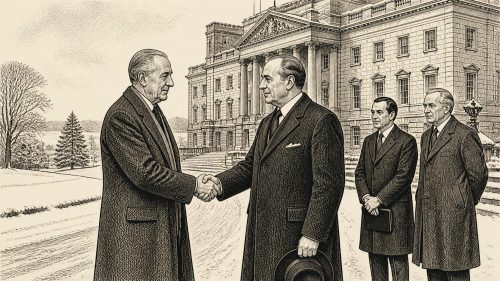
In 1965, Ireland cautiously embraced modernisation while enduring emigration, rural decline and cultural conservatism. Taoiseach Seán Lemass’s unprecedented Stormont meeting with Terence O’Neill opened limited North–South co-operation, followed by O’Neill’s Dublin visit. Casement’s repatriation symbolised improving Anglo-Irish relations. Fianna Fáil retained power in a television-covered election, while the Anglo-Irish Free Trade Area Agreement signalled departure from protectionism despite fears over employment. Legal reforms addressed land and inheritance; vernacular Mass and Galway Cathedral reflected changing Catholic life. Eurovision, the Young Scientist Exhibition and literary events demonstrated wider connections, although a newspaper strike and GAA restrictions exposed persistent constraints within Irish society.
Read Article
Archived: 8 October 2026
Abstract
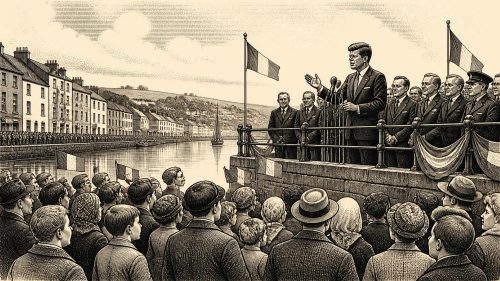
1963 marked Ireland’s uneven transition towards economic modernisation, planning and international engagement. France’s rejection of Britain’s EEC bid stalled Dublin’s linked application, while growth, industrial change and reduced yet persistent emigration exposed continuing dependence on Britain. A controversial turnover tax highlighted social costs. In Northern Ireland, Terence O’Neill became prime minister amid unemployment and unresolved nationalist grievances. President Kennedy’s celebrated June visit connected statehood, diaspora and American links, before his assassination prompted national mourning. The Planning Act created development controls; cultural and religious life remained influential. Ireland also pursued disarmament at the United Nations, while constitutional division and inequality endured.
Read Article

Archived: 8 October 2026
Abstract
In 1958, Ireland faced unemployment, low output and severe emigration, prompting T. K. Whitaker’s Economic Development, or Grey Book, and the Government’s November Programme for Economic Expansion. These rejected reliance on protectionism alone, advocating productivity, exports, investment and planning, though recovery remained uncertain. Lemass promoted outward-facing industry, symbolised by Ardmore Studios. Political debate included a proposed replacement of proportional representation and partial relaxation of the marriage bar for national teachers. Transport reorganisation divided the Great Northern Railway and closed Dublin’s Harcourt Street line. Amid the IRA Border Campaign, Ireland began United Nations service in Lebanon. Sporting events provided international connections.
Read Article

Archived: 8 October 2026
Abstract
In 1956, Ireland confronted population decline, unemployment and record emigration despite democratic stability and international involvement. The April census confirmed losses, while rural electrification expanded unevenly. Government created the Department of the Gaeltacht, defining language areas and linking Irish preservation with economic and social development. New citizenship legislation reflected continuing constitutional claims regarding Northern Ireland. The IRA’s Border Campaign began in December; Costello’s administration opposed violence while disputing British sovereignty claims. Ireland engaged with UN responses to Suez and Hungary, accepting Hungarian refugee families. T. K. Whitaker became Finance Secretary, and Olympic medals, led by Ronnie Delany, provided national celebration.
Read Article

