Longford Leases1620 CE
In 1620, Longford’s April plantation lease conditions advanced Crown efforts to replace Gaelic landholding with surveyed estates, rents and accountable landlords, while allowing adaptation by established inhabitants. Under Sir Oliver St John and surveyor William Parsons, plantation policy extended beyond Ulster, with Leitrim approved for development. Royal patronage elevated Richard Boyle as earl of Cork and Catholic Gaelic-Scottish Randal MacDonnell as earl of Antrim, binding regional powers to the Stuart state. Bangor gained port status, strengthening Irish Sea links. Church appointments, Catholic continental networks, and Trinity College’s scholars revealed competing yet interconnected religious and intellectual worlds within the post-conquest order.
Dateline
In 1620, Ireland was not at war, but it was being remade through paper, patronage and property. The decisive military conquest of the previous generation had given the government of James I unprecedented scope to reorder landholding, settlement and local authority. That process was uneven and contested. It operated most visibly in Ulster, but its reach now extended across the midlands and westwards into Leitrim. The year is especially clear in County Longford, where plantation lease conditions mark a practical stage in the replacement of older arrangements associated with the O’Farrell lordship. At the same time, the Crown rewarded men whose wealth, offices and loyalties helped bind Ireland more tightly to the Stuart monarchy.
Leasehold Change in Longford
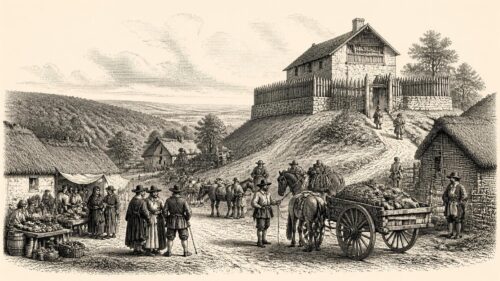
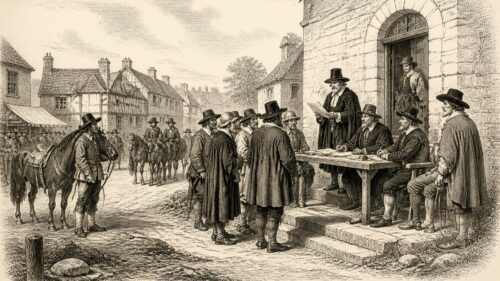
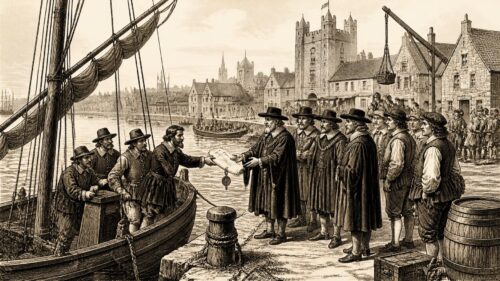
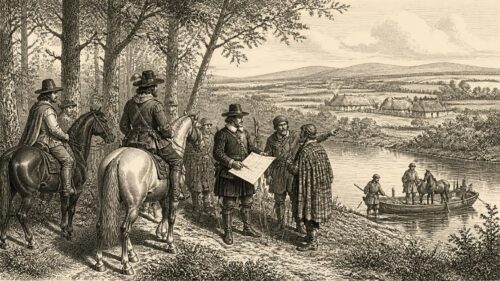
The plantation of Longford did not begin neatly on 1 January 1620. Royal instructions for planting Longford and Ely O’Carroll had been issued in August 1619, while disputes over title, surveys and the treatment of existing occupants belonged to a longer process. What can securely be placed in 1620 is the issuing of conditions for leases under the Longford plantation in April. That matters because plantation was not simply a transfer of acres on a map. It depended upon leases: documents that determined who could occupy land, on what terms, with what rents, and under whose jurisdiction.
For the O’Farrells and other established inhabitants, this was a profound alteration in the meaning of possession. Their territory had long been organised through Gaelic lordship, kinship, clientship and customary obligations, though these had already been pressured by conquest and the spread of English common law. The Crown and its agents instead sought estates held by legally defined title, surveyed boundaries, monetary rents and landlords answerable to Dublin. English and Scottish undertakers were expected to bring tenants and to encourage settled cultivation; officials also envisaged market towns, Protestant churches and a more readily taxable countryside.
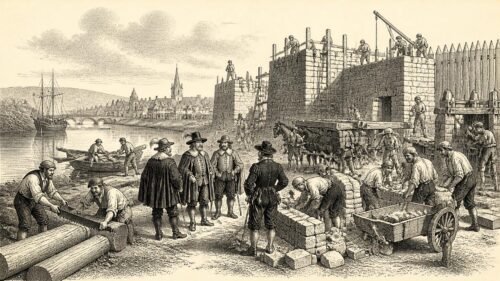
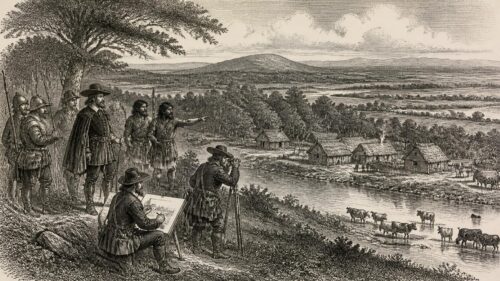
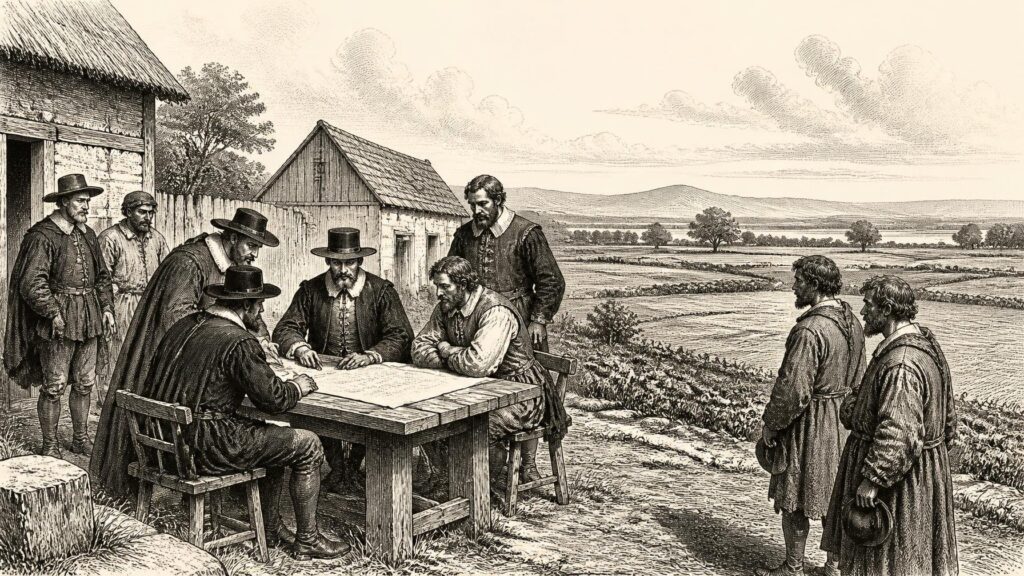
Such schemes were never as tidy in practice as their promoters suggested. Land needed to be measured, claims heard, tenancies negotiated and people persuaded or compelled to move. Native landholders could retain portions, become tenants, seek leases, litigate, or use family and patronage connections to defend their interests. Nor did a plantation instantly produce a wholly newcomer population. The April lease conditions therefore illuminate an administrative turning point rather than a single act of total displacement. They show Longford entering the working machinery of plantation, with consequences that would become more visible in its town, estates and social divisions over the following decades.
Plantation as Government Policy
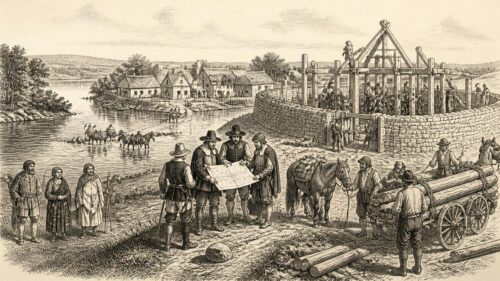
Longford was part of a wider strategy pursued by the lord deputy, Sir Oliver St John, and senior officials around Dublin Castle. St John’s administration revived plantation projects in Wexford and the midlands and used them to strengthen royal revenue, reward clients and extend Protestant political influence. Sir William Parsons, surveyor general, was one of the central technicians of this programme. He had already worked on the Ulster and Wexford plantations and was involved with Longford and Ely O’Carroll in 1619. Early in 1620 he travelled to London to report on the progress of plantation and to assure George Villiers, the king’s powerful favourite, that future schemes would serve the interests of their political circle.
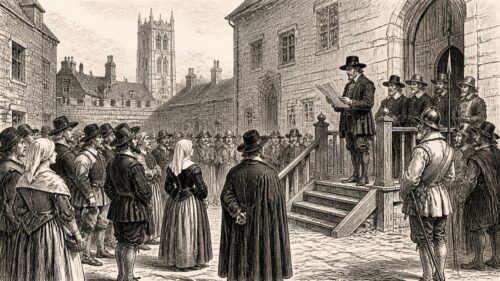
The direction of travel became still clearer in the autumn. During the summer, the English privy council considered whether plantation in Ireland should be curtailed. Parsons and Buckingham argued for carrying it forward, and by late September the Crown had approved a plantation project in Leitrim. This decision should not be mistaken for an immediate, completed settlement of that county: the Leitrim plantation unfolded during the 1620s and 1630s. Yet the approval is firmly connected to 1620 and demonstrates that Longford was not an isolated experiment. The government treated new plantations as an instrument of rule, as well as a source of profit and advancement.
Earls of Cork and Antrim
The year’s honours reveal another side of Stuart policy: the making of a governing elite whose members differed sharply in origin, religion and regional power, but who could be tied to the Crown. In October Richard Boyle was created first earl of Cork. Boyle, an English adventurer who had arrived in Ireland in 1588, had assembled an immense estate across Munster and beyond. By 1620 he had made Lismore his principal residence and had built a family interest spanning land, towns, mines, fisheries, industry, office and ecclesiastical patronage. His earldom recognised a fortune and political position already created through the opportunities of post-conquest Ireland.
In December, Randal MacDonnell, previously Viscount Dunluce, was made earl of Antrim. This elevation was strikingly different in social meaning. MacDonnell was a Catholic Gaelic lord of Scottish Hebridean descent, with deep roots in the Route and Glens of north Antrim and connections across the North Channel. Having submitted to the Crown after the Nine Years’ War, he had secured his territorial position through royal patents while retaining a regional following and attracting Scottish settlers to his lands. His new earldom angered sections of the emerging British Protestant interest in Ireland. Nevertheless, it showed that royal policy could accommodate a powerful Catholic lord when he was useful to the new order.
Together, Boyle and MacDonnell demonstrate that “plantation Ireland” was not composed only of newly arrived small settlers. It also rested upon great proprietors, office-holders and intermediaries. They translated local resources into rent, trade and political leverage; in return, titles and patents expressed royal favour. The contrast between the English Protestant magnate of Munster and the Catholic Gaelic-Scottish earl of Antrim also warns against treating Ireland’s political world as a simple division between old and new. Authority was being renegotiated through overlapping interests, not replaced everywhere by one uniform system.
Bangor’s New Port
On the eastern edge of Ulster, Bangor in County Down received the status of a port from James I in 1620. The grant belonged to the private plantation developed by Sir James Hamilton, rather than to the six counties of the official escheated Ulster plantation. Its importance nonetheless lay in the same broad transformation: the closer connection of Ulster’s coast to Scotland, England and the commercial networks of the Irish Sea.
A port was a legal and administrative designation, not proof that Bangor suddenly became a major harbour in that year. But it gave greater form to a settlement already growing under Hamilton’s patronage. Sea crossings from western Scotland brought people, goods, news and religious connections. Coal, salt and other supplies could enter; produce could leave; and the port could be drawn into the Crown’s customs system. In 1620, Bangor’s designation was therefore a modest but revealing sign of how settlement, trade and state authority reinforced one another along the northern coast.
Church Office and Catholic Networks
Religious life in 1620 was shaped by an established Church of Ireland supported by the state, alongside a Catholic majority whose clergy and lay networks survived despite recurrent official pressure. St John’s administration had pursued a firmer policy of conformity, including recusancy fines and demands that office-holders take the oath of supremacy. This did not mean that Catholic worship vanished, nor that every locality experienced enforcement in the same way. It did mean that religion remained inseparable from questions of loyalty, office and property.
Several precisely dated events show the institutional texture of that year. James Archer, a Kilkenny-born Jesuit who had become an important administrator and intermediary among Irish Catholics in Spain, died at the Irish College in Salamanca on 15 February. His death was abroad, but it underlines the international character of Irish Catholic life. Colleges and religious houses in Spain, the Low Countries, France and Italy educated clergy, preserved contacts with Irish communities and connected Irish affairs to Catholic Europe.
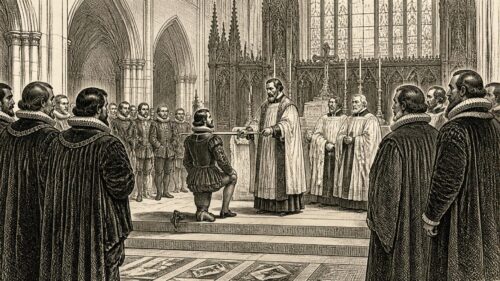
Within the established church, John Boyle, bishop of Cork, Cloyne and Ross, died on 10 July. His cousin Richard Boyle was named bishop of those dioceses on 20 August; the patent was issued on 24 October and he was consecrated on 20 November. The succession illustrates how ecclesiastical advancement could run through family influence as well as religious qualification. It also linked the great earl of Cork’s Munster power to the institutional church, whose lands, livings and buildings were valuable parts of the region’s political economy.
Learning, Language and the Limits of Incorporation
Dublin’s Trinity College remained a small Protestant institution intended to educate clergy and servants of the reformed state. Its provost in 1620 was Sir William Temple, who had held office since 1609. A contemporary statement associated with Temple recorded five fellows and thirty-seven scholars who were natives by birth. The figure should not be turned into a measure of popular access to education, nor does “native” reveal language, religion or social background. It does, however, suggest that the College was not simply an English enclave. Irish-born students were entering an institution designed to furnish the administrative and ecclesiastical framework of the new regime.
Yet the island’s learned world was wider than College Green. Catholic education increasingly depended on continental colleges, while Irish-language learning continued through hereditary scholarly families, clergy and manuscript culture. The coexistence of these worlds was a defining condition of 1620: new English-language institutions gained patronage and land, but older intellectual and devotional traditions did not disappear.
A Year of Quiet Pressure
There was no single battle or rebellion that defines 1620 in Ireland. Its significance lies instead in quieter instruments of change. Longford’s lease conditions made plantation operational at household level; the approval of the Leitrim project confirmed that further territorial transformation remained government policy; Bangor’s port status connected settlement with maritime exchange; and new earldoms placed both Boyle and MacDonnell within the Crown’s hierarchy. Church appointments and the death of James Archer reveal the opposing yet interconnected religious structures that crossed the island and Europe.
For many people, the year’s consequences would have been encountered not in a royal proclamation but in altered rents, a disputed title, a new landlord, a market opportunity, a journey to a port, or the precarious work of maintaining a congregation. In that sense, 1620 was a year in which Ireland’s post-conquest order became more deeply embedded—unevenly, ambitiously and with tensions that later decades would expose.

Primary Sources
- St John, Oliver
- Parsons, Sir William
- Boyle, Richard
- MacDonnell, Sir Randal mac Sorley
- Archer, James
- Boyle, Richard
- Bulkeley, Lancelot
- The Plantation of Leitrim, 1620–41
- Early Modern Gaelic and Plantation Towns: Longford
- After the Flight: the Plantation of Ulster
- Kindred Lines: Tracing People on the Land in the Tudor and Jacobean Plantations
- Plantation People
- A History of Bangor
- Calendar of the State Papers Relating to Ireland, of the Reign of James I, 1603–1625
- State Papers Ireland 1509–1782: Government Papers on Irish Affairs
- Sir Richard Boyle Knight, Earl of Cork, His True Remembrances
- A History of the Franciscan Order in Ireland
- History
- Sir William Temple – Provost & President
- Memorial Discourse