
Archived: 12 October 2026
Abstract
In 1781, wartime pressures, commercial controls and constitutional unrest shaped Ireland. James Gandon began Dublin's Custom House, a decade-long project intended to strengthen revenue collection and redirect trade eastwards along the Liffey. Embargoes, quarantine measures and maritime crime exposed ports to imperial conflict. The Protestant-led Volunteers, initially raised for defence, increasingly demanded commercial freedom and Irish legislative autonomy, while parliament acknowledged influence without granting settlement. An Armagh meeting prepared the 1782 Dungannon convention. Meanwhile, Granard founded its harp festival, supporting endangered traditional musicians. Measures associated with the parliamentary session did not establish the Bank of Ireland, which opened in 1783.
Read Article

Archived: 16 October 2026
Abstract
In 1620, Longford’s April plantation lease conditions advanced Crown efforts to replace Gaelic landholding with surveyed estates, rents and accountable landlords, while allowing adaptation by established inhabitants. Under Sir Oliver St John and surveyor William Parsons, plantation policy extended beyond Ulster, with Leitrim approved for development. Royal patronage elevated Richard Boyle as earl of Cork and Catholic Gaelic-Scottish Randal MacDonnell as earl of Antrim, binding regional powers to the Stuart state. Bangor gained port status, strengthening Irish Sea links. Church appointments, Catholic continental networks, and Trinity College’s scholars revealed competing yet interconnected religious and intellectual worlds within the post-conquest order.
Read Article
Archived: 16 October 2026
Abstract
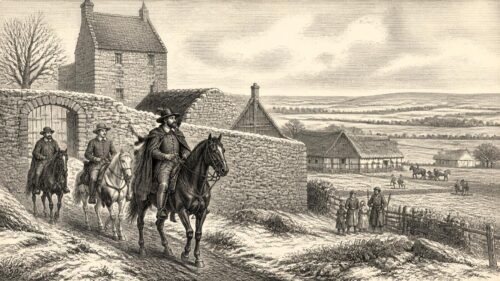
In 1618, Stuart government in Ireland used municipal law, land policy and inspection to reinforce royal authority, Protestant conformity and plantation. Waterford lost its charter after electing recusant civic officers, demonstrating that corporate liberties depended upon religious obedience. Commissioners examined plantation schemes in Longford and O’Carroll country, while an October order required native Irish occupiers to leave assigned Ulster plantation lands by May 1619. In November Captain Nicholas Pynnar was commissioned to inspect settlement, fortifications, tenants and arms in Ulster’s escheated counties. Aodh Mac Cathmhaoil’s Irish-language Catholic book, published at Louvain, and Richard Stanihurst’s death in Brussels highlighted Catholic connections.
Read Article




