Archived: 26 September 2026
Abstract
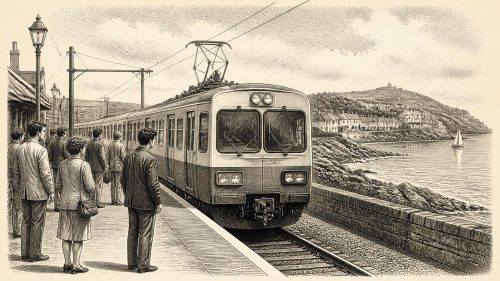
In 1984, recession, unemployment and industrial closures, including Ford Cork and Irish Shipping, shaped Irish life, while DART and the East-Link bridge improved Dublin transport. The New Ireland Forum developed a shared nationalist approach to Northern Ireland, although Thatcher rejected its options and violence continued, notably the Brighton bombing and supergrass case collapses. Reagan’s visit prompted both celebration and protest. Ann Lovett’s death in Granard and the Kerry babies investigation exposed harsh attitudes and institutional failings affecting unmarried pregnant women. Dunnes Stores workers began an anti-apartheid strike, while the GAA centenary provided a significant cultural celebration in Thurles that year.
Read Article
Archived: 11 October 2026
Abstract
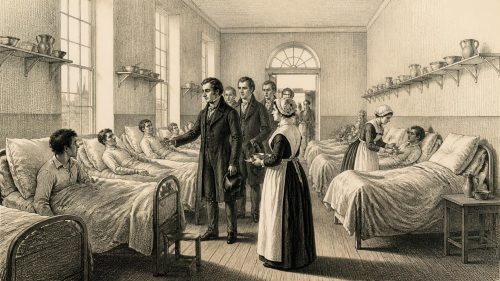
In 1817, Ireland faced severe scarcity, unemployment and typhus amid poor harvests and post-Napoleonic depression, though not an island-wide famine comparable to the Great Famine. Dublin fever surged in September, prompting Dr Steevens’ Hospital to open emergency wards for labourers, artisans and servants. Relief depended on fragmented charities, local bodies and government employment schemes, while new legislation addressed public works, grand-jury finance and institutional care. Fiscal integration with Britain advanced, and Catholic emancipation remained unresolved. Despite crisis, the Royal Canal reached Cloondara, Dunleary harbour construction began, temperance emerged in Skibbereen, and O’Reilly published an Irish-English dictionary, carefully preserving linguistic knowledge.
Read Article

Archived: 12 October 2026
Abstract
In 1781, wartime pressures, commercial controls and constitutional unrest shaped Ireland. James Gandon began Dublin's Custom House, a decade-long project intended to strengthen revenue collection and redirect trade eastwards along the Liffey. Embargoes, quarantine measures and maritime crime exposed ports to imperial conflict. The Protestant-led Volunteers, initially raised for defence, increasingly demanded commercial freedom and Irish legislative autonomy, while parliament acknowledged influence without granting settlement. An Armagh meeting prepared the 1782 Dungannon convention. Meanwhile, Granard founded its harp festival, supporting endangered traditional musicians. Measures associated with the parliamentary session did not establish the Bank of Ireland, which opened in 1783.
Read Article

Archived: 13 October 2026
Abstract
In 1728, Irish legislation disfranchised Roman Catholics, excluding the Catholic majority from parliamentary elections and legal employment while reinforcing Protestant Ascendancy within a constitutionally dependent kingdom. Parliament also contemplated replacing dilapidated Chichester House. A severe harvest failure intensified the 1727–29 subsistence crisis, raising grain prices and exposing tenants, labourers and smallholders to hunger despite local charitable relief. Efforts to promote tillage reflected tensions between grazing exports and food security. Emigration from Belfast to America signalled economic pressure. Brooking’s Dublin map portrayed civic confidence amid poverty. Esther Johnson’s death, Swift’s political writing, and Matthew Dubourg’s appointment marked cultural life that year.
Read Article
Archived: 31 October 2026
Abstract
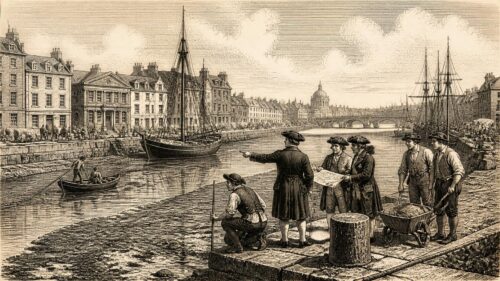
In 1707, Ireland’s brief Dublin parliamentary session exposed post-Williamite government: Protestant elites contested office and revenue, while efforts to admit Protestant Dissenters failed. Legislation created the framework for the Registry of Deeds, protecting property transactions while reinforcing Protestant possession. Margaret McNamara’s abduction prompted safeguards for heiresses and further controls on Catholic marriage. Penal measures restricted Catholic legal participation, religious observance and civic status, while anti-rapparee laws linked crime, vagrancy and suspected disloyalty. Dublin gained a Ballast Office, statutory security for Marsh’s Library, and St Anne’s parish. Measures promoted agriculture and manufacture. Britain’s Anglo-Scottish union excluded Ireland, leaving its parliament separate.
Read Article

Archived: 16 October 2026
Abstract
In 1620, Longford’s April plantation lease conditions advanced Crown efforts to replace Gaelic landholding with surveyed estates, rents and accountable landlords, while allowing adaptation by established inhabitants. Under Sir Oliver St John and surveyor William Parsons, plantation policy extended beyond Ulster, with Leitrim approved for development. Royal patronage elevated Richard Boyle as earl of Cork and Catholic Gaelic-Scottish Randal MacDonnell as earl of Antrim, binding regional powers to the Stuart state. Bangor gained port status, strengthening Irish Sea links. Church appointments, Catholic continental networks, and Trinity College’s scholars revealed competing yet interconnected religious and intellectual worlds within the post-conquest order.
Read Article
Archived: 16 October 2026
Abstract
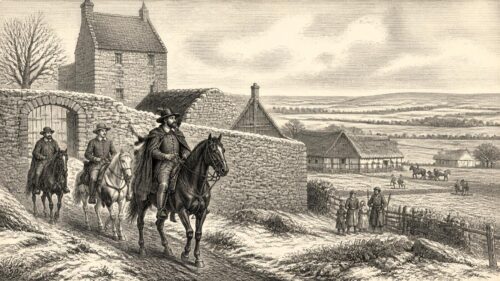
In 1618, Stuart government in Ireland used municipal law, land policy and inspection to reinforce royal authority, Protestant conformity and plantation. Waterford lost its charter after electing recusant civic officers, demonstrating that corporate liberties depended upon religious obedience. Commissioners examined plantation schemes in Longford and O’Carroll country, while an October order required native Irish occupiers to leave assigned Ulster plantation lands by May 1619. In November Captain Nicholas Pynnar was commissioned to inspect settlement, fortifications, tenants and arms in Ulster’s escheated counties. Aodh Mac Cathmhaoil’s Irish-language Catholic book, published at Louvain, and Richard Stanihurst’s death in Brussels highlighted Catholic connections.
Read Article
Archived: 17 October 2026
Abstract
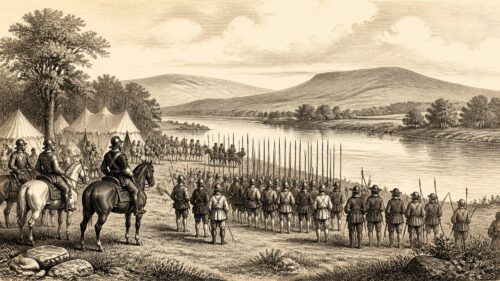
In 1586, the Battle of Ardnaree exposed the entanglement of Connacht rivalries, Scottish military migration and expanding Tudor authority. On 23 September, Richard Bingham surprised and defeated Scottish mercenaries and Irish allies beside the River Moy near modern Ballina. The encounter formed part of a wider campaign to enforce government through sheriffs, courts, rents and military pressure. Bingham’s position as provincial governor connected local conflict to Dublin’s claims of sovereignty. The victory weakened his opponents without resolving the underlying tensions. Ardnaree illustrates how Gaelic lordship, external armed support and crown administration shaped one another within an contested regional political order.
Read Article
Archived: 20 October 2026
Abstract
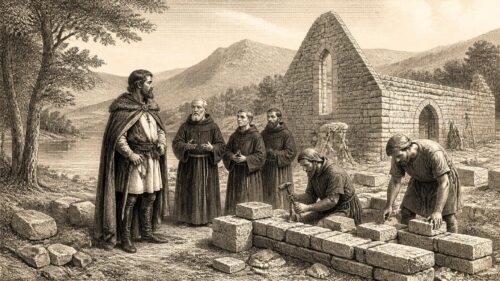
Records for 1448 depict Ireland as a patchwork of lordships, religious houses and learned networks rather than a single national story. A severe plague in Meath caused deaths among laymen, a ruling family and friars. Killings in Leinster and Connacht, alongside changes in regional lordships, reveal persistent rivalry within and between political communities. Bishops, abbots and aristocrats died, while a couple drowned on an Ulster waterway, underlining travel’s hazards. Donal Mac Cárthaigh Mór supported the Observant Franciscan foundation at Muckross. The deaths of poets Tadhg Óg Ó hUiginn and Diarmait Ó Dálaigh highlighted institutions of education, hospitality, patronage and commemoration.
Read Article
Archived: 20 October 2026
Abstract
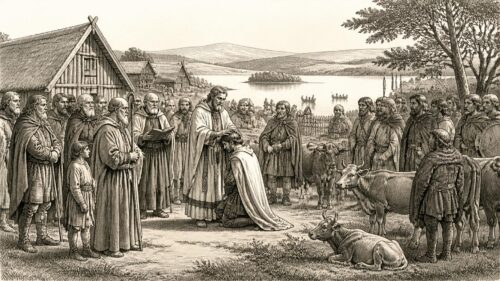
In 1430, Irish political life was marked by warfare, negotiation and succession rather than an island-wide event. Tomás Mág Uidhir died on 13 November after thirty-six years ruling Fermanagh, and his son Tomás Óg succeeded with publicly affirmed support. Eóghan O’Neill raided Oriel and Meath, securing tribute, submissions and a hostage without permanently conquering these territories. In Cork, Kilbrittain castle changed hands amid MacCarthy and Desmond conflict. Raids and rival claims affected Connacht and Breifne, where sanctuary and éraic enabled settlement. Deaths of clerics and legal scholars underline ecclesiastical and learned institutions’ roles in authority, hospitality, memory and social order.
Read Article
Archived: 21 October 2026
Abstract
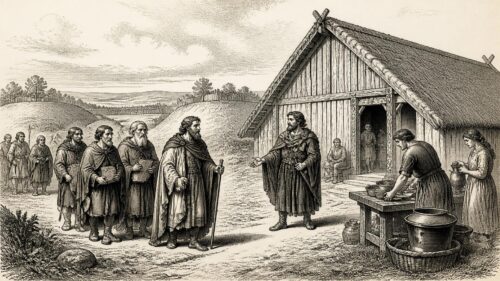
In 1387 Niall Ó Néill junior built a house at Emain Macha to support Ireland’s learned companies, linking Ulster lordship with cultural patronage. The year also saw deaths of chief poet Gofraidh Fionn Ó Dálaigh and historian-scribe Ruaidhri Ó Cianáin, illustrating networks sustained by aristocratic hospitality. Annals record feuding, killings and Nualaith Ó Fearghail’s capture in the Midlands, while Richard Óg de Burgh died in Connacht. In Munster, royal officials mediated discord between Desmond and Ormond. Deaths and marriages reflected ecclesiastical, kinship and Irish Sea connections. Sparse sources nevertheless show authority negotiated through force, patronage, reputation and learning across Ireland.
Read Article
Archived: 21 October 2026
Abstract
In 1377, Ireland’s regional lordships experienced warfare, fortification, religious loss and constitutional change. Clann Cuilein defeated Richard Burke’s Clanricarde force in Thomond, while Ruaidhrí Ó Conchobair overcame an alliance of Mac William Burke and Uí Maine at Roscommon. In Moylurg, war between Mac Diarmata and Ruaidhrí brought killings and the burning of crops and buildings, before peace and compensation. John O’Ferrall built Lissardowlin Castle in Annaly. Assaroe monastery burned, and prominent clerics and lords died. Edward III’s death, Richard II’s succession, and Robert Wikeford’s chancellorship affected Dublin government, whose authority coexisted with powerful local networks and military retinues across Ireland.
Read Article
Archived: 21 October 2026
Abstract
In 1376, Sir William Windsor’s recall from Ireland followed resistance to his taxation and administration, as communities defended their customary right to consent. Maurice FitzGerald and then James Butler replaced him, but weakness persisted there. Warfare continued: English forces raided Annaly, whose O’Farrell lord retaliated with destructive incursions; Bran Ó Broin regained Wicklow and Newcastle castles; and northern lords faced captivity and death. Tadhg Ó Ruairc of West Breifne died, succeeded by his brother Tighearnán. Annals also recorded deaths among distinguished Gaelic historians, poets and ollamhs, underscoring the resilience of learned institutions amid fragmented authority, frontier conflict and contested lordship.
Read Article

Archived: 21 October 2026
Abstract
In 1374, Ireland was shaped by contested local lordships rather than unified conflict. Cú Choicriche Óg Mac Eochagáin, chief of Cenél Fiachach, was murdered near Athlone while accompanying the Bishop of Meath; his killer was brutally executed. William de Windsor returned as royal lieutenant, but crown authority remained limited. Connacht saw Theobald Burke, Mac William’s heir, killed by Uí Maine, while Annaly warfare claimed Máel Sechnaill Ó Fearghail. Feuds followed disputed killings. Annals also record Niall Ó Néill’s victory over Ulster settlers, though its date is uncertain. Deaths including historian Máel Sechnaill Ruad Ó Duibhgeannáin underline violence and fragmented authority.
Read Article
Archived: 21 October 2026
Abstract
In 1373, Irish annals record violence across contested lordships rather than a national campaign. Meath raiders killed Ruaidrí Ó Fergail, his son and followers in Annaly; Donnchad Ó Fergail pursued them, inflicted losses, but was slain by an arrow and his men defeated. Elsewhere, William Dalton and Meath’s sheriff were killed, while Connacht disputes brought treachery, hostage killing and injury. Dynastic murders affected Maguire and de Burgh figures. Deaths of noblewomen, churchmen, historians and poets reveal interconnected elites and learning. A destructive wind damaged churches. These entries portray overlapping Gaelic, settler and administrative powers, with chronology sometimes uncertain in places.
Read Article

Archived: 24 October 2026
Abstract
In 1299, Ireland saw dispersed developments rather than a single national event. Theobald Butler died childless at Turvey, passing his office and lands to Edmund. John Wogan’s government relied on Richard de Burgh as deputy justiciar during his Scottish absence, following settlement of magnate conflict. Edward I protected the Curragh’s pasture by banning swine. In Annaly, Sefraid Ó Fearghail killed Meath knight Seoán de la Mare during a livestock pursuit, illustrating frontier tensions. Irish annals also noted Scottish conflict and Bishop Muiris Ó hÓcáin’s death. Misdated annalistic entries concerning Armagh and Tír Chonaill properly belong to 1303, not 1299 itself.
Read Article

Archived: 26 September 2026
Abstract
In 1199, Ireland remained a fragmented landscape of Gaelic lordships, church lands and expanding Anglo-Norman seigneuries rather than a uniform English possession. King John’s accession united the English crown with the lordship of Ireland, though power remained uneven. In Connacht, Cathal Crobhdearg and Cathal Carrach made an uneasy peace as William de Burgh pursued his grant. Northern campaigns exposed colonial limits when Áed Ua Néill defeated foreign forces. Raids damaged communities and churches, including Armagh. Richard de Tiúit built Granard’s motte-and-bailey, strengthening Meath’s frontier. Annals record famine, capture, deaths, cattle-raiding and hostages, revealing conflict’s burden on ordinary populations throughout Ireland.
Read Article

Archived: 26 September 2026
Abstract
In 1182, Ireland remained divided among Gaelic kings, Norse-Irish towns and expanding Anglo-Norman lordships. Domnall Ua Lochlainn’s Cenél nEógain force was defeated at Dunbo, probably by John de Courcy’s men, who seized the Gospel of St Martin. In Munster, Miles de Cogan’s killing near Lismore triggered resistance and exposed the weakness of settlement beyond fortified bases. Dynastic conflicts continued in Connacht, Annaly and elsewhere. The deaths of leading churchmen coincided with Kilcooly Abbey’s foundation under Domnall Mór Ua Briain. Hugh de Lacy’s castles and manors transformed Meath, yet trade, Gaelic institutions and local power still endured amid an unsettled frontier.
Read Article


