Ciarán’s Recovered Crozier931 CE
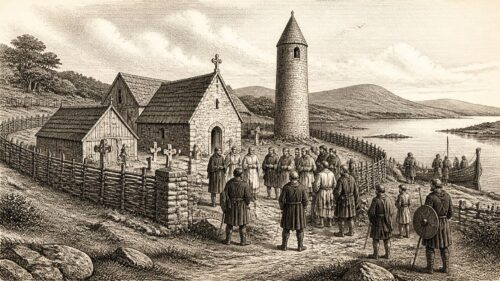
In 931, Irish annals record interconnected political, ecclesiastical and Scandinavian developments, although dating varies between sources. Tipraite son of Ainnsine, head of Clonmacnoise, died, with rulers and churchmen including Cernachán of Bréifne, Derbail of Tara, and clerics of Clones, Armagh, Trim and Kildare. Foreigners from Limerick entered Lough Ree, highlighting the Shannon corridor’s importance near Clonmacnoise. Chronicon Scotorum reports that Ciarán’s crozier sank in Loch Techet, drowning twelve men, but was recovered. The relic represented saintly and institutional authority, though it cannot be identified with the surviving Clonmacnoise crozier. These events reveal power rooted in waterways, succession and sacred possessions.
Dateline
For Ireland in 931, the surviving record is unusually revealing precisely because it is not dominated by a single battle or royal expedition. It preserves a cluster of deaths among rulers and churchmen, a Scandinavian movement onto Lough Ree, and a remarkable mishap involving the crozier of St Ciarán. Taken together, these notices show a country in which political authority, ecclesiastical wealth and control of waterways were closely entwined. Yet they must be handled carefully. Irish annals did not all reckon years in precisely the same way, and later compilations sometimes place an event one or more years apart. The year is therefore best approached through the securely associated notices, with the chronology of each source kept in view.
The most consistent entry concerns Tipraite son of Ainnsine, described as head of Clonmacnoise: the Annals of Inisfallen call him its abbot, Chronicon Scotorum its superior, and the Annals of Ulster successor of Ciarán. His death belongs firmly to the annalistic year 931. That agreement matters. It places one of Ireland’s greatest ecclesiastical settlements at the centre of the year’s evidence, while the related notices explain why its patron saint, its religious objects and the surrounding Shannon route mattered so much.
A Fleet on Lough Ree
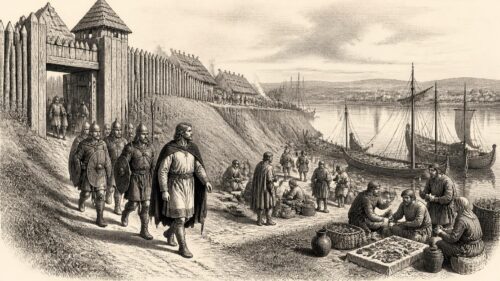
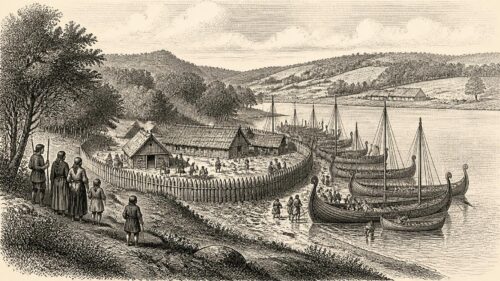
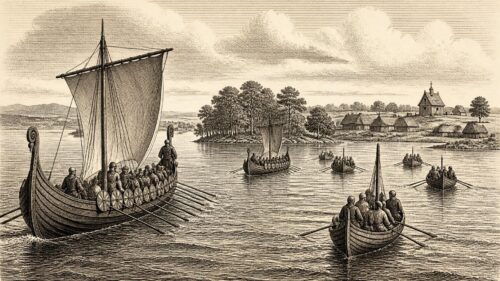
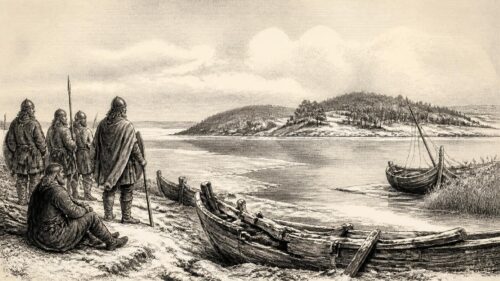
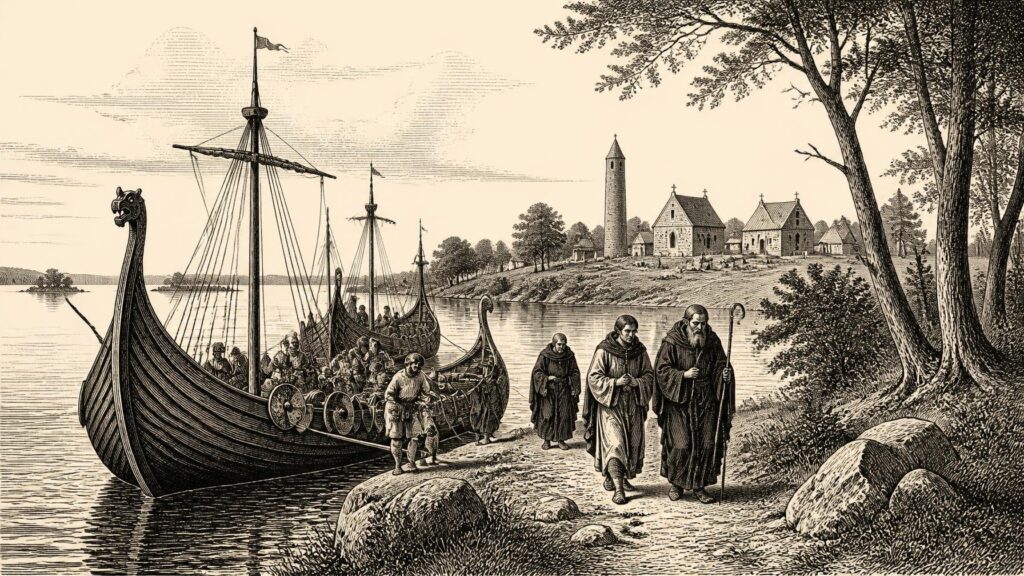
Chronicon Scotorum records that the foreigners of Limerick went onto Lough Ree. Modern historians conventionally connect this notice with 931, while recognising that the annals and later compilations assign adjacent labels to parts of this sequence. The phrase is brief, but it signals far more than a passing voyage. Lough Ree lies on the Shannon corridor, close to Clonmacnoise and within reach of Connacht, Meath and the midlands. A fleet operating there could use the lake as a protected anchorage, a point of resupply and a platform from which to threaten settlements, estates and traffic on the river.
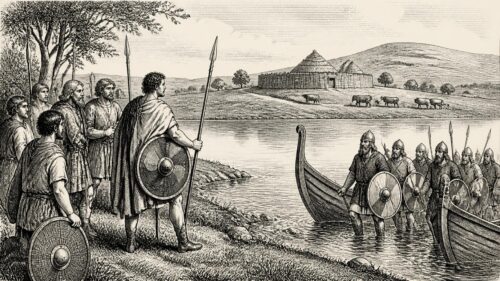
These were not anonymous invaders appearing from nowhere. Scandinavian rulers and war-bands had maintained Limerick as a major power on the Shannon estuary since the early 920s. Their ships had already ranged through Connacht, central Ireland and Osraige. Earlier raids had exposed Clonmacnoise itself to attack, while Limerick fleets had operated on Lough Ree before. The 931 notice consequently belongs to a sustained contest for access to the inland waterways rather than to an isolated eruption of violence. It is reasonable to infer a strategic presence on the lake; it would be unsafe, however, to claim an exact camp-site, a particular raid or a permanent settlement from this entry alone.
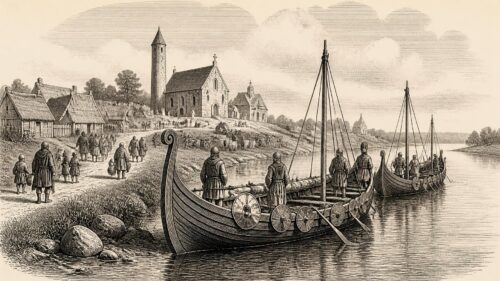
The geography gave this activity an economic as well as military meaning. The Shannon was the great north–south route through the island, while esker roads crossing the midlands supplied an east–west connection. Clonmacnoise stood at their intersection. Its importance was built not simply on prayer and scholarship but on estates, dependants, craft production, hospitality and exchange. A body of armed sailors on Lough Ree therefore stood near a place where religious prestige could be turned into material resources and political influence. In a landscape with few urban centres, a monastic settlement of this scale could resemble a town in population, activity and reach.
The Crozier in the Lake
The year’s most vivid episode is preserved by Chronicon Scotorum. The staff or crozier of Ciarán was drowned in Loch Techet; twelve men went down with it, but the relic was recovered immediately. The later Annals of the Four Masters, under a differently numbered annal, identifies the object as the Oraineach, or golden crozier, and similarly reports the loss and prompt recovery. Neither source gives a day, a full explanation of the accident, or a reliable basis for identifying every person involved. It should not be embroidered into a Viking attack, a ceremonial procession or a miraculous rescue witnessed in detail. What can be said is striking enough: twelve deaths and the temporary disappearance of a major sacred object were worth preserving in the historical record.
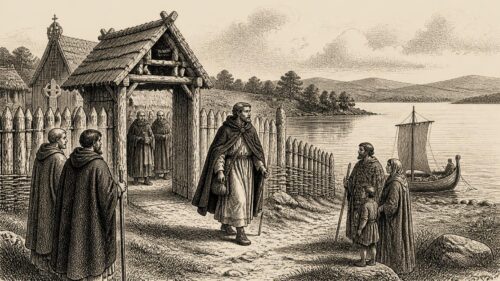
A saint’s crozier was no ordinary walking-stick. In early medieval Ireland such objects materialised the authority of a saint and of the community that guarded his inheritance. They could be carried in legal, political or liturgical contexts, attract gifts and oaths, and represent an institution beyond the lifetime of any one abbot. The anxiety implicit in the report is therefore understandable. Tipraite’s death deprived Clonmacnoise of its current head; the recovery of Ciarán’s staff affirmed the continuity of the saint’s protection and claims. This is an interpretation of the juxtaposed evidence, not an annalist’s stated explanation, but it fits the institutional world in which the entries were written.
The crozier mentioned in 931 cannot simply be equated with the celebrated Clonmacnoise crozier now associated with the National Museum of Ireland. The surviving object is generally dated to the eleventh century, with later additions, and recent scholarship stresses the complexity of its provenance. Still, the later artefact gives a valuable indication of the craftsmanship and devotional investment that could attach to an Irish ecclesiastical staff. The 931 report is evidence for a revered relic of Ciarán; it is not secure proof that a particular surviving crozier is the very object rescued from the lake.
Deaths and Connected Power
931 also brought changes in the personnel of secular and ecclesiastical government. Cernachán son of Tigernán, king of Bréifne, died. His kingdom lay in the north-western and central interior, a region whose routes and clientships mattered to any force travelling between Ulster, Connacht and the Shannon basin. The annals do not describe a disputed succession or a campaign following his death, so neither should be invented; nevertheless, a king’s death was never administratively trivial in a polity where rule depended upon kinship, tribute, alliances and the ability to command followers.
At Tara’s wider political horizon, Derbail daughter of Máel-Finnia, styled queen of Temair, also died. She was a wife of Donnchad Donn, king of Tara and leading figure of Clann Cholmáin. Her obituary shows that women of royal dynasties could be recorded in their own right, especially where marriage linked powerful kindreds. The title did not denote a queen ruling a territorially unified Irish state: ‘Tara’ expressed a senior kingship, negotiated and contested among regional dynasties. Donnchad’s position in 931 was consequential, but the Limerick fleet on Lough Ree and the independent kingship of Bréifne demonstrate the limits of any simple picture of central control.
The ecclesiastical obituaries were no less political. The Annals of Ulster record Cenn Fáelad son of Lorcán as superior of Clones and Clocher, and as tanist-abbot of Armagh: a senior office-holder positioned within the network associated with Patrick’s principal church. Máel Eóin, bishop and anchorite of Trim, also died. Chronicon Scotorum adds Crundmáel, bishop of Kildare. These notices reveal a church organised through communities, offices and patron saints rather than a later diocesan system alone. ‘Anchorite’ indicates a life of exceptional religious withdrawal, but the recording of Máel Eóin’s death within an annal shows that such spiritual status could carry public significance.
Learning, Labour and Memory
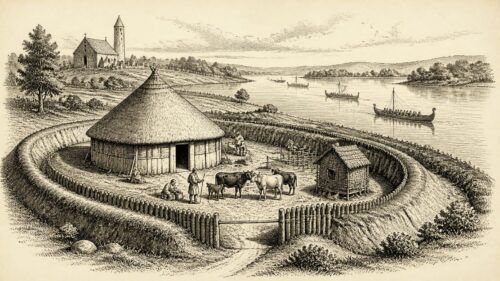
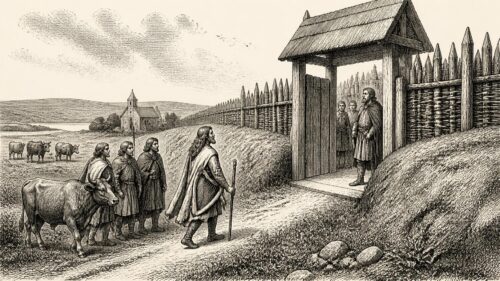
Clonmacnoise was a community of more than clergy. Its estates required cultivation and livestock management; its churches and dwellings needed builders and metalworkers; travellers required food, shelter and boats; students and scribes needed books, skins, ink and skilled teaching. It was already a place of learning and literary production, though surviving manuscripts and monuments should not be projected carelessly backwards as if they were all present in 931. The famous Cross of the Scriptures, for example, belongs to the early tenth century and demonstrates the patronage and expertise available at the site, but it cannot tell us what ceremonies occurred in Tipraite’s final year.
The sources’ silences are as instructive as their detail. No harvest failure, plague, major treaty or pitched battle is securely recorded for Ireland under this year’s best-aligned notices. The absence does not mean peaceful daily life, nor does it permit a fabricated national narrative. Rather, 931 survives as a year of movements and transitions: a Limerick fleet reached the heart of the island; a dangerous accident claimed twelve lives but not Ciarán’s relic; a major abbot died; and royal, episcopal and monastic offices changed hands. For contemporaries, the preservation of a saint’s staff may have seemed as consequential as the manoeuvres of kings. The annals allow us to see an Ireland in which river routes, sacred possessions and human succession were inseparable elements of power.
Primary Sources
- The Annals of Ulster
- Chronicon Scotorum
- Part 100 of Chronicon Scotorum
- Annals of the Four Masters
- Part 3 of Annals of the Four Masters
- Annals of Inisfallen
- Part 5 of Annals of Inisfallen
- CELT project: Chronicon Scotorum bibliography and text record
- CELT project: Annals of Inisfallen bibliography and text record
- Donnchad Donn
- Ciarán
- Ciarán’s Church and His Lands: A Study of the History and Development of Clonmacnoise
- The History and Provenance of Two Early Medieval Crosiers Ascribed to Clonmacnoise
- Vikings’ Settlements in Ireland Before 1014
- Vikings
- Clonmacnoise Visitor Guide
- Clonmacnoise Monastic Site
- Clonmacnoise Monastic Site Highlights
- Irish School of Illumination, c. 650–1100
- Guide to the National Museum of Ireland
- National Museum of Ireland Art History Notes
- High Crosses
- Cultural Heritage and Archaeology Chapter: Limerick