Cormac of Lismore’s Martyrdom920 CE
Accounts conventionally dated to 920 depict Ireland under political, military and ecclesiastical pressure. Donnchad Donn, newly king of Tara, won a notable but imprecisely located victory over Scandinavian-associated forces, strengthening a contested claim to overlordship. Sitriuc Cáech left Dublin, signalling a change in leadership rather than the settlement’s collapse. Foreigners attacked Cenannas (Kells), damaging its stone church, killing many people and burning Tuilén’s church. In Munster, Cormac son of Cuilennán, bishop, abbot, king of the Déisi and counsellor, was killed by Uí Fhothaid Aiched. The notices, chronologically uncertain in detail, reveal intertwined warfare, regional kingship, church wealth and maritime power.
Dateline
Events conventionally placed in 920 show Ireland in a hard, unsettled interval: a newly established overking at Tara was testing his authority; Dublin’s Scandinavian ruler departed; a major church at Cenannas (Kells) was violently attacked; and, in the south-east, a king who was also a senior churchman was killed. These are not parts of one recorded campaign. The annals preserve them as separate notices, and their early medieval chronological systems do not always align perfectly. Yet together they reveal how closely warfare, kingship, religious institutions and control of strategic settlements were bound together.
A Year Recorded with Caution
The principal contemporary annal traditions assign the central northern and midland events to 920, although their calendrical headings require care. Chronicon Scotorum and the Annals of Ulster report a victory by Donnchad son of Flann over “heathens”, while the latter also records Sitriuc grandson of Ímar leaving Áth Cliath, modern Dublin, and an assault on Cenannas. The Annals of Inisfallen, whose coverage is especially valuable for Munster, records the killing of Cormac son of Cuilennán in the same year. These notices permit a firm account of the developments, but not a modern-style sequence of dates, routes or motives.
Later compilations must be used more warily. The seventeenth-century Annals of the Four Masters place several additional events under 920 which earlier annals locate differently, owing to chronological displacement. In particular, its notices of raids by the Limerick foreigners belong with the early 920s rather than being safely assigned to this calendar year. For 920 itself, the strongest picture comes from the overlapping evidence of the earlier annalistic tradition: violence around the middle and east of Ireland, volatility at Dublin, and a consequential killing in the Déisi.
Donnchad’s First Test
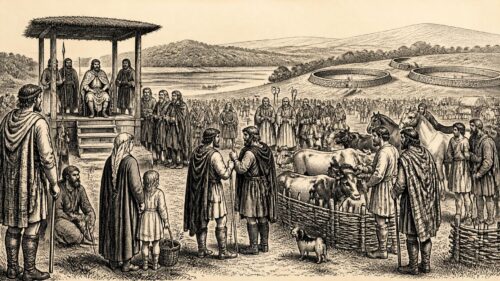
Donnchad Donn, son of Flann Sinna, had claimed the kingship of Tara after the death of Niall Glúndub in battle against the Dublin Scandinavians in 919. “High king” is a convenient modern label, but it can mislead if it implies a unitary Irish state. Tara’s king was expected to exercise a pre-eminent, negotiated and frequently contested authority over other kings. He did so through military success, hostage-taking, alliances, marriage, patronage of churches and assemblies, as well as through the ability to draw followers into a hosting.
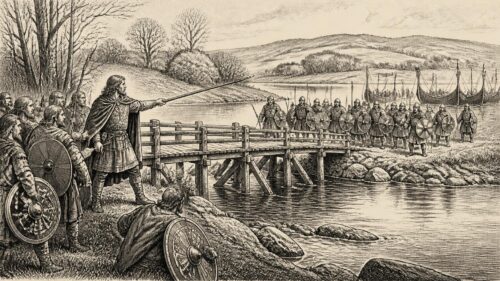
In 920 Donnchad achieved a victory important enough to be noticed in more than one chronicle. The Annals of Ulster say that he inflicted a battle-rout on the heathens and that very many were killed. Chronicon Scotorum is more expansive: the slaughter was supposedly beyond counting and greater than the Irish losses in the battle that had preceded it; it also names Muirchertach son of Tigernán as falling in a counter-attack. Such figures and rhetorical comparisons should not be read as reliable casualty statistics. Their value lies in showing how decisive the annalist wished the encounter to appear.
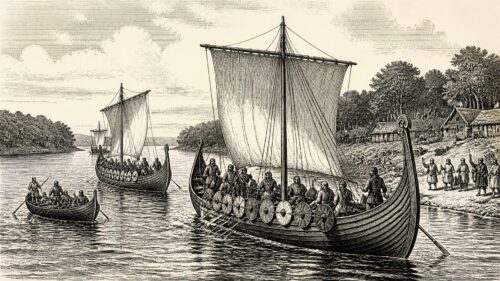
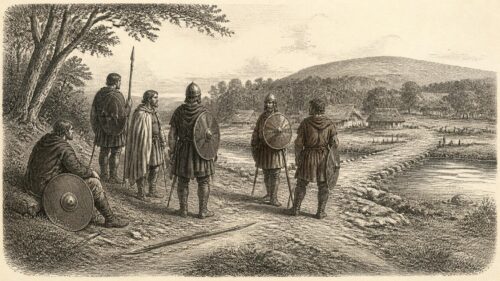
The site is not named, and the sources do not identify the enemy commander. It is therefore unsafe to turn the entry into a battle at Dublin, Kells or any other particular place. The word translated as “heathens” was the Christian annalists’ hostile label for Scandinavian-associated forces; it tells us much about ecclesiastical interpretation, but less about the precise ethnic composition of every fighting group. By 920, Irish and Scandinavian political worlds had already interacted for generations. Some forces may have contained people with local family, commercial or military ties on both sides of the Irish Sea.
Nonetheless, the victory offered Donnchad a timely claim to effectiveness. His father had been a formidable ruler of Tara, while Donnchad’s own earlier career had included rebellion against him. The battle allowed the new king to present himself as defender and war-leader at precisely the moment when the death of Niall Glúndub had exposed the weakness of Uí Néill dominance. It did not settle the contest for supremacy: rival branches of the Uí Néill, the kings of Leinster and Munster, and Dublin’s rulers remained powerful actors. It did, however, give Donnchad a notable success in the difficult first phase of his reign.
Sitriuc Leaves Dublin
Another terse entry has larger implications. The Annals of Ulster says that Sitriuc grandson of Ímar “abandoned Áth Cliath, through the power of God”. Sitriuc Cáech had been central to the Scandinavian return to Dublin after the earlier expulsion of its rulers in 902. In 917 he had re-established power there, and in 919 Dublin’s forces had defeated and killed Niall Glúndub. His departure in 920 therefore marked a sudden change in leadership at the Irish Sea settlement which had recently demonstrated its military reach.
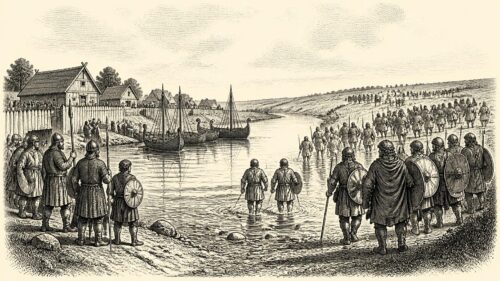
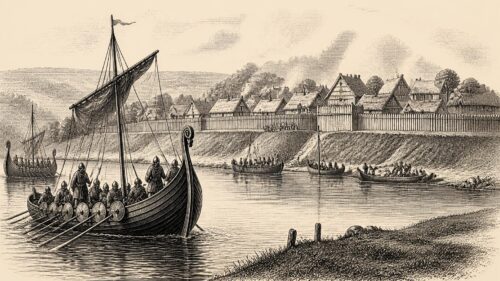
The annalist supplies neither a destination nor a political explanation. The phrase “through the power of God” is an interpretation, not evidence for a miraculous evacuation. Nor should the entry suggest an empty or destroyed town. Archaeology indicates that the Scandinavian settlement re-established after 917 occupied the high ground near the confluence of the Liffey and Poddle, around the later Christ Church area. It was an organised, defended settlement, connected by river and sea to the wider Irish Sea world. An early tenth-century earthen enclosure, houses, workshops, plots, storehouses and refuse areas belong to the physical setting in which political control changed hands.
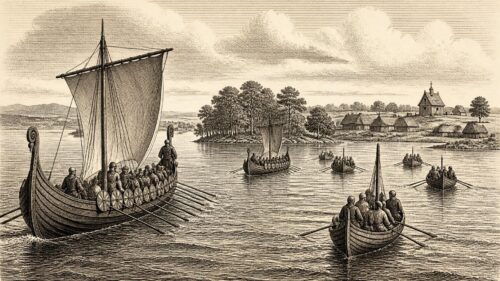
Dublin was consequently more than a target for raiding. It was a place where maritime power, craftsmanship, exchange and political ambition met. Finds from Viking-age Dublin include evidence for metalworking, woodworking, leatherworking, comb-making and long-distance connections, although material evidence cannot identify what happened in one particular year. Its people included newcomers, families of mixed backgrounds, enslaved people, traders, craftworkers and warriors. For inland rulers, control of or influence over the settlement mattered because its ships and crews could move quickly along coasts, rivers and sea lanes, while its markets and workshops channelled valuable goods.
Sitriuc’s departure did not end Scandinavian power in Ireland. On the contrary, it was a reshuffling within a durable political network spanning Dublin, northern Britain, the Isles and Scandinavia. The next year’s annals record Gofraid grandson of Ímar entering Dublin. That later development should not be pulled back into 920, but it confirms that the departure of one ruler did not mean the disappearance of the dynasty or the abandonment of the town.
Cenannas Attacked
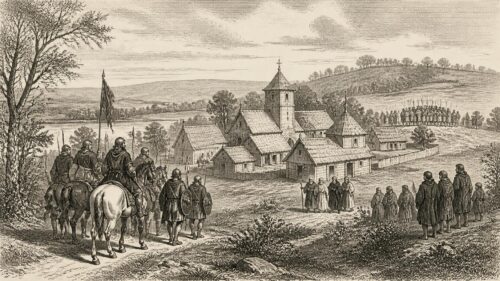
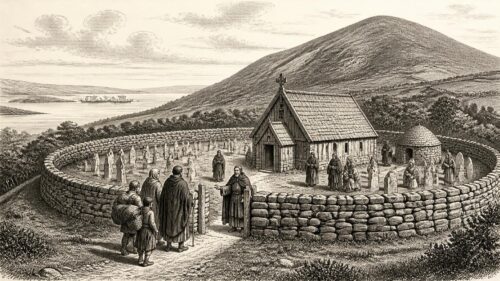
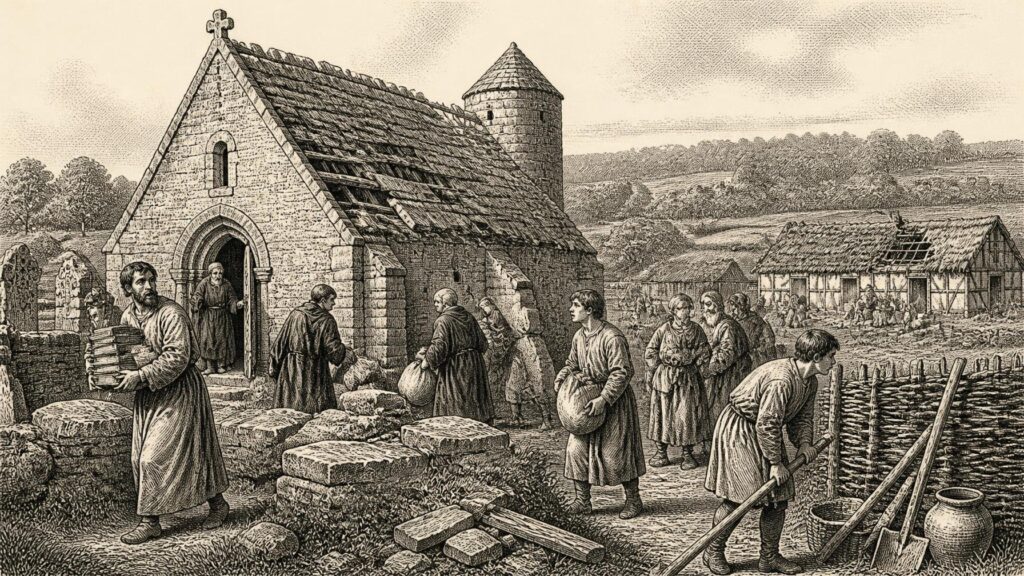
The pressure on church communities is starkly conveyed by the entry for Cenannas, now Kells in County Meath. The Annals of Ulster states that foreigners broke down its stone church and that a large number of people suffered violent death there; on the same day, the stone church of Tuilén was burned. Chronicon Scotorum independently records the attack on Cenannas and the breaking of the church. It does not name the attackers’ leader, specify the nature of the building’s collapse, or preserve the names of the dead. Even so, the convergence of the accounts makes the assault one of the clearest events of the year.
The reference to a stone church matters. Many early medieval Irish churches were built of wood, but masonry signalled substantial resources, specialised skills and institutional standing. Kells was no isolated shrine: it was a major ecclesiastical community in the northern midlands, with royal connections and a distinguished learned tradition. An attack on its church could injure or kill people seeking protection, seize portable wealth and food stores, disrupt the community’s authority, and strike at a centre where books, liturgy, legal memory and political relationships were maintained.
Yet it would be wrong to imagine monasteries merely as helpless refuges. Major churches possessed lands, tenants, livestock, staff and powerful patrons. Their leaders dealt with kings, received gifts, negotiated protection and sometimes became deeply involved in secular politics. The year’s obituary notices point to this wider religious landscape: Finnchar, bishop and “excellent scribe” of Damliac, and Scannal of Ros Cré, a scribe of Clonmacnoise, both died. Such brief entries cannot reconstruct individual lives, but they attest to a society in which literacy, book production and ecclesiastical office remained prized forms of authority despite recurrent violence.
Cormac in the Déisi
The southern notice is unusually revealing. The Annals of Inisfallen calls Cormac son of Cuilennán a bishop and vice-abbot of Lismore, abbot of Cell Mo-Laise, king of the Déisi, and chief counsellor of Munster. It then records his “martyrdom” at the hands of the Uí Fhothaid Aiched. The Annals of Ulster provides the plainer formulation that Cormac, king of the Déisi of Munster, was killed. These statements concern a local ruler, not Cormac mac Cuilennáin, the famous king-bishop of Cashel who had died in 908.
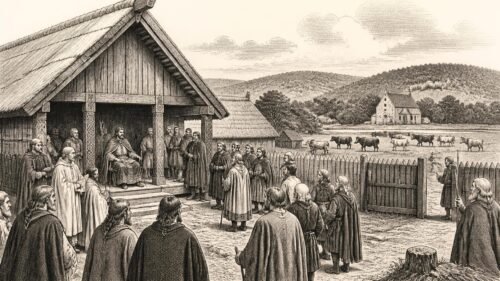
Cormac’s titles demonstrate that ecclesiastical and political leadership could overlap directly. Lismore and Cell Mo-Laise lay within the Déisi sphere in what is now County Waterford. To be bishop, abbot, king and chief counsellor was not necessarily to hold four neatly separate modern jobs. Rather, religious office, hereditary status, control of church resources and influence in provincial politics reinforced one another. His killing by a named local people points to rivalry within Munster’s complex patchwork of kingdoms. The annalist’s word “martyrdom” gives the death religious significance; it does not establish the full circumstances or prove that Cormac was killed solely for his faith.
His death is a reminder that Irish political life was not decided only at Tara or Dublin. Regional kingships mattered profoundly. The Déisi commanded routes between the south coast, inland Munster and the Irish Sea; its churches were centres of worship and learning as well as estates and places of assembly. The loss of a ruler with Cormac’s combined standing would have affected local succession, the management of church lands and the balance of influence among Munster’s leading dynasties.
Authority Under Pressure
For ordinary communities, 920 was experienced less as an island-wide narrative than through local demands and dangers: provisioning a king’s host, guarding stock, repairing damaged buildings, carrying news along roads and waterways, or seeking safety at a church enclosure. The annals chiefly name kings, clerics and violent events, so they leave most labouring people anonymous. Archaeology and later legal evidence nevertheless make clear that farming, cattle-rearing, dairying, grain production, seasonal work and household craft sustained both monasteries and kingships. Raiding endangered people as well as valuables: captives, livestock, food stores and portable metal all formed part of the economy of war.
The year did not produce a lasting settlement. Donnchad’s victory improved his position but did not secure uncontested supremacy. Sitriuc’s withdrawal altered Dublin’s leadership without removing the settlement from Irish politics. The devastation at Cenannas exposed the vulnerability of even well-connected churches, while Cormac’s killing showed how precarious authority could be within a regional kingdom. In 920, Ireland’s political landscape was neither simply “Irish” nor “Viking”, nor divided between sacred and secular power. It was a network of competing rulers, armed followings, church communities and maritime towns, all seeking security, status and resources in a year when each was under visible strain.
Primary Sources
- The Annals of Ulster
- Part 490 of The Annals of Ulster
- Chronicon Scotorum
- Part 99 of Chronicon Scotorum
- Annals of Inisfallen
- Part 48 of Annals of Inisfallen
- Annals of the Four Masters
- CELT project: Annals of the Four Masters
- Translated texts
- Donnchad Donn
- Flann Sinna
- Muirchertach na Cochall Craicinin
- The Vikings in ninth-century Ireland: Sources and settlements
- Dublin Archaeological Background: The Discussion
- Viking Dublin was a town of merchants and craftsmen
- Early Medieval Archaeology Project
- The Economy of Early Medieval Ireland
- High Crosses
- Monasterboice, County Louth
- Changing human-cattle relationships in Ireland: a 6000-year isotopic perspective