Start Exploring
Choose a route into Ireland’s past: follow the newest additions, find a particular year or subject, or browse every available period.

Day By Day
Welcome to Emerald Archives, where Ireland’s past awaits discovery. Our homepage brings you the latest additions to our growing collection, from remarkable people and historic places to pivotal events and forgotten traditions. Browse our newest discoveries and follow the archive’s progress day by day.
Deep Research
When you ask, we listen and respond. Enter a question about any aspect of Irish history in our search box (above) to initiate Deep Research. Give us a few moments, and we’ll prepare a detailed, illustrated article with sources and citations to answer your question. Your article becomes a permanent part of Emerald Archives.
Loughguile
Archived: 28 November 2026
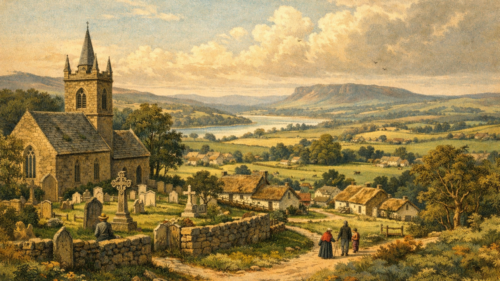
Loughguile is securely identifiable as the civil parish and settlement recorded in the Placenames Database of Ireland under the Irish form Loch gCaol and the English form Loughguile. The database places it in County Antrim and notes the parish hierarchy and associated population centre, confirming the settlement’s historical county assignment and its bilingual naming tradition 1. Historical references also show that the place circulated under variant English spellings. The most important early-modern and nineteenth-century forms include Loughgule and Loughgeel, both used in an 1824 act concerning the parish of “Loughgule otherwise Loughgeel,” and later gazetteer usage such as Samuel Lewis’s “Loughguile, or Loughgeel” 24.
Lagore Samian Ware
Archived: 28 November 2026
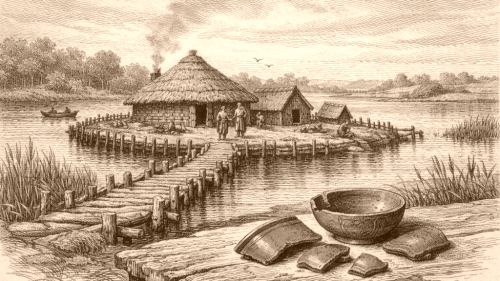
The Lagore Crannog finds are three fragments of Roman Samian ware from County Meath. Their broader type was produced from the first century BC to the third century AD, so the archaeological evidence reaches the archive year 294 CE even though the objects themselves were recovered much later.
Lisburn
Archived: 28 November 2026
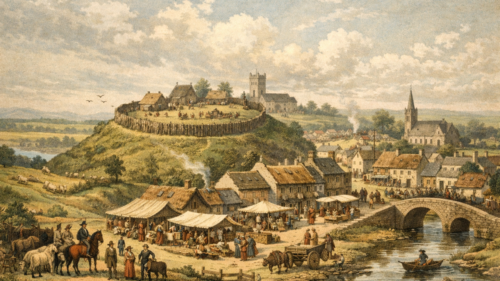
Lisburn’s older identity is tied to the settlement then known as Lisnagarvey. The Irish Linen Centre & Lisburn Museum explains that the place-name comes from an earlier Irish form, Lissnakarvagh, and that Lisburn’s original name was Lisnagarvey; it further notes the Irish element as Lios na gCearrbhach, glossed as “fort of the gamesters” or “gamblers’ fort.” 1 That same account connects the name to a ringfort site and makes clear that “Lisburn” is a later development, not the original medieval form. 1 The significance of this naming history is that Lisburn’s identity can be traced through successive spellings rather than a single fixed label.
Larne
Archived: 28 November 2026
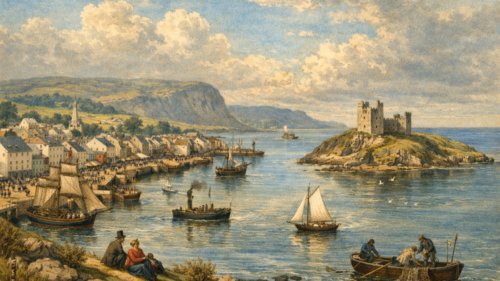
Larne is securely identified in historical reference works as a settlement in County Antrim. Samuel Lewis describes it as “a sea-port, market and post-town, and a parish, in the barony of Upper Glenarm, county of Antrim, and province of Ulster,” which confirms both the settlement identity and its county assignment in a 19th-century gazetteer. 1 The Irish place-name authority records the bilingual form Latharna / Larne for the place, showing that the English name stands alongside an Irish-language form rather than replacing an older place entirely. That authority also places the name within Antrim.
Killead
Archived: 28 November 2026
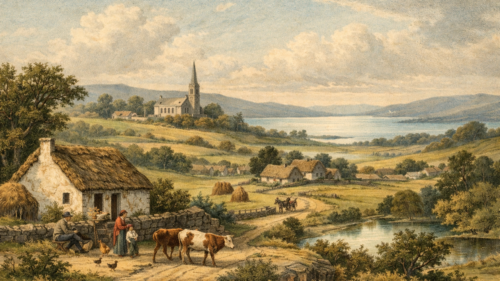
Killead is securely attested as a historic parish in County Antrim. Samuel Lewis’s 1837 topographical dictionary describes it as “KILLEAD, or KILLAGH,” placing it in the barony of Lower Massereene, County Antrim, Province of Ulster, and noting that it lay about 4½ miles south of Antrim on the road to Lurgan 1. The same basic identity is reflected by the modern Irish place-name authority, which gives the parish as Cill Éad / Killead and places it in County Antrim and the barony of Massereene Lower 2. That combination of evidence is important because it confirms both the settlement identity and its historical county assignment.
Kells
Archived: 28 November 2026
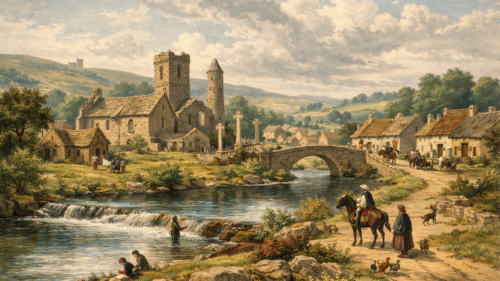
Kells is securely identifiable as the village/townland in County Antrim, lying on the south bank of the Kells Water and within the civil parish of Connor. A modern gazetteer places it explicitly in historic County Antrim and identifies the village as within the townland of Kells and the civil parish of Connor 1. The Irish place-name evidence published by the national placenames authority records the townland as Na Cealla / Kells in the County Antrim parish-and-townland hierarchy, confirming both the settlement and its Irish-language form 2. The name is historically significant because it belongs to the widespread Irish form ceall / cealla, “churches,” rather than to the better-known Kells in County Meath.
Jordanstown
Archived: 28 November 2026
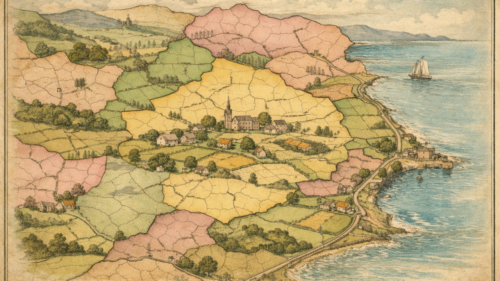
Jordanstown is securely identifiable as a townland in County Antrim, and not the Meath locality that appears in some placename databases. PRONI’s county townland list includes Jordanstown among the townlands of County Antrim, and townlands.ie places it in the historic hierarchy Antrim → Belfast Lower → Carnmoney civil parish → Monkstown electoral division. That combination fixes the settlement’s historical county assignment and its local administrative setting in the nineteenth-century landscape 12. The name appears in historical administrative and taxation records connected with Carnmoney parish. A Tithe Applotment Books transcription for Carnmoney parish records Jordanstown in 1816, showing that the place was already established under that spelling in the early nineteenth century 3.
Dún Lethglaise
Archived: 28 November 2026
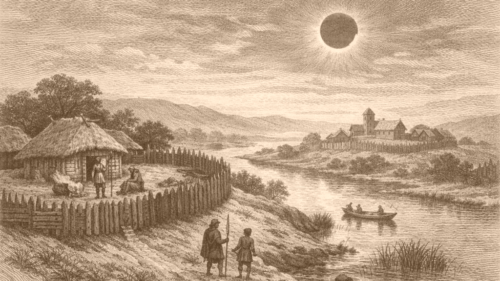
The annals for 495 CE are sparse but not empty. In the Annals of Ulster, the entry headed AD 495 records a solar eclipse, the repose of Mac Cuilinn of Lusca, and the storming of Dún Lethglaise, followed by a later uncertain note that the battle of Tailtiu may belong there instead. This brief record shows both a dated notice and an explicit correction or displacement in the manuscript tradition.
Islandmagee
Archived: 28 November 2026
Islandmagee is historically a parish and peninsula on the County Antrim coast, east of Larne Lough. Nineteenth-century gazetteer evidence places it explicitly in the barony of Lower Belfast, county of Antrim, province of Ulster, and describes it as “a parish” forming a peninsula between Larne Lough and the North Sea 1. The modern authoritative Irish-language placename record likewise places the same unit in Antrim and gives the Irish form Oileán Mhic Aodha, while recording the English local-name variant Islandmagee alongside the standard English form Island Magee 2. The history of the name itself is older than the modern English spelling.
Greenisland
Archived: 28 November 2026
Greenisland is securely attested as a settlement in County Antrim. The official 1937 Census topographical index lists “Greenisland” under Antrim, placing it in the Larne registration district and the Carrickfergus Rural district, with the relevant civil division shown as West Division 1. That is strong confirmation that the place was historically recognised as part of County Antrim, not as an outlying Belfast suburb detached from its older county setting. Ordnance Survey mapping also shows Greenisland as a named locality on the nineteenth-century six-inch series for Antrim.
Glenoe
Archived: 28 November 2026
Glenoe is securely identifiable as the East Antrim settlement whose modern name is standardised in Irish-language authority as Gleann Eo. The Logainm record preserves nineteenth-century documentary spellings from Ordnance Survey materials, including Glano and Glanoe, and also gives the Irish note Gleann eó with the gloss “glen of the yew,” alongside the English form Glenoe itself 1. These forms show both the place’s long documentary life and the persistence of an older Irish-language toponymy behind the present spelling. The settlement belongs to County Antrim in historical and modern usage.
Gracehill
Archived: 28 November 2026
Gracehill is a historical Moravian village in County Antrim, Northern Ireland, identified in the placenames record as the population centre of Baile Uí Chinnéide/Gracehill within the county of Antrim and the barony of Toome Lower. The same record places it in the civil parish of Ahoghill and explains that the English name Gracehill is the post-office name for the settlement, while the Irish name belongs to the underlying townland, Baile Uí Chinnéide/Ballykennedy (“the townland of Ó Cinnéide”). 1 The county assignment is therefore clear in the historical and authoritative placename evidence: Gracehill belongs to County Antrim, not another county boundary context.
Glynn
Archived: 28 November 2026
Glynn is securely identifiable as a settlement and civil parish in County Antrim. The modern authoritative Irish-language place-name record places the civil parish and townland of An Gleann/Glynn in county Aontroim/Antrim, under the barony of Belfast Lower, and also lists a population centre named Glynn within the same parish hierarchy 1. This matches the historic county assignment used in nineteenth-century gazetteers: Samuel Lewis’s Topographical Dictionary of Ireland places “GLYNN” in the barony of Lower Belfast, county of Antrim, province of Ulster 2. The name appears in older English-language sources as Glynn, but historical writers also noted earlier and alternative forms.
Glenwherry
Archived: 28 November 2026
Glenwherry is securely identified with the place now standardised by the Placenames Database of Ireland as Gleann an Choire/Glenwhirry, in County Antrim and the barony of Antrim Lower. The same record gives Glenwherry as a local English name variant, while the validated Irish form is Gleann an Choire 1. That establishment matters because the historical sources use slightly different English spellings, but they refer to the same settlement and parish complex in south-east Antrim. The place-name evidence also shows a strong spelling history. Logainm records the English form Glenwhirry as the main English name, with Glenwherry as an alternate local name 1.
Glenravel
Archived: 28 November 2026
Glenravel is securely identifiable in historical reference works as a settlement and Roman Catholic district in County Antrim. In Samuel Lewis’s Topographical Dictionary of Ireland (1837), Glenravel appears as the head of a “union or district” in the R.C. divisions of the parish, with the chapel “at Glenravel, near the bridge over the Ravel.” Lewis also notes a Presbyterian place of worship at Clough and describes schools, sepulchral monuments, and ancient earthworks in the area, showing that Glenravel was already a named local centre rather than a purely modern label 1.
Glenavy
Archived: 28 November 2026
Glenavy is securely identifiable as the village and parish in east County Antrim. A modern gazetteer describes it as a village on the Glenavy River in County Antrim, and gives the historic county as Antrim, while noting the civil parish and townland of Glenavy. The Irish place-name authority likewise records the civil parish as Lann Abhaigh/Glenavy within county Aontroim/Antrim and the barony of Mása Ríona Uachtarach/Massereene Upper 12. The settlement was known historically under variant anglicised spellings. Samuel Lewis’s 19th-century topographical dictionary gives the entry as “GLENAVY, or LYNAVY,” making clear that the place circulated under more than one English spelling in print.
Michael Scott, novelist
Archived: 28 November 2026
Michael Scott is an Irish author and collector and editor of folklore. Open Library lists his birth date as 28 September 1959, and Literature Ireland says he was born in Dublin. Literature Ireland also says that his fascination with Irish mythology derived from his work as a rare books dealer. Literature Ireland states that his first three collections of Irish myths and legends were published between 1983 and 1984. It also says that more than one hundred titles of fantasy, science fiction and folklore writing for young adults and adults followed. Macmillan describes him as one of Ireland's most prolific authors.
Glenarm
Archived: 28 November 2026
Glenarm is securely identifiable as the post-town and village in the parish of Tickmacrevan, barony of Upper Glenarm, County Antrim. Samuel Lewis’s nineteenth-century topographical dictionary places it exactly there, describing it as “Glenarm, a post-town, in the parish of Tickmacrevan, barony of Upper Glenarm, county of Antrim, and province of Ulster” and noting its situation by the Glenarm river and bay 1. That same county assignment is confirmed by the Irish place-name authority, which records the barony Glenarm Lower within county Antrim and gives the Irish form of the barony as Gleann Arma Íochtarach 2. The place-name itself has a clear Irish-language form.
Cullybackey
Archived: 28 November 2026
Cullybackey is securely identifiable in historical reference works as a village in County Antrim. Samuel Lewis’s Topographical Dictionary of Ireland (1837) describes “CULLYBACKEY” as a village in the parish of Ahoghill, barony of Lower Toome, county of Antrim, noting its situation on the River Maine, about 3 miles from Ballymena, and describing a Presbyterian place of worship and linen manufacture there 1. This confirms both the settlement and its historical county assignment in a nineteenth-century gazetteer. Modern Irish place-name authority also records the settlement under the bilingual form Coill na Baice / Cullybackey, placing it in county Antrim, barony of Toome Lower, and the civil parish of Craigs 2.
Dunseverick
Archived: 28 November 2026
Dunseverick is securely identifiable as the population centre recorded in the Irish place-name authority as Dún Sobhairce / Dunseverick, in County Antrim, in the civil parish of Billy and the townland Feigh alias Dunseverick. That modern catalogue form confirms both the settlement identity and the county assignment, while also preserving the Irish-language form used by the authority 1. The historical spelling record is varied. A Queen’s University Belfast archaeological and heritage publication on north Antrim calls the place Dún Soirbhice and gives the Anglicised form “Dunserverick”, showing that the name has circulated in more than one rendered spelling in scholarship and local history writing 2.
Crumlin
Archived: 28 November 2026
The settlement identified historically as Crumlin is securely attested in County Antrim. Samuel Lewis’s Topographical Dictionary of Ireland places Crumlin in the parish of Camlin, barony of Upper Massereene, county of Antrim, province of Ulster, and describes it as a post-town with 128 houses and 641 inhabitants 2. That same entry links the town’s name to the River Camlin, stating that Crumlin was a corruption of that river-name 2. The place-name authority Logainm records the Irish form as Cromghlinn for Crumlin and explicitly associates the entry with Ordnance Survey parish name-book material 1.
Cloughmills
Archived: 28 November 2026
Cloughmills is securely attested as a village in County Antrim in nineteenth-century descriptive gazetteers. Samuel Lewis’s Topographical Dictionary of Ireland places it in the parish of Killagan, barony of Kilconway, County Antrim, on the road from Ballymoney to Ballymena, and gives a small mid-1830s population of 15 houses and 101 inhabitants 1. Later historical gazetteer work repeats the same location and preserves the village name in the form Cloughmills 2. The historical county assignment is therefore clear: the settlement belonged to County Antrim in the traditional county system, specifically within Kilconway barony and Killagan parish 12.
Carnlough
Archived: 28 November 2026
Carnlough is securely identifiable as the coastal village on Carnlough Bay in County Antrim. Nineteenth-century and later historical references place it in the parish of Ardclinis, barony of Lower Glenarm, County Antrim; a modern historical gazetteer likewise describes Carnlough as a village on the east coast of County Antrim. A townland-and-landlord compilation for c.1860 also lists “Carnlough Town” in Civil Parish Ardclinis, Barony Glenarm Lower, Poor Law Union Larne, confirming the settlement’s historical county assignment within Antrim 12. The place-name appears in historical English spellings including “Carnalough” and “Carnalloch,” showing that the modern form was not yet fully fixed in older usage.
Cargan
Archived: 28 November 2026
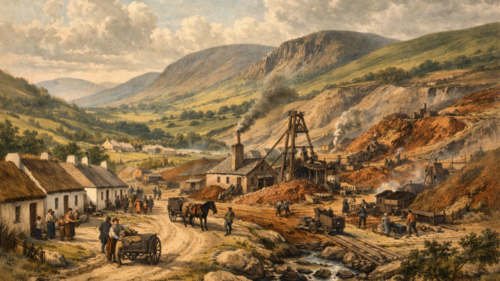
Cargan is a documented settlement in County Antrim, Northern Ireland. The Placenames Database of Ireland gives the place as An Carraigín / Cargin and places it in the county of Aontroim/Antrim, barony of Toome Upper, and civil parish of Duneane 1. A separate historical county index also lists Cargan in Antrim, within the Ballymena registration area and Clogh district, confirming the settlement’s county assignment in a twentieth-century official source 2. The main Irish-language form recorded by Logainm is An Carraigín, with English form Cargin 1. That spelling evidence matters because it shows that the modern English name Cargan sits beside an older and related place-name form, not a separate place altogether.
Dunmurry
Archived: 28 November 2026
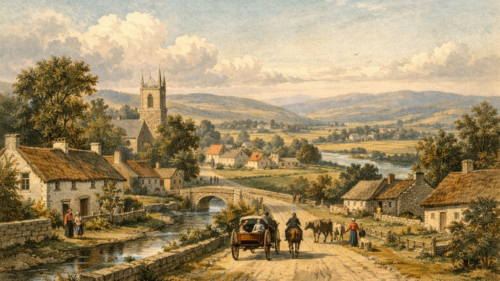
Dunmurry is securely identifiable in historical references as a settlement and townland in County Antrim. Samuel Lewis’s 1837 Topographical Dictionary of Ireland describes Dunmurry as one of the “largest villages” in County Antrim, placing it among the county’s named settlements. A modern gazetteer derived from historical sources likewise indexes Dunmurry under Belfast and County Antrim, confirming the same historical county assignment. 12 The place-name evidence shows a long sequence of spellings and Irish forms. The Irish national placenames database records early historical spellings including doommurry (1609), dunmury (1642), dunmurrey (1642), and later forms such as Drummurry and Dunmurry.
