Irish History Timeline
From 32,000 BCE to the Present
Explore Ireland’s story one reference year at a time. BCE dates identify archive reference points; archaeological evidence is presented with the dating limits explained within each article.
32000–31991 BCE
Castlepook Cave Fauna
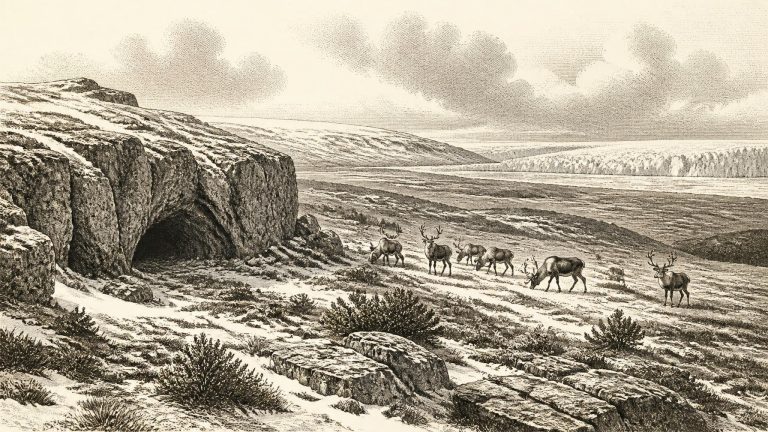
32,000 BCE is a modern chronological label, not a date that can be matched to an Irish historical year. There are no written records, named individuals, excavated settlements or securely dated events from this point. Indeed, the precision implied by a calendar year is unavailable: radiocarbon results are expressed as ranges and must be calibrated, while geological and archaeological sequences are often resolved only to centuries or millennia. In broad terms, 32,000 BCE falls about 34,000 years before the conventional “present” of 1950, within the Late Pleistocene and the Upper Palaeolithic of north-west Europe.
Cut-Marked Reindeer Bone
The label 31,999 BCE should not be mistaken for a date that people in Ice Age Ireland could have recognised, or that archaeology can isolate to a single year. This was long before writing, named rulers, states or calendars on the island. It falls broadly within the Late Pleistocene, in Marine Isotope Stage 3, a climatically unstable part of the last Ice Age. The most responsible approach is therefore to describe a span around this notional year using calibrated and radiocarbon date ranges, rather than inventing an event for it. In Irish terms, the period is important precisely because it may preserve the earliest presently claimed trace of human activity, while leaving enormous questions unresolved.

Castlepook Reindeer Marks
31,998 BCE is not a date that can be matched to a recorded Irish event. It is a modern calendar label applied to a time deep in the Late Pleistocene, long before writing, states, named peoples or even securely documented settlement on the island. Calendar-year precision is therefore unavailable. Indeed, 31,998 BCE is approximately 33,947 years before the radiocarbon convention of AD 1950, while archaeological ages are normally expressed as radiocarbon years or calibrated years BP (‘before present’). The responsible approach is to consider a broad window around 34,000 calibrated years ago, within Marine Isotope Stage 3, rather than imagine happenings on a particular day or in a particular year.
Ice Age Threshold
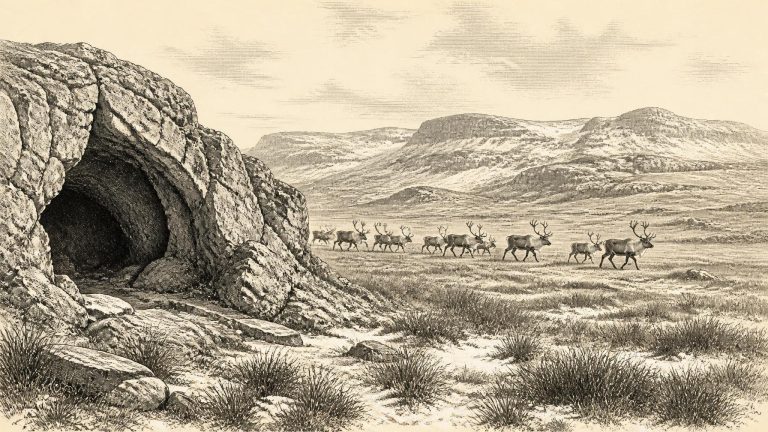
Modern calendar-year precision cannot be recovered for 31,997 BCE. The label is a retrospective point on a calendar created millennia later, rather than a date that Ice Age people could have recognised or recorded. In archaeological terms, it lies roughly 34,000 years before the 1950 reference point used for radiocarbon dating, within the Upper Palaeolithic and during the long build-up towards the Last Glacial Maximum. The responsible history of Ireland at this point is therefore not a narrative of a particular year, ruler or event. It is a carefully bounded account of a changing Ice Age landscape, its animals, and the very slight, still-developing evidence that people may have reached the island.
Castlepook’s Cold-Stage Fauna
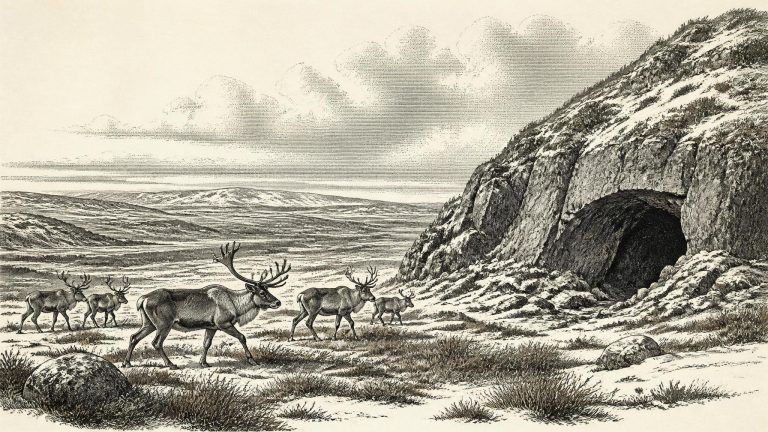
“31,996 BCE” is a modern retrospective label, not a date anyone living then could have named or recorded. It corresponds only approximately to 34,000 calendar years before 1950, the reference point used by archaeologists for “BP” dating. No evidence can identify an event in a particular Irish year, season or generation. The responsible history of Ireland at this point is therefore a history of landscapes, animal remains, cave deposits and the limits of archaeological inference. It belongs to the Middle Upper Palaeolithic world of Marine Isotope Stage 3 (MIS 3), during the long approach to the Last Glacial Maximum.
Cork Reindeer Butchery
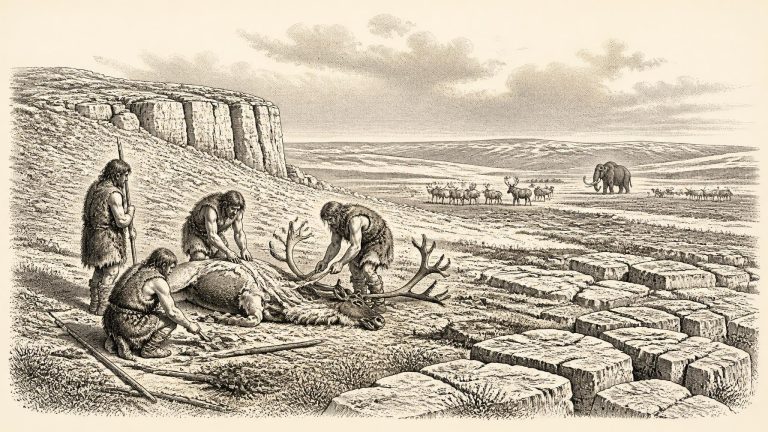
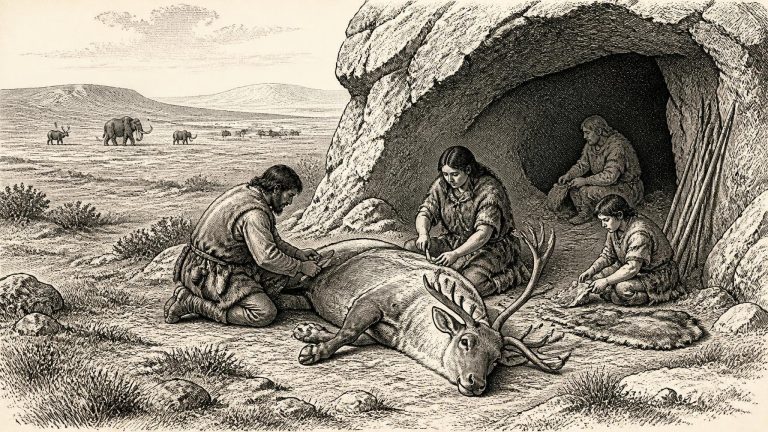
“31,995 BCE” is a modern calendar label, not a date at which archaeology can identify an event in Ireland. There are no written records, named people, political communities or year-by-year chronologies for this depth of time. In radiocarbon and environmental terms, the label falls broadly around 34,000 years before present, within the Late Pleistocene and the Middle Upper Palaeolithic of north-west Europe. Any responsible account must therefore use ranges, deposits and individual specimens rather than pretend that a particular winter, journey or killing happened in this numbered year.

Castlepook Reindeer Femur
31,994 BCE is not a year that can be recovered with modern calendar precision. It is a retrospective label for a point roughly 34,000 years before 1950, in the Late Pleistocene and broadly within Marine Isotope Stage 3 (MIS 3). The relevant archaeological and environmental dates are calibrated ranges, often with margins of centuries or millennia. Ireland has no securely dated settlement, named community, written record or political history for this precise moment. What can be responsibly described is an ice-age island or near-island landscape in profound climatic transition, and the sparse animal and geological evidence that survives from it.

Ireland Before Settlement
“31,993 BCE” is a modern calendar label, not a date that can be matched to a documented Irish event. At this depth of time, archaeological and environmental evidence is dated in broad calibrated ranges, often with sizeable uncertainty. In conventional terms this year falls roughly 33,900 years before AD 1950, within the later part of Marine Isotope Stage 3, a cold and highly variable phase of the Last Glacial Period. It was long before the Last Glacial Maximum, when ice later covered much or all of Ireland, and long before the island’s securely evidenced human settlement.
Castlepook Reindeer Butchery
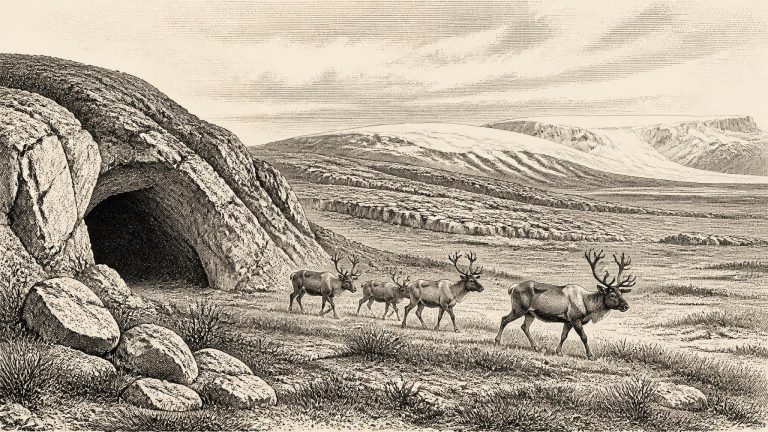
The label 31,992 BCE is a modern chronological convenience, not a date that people living in prehistoric Ireland could have named or recorded. Nothing in the evidence can be fixed to that individual calendar year. The responsible approach is therefore to look at the calibrated ranges and geological sequences that bracket it. This was the later part of the Upper Palaeolithic, within Marine Isotope Stage 3 and close to the long climatic deterioration that led into the Last Glacial Maximum. For Ireland, it was a world without farming, writing, towns, named rulers or recoverable political communities. What can be investigated is a changing Ice Age landscape, the animals which used it, and one exceptionally early but still limited indication that humans may have entered it.
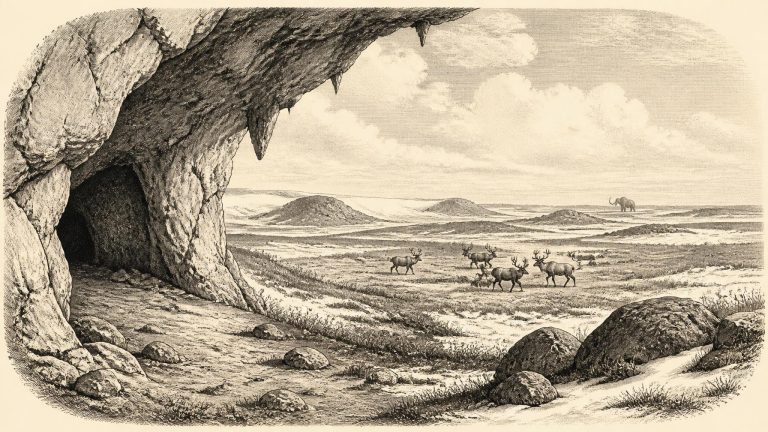
Atlantic Ice Sheet Growth
“31,991 BCE” is a modern way of labelling a point unimaginably far beyond written history. It must not be mistaken for a date that anyone then recorded, or for a year to which Irish archaeology can attach an event. In archaeological terms it falls roughly 33,940 calendar years before AD 1950, the conventional reference point for cal BP dates. At this depth of time, radiocarbon results have ranges, are revised as calibration improves, and seldom permit calendar-year precision. The responsible subject, therefore, is Ireland in the later part of Marine Isotope Stage 3 (MIS 3), shortly before the most severe phase of the last glaciation—not an invented episode in a named year.