Ufford’s Dublin Landing1344 CE
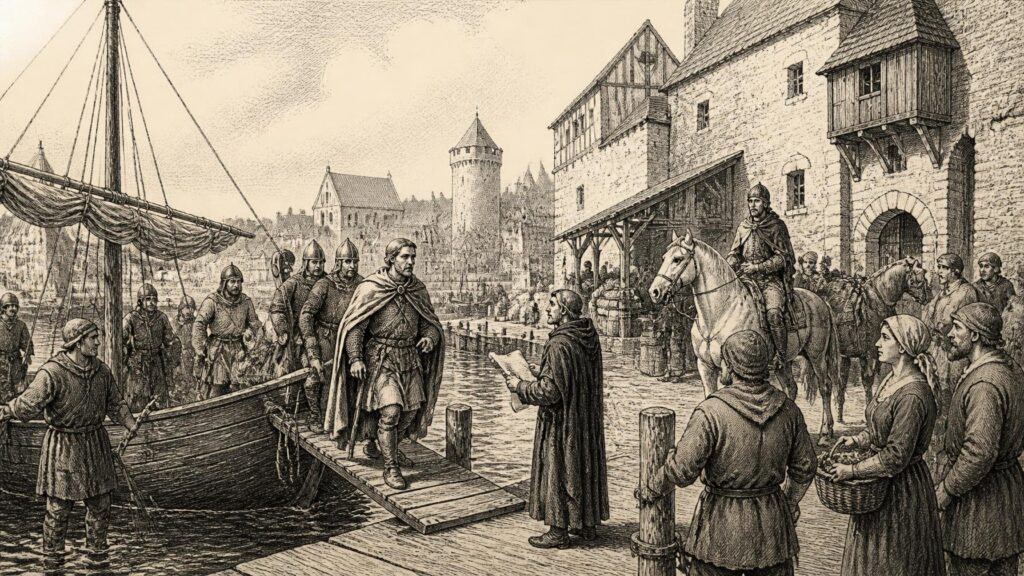
In 1344, Ralph d’Ufford became justiciar of Ireland, landing at Dublin with Maud of Lancaster and pursuing stronger royal oversight of grants, revenues, frontier defence and officials. His inquiries in Cork, administrative changes and Leinster campaign signalled intervention, though not restored island-wide control. Royal military demands also linked Irish magnates to Edward III’s French war. Elsewhere, annals recorded killings, imprisonments and rapid successions among Gaelic lordships in Mide, Airgialla, Breifne, Connacht and Ulster. Church affairs included James Bermingham’s appointment as bishop of Killala. Notices of Finnguala Ó Duibhgeannáin and Cill Rónáin illustrate cultural patronage and the uncertainties of medieval chronology.
Dateline
In 1344, Ireland was not a single political unit in any practical sense. Edward III was lord of Ireland, and royal institutions at Dublin claimed authority across the island; yet that authority depended on cooperation from great Anglo-Irish lords, towns, churchmen and regional officeholders. Beyond and between the areas most securely governed from Dublin, Gaelic kingships and lordships pursued their own rivalries, successions and alliances. The year is unusually clear in one respect: it brought a new and forceful royal chief governor. Elsewhere, the Irish annals show that local sovereignty could change hands with startling speed.
A New Justiciar
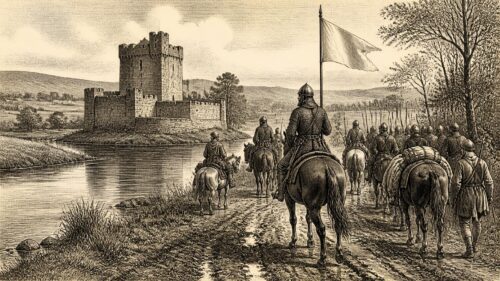
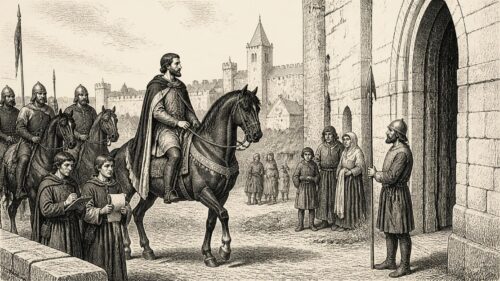
The best-dated development came from the English royal government. On 10 February Ralph d’Ufford was appointed justiciar of Ireland. He did not immediately take control on the ground. He landed at Dublin with his wife, Maud of Lancaster, Countess of Ulster, and his retinue on 13 July, and assumed office the next day. Maud’s position mattered greatly: she was the widow of William de Burgh, earl of Ulster, murdered in 1333, and mother of the young Ulster heiress Elizabeth de Burgh. Ufford therefore arrived not simply as a royal servant but as a man closely tied to a major unresolved inheritance in Ireland’s north-east.
His commission reflected Westminster’s anxieties about an impoverished and weakly administered lordship. Ufford was to investigate officials, examine the validity of grants made in Ireland, improve royal finances and inquire into franchises and liberties claimed by powerful subjects. This was more than routine bookkeeping. In a lordship where land, judicial rights, military service and local influence were closely connected, reviewing grants could unsettle magnates as well as clerks. Ufford’s authority rested on an unusually substantial household and on links with figures among the Anglo-Irish political elite; nevertheless, his arrival introduced an intrusive style of government into a system already suspicious of royal intervention.
Land, Revenue and Defence
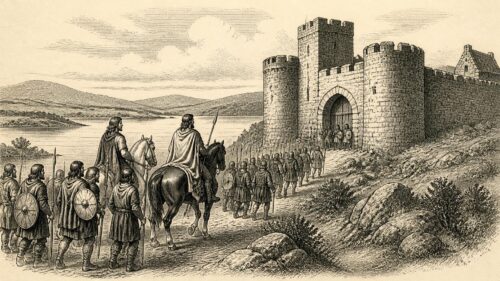
A royal writ of 14 June, issued before Ufford’s arrival but addressed to him as justiciar, indicates the scale of the Crown’s concern. It ordered an inquiry into lands and tenements formerly granted for defending the marches between English and Irish communities: who held them, how holders had performed their duties, and what had been lost to Irish seizure or destruction through neglect. The wording shows that defence was conceived through landed obligation. A lord or tenant who possessed property on a frontier might owe service, readiness or local protection; when that system failed, the Crown saw both a security problem and a loss of revenue.
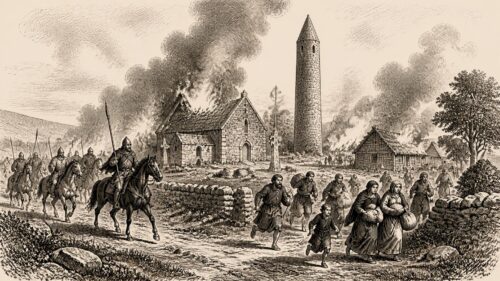
Ufford moved quickly after taking office. His first southern progress took him to Cork, where he held inquiries concerning Maurice fitz Thomas FitzGerald, earl of Desmond, and removed local officials. Back in Dublin he reshaped personnel in the central administration. These actions belong firmly to the opening phase of his rule, but they should not be confused with the open conflict between Ufford and Desmond that developed in 1345. In September 1344 he also campaigned against Irish opponents in Leinster. The evidence supports a determined assertion of royal authority in the year, not a completed restoration of control across Ireland.
Ireland’s government was also connected to Edward III’s war in France. Royal demands made during 1344 summoned leading Irish magnates, including the earls of Desmond and Kildare, to provide men-at-arms and hobelars for service overseas. Hobelars were mobile light cavalry, suited to rapid movement and familiar in Irish warfare. Such summonses exposed the double pressure on lordship: great men were expected to maintain regional power and defence at home while answering the wider military needs of the English crown.
Successions in the Midlands
The annals for 1344 make clear that political change was not confined to Dublin’s sphere. Annála Connacht records the killing of Thomas, son of Cathal Riabhach Ó Ruairc, by Clann Muircheartaigh. It also reports the death of Áed, son of Roalbh Mac Mathghamhna, king of Airgialla. Murchadh Óg, son of Murchadh Mór, succeeded him but died within a week; Maghnus, son of Eochaidh, then took the kingship. The sequence is a stark reminder that succession was not always a settled hereditary transfer. The death of a ruler could bring immediate competition, and an annalist’s brief notice may preserve a crisis whose wider human effects went unrecorded.
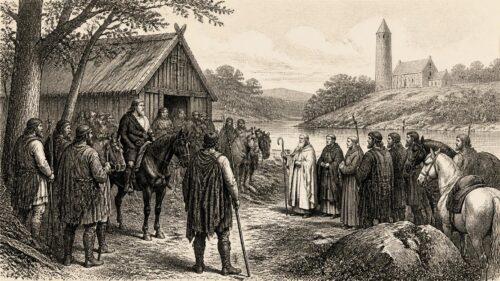
In Mide, Art Mór Ó Máel Sechlainn, described as king of Meath, was killed by Cormac Ballach Ó Máel Sechlainn, who then took the sovereignty for himself. The same annal notes the killing of William, son of Mathghamhain Mac Raghnaill, by the sons of Cathal Mac Raghnaill, and the killing of Matha, son of Gilla Crist Cleric Mac Diarmata, by Muintir Eolais at Corrsliabh. These were not peripheral disturbances. The middle of Ireland contained routes, pasture, churches and lordships whose control mattered to neighbouring dynasties and to the Dublin government. Yet the records describe politics through kin-groups and territorial claims rather than through a single national contest.
Breifne, Connacht and Ulster
The Annals of Ulster preserve further notices under their entry headed 1344, though their own chronological apparatus gives the year as “1344–7”. That discrepancy is important: these reports can be connected to the annalistic year 1344, but their precise calendar placement should not be claimed more strongly than the source permits. Under that heading, the annal reports the death of Gilla na Naem Ó Fearghail, chief of Muintir Anghaile, followed by Cathal Ó Fearghail’s succession. It calls Maurice Mac Diarmata an exceptionally distinguished son of an Irish sub-king, and records that he was killed by John Mac David de Burgh, known as the Red.
The same entry records Tadhg Mag Raghnaill, chief of Muintir Eolais, being taken prisoner by Clann Muircheartaigh; William Mac David Bimilis de Burgh being killed at Baile in Tobair; and Fergal Mac Cormaic being killed by an unidentified assailant. Capture, killing and disputed succession were therefore not merely military episodes. They affected the custody of people, the security of a lord’s followers, and the status of the families on whom local order depended.
Its most arresting Ulster notice is the hanging of Thomas Mac Artain, or Mac Cartan, king of Uí Echach in Ulidia, by people described simply as “the Foreigners”. The annalist judged it an exceptionally pitiful deed. The source does not identify the officials or settlers responsible, nor does it provide a location or exact day. It would be unsafe to attach the execution directly to Ufford’s administration merely because he had arrived in Dublin that summer. It does, however, show the sharp edge of contact between Gaelic rulership and colonial power in the north.
Church, Craft and Historical Memory
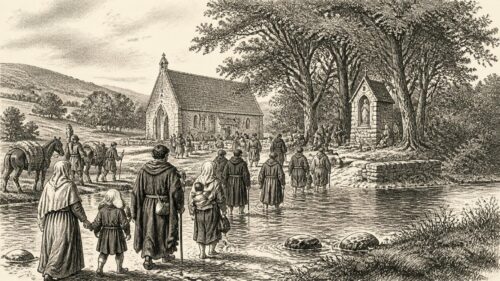
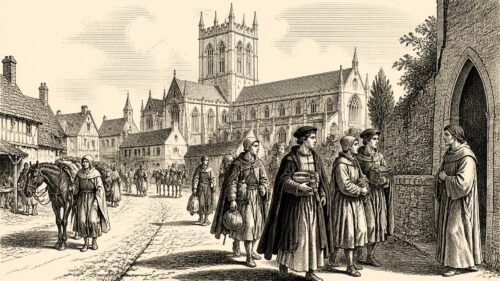
Ecclesiastical life continued amid this instability. James Bermingham became bishop of Killala in 1344, following the death of the previous bishop, John Tankard, in 1343. His tenure was brief and later contested, illustrating that episcopal succession, like secular lordship, could involve competing local claims and appeal beyond Ireland. Church office joined spiritual care to control of temporalities, patronage and regional standing.
The Annals of Ulster also record the death of Finnguala, daughter of Mac Finghin and wife of Fergal Ó Duibhgeannáin, praising her as the foremost woman in Ireland in her own art or sphere. The notice is valuable precisely because it is limited: it does not name her craft. Still, it preserves an unusual acknowledgement of female accomplishment in a record dominated by kings, clerics and warriors. Her husband belonged to the Ó Duibhgeannáin, a learned family associated with the north Connacht and Breifne world. Their later reputation as chroniclers and hereditary men of learning helps explain why skill, household standing and cultural authority could be worthy of commemoration alongside political events.
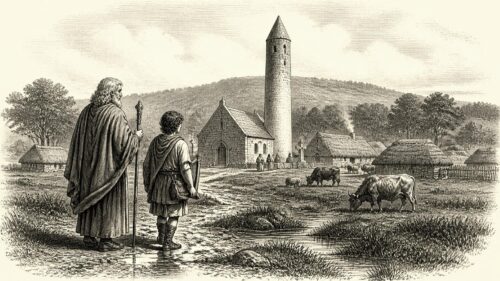
A related caution concerns the church of Cill Rónáin. The Ulster annal places its erection by Fergal Ó Duibhgeannáin under its 1344 heading, while the Annals of Loch Cé places the same foundation in 1339. The building is important evidence of local ecclesiastical patronage, but not secure evidence for construction in the calendar year 1344. The disagreement demonstrates why medieval annals must be read as carefully transmitted historical testimony, not treated as modern dated registers.
A Year of Reassertion
For ordinary people, the surviving record is frustratingly selective. It does not permit a responsible nationwide claim about harvests, prices, disease or weather in 1344. What it does show is a political landscape in which warfare, imprisonment, the death of rulers and the arrival of armed government could alter daily security locally. In Dublin, Ufford’s landing marked the beginning of a more interventionist royal administration. In Mide, Airgialla, Breifne, Connacht and Ulster, the year’s annals instead reveal a mosaic of competing lordships, where authority still depended on family, followers, land and the ability to survive sudden violence.
Primary Sources
- The Annals of Ulster: Year U1344
- Annala Uladh: Annals of Ulster otherwise Annala Senait, Annals of Senat
- Annála Connacht
- Annals of Loch Cé, A.D. 1014–1590, Part 15
- Annales Hiberniae
- Ufford (D'Ufford, de Ufford, Offord), Ralph
- Morice (Moriz), John
- FitzGerald, Maurice fitz Thomas
- The Administration of Ireland 1172–1377
- The Administration of Ireland 1172–1377: Irish Historical Studies review
- Calendar of the Close Rolls: 20 April 1344, Westminster
- Calendar of the Patent Rolls: Edward III, A.D. 1343–1345
- Calendar of the Patent Rolls: bibliographical guide
- Calendar of the Fine Rolls, 1337–1347
- Calendar of Entries in the Papal Registers Relating to Great Britain and Ireland: Papal Letters, Volume III, 1342–1362
- Diocese of Killala and Achonry: Diocesan Archive Guide
- Notes on the Early History of Tuam, Killala and Achonry
- The Gaelic Learned Tradition
- The Ó Duibhgeannáin Family of Historians and the Annals of the Four Masters
- The Place-Names of Co. Roscommon