

Threshold Nights
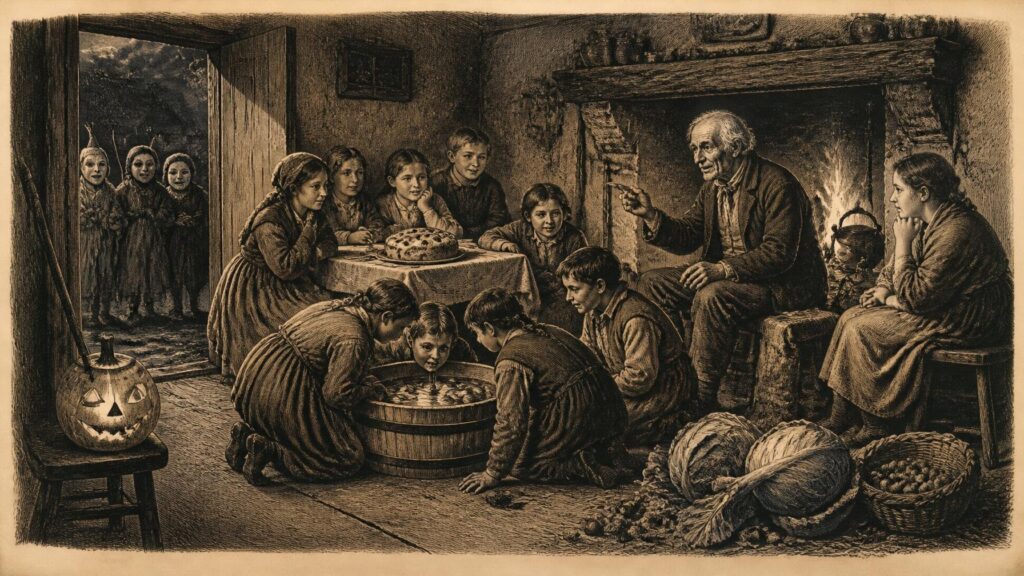
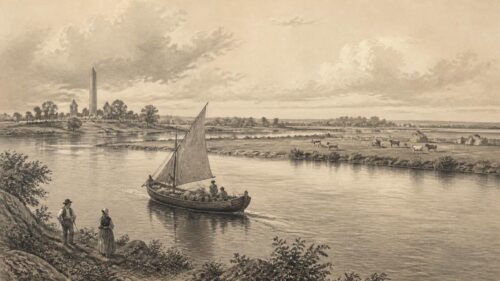
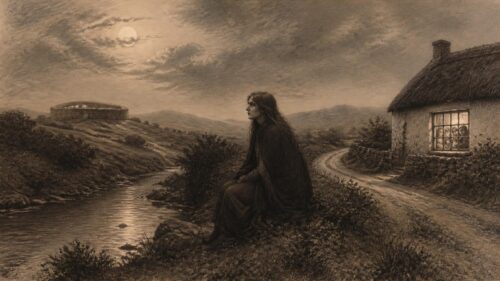
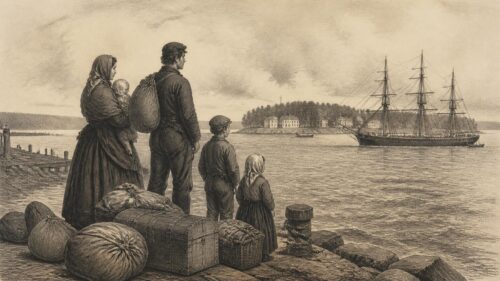
AI generated historical illustration, not a contemporary photograph.
At a Glance
Irish Halloween is neither a fossil preserved unchanged from a remote pagan past nor an imported modern amusement with superficial Irish colouring. It is a layered seasonal observance: Samhain in the Irish calendar; the Christian vigils and feasts of All Saints and All Souls; and a rich body of household custom, storytelling, divination, disguise and misrule recorded across Ireland. Its history is clearest when evidence, later interpretation and folklore are allowed to remain distinct.
Seasonal Threshold
The Irish name most closely associated with Halloween is Oíche Shamhna, the eve of Samhain. In modern usage, Samhain also denotes November and is deeply embedded in the Irish calendar. The National Museum of Ireland describes 1 November as the traditional first day of winter, with the preceding evening as the principal time for celebration. That placement matters. The observance stood at a practical hinge in the farming year, when daylight had contracted, the harvest had been gathered, animals were being managed for winter, and households faced the difficult season ahead.
It is tempting to call Samhain simply the Celtic New Year. The phrase is familiar and captures something of its calendrical importance, but it can conceal more than it explains. The surviving evidence does show that Samhain marked an important division in the Irish year and was repeatedly imagined as a consequential time. It does not supply a complete, uniform account of a prehistoric national rite, much less a single ceremony from which every later Halloween practice can be mechanically derived. The ancient and medieval Irish world changed over centuries, and the records that survive were written down after Christianity had become culturally dominant.
In Irish seasonal reckoning, Samhain belongs with Imbolc, Bealtaine and Lughnasa as one of the great turning points of the year. Such dates were useful for agriculture, rents, assemblies, movements of livestock and social obligation. A festival need not be reduced to economics in order to be practical. The end of the productive season, the approach of cold and scarcity, and the gathering of people before winter naturally made Samhain a time charged with both business and imagination. The calendar’s material needs and its supernatural associations were not opposites.
The word ‘threshold’ is therefore more useful than a confident claim about a prehistoric religion. A threshold is a place between settled states: not wholly one season or another, not safely inside ordinary routines, and open to anxiety as well as hope. Irish literature and later folk belief repeatedly treat Samhain in precisely this manner. At such a time, conventional protections appear weaker, hidden knowledge becomes imaginable, and ordinary people may behave with a licence not permitted on other nights.
Medieval Witness
Medieval Irish texts provide the earliest substantial written evidence for Samhain’s special imaginative status. They are not eye-witness ethnographies of pre-Christian ritual. They are literary works, copied and shaped within learned Christian manuscript culture, sometimes preserving older materials and sometimes refashioning them. Their importance lies in the persistence with which Samhain appears as a time of assembly, danger, encounter and revelation.
The tale commonly known as Echtra Nerai, or The Adventure of Nera, is set at the royal residence of Cruachan on Samhain night. King Ailill offers a reward to the man bold enough to put a withy around the ankle of a condemned man on the gallows. Nera accepts the challenge and is drawn into an unsettling sequence of encounters involving the dead, fire, water and an otherworldly host. The tale’s exact date and literary history are matters for specialists, but its setting is plain: Samhain is the chosen night for a crossing between human society and an uncanny alternative order.
Other medieval traditions make comparable use of the festival. University College Cork’s discussion, ‘Secrets at Samhain’, draws attention to tales in which supernatural knowledge may be gained on that night, and to an annalistic notice concerning a man said to visit Newgrange at Samhain in order to learn the future from Óengus Óc. Whether a modern reader accepts such an account as belief, literary motif or record of local story, it demonstrates that Samhain could be used to frame privileged access to hidden things.
The point is not that medieval authors give modern Halloween a simple origin story. Apples bobbed in water, commercially manufactured costumes and plastic lanterns do not emerge from these manuscripts. Rather, the texts establish a powerful Irish literary pattern: Samhain is a night on which boundaries are unsettled. Mortals may meet beings of the síde; a journey can lead elsewhere; apparent safety proves precarious; and a person may learn what ordinary time withholds.
That pattern has often been overextended. Victorian and twentieth-century writers sometimes treated every reference to Samhain as proof of a wholly recoverable pagan ceremonial system. More careful reading allows for uncertainty. Medieval narrative can preserve traditional ideas without offering a literal description of a public festival. Yet it would be equally mistaken to dismiss the tales as irrelevant decoration. They show that the association of Samhain with danger, prophecy and the Otherworld is old, specifically Irish, and deeply rooted in the surviving literary record.
Christian Calendar
Halloween’s English name derives from All Hallows’ Eve: the evening before All Saints’ Day on 1 November. In Ireland, the vigil stood immediately beside All Saints’ Day and All Souls’ Day on 2 November. The resulting sequence brought the liturgical commemoration of saints and the dead into close proximity with the older seasonal landmark of Samhain. For generations of Irish people, the night could be understood in several ways at once: as Oíche Shamhna, as Hallowe’en, as a winter threshold, and as a time when departed souls required remembrance.
It is historically unsafe to state that the Christian feast was simply invented to erase Samhain. The history of All Saints’ observance is more complicated: the feast had earlier dates in parts of Christendom, and the precise reasons why 1 November became established in the western calendar remain debated. Ireland had also been Christian for centuries by the time medieval manuscripts were written. The relationship is better described as overlap, adaptation and coexistence than as a tidy act of replacement.
This overlap nevertheless had consequences in popular observance. The National Museum of Ireland notes a traditional expectation that the souls of the dead might return to the family home, while other spirits were believed active on the night. In a Catholic setting, prayers for the dead and concern for souls in the next world could sit alongside folk accounts of ghosts, fairies and dangerous wandering lights. Neither a rigid division between ‘Christian’ and ‘pagan’ nor an assumption that all local custom was doctrine captures this lived complexity.
Folklore collected in County Monaghan during the Schools’ Collection of 1937–39 records an account that the Holy Souls were released between midnight on Hallowe’en and midnight on All Souls’ Night. It also describes households leaving food for possible visitors and people avoiding lateness outdoors. That testimony is not evidence for antiquity: it records what an informant told a schoolchild in the 1930s. It is, however, excellent evidence for the blending of Catholic language, household hospitality and apprehension surrounding the dead in twentieth-century rural memory.
Thus Irish Halloween cannot be assigned exclusively to one religious inheritance. The Christian calendar gave it names, feast days and devotional neighbourhood. Older literary and folk patterns supplied a vocabulary of seasonal vulnerability and supernatural encounter. In homes and communities, people did not necessarily analyse the distinction. They observed a night that was familiar, enjoyable, unsettling and morally charged.
Household Rites
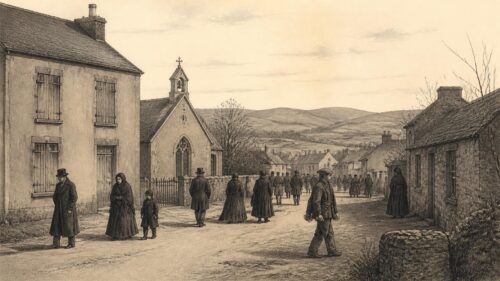
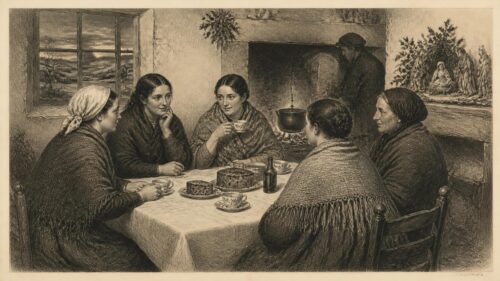
For much of the nineteenth and twentieth centuries, Halloween in Ireland was foremost a domestic and local occasion. The idealised modern image of children travelling from house to house for sweets catches only one portion of its history. Earlier recollections commonly place the centre of the evening in kitchens and parlours, where relatives, neighbours and young people gathered around food, games and stories.
Fruit and nuts were particularly associated with the night. Apples, hazelnuts and other autumn stores were festive fare but also useful materials for games. Apples could be bobbed for in water, caught from a suspended stick, or placed within a revolving contrivance with candles. The National Museum preserves descriptions and objects connected with such practices, including masks and a Halloween cross. Their survival is valuable because folklore is not merely a chain of tales; it also leaves material traces in ordinary things made, handled and displayed.
The barmbrack, or báirín breac, became perhaps the best-known Irish Halloween food. This sweet bread or tea brack could contain tokens whose discovery was held to forecast the finder’s future. A ring commonly suggested marriage. Accounts vary by district and household concerning other objects and their meanings; money might portend wealth, while a piece of cloth, a stick, a bean or clay could signal less welcome prospects. The variation itself is significant. Folklore did not operate through a single national rulebook.
Colcannon also carried divinatory associations in some places. Tokens might be concealed within it, turning an ordinary autumn dish into a small drama of chance and future expectation. Such customs were sociable entertainment, but it would be too dismissive to call them merely games. Marriage, migration, prosperity and death were serious matters. Divination gave young people an approved, comic and ceremonial way to speak about uncertain futures in the presence of family and neighbours.
Food likewise expressed care for absent or vulnerable people. The Monaghan account in the National Folklore Collection speaks of a prepared meal being left in case a visitor should come. This should not be converted into proof that every Irish household set a feast for ancestral spirits. It does show the durability of an idea that hospitality on this night might extend beyond those visibly seated at the table. In the context of All Souls, it could be interpreted through prayer for the departed; in a folkloric context, it could be connected with ghosts, fairies or unnamed travellers.
Fortune Games
Halloween divination was one of the most persistent features of Irish custom. It was especially concerned with courtship and marriage, though its meanings could encompass travel, livelihood and mortality. The night’s status as a seasonal threshold made it a fitting occasion for games that pretended, or sometimes claimed, to discover what lay ahead.
Hazelnuts were used in love divination. A young person might name nuts for possible sweethearts and watch their behaviour in a fire: the nut that burned steadily could be read as the faithful choice, while one that cracked, leapt or burned away might indicate betrayal or failure. Similar forms of nut divination existed elsewhere in Britain and Europe, which is a useful reminder that Ireland shared a wider Atlantic and European repertoire even as local customs acquired their own language and texture.
Cabbage was another medium of playful prophecy. In several Irish accounts, unmarried people pulled a cabbage blindfolded and examined its shape, size, taste or amount of soil. These details were read as clues to the appearance, temper, circumstances or home of a future spouse. A cabbage brought in with much earth attached might point to a partner from a distant or poor place; other readings varied. The comic potential is obvious, yet the game permitted a community to make marriageable youth the centre of attention without requiring direct confession of desire.
The saucer game, remembered in many Irish homes, involved a blindfolded participant choosing among saucers holding different substances or objects. Water could signify travel or emigration; a ring marriage; clay death. The exact arrangement differs in testimony, and no version should be assumed universal. The game’s emotional range is striking. It moved rapidly from flirtation to departure and death, the principal uncertainties that shaped family life in a society marked by migration and precarious livelihoods.
These practices must be classified carefully. We may document that people described and performed them in particular places and periods. We cannot demonstrate that they reliably preserved a single ancient rite, nor need we suppose that every participant believed their predictions literally. In folklore, belief can be partial, playful and situational. A young person might laugh at a prophecy and still remember it for years. The significance lay in performance, anticipation and shared attention as much as in conviction.
Masks Mischief
Disguise was another defining element. The National Museum of Ireland notes that ghostly masks could be made to frighten neighbours and that groups of men or children, enabled by their disguises, went visiting and entertaining. This resembles later costume customs, but its social function was more complicated than dressing for individual display. A masked person could enter a temporary space of anonymity, licence and collective performance.
The Irish word and practice of mumming belong to a broader family of visiting, masking and performance customs found across Ireland and neighbouring regions. Their dates, forms and local names vary considerably. A Halloween visit might involve a rhyme, song, comic entertainment, a demand for food or money, or simple disruptive play. It is prudent not to treat every instance as the direct ancestor of modern trick-or-treating. Yet the family resemblance is unmistakable: a visitor in disguise comes to a door and expects a response.
Mischief was frequently recalled as part of the night. Gates might be lifted from hinges, carts moved, chimneys stopped, cabbages scattered or doors obstructed. A County Monaghan Schools’ Collection account names several such pranks, while other notebooks record similar stories from distant districts. The evidence makes clear that these acts were remembered, though it cannot tell us how often they occurred or how warmly householders received them. What young people called sport could impose real inconvenience or damage on neighbours.
Such inversion was not unique to Halloween. Calendar customs often allow controlled disorder at moments when the year is thought to change. On Hallowe’en, pranksters could be blamed on ghosts, fairies or unnamed nocturnal forces; disguise made the claim plausible enough to be amusing and deniable. The custom gave form to anxiety about disorder while also creating it. Adults could condemn excess and still accept that the night allowed more freedom than an ordinary evening.
Protective action ran alongside misrule. Museum records describe crosses made for Halloween and placed above doors to guard the household from misfortune in the coming year. People also avoided travelling alone, stayed indoors after dark or told stories that instructed listeners about the dangers outside. These are not proof of a coherent ancient protective cult. They are documented examples of ordinary people responding to a night imagined as unusually exposed to harm.
Turnip Lanterns
The carved pumpkin is now so dominant in international Halloween imagery that it can obscure the older Irish use of turnips. In Ireland and Scotland, root vegetables could be hollowed, given a face and lit from within. The results were less smooth and cheerful than the modern pumpkin lantern: a turnip’s hard pale flesh produced a small, fierce and often grotesque object. It could be carried as a joke, used to frighten someone, or linked in later storytelling to wandering lights and uncanny figures.
The Smithsonian’s account of jack-o’-lantern history connects the American pumpkin lantern with earlier Irish carving of root vegetables and with stories concerning ‘Stingy Jack’. That account is useful for the broad material transition, but the legend itself must be handled as folklore, not biography or ancient religion. Versions of Jack’s story were recorded and retold in different places; they explain the name of a will-o’-the-wisp through a morally comic encounter with the Devil. They do not establish one universal Irish belief.
Nor should every turnip lantern be imagined as an object of solemn ritual. Children could make them precisely because they were grotesque, portable and frightening. The ability of a small domestic vegetable to become a face in the dark is itself part of Halloween’s visual power. A lantern makes the familiar strange. In this sense, the object fits the wider character of the night: normal boundaries between house and road, person and mask, safety and alarm are temporarily unsettled.
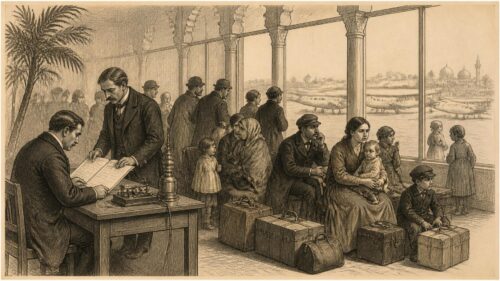
Irish migration to North America contributed to the transformation of the lantern. Pumpkins were plentiful, larger and easier to carve than turnips. By the later nineteenth century, they had become strongly associated with American Halloween. This was adaptation rather than simple cultural replacement. Migrants and their descendants carried practices into new environments, where materials, neighbours, commercial opportunities and local traditions changed what the festival looked like.
Archive Voices
The most vivid evidence for Irish Halloween in relatively recent times comes from folklore collections. The National Folklore Collection at University College Dublin holds the Schools’ Collection, created between 1937 and 1939 when schoolchildren gathered local lore from parents, grandparents and neighbours. Its Halloween entries cover many counties and preserve accounts of food, pranks, games, ghost stories, fairies and devotional ideas.
These manuscripts are enormously valuable, but they require historical discipline. They are records made by children, mediated by teachers, written in particular linguistic and social settings, and often based on recollection. They do not offer a statistical survey of every custom practised in Ireland in the 1930s. Some contributors repeat ideas from books, newspapers or classroom lessons; some present customs as older than they may have been. Their authority lies in the detail of remembered local tradition, not in their ability to settle every question about origins.
One Cork account describes young people gathering at a neighbour’s house, collecting food and money, preparing cakes and candles, and attempting to catch apples from a spinning wooden cross. It also says that doors were shut early and ghost stories told indoors. In County Leitrim, another account remembers older people telling of the ‘good people’ or fairies, who were thought to have licence to roam on Hallow Eve. Together, such testimonies make a persuasive case for the variety and social density of the evening.
The archive also reveals that people themselves were conscious of change. Informants repeatedly say that customs were dying out, had existed ‘in olden times’, or were no longer observed as fully as before. Such statements should not always be read literally; nostalgia is itself a traditional way of speaking. But they show that Halloween was already being historicised within living memory. Each generation compared its festivities with an imagined, remembered or reported past.
That awareness is especially important for historians. Folklore is not a transparent window opened directly on antiquity. It is a continuing conversation between past practice, present performance and memory. Irish Halloween survives in the archive not as one intact inheritance but as a mosaic of local voices, often contradictory, always shaped by the moment in which they were recorded.
Atlantic Passage
Halloween’s global prominence owes much to North American development, and Irish migrants formed part of that history. It is reasonable to say that Irish and Scottish traditions travelled across the Atlantic and contributed to American Halloween. It is less accurate to say that Ireland alone ‘invented’ the modern festival. The American celebration emerged from overlapping immigrant customs, urban childhood culture, print, commerce, local festivals and later mass media.
Irish emigrants brought knowledge of seasonal foods, divination games, masks, pranks and lanterns. In the United States, pumpkin carving became more practical than turnip carving and gradually more visually spectacular. Door-to-door visiting likewise acquired new forms. By the twentieth century, civic organisations, schools, confectionery companies and neighbourhood expectations had helped make Halloween a highly organised children’s event. The Irish inheritance was real, but it was transformed through diaspora.
This return journey also affected Ireland. American popular culture, film, advertising and consumer goods have strongly influenced late twentieth- and twenty-first-century Irish Halloween celebrations. Costumes, plastic decorations, commercial sweets and pumpkin lanterns coexist with barmbrack, bonfires in some areas, local storytelling and the Irish language name Oíche Shamhna. The result is not evidence that old customs have vanished; it is evidence that festivals continually absorb new materials.
Historical continuity is therefore best understood as selective. Certain themes endure remarkably well: disguise, food, juvenile licence, mock fear, fortune telling, the dead and the strange light in darkness. Their particular expression changes. A turnip becomes a pumpkin; a visiting party becomes organised trick-or-treating; a family prophecy game becomes a nostalgic demonstration at a heritage event. Continuity does not require sameness.
Modern Memory
Contemporary Ireland has embraced Halloween as both a living celebration and a heritage subject. Museums, schools, local historians and cultural organisations draw upon traditions of Samhain, masks, food and folklore. Some of this work responsibly introduces archival material to new audiences. Some also makes large claims about a wholly ancient Celtic festival, claims which are attractive because they offer a clear origin and a strong national story.
The more interesting history is less tidy. Ireland possesses a substantial documentary connection to Halloween: the Irish seasonal name Samhain; medieval literature that repeatedly gives Samhain supernatural force; Christian observances of the dead; objects and descriptions preserved by the National Museum; and thousands of twentieth-century oral-history and school-collection records. None of these sources needs exaggeration. Taken together, they establish an exceptionally rich Irish tradition.
Folklore should not be treated as error simply because it cannot be verified as fact. A tale of fairies abroad, a prediction from a saucer, or a story of a dead relative returning home tells historians about fear, hope, household relationships and the moral geography of a community. It may not prove that fairies were seen or that futures were known. It proves that people made room for such possibilities in their seasonal imagination.
At the same time, interpretation must not harden into certainty. There is no secure basis for assigning exact prehistoric dates to particular Halloween games, for claiming that every carved lantern was a druidic relic, or for collapsing Christian and pre-Christian practices into a single timeless rite. A historically grounded account gains rather than loses power when it admits these limits.
Lasting Meaning
Irish Halloween endures because it addresses experiences that are both seasonal and human. As the year darkens, people gather indoors, share stored food, test courage, mock danger, remember those absent and imagine the future. Children enjoy fright because adults have already made a safe place for fear. Young people play at marriage and death because both are uncertain. Neighbours tolerate a measure of disorder because order will return in the morning.
Samhain’s historical importance rests not on a claim that modern people exactly repeat ancient rites. Its importance lies in the long record of a night treated as exceptional in Ireland. Medieval storytellers located perilous adventures there. Christian observance set it beside the remembrance of saints and souls. Rural households made food, played games, told tales and guarded their doors. Migrants adapted its forms abroad, and later generations brought new versions home.
That is the proper richness of Irish Halloween: a history of transmission without purity, belief without uniformity, and change without amnesia. The night remains a threshold because each generation approaches it carrying inherited stories while making its own arrangements with darkness.
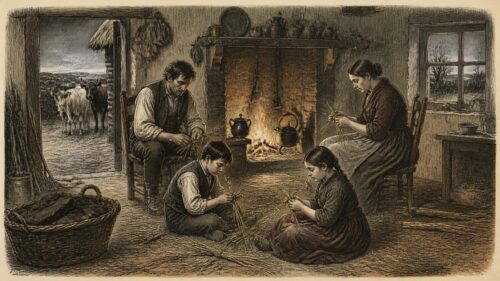
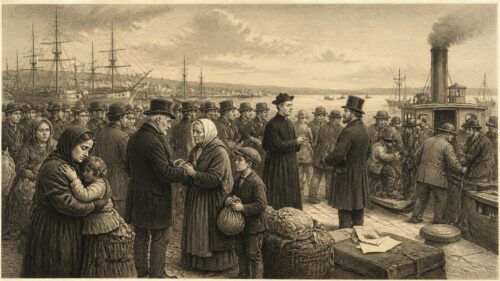
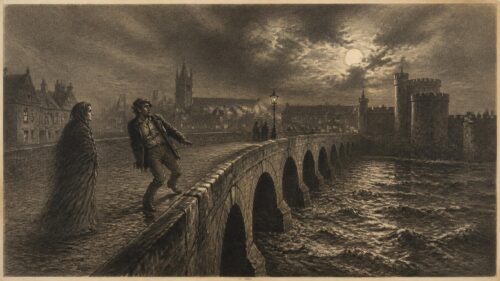
The article usefully presents Irish Halloween as a layered tradition rather than a straightforward survival from one source. Particularly striking is the way Samhain’s medieval associations with danger and revelation coexist with Christian remembrance of the dead, household divination, and playful misrule. The transformation of carved turnips into pumpkins after emigration also shows how customs can retain a threshold atmosphere while changing materially and socially. This raises an intriguing question about continuity: when practices are adapted across places and generations, what features matter most in defining their connection to earlier traditions: symbols, beliefs, community functions, seasonal timing, or something else?