
Arbour Hill
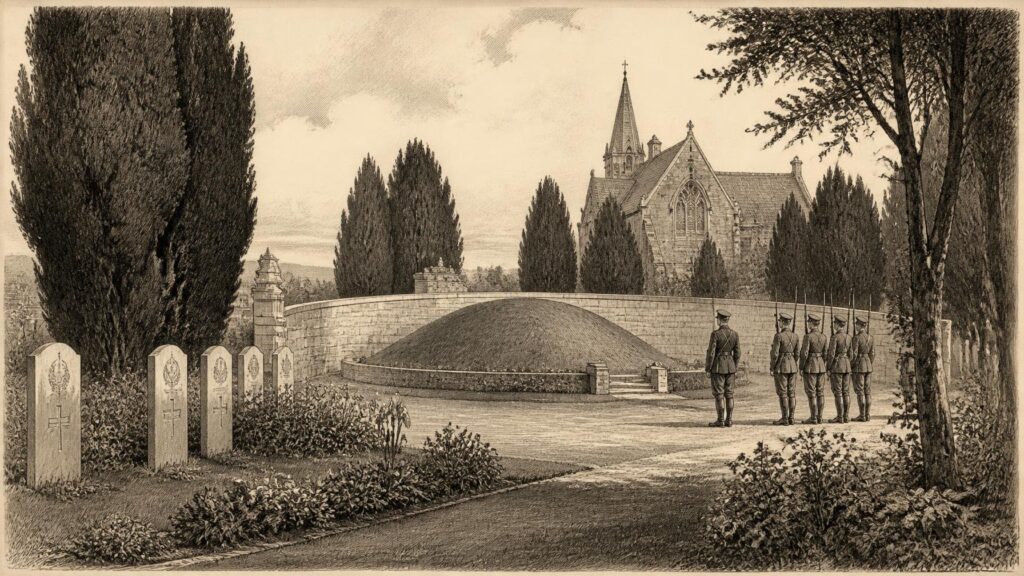
AI generated historical illustration, not a contemporary photograph.
At a Glance
Arbour Hill is not simply the grave of fourteen men executed after the Easter Rising: it is one of the places in which the Irish State has repeatedly tried to explain its own descent, authority and obligations. The annual ceremony held there has survived civil war division, party rivalry, changing attitudes to political violence, the Troubles and the more plural language of recent remembrance. Its apparent permanence should not disguise its history. The commemoration was made, managed and remade.
Burial Ground
Arbour Hill lies in Dublin’s old military quarter, behind Collins Barracks and beside the prison that still bears the district’s name. The setting matters. Long before it became associated with Irish republican martyrdom, it formed part of the infrastructure of British military power in Ireland: barracks, prison, church and cemetery. The old cemetery contains the graves of thousands of British military personnel and members of their families. This older landscape is not incidental background. It makes the later burial of the Rising leaders unusually charged: men executed by the British authorities were interred within a British military enclosure, in ground intended to be hidden from the public rather than fashioned as a national shrine.
Between 3 and 12 May 1916, fourteen men were executed by firing squad in the stonebreakers’ yard of Kilmainham Gaol following courts martial held in the aftermath of the Rising. They were Thomas J. Clarke, Seán MacDiarmada, Patrick Pearse, Thomas MacDonagh, Joseph Plunkett, Edward Daly, William Pearse, John MacBride, Éamonn Ceannt, Michael Mallin, Seán Heuston, Con Colbert, Michael O’Hanrahan and James Connolly. Seven were signatories of the Proclamation. Their collective burial at Arbour Hill provided a physical focus for the memory of the executions, but it did not originally do so by design of the mourners or the emerging Irish revolutionary movement.
The documentary record is clear that concealment was central to the British military authorities’ purpose. The bodies were transferred from Kilmainham to Arbour Hill and placed together in a pit in the prison exercise ground. The burial was conducted away from the public gaze and the grave was covered with quicklime. General Sir John Maxwell, the military governor who supervised the repression of the Rising, understood that graves could become political places. His fear that public sentiment would make them shrines was not misplaced. The attempt to deny ceremonial burial helped give the site its later moral force.
It is important, however, not to turn the burial itself into a legend detached from evidence. The claim that the men were buried in a communal pit, and the purpose of avoiding a public funeral, are well supported by official instructions and later archival testimony. What cannot be known with the same confidence is every detail of the night burials: the precise sequence of each arrival, the attitudes of every soldier present, or the private reactions of onlookers. Such details have naturally attracted retelling, but historical significance does not depend upon embellishment. The known facts are stark enough.
Martyr Making
The Rising did not immediately command unanimous public support. Dublin had suffered considerable destruction and loss of life; many families were grieving civilians and members of British forces as well as Volunteers and Citizen Army members. Yet the executions transformed the political atmosphere. The repeated killings, particularly after public opinion had begun to shift towards sympathy, gave the dead an importance far beyond the military outcome of Easter Week. Arbour Hill became inseparable from that transformation because it held the bodies of the executed men together.
There is a temptation to speak of the fourteen as though they entered memory in a finished, unanimous national pantheon. In fact, their reputations, political meanings and personal stories differed. Connolly was a socialist labour leader as well as a military commander; Pearse was a teacher, writer and political theorist; MacBride had a long earlier association with Irish nationalism; others were young Volunteers whose public profiles had previously been limited. The grave brought them into a single commemorative company. That act of grouping was powerful, but it could also smooth away disagreement, difference and the much wider social range of those involved in 1916.
The language of sacrifice became especially influential. Catholic devotional practice, funeral ritual, the republican tradition of graveside oratory and the Proclamation’s promise of national sovereignty all shaped the vocabulary in which the dead were remembered. It would be too simple to call this merely propaganda. Many relatives, comrades and ordinary visitors experienced genuine grief and reverence. But public mourning was also political. To honour the dead was often to make a claim about the living Republic, the Treaty settlement, partition, prisoners, or the legitimacy of those governing the Free State.
Arbour Hill was therefore a place of both shared mourning and potential dispute. Its seclusion reinforced its symbolism. Unlike the General Post Office, which faced a major thoroughfare and could accommodate spectacular civic display, the cemetery required entry into a contained military and ecclesiastical environment. The site invited solemnity, religious observance and controlled ceremonial. It did not prevent rival political interpretations; rather, it gave the State a setting in which it could attempt to regulate them.
State Beginnings
The commemoration began in 1923, shortly after the Civil War, and the first official State ceremony took place in 1924. Those dates alone explain much of the ceremony’s original difficulty. The Government of the new Irish Free State sought an inheritance from 1916 while fighting, imprisoning and executing opponents who also invoked the Republic proclaimed that year. Arbour Hill lay beside a functioning prison. For anti-Treaty republicans, a ceremony honouring the executed leaders while republican prisoners were confined nearby could appear less an act of national reconciliation than an assertion of State ownership over a revolutionary tradition.
Early ceremonies were correspondingly restrained. The first official commemoration did not produce an uncomplicated public consensus; contemporary historical research records that the widow of Michael Mallin was the only relative of an executed leader to attend in 1924. That sparse family presence is revealing. A State ritual requires more than flags, troops and ministers. It also needs acceptance, or at least participation, from those whose bereavement gives it human credibility. At Arbour Hill, the relationship between official ceremony and family memory was never merely decorative. It was central to the legitimacy of the occasion.
The selection of Arbour Hill was nevertheless a shrewd act of State formation. The grave was a real site of sacrifice, not an invented monument. The Government could honour men who had died in the Rising without surrendering the authority it claimed to have won through the Treaty and the Free State. Ceremonial discipline, the presence of the Defence Forces, religious service and the participation of elected institutions gave the commemoration a constitutional character. The message was not simply that 1916 had been remembered; it was that the State was its proper guardian.
This interpretation should be treated as historical analysis, not as an assertion of a secret governmental plan. Ministers and officials did not need to formulate a single doctrine for the ceremony to have this effect. Public ritual works through setting, repetition and participation as much as through speeches. Arbour Hill made the revolutionary dead visible within the ceremonial order of the new State. Its very location in an inherited military landscape dramatised a transfer of authority from empire to Irish government.
Rival Claims
That transfer was never complete in the realm of memory. During the 1920s and 1930s, competing political groups mounted their own commemorations of 1916. The annual Arbour Hill ceremony existed alongside events at the GPO, Glasnevin, Bodenstown and other republican places of memory. These ceremonies were not simply duplicates. Each site carried its own political associations. Arbour Hill centred the executed leaders; Glasnevin connected 1916 to earlier nationalist funerals and the Fenian tradition; the GPO evoked the insurrection’s public drama; Bodenstown recalled Wolfe Tone and the long genealogy of Irish republicanism.
Successive governments had to negotiate an awkward inheritance. W. T. Cosgrave and many leading figures in Cumann na nGaedheal had themselves been involved in the revolutionary period, but their immediate work was restoring administration after violence and civil conflict. A loud celebration of insurrection could sit uneasily beside appeals to peace, constitutional order and economic reconstruction. Later Fianna Fáil governments, led by Éamon de Valera, possessed their own powerful claim to the legacy of 1916 and approached commemoration with different political advantages. Yet no party could entirely monopolise the dead without provoking resistance.
The annual rite therefore tells a wider story of Irish democracy. Political opponents repeatedly contested the meaning of the Rising while broadly accepting that the executed leaders mattered. The argument was not whether memory should exist, but who had the right to speak through it. The State ceremony’s continuity may suggest settled agreement in retrospect, but its history shows continual pressure from alternative republican, party-political, familial, labour and cultural memories.
Archival evidence from later decades gives a revealing glimpse of how ceremony was administered. Department of Defence files include requests to lay wreaths, applications to celebrate Mass, correspondence about military honours and even disputes over seating arrangements for relatives. Such papers may seem prosaic beside the grandeur of national commemoration, yet they reveal the practical politics of remembrance. Access, precedence and recognition could carry real emotional and political weight. A commemoration is not simply an idea enacted once a year; it is an institution, dependent on invitations, protocol, security, space and negotiation.
Memorial Form
For several decades the grave’s physical appearance remained modest in relation to its importance. Its modern form emerged gradually. In 1956, the prison yard, adjacent school yard and former barracks cemetery were combined to make a memorial area. The grave was set within a limestone surround carrying the names of the fourteen in Irish and English. The curving memorial wall, bearing the full text of the Proclamation in both languages, was completed through the work of the sculptor and letter-cutter Michael Biggs in the years leading to the fiftieth anniversary of the Rising.
The design deserves close attention. It does not imitate a conventional Victorian monument with a heroic figure on a pedestal. Instead, it makes text, names, stone and enclosed ground do the commemorative work. The low mound marks the collective burial without pretending to separate the bodies into individual graves. The inscribed names restore individuality, while the Proclamation provides a political document around which the sacrifice is interpreted. The bilingual lettering locates the memorial in a State that understood Irish language and English language as part of its public identity.
There is also a significant tension in the site’s visual language. The memorial proclaims a republican national narrative, yet it stands within a cemetery whose surviving stones recall the British Army. The surrounding cemetery has not been erased. This makes Arbour Hill more historically complicated than a purpose-built nationalist monument. It is a palimpsest: an imperial military place, a prison ground, a secret burial site, a Catholic and Defence Forces church precinct, and a national memorial garden.
Interpretation should not collapse that complexity into a claim that the memorial deliberately reconciles all traditions of Irish military history. The present landscape permits such reflection, but the 1916 grave was principally created to honour republican dead. Still, the coexistence of the older British military cemetery and the 1916 memorial provides an unusually tangible reminder that Irish historical memory has been formed in shared, disputed and inherited spaces.
Golden Jubilee
The fiftieth anniversary in 1966 gave Arbour Hill a more prominent place in the State’s presentation of 1916. The anniversary was marked nationally with major ceremonies, exhibitions and military display. The memorial garden’s completed form helped establish the cemetery as a principal destination in the official geography of commemoration. The Proclamation wall in particular made the site legible to visitors: it joined the burial of the leaders to the political statement with which the Rising had announced itself.
Anniversaries do not merely recall the past; they reveal the concerns of the present. In 1966 the Republic of Ireland was seeking to express confidence, cohesion and historical legitimacy. Yet the language of sacrifice and national liberation also had consequences beyond official intention. The outbreak of conflict in Northern Ireland later in the decade made commemoration of armed struggle politically fraught. The same symbols could be used to support democratic State authority, cultural pride, constitutional nationalism or militant republicanism.
It would be inaccurate to argue that a single commemoration caused later violence. Historical causation is not so simple, and the Northern conflict arose from deep political, social and constitutional conditions. But historians have reasonably observed that official celebration of 1916 could make the language of unfinished national struggle more resonant. The challenge for the State was to preserve respect for the dead without allowing ceremony to become an uncomplicated endorsement of contemporary violence.
Arbour Hill’s ritual form assisted in this balancing act. Requiem Mass, wreath laying, a minute of silence, military honours and the National Anthem framed the occasion as solemn public mourning rather than mass political mobilisation. The grave was not a parade ground for competing forces. Its religious setting and limited space encouraged gravity. This did not remove controversy, but it helped distinguish the annual State ceremony from the more openly partisan commemorative gatherings that could occur elsewhere.
Troubled Decades
The Troubles brought a new reserve to official remembrance. The large Easter military parade was discontinued in the early 1970s, while the Arbour Hill observance endured as a more contained annual occasion. Its survival is notable. In a period when the political use of 1916 was intensely sensitive, the State did not abandon the grave of the executed leaders. Instead, it retained a ceremony whose format emphasised dignity, prayer and constitutional representation.
That continuity should not be mistaken for historical silence. The ceremony remained capable of carrying contested meaning, precisely because it continued to place public representatives, military personnel, clergy and relatives at the grave of men executed for rebellion. But its scale and tone enabled a careful distinction between commemorating the historical Rising and endorsing any living paramilitary organisation. The distinction could never be wholly immune from challenge, yet it was vital to the ceremonial language of the Republic.
Family participation was especially important in these decades. Relatives did not necessarily share identical political views, nor should they be treated as a single bloc. Their presence reminded the State that the commemoration concerned deaths, bereavement and kinship as well as national symbolism. Official files recording requests for ceremonies and negotiations about access indicate that relatives were recognised as stakeholders rather than merely spectators. Their attendance gave the ceremony an intimacy that counterbalanced the formality of State protocol.
The religious character of the event also evolved in practice. The annual Mass remained central, but modern ceremonies have included prayers involving leaders of different Christian denominations at the graveside. This does not erase the strongly Catholic inheritance of Irish public commemoration, and it should not be represented as though the ceremony had always been ecumenical. Rather, it signals an adaptation of the ritual to a more plural understanding of public life and of those touched by the events of 1916.
Centenary Moment
The centenary year of 2016 brought Arbour Hill into an expanded national programme that sought to address the Rising in its many dimensions. The State commemoration there took place on 24 April, the centenary date of Easter Monday 1916, rather than following only the usual early-May timetable. It was one part of a much wider sequence that included the GPO parade, ceremonies at Kilmainham, historical exhibitions, local projects and events recalling other experiences of the revolutionary decade.
The centenary encouraged a broader historical conversation than earlier anniversaries often had done. Alongside the leaders and the Proclamation, there was increased attention to women, civilians, children, British soldiers, Irish soldiers in the First World War, police, labour activists and the varied local contexts of the Rising. Arbour Hill remained indispensable, but it could no longer plausibly stand for the whole story of 1916. Its particular function was clearer: it commemorated the executed leaders and the political consequences of their deaths.
This greater breadth did not diminish the site. It made it possible to see its strengths and limits. Arbour Hill conveys sacrifice, execution, burial and State continuity with exceptional force. It does not on its own convey the destruction of Dublin, the experiences of civilian victims, the role of women in the Rising, the battles outside the capital, or the complicated loyalties of Irish people in 1916. A mature commemoration need not demand that one memorial carry every history. It should instead recognise how different sites illuminate different parts of the past.
The centenary also renewed interest in the physical memorial. Visitors could read the Proclamation, encounter the names and consider the contrast between the quiet enclosure and the violence that led to the burials. The memorial’s restraint proved an advantage. In an age accustomed to large public spectacle, its low mound and carved stone asked for attention rather than applause.
Living Ritual
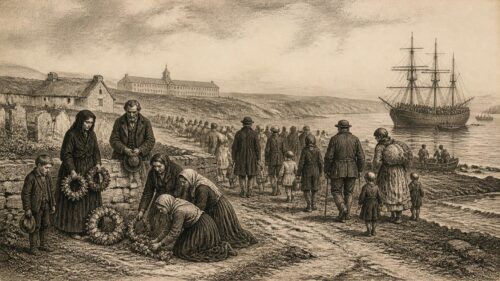
The annual ceremony retains a recognisable structure. It is hosted by the Minister for Defence at the Church of the Sacred Heart, the Church of the Defence Forces. A Requiem Mass is followed by a procession to the burial plot. At the grave, prayers are offered, a wreath is laid by the President on behalf of the people of Ireland, a silence is observed, the National Colours are raised and the National Anthem is sounded. The Taoiseach, members of Government and the Oireachtas, the judiciary, Defence Forces personnel, civic representatives and relatives have all formed part of the official gathering.
As of the 102nd State commemoration, held on 6 May 2026, the Department of Defence described the ceremony as an unbroken annual observance since the first State event in 1924. Such continuity is historically meaningful, but it should not be romanticised. Continuity has been achieved because each generation adjusted the ceremony to its own circumstances: the early Free State’s insecurity, party competition, the memorial building programme of the mid twentieth century, the caution required during the Troubles, and the wider historical consciousness of the centenary era.
There is a distinction here between remembrance and commemoration. Remembrance may be private, personal and various: a family story, a visit, a prayer, a political speech, a book, a school lesson or a moment of silence. Commemoration is public and organised. It selects a date, a place, authorised participants, language and gestures. Arbour Hill has endured because it has been able to combine both. It is a national ceremony, but it takes place at an actual grave, where historical abstraction encounters bereavement.
Historical Lessons
Arbour Hill should be neither worshipped uncritically nor reduced to a tool of official nationalism. The documented record shows a more interesting history. A British military authority sought to prevent the executed leaders becoming martyrs; the burial site became one of the Republic’s most potent memorial spaces. A Free State emerging from civil war adopted the grave for official ceremony; opponents challenged its right to do so. Later governments maintained the ritual, altered its setting and negotiated its political implications. Families, clergy, soldiers, civil servants, artists and visitors all contributed to the meaning of the place.
Folklore has naturally gathered around the executions and burials, as it does around places of trauma. Some stories convey emotional truths about secrecy, grief and outrage, even where their particulars cannot be securely verified. Historical writing should acknowledge the power of such traditions without presenting them as documented fact. The most durable significance of Arbour Hill needs no embellishment: fourteen executed men were placed in a concealed communal grave, and that grave became a recurring focus of national ritual.
The cemetery’s deepest lesson may be that public memory is never settled merely by building a monument. The wall, names and annual wreath are important, but their meaning changes with the people who approach them. Arbour Hill has served as shrine, political claim, family place of mourning, military ceremony, historical classroom and site of reflection on the costs of violence. Its continued observance is not evidence that Ireland has one fixed interpretation of 1916. It is evidence that the Rising remains important enough to require careful, recurring and sometimes uncomfortable acts of remembrance.
In that sense, the quietness of Arbour Hill is part of its achievement. The setting does not offer an easy triumphal narrative. The visitor passes through an old military landscape, encounters the memorial of a revolution and stands above a collective grave. The annual commemoration gives that encounter public form. At its best, it asks not only what the fourteen died for, but how a democratic Ireland should remember political violence, honour the dead and live responsibly with the inheritance of its revolutionary past.
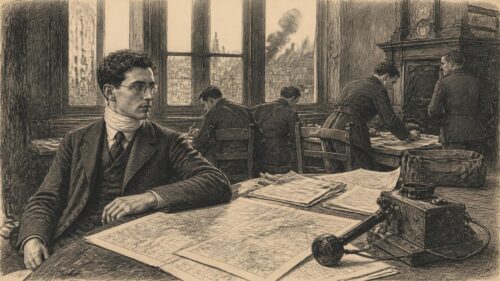
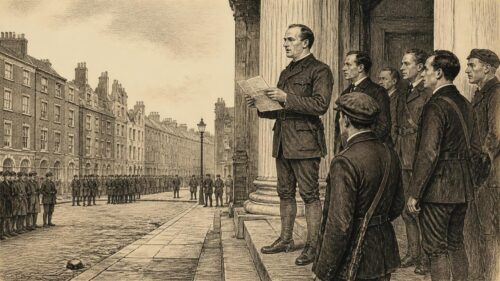
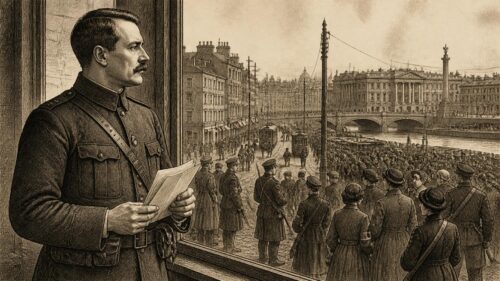
Arbour Hill’s evolution from concealed military burial ground to State memorial reveals how commemoration can preserve reverence while continually negotiating political division, family memory and changing views of violence. Particularly striking is the tension between the collective grave, which unites fourteen executed leaders within a national narrative, and the distinct lives, beliefs and relatives whose experiences resist simplification. Its location amid an older British military cemetery further complicates the symbolism without diminishing the memorial’s republican focus. How should contemporary commemorations at Arbour Hill balance solemn national remembrance with fuller recognition of individual differences, inherited landscapes and communities affected by 1916?