Toirdelbach Ua Briain
The sources supplied for his life describe him as king of Munster and as effectively high king of Ireland, and the Oxford Dictionary of National Biography entry associated with him dates his life from 1009 to 1086. He was a grandson of Brian Bóruma and the son of Tadc mac Briain, who was killed in 1023. Toirdelbach belonged to the ruling house that traced descent from Brian Bóruma. The sources identify his father as Tadc mac Briain and his mother as Mór, daughter of Gilla Brigte Ua Maíl Muaid of Cenél Fiachach.
Dateline
The sources supplied for his life describe him as king of Munster and as effectively high king of Ireland, and the Oxford Dictionary of National Biography entry associated with him dates his life from 1009 to 1086. He was a grandson of Brian Bóruma and the son of Tadc mac Briain, who was killed in 1023.
Family Background
Toirdelbach belonged to the ruling house that traced descent from Brian Bóruma. The sources identify his father as Tadc mac Briain and his mother as Mór, daughter of Gilla Brigte Ua Maíl Muaid of Cenél Fiachach. After Tadc’s death, Toirdelbach appears in the historical record only later, when he emerged as a challenger to his uncle Donnchad mac Briain, who had secured the kingship of Munster after Tadc was killed. The family conflict over Munster formed the political setting for Toirdelbach’s early career, and later narratives place him within the wider struggle for control of southern Ireland.
Rising Power
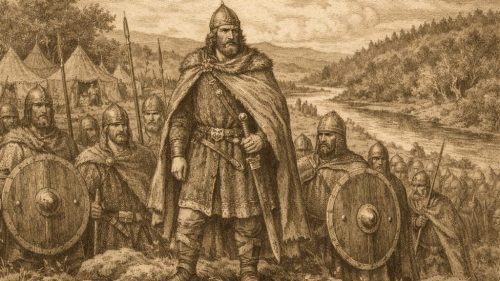
The annalistic tradition places Toirdelbach among the actors in Munster politics by the early 1050s. One extract records that in 1052 he raided Tuadmumu, and another says that in 1055 he defeated Murchad mac Donnchada. The available extracts make clear that his position depended on repeated military action over several years.
Munster Rule
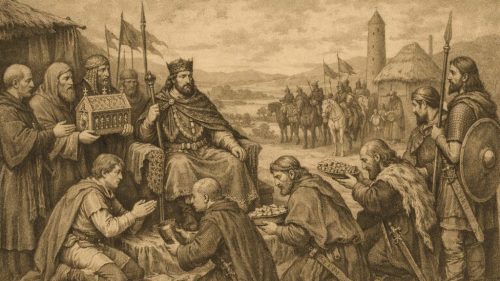
Once established in Munster, Toirdelbach is described as working through politics as much as warfare. It also reports that in 1068 a law and ordinance associated with him was made in Munster, and that the annalist praised it highly. In the same year the archbishop of Armagh, Máel Ísu mac Amalgada, visited Munster and received tribute and offerings. These notices present Toirdelbach as a ruler concerned with order, tribute, and the management of clerical relationships as well as with armed power.
Dublin Control
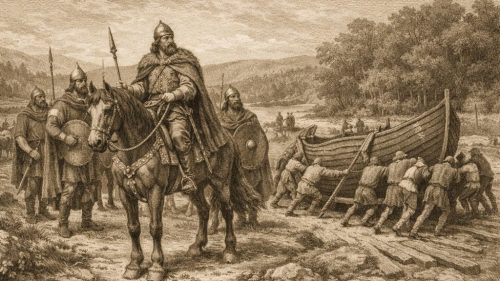
After the death of Diarmait mac Maíl na mBó in 1072, Toirdelbach took control of Dublin. The supplied material states that Dublin had earlier been seized by Diarmait, and that Toirdelbach then gained overlordship there and placed a loyal ruler in the city. The extract on Gofraid mac Amlaíb meic Ragnaill says that Toirdelbach was Gofraid’s predecessor in Dublin and that Gofraid appears to have held the kingship with Toirdelbach’s consent or appointment. The same material later says that Toirdelbach drove Gofraid overseas in 1075. These notices show Toirdelbach exercising authority over Dublin as part of his wider political reach across Ireland’s coastal and inland power centres.
Church Links
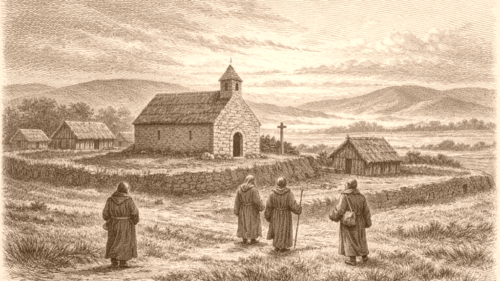
The surviving notices also connect Toirdelbach with church politics. One account says that Lanfranc, archbishop of Canterbury, wrote to him, and another associates him with church affairs in Dublin. These notices show that he appears in material beyond battle narratives.
Final Years
Taken together, the surviving notices present Toirdelbach as a ruler active in Munster and later in Dublin, and as a figure remembered in both annalistic and ecclesiastical material.
Illness Death
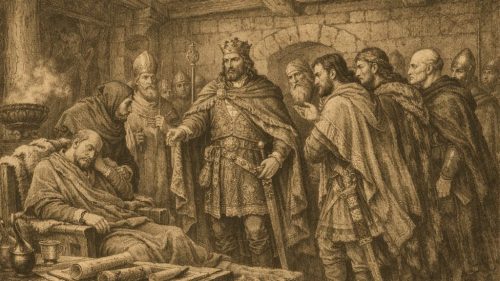
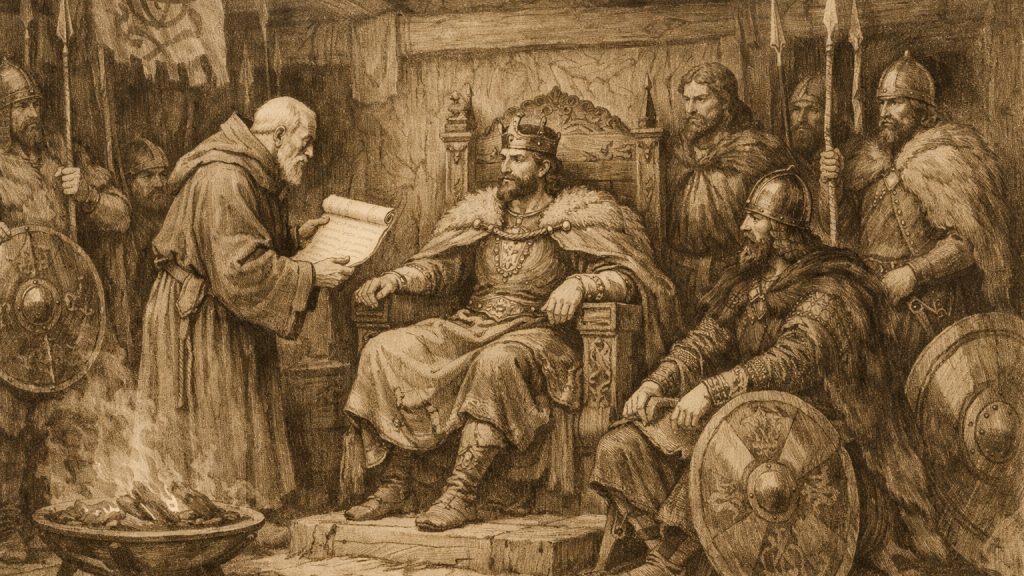
Later accounts also preserved recollections of his final years and of his role in wider church and political affairs. They present him as a ruler whose death marked the end of a long and influential career in Munster and Ireland.
Source References
Hover over a number to see the source. Select it to open the source.